

Before You Begin
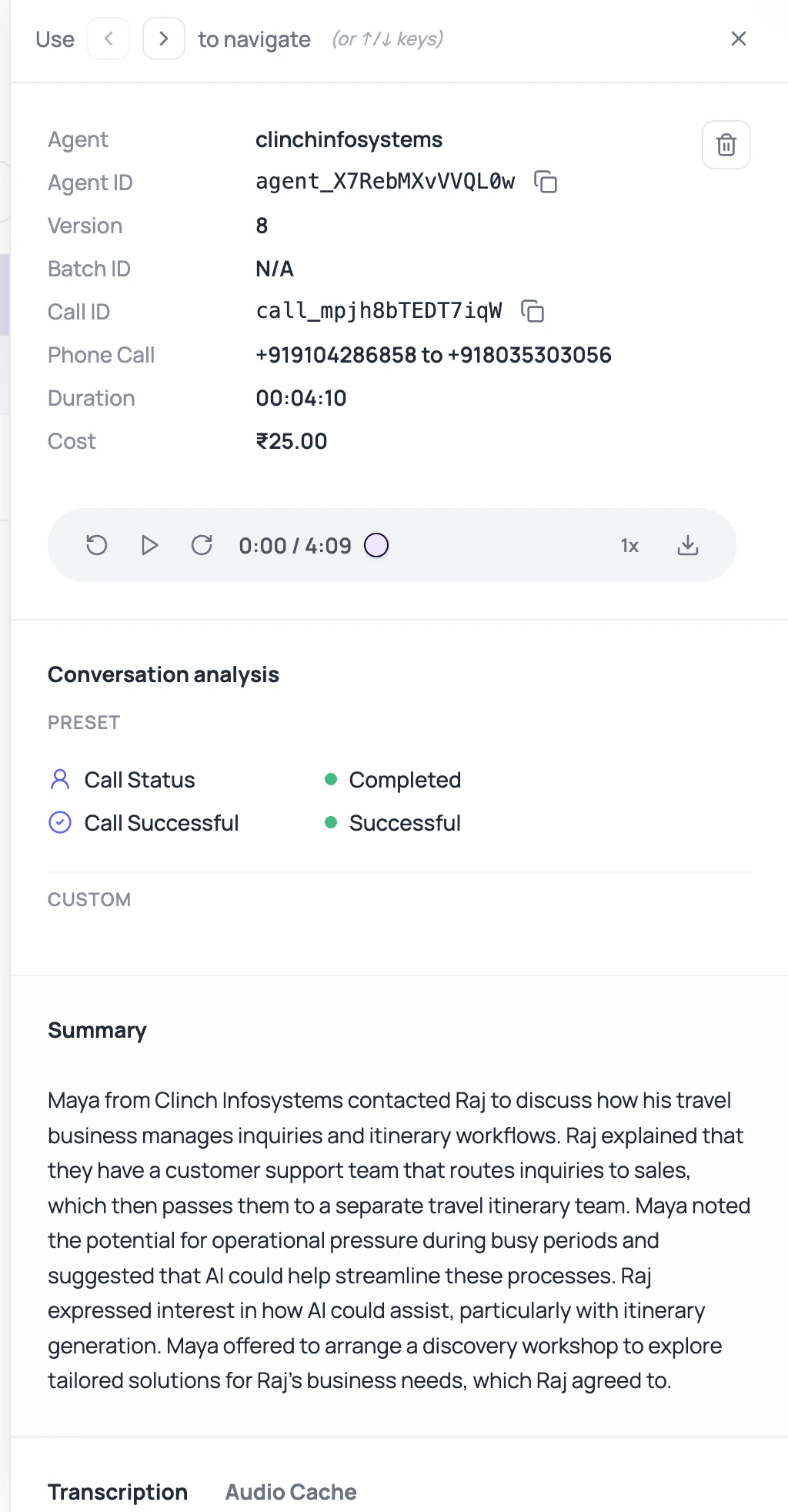
Open a specific call from Call History and know what you are trying to explain: routing, conversation quality, outcome, transfer, retry, extracted field, or cost.DialNexa Call Detail Page Sections
Transcript Tabs
Useful Actions
Download recording
Copy transcript
Annotate turn
Review One Call Thoroughly
1
Read status and duration
Check whether the call completed, failed, ended early, or hit voicemail.
2
Play the recording
Listen before judging prompt behavior.
3
Compare transcript and recording
Spot transcription errors, interruptions, overlap, noise, or silence.
4
Check extracted fields
Confirm structured outputs match what happened in the call. DateTime fields can be shown as readable dates and times while keeping ISO 8601 values for exports.
5
Open special tabs
Use Transfers and Audio Cache when those features were involved.