
Top 10 Call Manager Apps for 2026: A CXO’s Guide
For Indian operators, the gap between a basic telephony stack and a strategic voice engine is no longer academic. The country’s call centre industry employs over 5.4 million people and contributes approximately 8 to 10% to GDP, while the average Indian call centre handles around 4,400 calls per month and 61% of leaders report a post-pandemic surge in volumes from digital support and presales demand, according to India call centre industry statistics. That scale makes the wrong call manager app expensive fast.
Most buying teams still evaluate call manager apps as utility software. That’s a mistake. Your system shapes connect rates, staffing pressure, reporting quality, compliance exposure, and how quickly revenue teams move from enquiry to conversion. If your current stack still depends on manual triage, fragmented reporting, or weak routing logic, it’s already constraining growth.
Reporting quality is where many of these platforms fall short. A dedicated call tracking software layer gives operations leaders the campaign-to-call audit trail that a call manager app alone usually can't provide.
This guide is built for leaders making platform decisions, not supervisors comparing button layouts. It looks at the most relevant call manager apps through a business lens: operational control, automation readiness, integration depth, and suitability for India-heavy calling environments. If you’re also reviewing broader call centre software for small business, this list will help you separate telecom plumbing from systems that improve commercial outcomes.
Table of Contents
- 1. Exotel
- 2. Knowlarity by Gupshup
- 3. MyOperator
- 4. Ozonetel CloudAgent
- 5. Freshdesk Contact Center by Freshworks
- 6. Tata Tele Business Services Smartflo
- 7. Zoho Voice
- 8. JustCall by SaaS Labs
- 9. CallHippo
- 10. DialNexa Labs Private Limited
- Top 10 Call Manager Apps, Feature & Pricing Comparison
- The Verdict From Managing Calls to Automating Conversations
1. Exotel
Exotel is one of the clearest choices for Indian businesses that want cloud telephony without stitching together separate vendors for voice, messaging, masking, and API-led workflows. It covers the operational core well: virtual numbers, IVR, recording, dashboards, outbound dialers, and integrations that let sales or support teams move quickly.
For CXOs, Exotel’s value isn’t novelty. It’s execution. When your teams need stable PSTN connectivity, clean routing, and one vendor that can support voice plus customer communication channels, Exotel reduces coordination overhead across procurement, operations, and engineering.
Where Exotel fits best
Exotel is a strong fit for companies running structured inbound and outbound motions in India. Think lending, property sales, appointment-heavy healthcare, or support environments where number masking and auditability matter as much as call handling itself.
A practical example: a real estate business can route first-touch enquiries by project, geography, or campaign source, record every conversation, and push events into the CRM through webhooks. That gives leadership a cleaner path from marketing spend to call outcome, instead of relying on supervisor spreadsheets.
- Best for India-first operations: It’s built around local calling realities, not retrofitted for them.
- Best for custom workflows: Its developer docs and APIs make it easier to connect telephony with CRM, ticketing, or lead-routing logic.
- Watch the billing model: Credit-based pricing can be efficient, but finance teams should model usage before scaling.
Practical rule: If your telephony roadmap includes workflow automation, involve your RevOps or engineering team before procurement signs off. API quality matters more than feature count.
If you’re building a new voice operation, this becomes more compelling when paired with a clear plan to start a call center.
Use Exotel when you want a dependable India-first communications layer. Don’t use it if your real objective is full conversational automation. That requires a different category.
2. Knowlarity by Gupshup
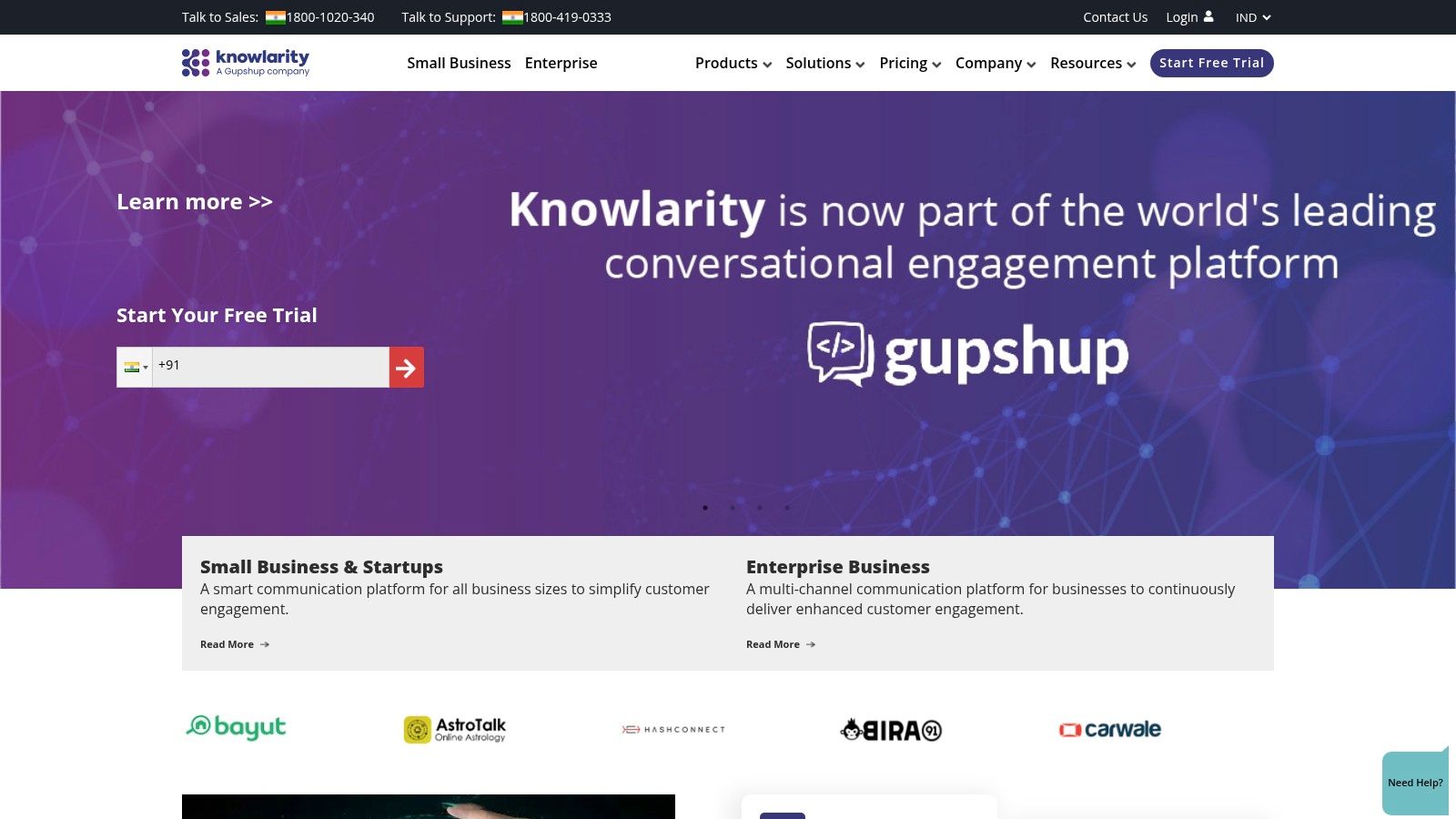
Knowlarity remains a practical buying decision for companies that want broad telephony coverage with seat-based packaging. It spans inbound and outbound contact centre seats, virtual numbers, toll-free, missed-call flows, masking, dialers, dispositions, analytics, and messaging extensions through the wider Gupshup ecosystem.
That breadth matters for leadership teams standardising customer communications across multiple departments. A fragmented stack often creates duplicate vendor contracts, disjointed reporting, and inconsistent routing logic between support, sales, and service teams. Knowlarity helps simplify that.
Commercial view
This platform suits businesses that want predictable operational packaging rather than pure usage-led complexity. It works well for organisations with defined teams, fixed seat planning, and mixed inbound-outbound use cases.
For example, an admissions team at an education business can assign calling seats for counsellors, run outbound follow-ups, deploy missed-call acquisition flows, and keep voice and WhatsApp under one commercial umbrella. That won’t transform the funnel on its own, but it does create better process discipline.
Buy Knowlarity when you need broad coverage and manageable rollout. Skip it if your board mandate is automation-led headcount leverage.
Its biggest strength is practicality. Its biggest weakness is that advanced capabilities often sit behind a sales process, which slows comparison shopping and makes it harder to benchmark total cost at scale.
- Strong operational breadth: Good for teams that need voice plus adjacent channels.
- Good rollout profile: Suitable for both SMB and enterprise deployment models.
- Decision friction: WebRTC versus MPLS options and quoted add-ons can complicate evaluation.
For buyers who want a wide feature catalogue and a known name in Indian cloud telephony, Knowlarity by Gupshup is a credible shortlist candidate.
3. MyOperator
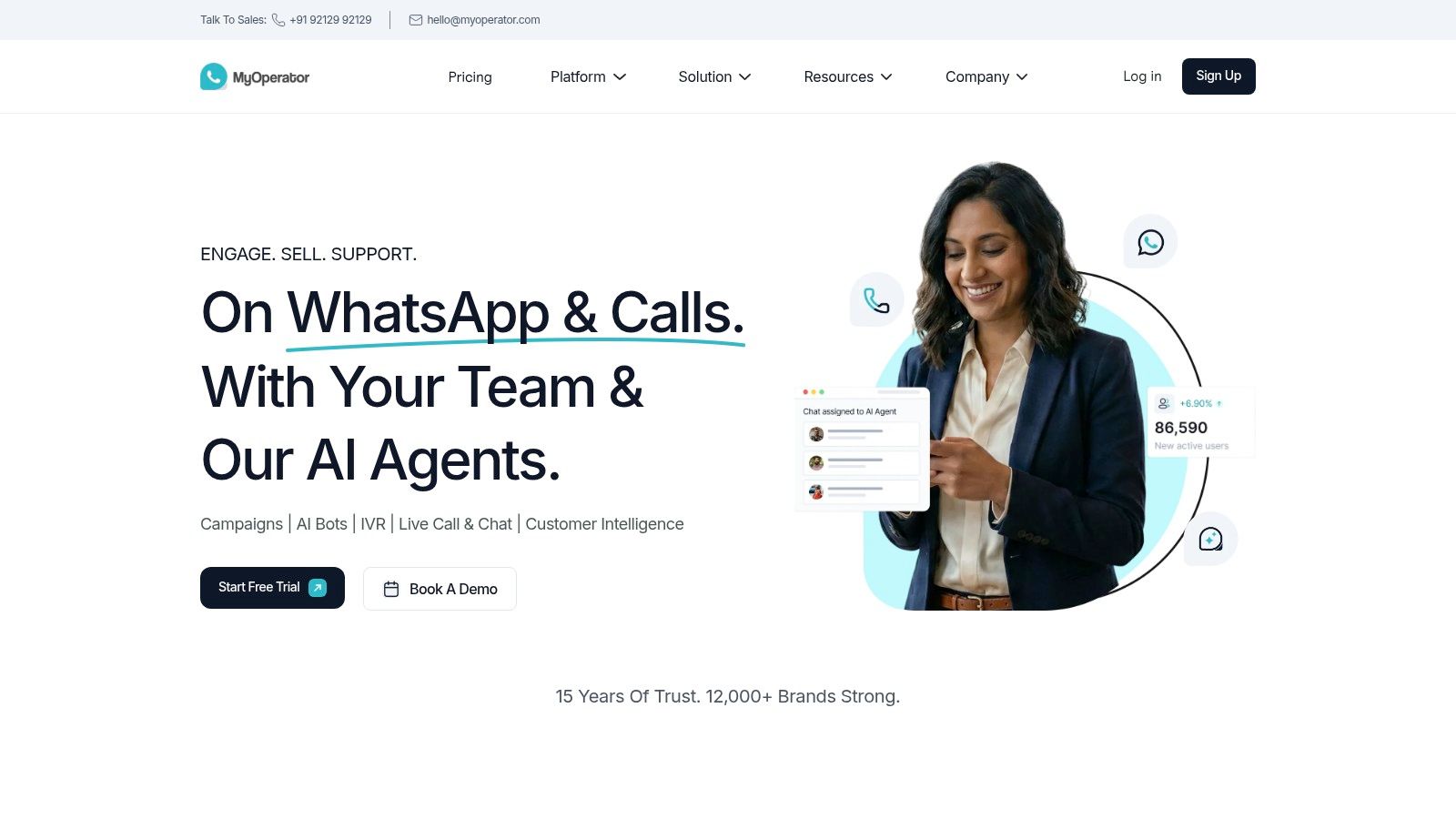
MyOperator earns its place on this list for one reason. It gets call operations live fast.
For CXOs, that matters because delay is expensive. Every week spent waiting on telephony setup means slower lead response, weaker call accountability, and more revenue leaking through personal numbers, missed callbacks, and inconsistent routing. MyOperator is built for companies that need order now, not a long transformation program.
Its strongest fit is SMB and mid-market businesses that have outgrown informal calling but do not need enterprise telephony architecture. Multi-level IVR, call tracking, routing, recordings, reports, virtual numbers, toll-free numbers, and campaign management give operations leaders enough control to standardise customer-facing conversations without dragging IT into every change request.
The strategic trade-off is clear. MyOperator improves process discipline, but it does not redefine the operating model. If your board expects true business process automation, lower cost-per-lead, and faster conversion velocity through AI-led call handling, this sits in the “organise the team” category rather than the “automate the funnel” category.
A practical use case is a multi-location services company that needs one business number, basic departmental routing, manager visibility into recordings, and cleaner follow-up ownership across sales and support. MyOperator handles that well. It is a strong step up from ad hoc calling, spreadsheets, and fragmented mobile usage.
It also reduces migration friction. Number porting support and guided onboarding help companies preserve continuity while shifting to a cloud-based setup. That makes it a sensible choice for leadership teams focused on stabilising operations first, then improving reporting and workflow control through better call center dashboards for performance management.
- Fast time-to-value: Good option for teams that need structured call handling without a heavy implementation cycle.
- Operational clarity: Centralised recordings and routing improve manager oversight and reduce shadow processes.
- Cost discipline required: Per-minute billing and WhatsApp charges can push total spend higher than headline plan pricing suggests.
MyOperator is a practical buy if your objective is speed, governance, and a cleaner customer communication process. Skip it if the mandate is aggressive automation and headcount efficiency. If voice sits inside a wider support stack decision, review a head-to-head Help Desk Software Comparison before you commit.
For a broader operational view, see these cloud solutions for call centers.
MyOperator is best for companies that need to professionalise calling quickly and give managers tighter control without enterprise complexity.
4. Ozonetel CloudAgent
Ozonetel CloudAgent belongs on the shortlist when telephony directly affects revenue operations, collections performance, and service compliance. This is not a lightweight call manager for basic routing. It is a platform for companies that need voice infrastructure to support scale, control risk, and connect tightly with the rest of the operating stack.
That distinction matters at the leadership level.
If your contact center runs acquisition, follow-ups, renewals, repayment reminders, or service recovery, call handling decisions shape cost-per-lead, agent productivity, and conversion velocity. Ozonetel stands out because it gives operations leaders more control over dialer strategy, queue logic, monitoring, and integrations than SMB-first tools usually offer.
Best use case
Ozonetel fits enterprises with multiple call motions across inbound and outbound teams, especially in BFSI, marketplaces, healthcare, logistics, and large support environments. A lender, for example, can run lead qualification, document chase-ups, collections, and customer callbacks inside one system while keeping tighter governance over scripts, routing paths, and supervisor intervention.
Its value is operational discipline. Predictive and power dialers help teams increase output. Supervisor controls support quality management. APIs make it possible to connect telephony with CRM workflows, internal tools, and the call center dashboards used for performance management that executives rely on to spot drop-offs in answer rates, agent occupancy, and campaign yield.
The tradeoff is clear. Ozonetel is a stronger fit for organizations with process maturity and technical ownership. Buyers looking for instant setup and simple public pricing will face a longer sales cycle and a heavier implementation discussion.
CXOs should judge Ozonetel on one standard: can it reduce manual call operations and improve measurable throughput across revenue and service teams?
- Built for scale: Strong choice for complex routing, large agent teams, and supervisor-led environments.
- Useful integration depth: Good option when telephony needs to plug into CRM, support, and internal workflow systems.
- Cost discovery takes work: Public pricing is limited, so finance and operations teams should pressure-test total rollout cost early.
If voice is part of a broader service stack review, compare it against adjacent support tooling through a head-to-head Help Desk Software Comparison.
Ozonetel is the right buy for enterprises that treat calling as an operating system issue, not a channel feature. If your mandate is true conversation automation rather than better call administration, newer Voice AI-first platforms set a higher bar.
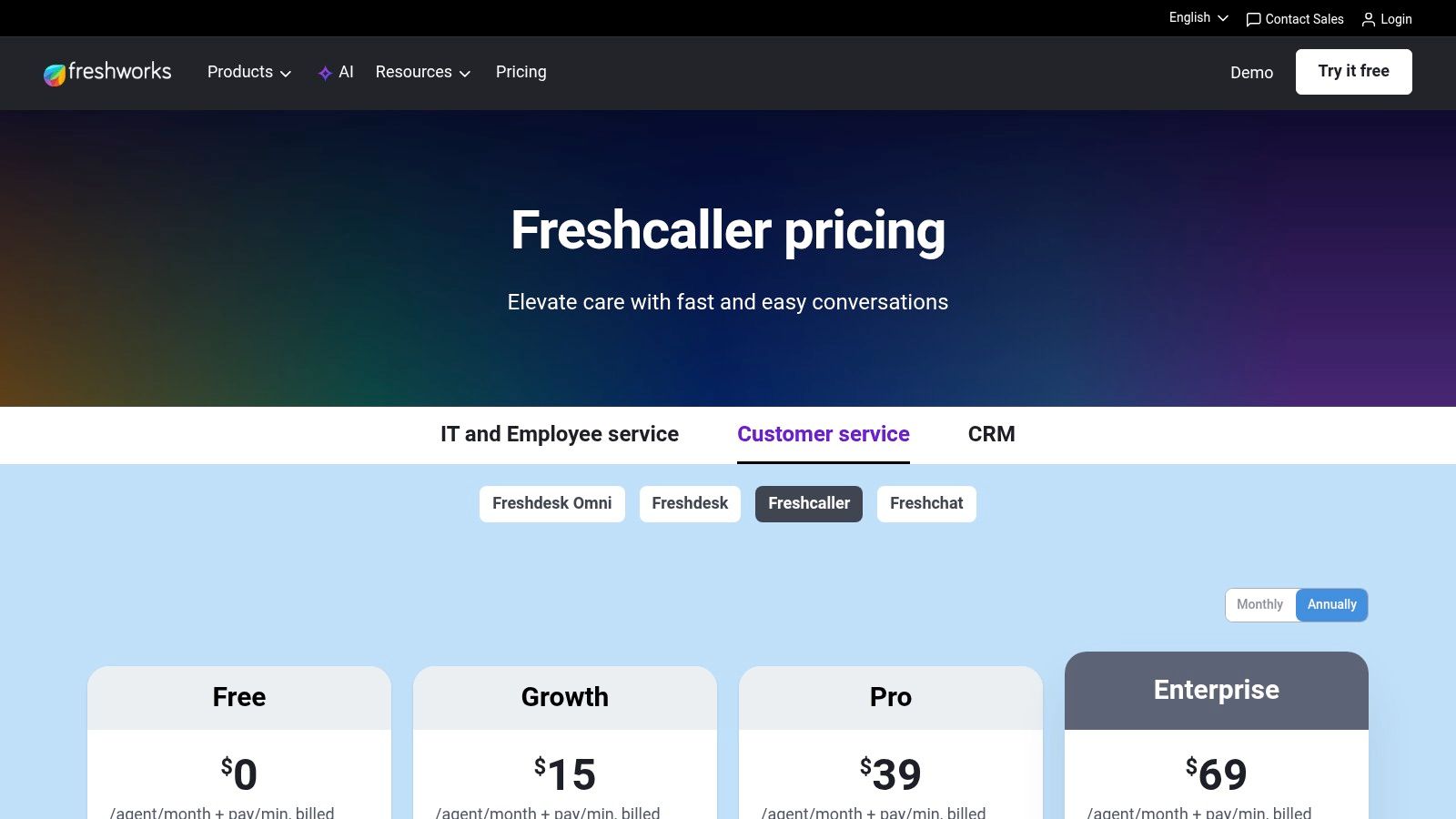
5. Freshdesk Contact Center by Freshworks
Freshdesk Contact Center is one of the fastest ways to bring voice into a service operation without creating another systems problem for IT, finance, and support leadership. For CXOs, that matters more than feature volume. A calling platform should reduce handling time, tighten visibility into agent performance, and keep customer context inside the tools teams already use.
Freshworks does that well when the business already runs on Freshdesk or Freshsales. Voice, tickets, and customer records stay connected in one environment, which cuts agent switching time and gives managers cleaner operational oversight. That translates into faster issue resolution and better control over service cost.
Best use case
Choose Freshdesk Contact Center if your priority is execution speed and predictable operating discipline. Teams can buy numbers, set routing rules, manage queues, handle after-hours traffic, and review call activity without a long implementation cycle. That makes it a practical choice for mid-market support organizations and growth-stage companies that need measurable progress this quarter.
The strongest business case is ecosystem fit. If service and sales already live in Freshworks, adding telephony inside the same stack is usually a better decision than introducing a separate voice vendor that creates new integration work and fragmented reporting. Leaders should view this as a margin decision as much as a tooling decision.
Pricing transparency is another advantage. Public tiers and included minutes make budget planning easier, especially for CFOs who want cleaner rollout models and fewer surprises during expansion. The tradeoff is straightforward. Advanced AI and higher-end capabilities sit in upper plans, so buyers should map required automation outcomes to plan limits before committing.
Buyers comparing service platforms more broadly may also want a head-to-head Help Desk Software Comparison.
- Best for Freshworks customers: Delivers the most value when voice, support, and CRM are already in the same stack.
- Strong operational fit: Good choice for leaders who want quick deployment, easier administration, and clearer budget control.
- Depth of change: It improves call management, but it offers less fundamental impact than Voice AI-first platforms, and it is not the strongest option if your goal is deeper conversation automation tied to conversion speed or lower cost-per-lead.
Freshdesk Contact Center by Freshworks is the right buy for companies that want disciplined service operations and fast time to value. If your mandate is broader business process automation through voice, traditional contact center tools like this set the baseline, while newer Voice AI platforms set the higher ceiling.
6. Tata Tele Business Services Smartflo
Smartflo is a governance-first telephony decision. For CXOs, that matters. If your business runs across multiple branches, regulated workflows, or tightly controlled procurement cycles, vendor stability often protects revenue better than another marginal feature release.
Tata’s advantage is institutional fit. Smartflo aligns well with organisations that want telecom buying to pass cleanly through IT, procurement, legal, and risk without creating approval friction. That makes it a practical choice for enterprises where call handling supports core operations such as sales intake, service coordination, or distributed customer support.
The strategic question is not whether Smartflo has call management capabilities. It does. The key question is whether your company needs a platform that reduces operational risk and standardises voice operations at scale, or one that pushes harder into AI-led automation. Smartflo sits firmly in the first camp.
A national company centralising telephony across regional offices is a good fit. In that environment, consistency, auditability, and vendor accountability usually matter more than self-serve experimentation. Smartflo supports that model better than lighter SaaS tools built for fast team-level deployment.
Choose Smartflo if procurement alignment, compliance posture, and managed service reliability rank above aggressive automation.
- Best for enterprise control: Strong fit for companies that need central governance across locations, teams, and approval layers.
- Good procurement match: Works well when incumbent telecom relationships and formal vendor evaluation shape the buying process.
- Lower automation ceiling: Suitable for structured call management, but less compelling for leaders targeting faster conversion velocity, lower cost-per-lead, or deeper business process automation through Voice AI.
Tata Tele Business Services Smartflo deserves consideration if your priority is operational control and enterprise acceptability. If your mandate is broader transformation, including automating conversations instead of only routing and tracking them, traditional systems like Smartflo set a stable floor, not the strategic ceiling.
7. Zoho Voice
Zoho Voice is a smart cost-control decision for companies already standardized on Zoho. If your revenue, support, and customer data already sit inside Zoho CRM, Zoho Desk, or Zoho One, adding another telephony vendor usually increases admin overhead, fragments reporting, and slows execution. Zoho Voice keeps voice operations inside the system your teams already use.
That matters at the executive level. Fewer vendors mean fewer contracts, fewer integration points, and fewer failure points across customer-facing workflows. For businesses focused on operating margin and management simplicity, that is a stronger reason to buy than feature chasing.
Why it works for stack consolidation
Zoho Voice covers the core requirements most mid-market teams need. Number purchase, queues, live monitoring, whisper, barge, and power dialer functions are all here. The bigger advantage is operational alignment. Calls, customer records, and service activity stay closer together, which improves reporting discipline and reduces the handoff friction that often hurts follow-up speed.
A practical fit is a B2B services company running pipeline management in Zoho CRM and support in Zoho Desk. In that setup, Zoho Voice helps leaders shorten onboarding, reduce tool switching, and keep call data tied to the same system used for pipeline reviews and service resolution. That improves managerial visibility without adding another layer of software governance.
The strategic trade-off is clear. Zoho Voice is strongest as a consolidation play, not as a major automation leap. It helps teams manage calls efficiently, but it does not materially change the human dependency at the center of the workflow. If your board expects lower cost-per-lead, faster conversion velocity, or conversation-level automation, you will hit the ceiling faster than you would with a Voice AI-first platform.
- Best for existing Zoho customers: Buy it for lower complexity and tighter operational control across the Zoho stack.
- Strong financial logic: Fewer systems to buy, train, support, and audit usually produce cleaner unit economics.
- Limited transformation upside: Good for integrated telephony. Weaker for leaders pursuing AI-driven process automation at scale.
Zoho Voice is the right choice when your priority is stack discipline, cleaner reporting, and lower operational drag. If you want voice to act as an autonomous revenue or service engine, look beyond traditional call management.
8. JustCall by SaaS Labs
JustCall is built for revenue and support teams that want telephony tied directly into the CRM layer. That’s why it shows up often in GTM-led buying processes. Setup is relatively quick, the integration catalogue is broad, and the AI add-ons around summaries, QA, and tagging make it attractive for managers who need coaching visibility.
This is not the deepest enterprise telephony platform on the list. It is, however, a commercially useful one for organisations that care about sales productivity and multi-system CRM alignment.
Who should buy it
Buy JustCall if your teams live in tools like HubSpot, Salesforce, or Pipedrive and need calling to sit inside those workflows. Sales leaders usually benefit most because the platform helps standardise outbound motions without requiring a larger telephony transformation.
A practical scenario is a SaaS company running SDR outreach, demo scheduling, and customer success callbacks from a CRM-centric workflow. JustCall can support that operating model well, especially if the business values fast deployment over telecom complexity.
Its strategic limitation is the same as many modern call manager apps. AI features help analyse conversations after they happen, but they don’t remove the human dependency at the centre of the workflow. That distinction matters if the board expects cost savings, not just better call notes.
- Good GTM alignment: Best for CRM-led teams that want fast deployment.
- Useful coaching layer: AI summaries and QA features support manager oversight.
- Watch add-ons: Regional numbers and layered modules can change cost assumptions.
For sales and support teams that want a practical, CRM-friendly phone system, JustCall by SaaS Labs is a credible option.
9. CallHippo
CallHippo is the speed-to-live option. Small and growing teams choose it because provisioning is fast, the interface is simple, and it supports web, mobile, and Chrome-based usage without a heavy rollout burden.
That makes it useful for companies opening new calling functions, setting up India-to-international sales coverage, or giving small teams a cleaner phone operation quickly. It’s not the most advanced system in this list, but it doesn’t need to be for the right buyer.
Where it delivers fastest
CallHippo is strongest when the main goal is operational readiness. A startup or SMB can buy numbers, deploy IVR, route calls, record interactions, and connect to popular CRMs with relatively little friction.
For executive teams, the appeal is speed and clarity. You can stand up a serviceable calling layer without a drawn-out implementation process. That’s valuable in expansion phases, partner operations, and cross-border sales motions where responsiveness matters more than deep customisation.
There is one strategic caveat. Buyers should validate number availability and region-specific economics before rolling out broadly. That matters most for companies planning Indian operations alongside US or EU outreach.
A simple platform that gets deployed and adopted beats a complex platform that never becomes operational discipline.
- Fastest route to basic telephony maturity: Good for SMBs and newly formalised teams.
- Usable across devices: Helpful for distributed teams and mobile-led operators.
- Not ideal for advanced operations: Larger outbound programmes and deeper QA needs may outgrow it.
CallHippo is a good recommendation for leaders who need a functional cloud phone system quickly and don’t want a heavy buying cycle.
10. DialNexa Labs Private Limited

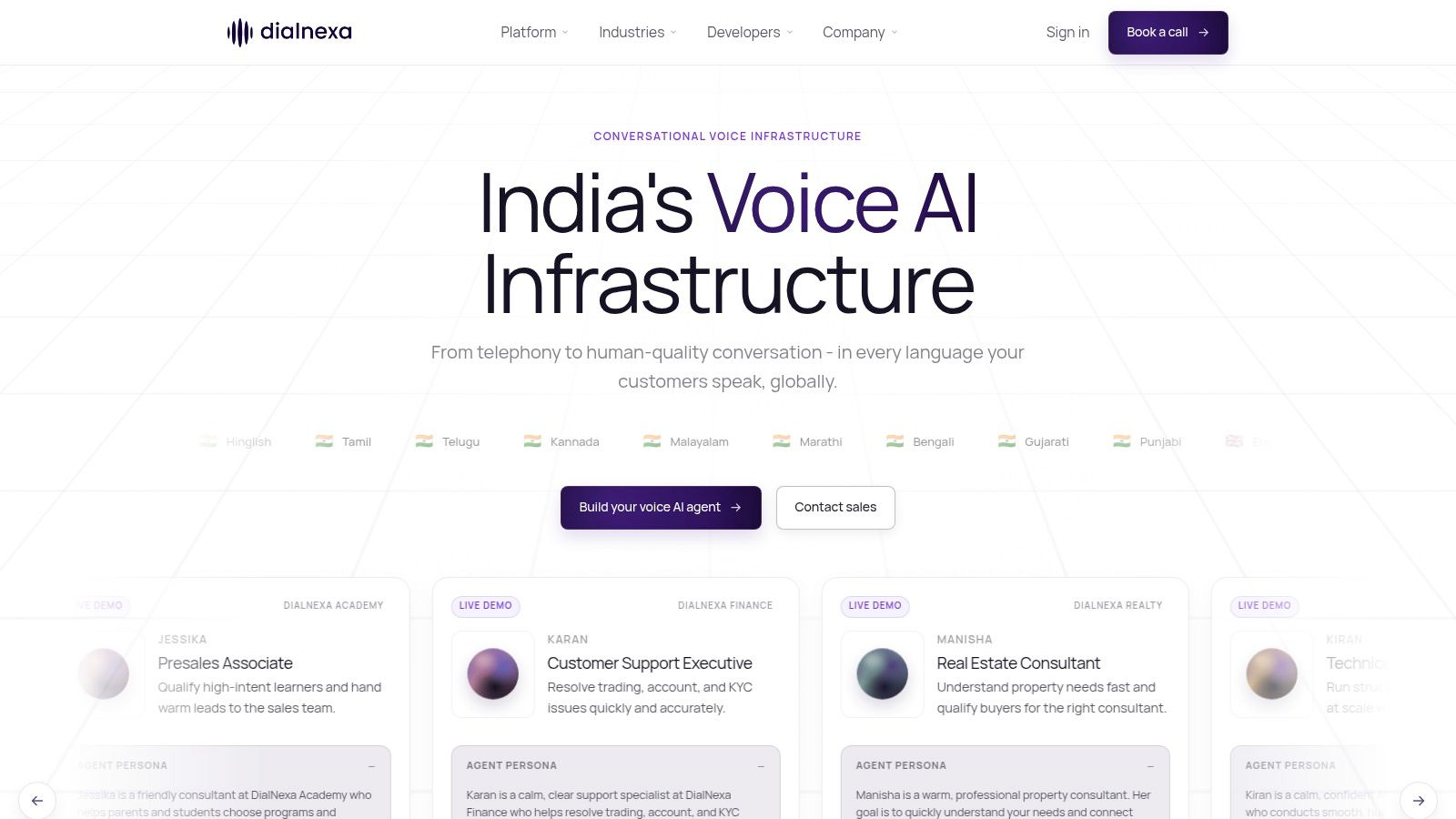
DialNexa should be evaluated as an automation investment, not as another cloud calling tool. The difference matters at the P&L level. Standard call manager apps improve routing, recording, and agent visibility. DialNexa targets the larger cost center and revenue bottleneck. It automates the conversation layer itself through Voice AI agents built for lead qualification, support, recruitment, and presales.
That shifts the buying criteria from feature coverage to unit economics. If every qualified lead, support resolution, or follow-up call still depends on human capacity, growth stays tied to hiring, training, QA, scheduling, and attrition. DialNexa gives leadership teams a way to remove that dependency from high-volume workflows and increase conversion velocity without adding headcount at the same rate.
The strongest use cases are the ones with clear business rules and measurable outcomes. Real estate teams can qualify enquiries and book site visits faster. BFSI teams can structure support or KYC-adjacent interactions around approved scripts and logged steps. EdTech teams can standardise counselling and lead qualification, which reduces lead decay and message drift across shifts and locations.
The strategic value is simple. A traditional system records what happened after an agent picks up. DialNexa can handle the first conversation, qualify intent, ask discovery questions, address common objections, schedule the next step, and pass a structured outcome into the rest of the workflow. That is business process automation applied to voice, not a marginal improvement in call handling.
This matters even more in regulated sectors. Financial services and healthcare leaders cannot treat voice automation as a creative experiment. They need controlled workflows, consent-aware interactions, and traceable logs that support audit requirements. The compliance discussion should sit alongside the ROI discussion from day one.
My recommendation is direct.
- Choose DialNexa if repetitive voice conversations are slowing revenue production: It reduces agent load in qualification, follow-up, and first-response workflows where speed affects win rates.
- Choose it if consistency is a board-level concern: AI agents follow the approved process every time, which improves QA discipline and reduces variation across teams.
- Use it where outcomes can be measured clearly: The best deployments tie directly to KPIs such as cost-per-lead, booked meetings, resolution speed, and agent productivity.
- Keep humans in the loop for exceptions: Sensitive escalations, complex compliance judgments, and relationship-heavy conversations still need oversight and smart workflow design.
DialNexa is the strongest option in this list for executives who want more than call management. It is built for organisations that want to convert voice operations into a scalable automation system with direct impact on efficiency, revenue, and compliance.
Top 10 Call Manager Apps, Feature & Pricing Comparison
| Platform | Core features | UX & scale (★) | Price & value (💰) | Best for (👥) | Unique strength (✨) |
|---|---|---|---|---|---|
| Exotel | Virtual numbers, IVR, recordings, outbound dialers, SMS/WhatsApp APIs | ★★★★, reliable PSTN & campaign scale | 💰 India plans, credits model (mid) | 👥 Sales & support teams | ✨ Broad voice+messaging ecosystem & strong APIs |
| Knowlarity (by Gupshup) | Contact center seats, virtual numbers, progressive/predictive dialers, analytics | ★★★½, seat-based operations | 💰 Seat-based plans with inclusive minutes | 👥 SMBs & enterprises needing bundled minutes | ✨ Inclusive seat bundles + messaging add-ons |
| MyOperator | Multi-level IVR, smart routing, call tracking, WhatsApp & campaigns | ★★★★, easy deployment for non-tech teams | 💰 SMB-friendly; per-minute/WhatsApp extras | 👥 SMB / mid-market support teams | ✨ India-centric onboarding & number porting help |
| Ozonetel (CloudAgent) | Cloud CCaaS, power/predictive dialers, speech analytics, open APIs | ★★★★, enterprise-grade scale & controls | 💰 Enterprise/quote-based (scales high) | 👥 Large enterprises with heavy outbound needs | ✨ API-first platform with strong dialer tooling |
| Freshdesk Contact Center | Numbers, IVR, queues, power dialer, Freddy voicebot (top tier) | ★★★★, excellent UI/UX, quick setup | 💰 Clear tiering; free entry; inclusive minutes | 👥 Teams using Freshworks CRM/helpdesk | ✨ Tight Freshworks integration & clear pricing tiers |
| Tata Tele Business Services – Smartflo | Cloud PBX/CC, IVR/ACD, virtual/toll-free, managed deployment | ★★★½, operator-grade SLAs & compliance | 💰 Quote-based, enterprise procurement | 👥 Enterprises needing telco-grade reliability | ✨ Telecom-backed infrastructure & compliance support |
| Zoho Voice | Number purchase, queues, power dialer, live monitoring, Zoho integrations | ★★★★, seamless in Zoho ecosystem | 💰 Transparent India pricing; free Solo option | 👥 Zoho-centric sales/support teams | ✨ Native Zoho CRM/Desk integration |
| JustCall (SaaS Labs) | Inbound/outbound calling, power dialer, SMS, large app marketplace, AI add-ons | ★★★★, fast setup, strong CRM fits | 💰 Mid; many regional/AI features as add-ons | 👥 GTM & sales teams using CRMs | ✨ Extensive CRM marketplace + AI call insights |
| CallHippo | Local/toll-free numbers, IVR, recording, apps (web/mobile/Chrome) | ★★★½, simple, SMB-friendly UX | 💰 Transparent self-serve pricing | 👥 Small teams needing cross-region provisioning | ✨ Quick provisioning for India–US/EU setups |
| 🏆 DialNexa Labs Private Limited | Human-like Voice AI agents, ready-made personas, API & dashboards, automated reminders | ★★★★★, multi-minute natural calls; proven gains (connect → 91%) | 💰 Transparent signup; contact for scale pricing | 👥 Enterprises & vertical teams (EdTech, BFSI, real‑estate, e‑commerce) | ✨ 🏆 Industry-adapted, deployable Voice AI + 97% parity with human-qualified leads |
The Verdict From Managing Calls to Automating Conversations
Voice software is now a profit decision, not a telephony decision.
A standard call manager gives you control over routing, recording, queues, and numbers. That improves operational discipline. It does not improve revenue per conversation on its own. If lead qualification, follow-ups, appointment booking, or first-line support still depend on manual calling, labor costs rise with volume, service quality stays uneven, and growth slows the moment hiring does.
CXOs should separate two buying categories clearly. The first is call infrastructure. The second is conversation automation.
Exotel, Knowlarity, MyOperator, Smartflo, and Zoho Voice fit companies that need dependable cloud telephony, local coverage, and stronger oversight of distributed teams. Ozonetel fits enterprises with heavier workflow requirements and API-driven operations. Freshdesk Contact Center and JustCall fit teams that want calling embedded inside a broader service or CRM workflow. CallHippo fits businesses that need fast deployment and simple administration.
DialNexa belongs in a different investment discussion. It is for leadership teams that want to reduce cost per lead, increase conversion velocity, and remove repetitive calling work from human teams.
As noted earlier, Voice AI adoption in India is changing buyer expectations. The strongest platforms no longer stop at call handling. They automate high-volume conversations, standardize customer interactions, and help teams scale outreach without adding headcount at the same rate. That matters in sectors where missed follow-ups, slow response times, and inconsistent qualification directly reduce pipeline yield.
Compliance raises the stakes further. In BFSI, healthcare, and other regulated sectors, voice operations affect consent management, retention, auditability, and customer trust. Treating voice as a commodity purchase is a board-level mistake. The wrong platform adds operational drag and compliance exposure. The right one improves throughput, strengthens control, and protects margin.
Make the decision based on the constraint that is holding back the business. If you need a better phone system, buy the platform that fits your operating model. If you need to automate revenue-critical or service-critical conversations, choose Voice AI.
That platform is DialNexa.
If your team still spends hours on repeated qualification, support, booking, and follow-up calls, change the operating model. DialNexa Labs Private Limited helps enterprises deploy human-like Voice AI agents that handle high-volume conversations, automate routine workflows, and free teams to focus on higher-value work.

I especially like how it connects each platform to real CXO priorities like scalability, governance, automation, and cost efficiency, helping leaders choose tools based on business goals rather than marketing claims.