
What Is Interview Scheduling? Strategic Hiring Explained
Interview scheduling affects revenue sooner than most hiring leaders expect. Every day a role stays open, sales capacity, service coverage, or branch productivity stays below plan. In high-volume Indian sectors such as EdTech and BFSI, that drag scales quickly because candidate response windows are short, interviewer calendars are fragmented, and drop-off rises when coordination slows. The operational issue looks administrative. The financial impact does not.
What is interview scheduling? Interview scheduling is the operating system that aligns candidate intent, interviewer capacity, and hiring urgency. It determines whether recruiter time goes into assessing talent or chasing calendars, whether applicants experience a responsive employer or a disorganised one, and whether hiring teams reduce vacancy costs or extend them. That is why scheduling sits closer to conversion management than back-office administration.
The strategic point is easy to miss. A weak scheduling process does not only delay interviews. It lowers candidate attendance, reduces recruiter productivity, weakens employer perception, and increases the odds of a vacancy staying unfilled long enough to affect revenue targets. In that context, the true cost of a bad hire starts before selection. It starts when a strong candidate disengages because the company could not coordinate one interview without friction.
This article treats interview scheduling as a controllable operating lever. The goal is not only efficiency. It is lower cost per hire, faster time to productivity, better candidate conversion, and lower execution risk. Voice AI matters here because in high-volume markets, especially where calls still outperform email links for response and confirmation, automation can convert a scheduling bottleneck into a faster, more reliable hiring engine.
Table of Contents
- The True Cost of Your Scheduling Bottleneck
- Deconstructing the Interview Scheduling Workflow
- Manual Chaos vs Automated Control
- The Strategic KPIs of Modern Interview Scheduling
- Building an Integrated Scheduling Ecosystem
- The Voice AI Advantage in High-Volume Hiring
- Your Implementation Roadmap for Automated Scheduling
The True Cost of Your Scheduling Bottleneck
Open roles rarely stay empty without consequence. The cost starts before assessment quality, offer approval, or onboarding risk become visible. It starts in the scheduling layer, where recruiter time, manager availability, and candidate intent are either converted into interviews or lost in coordination.
Interview scheduling is often filed under HR administration. That classification hides its economic impact. Every hour spent chasing calendars is an hour not spent screening stronger candidates, closing offers, or advising hiring managers on pipeline quality. In high-volume categories such as Indian EdTech and BFSI, where hiring velocity directly affects sales capacity, service delivery, and branch operations, that delay functions like a recurring tax on growth.
The tax shows up in three places.
First, labour cost. Scheduling work absorbs paid recruiter and coordinator capacity without improving selection quality by itself. If the process depends on repeated calls, email follow-ups, and manual rescheduling, the organisation is paying skilled staff to act as traffic managers rather than talent operators. The same operational pattern appears in other appointment-heavy functions, which is why many teams now study patient appointment scheduling software as a parallel model for reducing coordination overhead.
Second, revenue delay. An unfilled admissions counsellor seat in EdTech or a vacant relationship manager role in BFSI is not a neutral vacancy. It can mean fewer outbound conversations, slower lead conversion, missed renewals, and lower branch throughput. Scheduling friction lengthens time-to-interview, which lengthens time-to-hire, which delays the moment a role starts producing value.
Third, brand and decision risk. Candidates do not separate scheduling from employer quality. A slow, fragmented process signals weak internal coordination. Strong candidates interpret that signal early and often have alternatives. Teams that already understand the true cost of a bad hire should treat scheduling as an earlier control point. Preventing candidate drop-off and rushed hiring decisions is cheaper than correcting a poor hire after the fact.
The operational failure is cumulative. One missed panel slot can trigger a chain of exceptions across recruiters, interviewers, and candidates. Then come status checks, escalations, duplicate outreach, and avoidable reschedules. At scale, that shadow workload becomes measurable management drag.
For a CXO, the conclusion is straightforward. Interview scheduling is not a clerical side process. It is a conversion system that influences hiring cost, speed-to-productivity, and employer brand. If it remains manual, the business keeps paying the scheduling tax. If it is redesigned with automation and Voice AI, the same layer can increase interview show rates, recover candidate intent faster, and convert hiring demand into productive capacity with less waste.
Deconstructing the Interview Scheduling Workflow
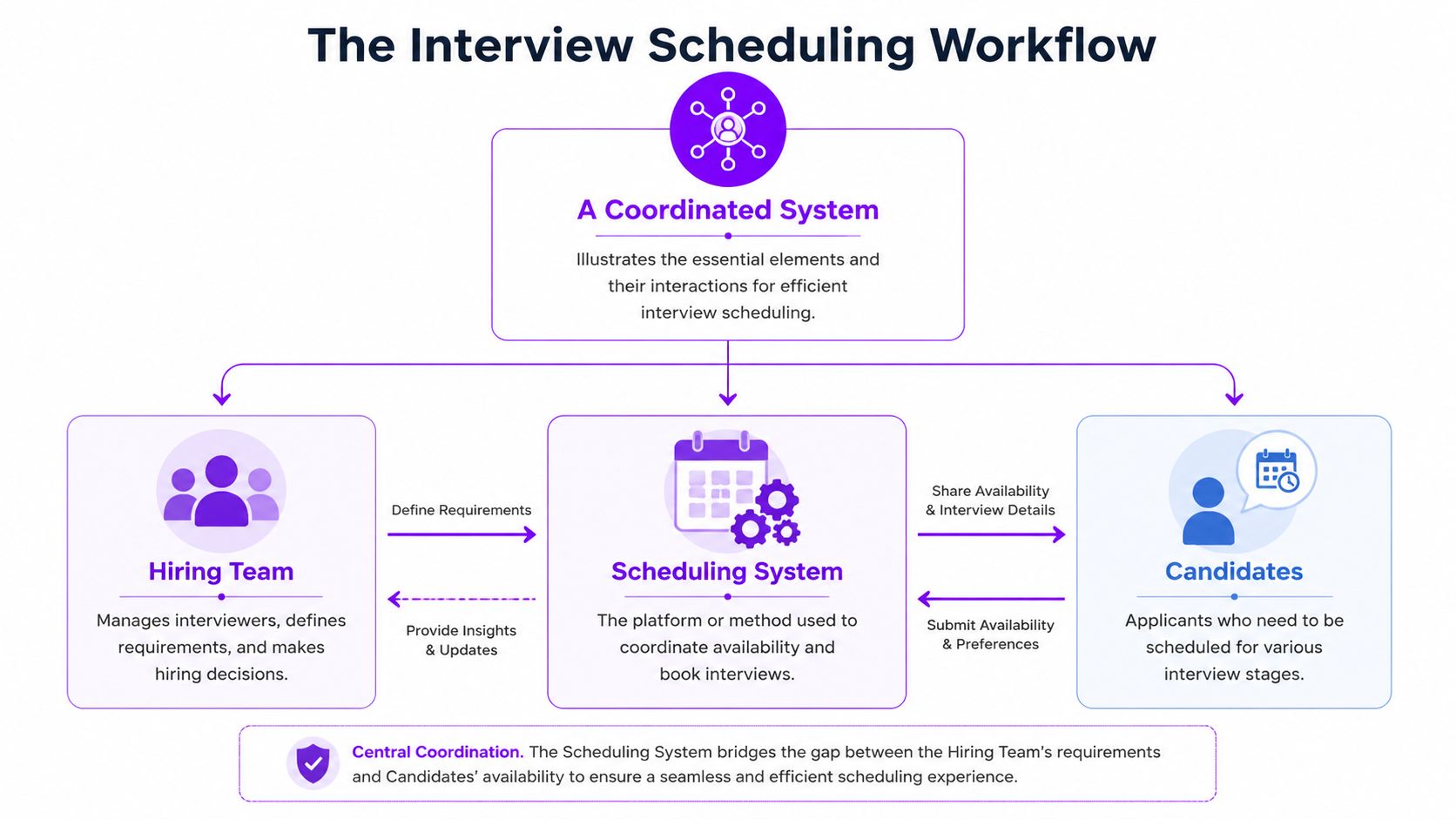
Interview scheduling is the coordination layer between three parties: the candidate, the hiring team, and the system that manages availability and communication. In plain terms, it’s the mechanism that turns hiring intent into a confirmed meeting with the right people, at the right time, with the right context attached.
Why the process behaves like air traffic control
A useful analogy is air traffic control for talent. Every interview request competes for scarce slots. Recruiters must align interviewer calendars, candidate preferences, role priority, and communication timing, often while the hiring manager is balancing delivery work.
That complexity is why seemingly simple booking problems often spill into operational delays. One interview may require a recruiter screen, a functional round, and a final panel. Each stage has different participants and different urgency. The scheduling layer has to preserve sequence, avoid double-booking, and keep all parties informed.
A mature workflow usually includes these elements:
- Candidate intake and stage readiness. Someone confirms the candidate is ready for the next round and has the right contact details.
- Interviewer matching. The system or coordinator maps the right interviewer pool to the role and stage.
- Availability capture. Calendars, constraints, and preferred windows are collected.
- Booking and confirmation. Time is locked, invitations are issued, and reminders are triggered.
- Rescheduling and follow-up. Changes are absorbed without restarting the process from scratch.
For leaders who run customer operations, the logic is similar to scheduling in service industries. That’s why patterns from patient appointment scheduling software are relevant. The core problem is the same: align multiple stakeholders, reduce friction, and protect attendance.
Where the workflow usually breaks
Manual workflows fail at the handoffs. Candidate data may sit in an ATS, interviewer diaries may live in Outlook or Google Calendar, and communication may happen across email, phone, or messaging apps. If those systems don’t connect cleanly, the recruiter becomes the integration layer.
The more your process depends on one person remembering who replied last, the less control you actually have.
Failure points usually cluster around sequencing, calendar visibility, and rescheduling. A candidate responds after business hours. A hiring manager blocks time late. A panel member drops out. Without system support, each change creates another round of manual coordination.
That’s why interview scheduling isn’t just a meeting-booking task. It’s a controlled workflow with operational dependencies.
Manual Chaos vs Automated Control
The economics of scheduling break down faster than many hiring teams assume. According to one hiring workflow benchmark set, manual scheduling can consume 243 minutes per interview compared with 27 minutes for self-scheduling, and weekly coordinator capacity can shift from roughly 30 interviews to 158 under automation. For a CXO, that is not an admin improvement. It is a throughput, cost, and conversion issue.
What manual scheduling costs
Manual scheduling depends on email follow-ups, spreadsheet tracking, separate calendars, and individual judgement. In low-volume hiring, that may be tolerable. In EdTech admission cycles, BFSI sales hiring, or any operation filling roles at scale in India, it creates a hidden scheduling tax. Recruiter hours are spent on coordination instead of screening, candidate communication becomes uneven, and each delay increases the odds that qualified applicants drop out or accept a faster offer elsewhere.
The business effect is straightforward. More manual touchpoints mean higher labour cost per interview, lower coordinator capacity, and greater exposure to process failure.
| Metric | Manual Scheduling | Automated Scheduling |
|---|---|---|
| Time spent per interview | High manual effort per booking cycle | Significantly lower handling time through self-serve booking and workflow rules |
| Weekly interview capacity | Lower coordinator throughput | Higher throughput with the same team size |
| Co-ordination method | Email chains, diary checks, spreadsheet tracking | Real-time availability, booking logic, automated reminders |
| Operational risk | Higher chance of delays, missed updates, and dependency on individual coordinators | Better control, cleaner audit trail, and less manual rework |
That cost rarely appears as a line item. It shows up in slower hiring, recruiter overtime, interviewer idle time, and lost candidate conversion.
What automation changes operationally
Automation changes more than speed. It shifts scheduling from person-dependent coordination to system-controlled execution. Rules handle availability, reminders reduce no-shows, and rescheduling happens without restarting the process across multiple inboxes. That lowers variance across business units and gives leadership a cleaner operating model.
The strongest automation setups also improve commercial outcomes. In high-volume hiring environments, the scheduling layer sits close to revenue because it affects how quickly revenue-generating roles are filled. Delay a counsellor hire in EdTech or a relationship manager hire in BFSI, and the cost is not limited to recruiter effort. It can mean missed enrolments, slower branch productivity, and weaker pipeline coverage.
Other appointment-heavy sectors have already treated scheduling as conversion infrastructure. Providers of tutoring scheduling software optimise availability, reminders, and self-booking because each booking has downstream revenue value. Hiring teams should apply the same operating logic.
A well-designed automation layer improves performance in four ways:
- It reduces lag between shortlist and interview. Candidates choose from live slots instead of waiting for back-and-forth coordination.
- It raises recruiter productivity. Teams spend less time brokering calendars and more time on assessment, candidate quality, and stakeholder alignment.
- It cuts process inconsistency. Standard rules produce the same booking logic, reminders, and follow-up across roles and locations.
- It creates usable operational data. Leaders can identify where delays cluster by interviewer, role family, geography, or business unit.
For teams reviewing AI-powered recruitment tools for interview scheduling and hiring operations, scheduling is usually one of the fastest workflows to automate because the operational waste is visible and the savings appear early. Voice AI strengthens that case in Indian markets where candidates often respond faster to calls than to email, and where after-hours outreach can recover applicant intent that manual teams would otherwise miss.
The highest-return automation targets are repetitive, rules-based workflows that sit close to a conversion bottleneck. Interview scheduling fits that profile with unusual precision.
The Strategic KPIs of Modern Interview Scheduling
Candidates expect hiring decisions far faster than many employers deliver. As noted earlier, the gap between candidate expectations and typical hiring timelines is large enough to create measurable withdrawal risk. For a CXO, that gap is not an HR inconvenience. It is a conversion problem that affects revenue capacity, labour cost, and brand perception.
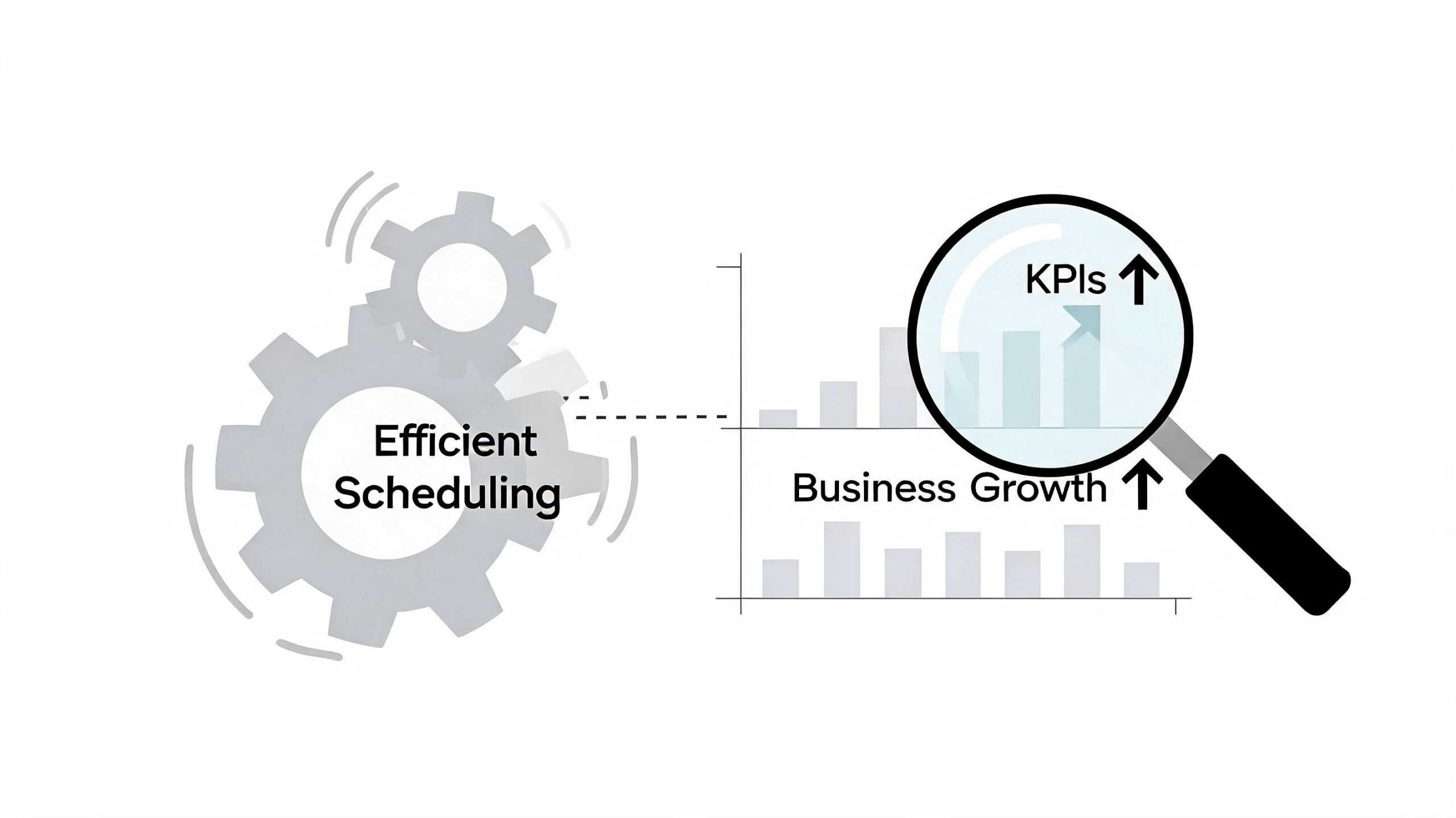
Interview scheduling sits near the top of the hiring funnel where small delays create outsized downstream effects. A missed call, a two-day wait for slot confirmation, or a reschedule handled slowly can reduce candidate intent before the interview even begins. In high-volume sectors such as EdTech and BFSI in India, where hiring demand can spike quickly and candidate response windows are short, scheduling speed affects whether shortlisted talent converts or disappears into a competitor pipeline.
The right way to assess scheduling is through operating metrics tied to financial outcomes.
The metrics leadership should watch
- Interview scheduling lead time. Measure the time from shortlist to confirmed interview. This is the cleanest indicator of coordination speed and one of the earliest points where process friction becomes visible.
- Interview show rate. Low attendance often signals weak reminders, poor channel mix, or slow rescheduling. Each no-show wastes interviewer capacity and increases cost per hire.
- Candidate conversion by stage. Track how many shortlisted candidates reach interview, complete the process, and accept offers. Drop-off during scheduling points to lost demand, not just poor administration.
- Recruiter hours spent per scheduled interview. This shows the hidden scheduling tax directly. If trained recruiters are spending high-value hours on calendar brokerage, the function is carrying avoidable labour cost.
- Interviewer utilisation and cancellation rate. Unused panels and late changes create productivity loss across business teams, not just talent acquisition.
- Candidate satisfaction with the scheduling experience. A weak experience shapes employer brand before any assessment of role fit. In consumer-facing sectors, that brand effect can spill into customer perception.
These KPIs matter because scheduling controls both throughput and quality of experience. One affects cost. The other affects conversion.
A useful operating principle is to treat interview scheduling like a demand-management system. Sales teams monitor lead response time because delay lowers conversion. Hiring teams should apply the same logic to candidate response, slot allocation, reminder timing, and rescheduling recovery. The difference is that hiring losses are often buried inside vacancy cost, agency spend, interviewer time, and employer brand erosion, so the economics look less visible than they are.
Why these KPIs matter at board level
Open roles in sales, service, operations, and regulated functions carry direct business exposure. Slow scheduling extends vacancy periods. That can reduce sales coverage, stretch service teams, and increase execution risk in functions where staffing gaps have compliance implications.
There is also a brand cost. Candidates often judge organisational quality through speed, clarity, and follow-through during the scheduling process. In Indian high-volume hiring markets, where applicants may respond more reliably to calls than emails, Voice AI can improve contact rates and recover intent outside recruiter working hours. That changes scheduling from a support task into a conversion engine.
Fast scheduling improves the odds that qualified candidates stay in process long enough to be assessed fairly.
The strategic implication is straightforward. Interview scheduling should sit on the same performance agenda as funnel conversion, productivity, and service levels. If leadership measures revenue leakage with precision, it should measure candidate leakage with the same discipline.
Building an Integrated Scheduling Ecosystem
Scheduling software is only as strong as the systems around it. If the tool cannot read candidate context, interviewer availability, and communication status in one connected flow, the organisation still carries manual work, only in a different interface.
The architecture behind reliable scheduling
Modern scheduling works through API layers connecting the ATS, calendars, and communication tools. That architecture retrieves candidate data, job requisitions, and pipeline stages to automate event creation and remove manual data entry, as explained in this guide to ATS and calendar API orchestration.
For a business leader, the technical detail matters because it determines operational reliability. A disconnected scheduler may still create booking links, but it won’t act as a system of record. Recruiters then re-enter data, update stages manually, and reconcile conflicts by hand.
A stronger ecosystem does three things well:
- Synchronises calendars in real time so availability reflects actual commitments.
- Pulls hiring context from the ATS so interview type, stage, and participants are correct.
- Triggers communication automatically so confirmations and reminders follow the booking event.
What to ask before buying a tool
Many teams buy the front-end experience and ignore the integration layer. That’s where disappointment starts. A smooth candidate booking page is useful, but the true value sits behind it.
Ask operational questions, not only feature questions:
- Does it write back to the ATS cleanly so the candidate record stays current?
- Can it support panel and round-robin logic without manual intervention?
- Does it work across Outlook and Google Calendar if your managers use both?
- Can communication tools inherit the scheduling event for reminders and follow-ups?
If the answer is weak on any of these, the product may automate the appearance of scheduling while preserving the labour of scheduling. That’s not transformation. It’s interface improvement.
The Voice AI Advantage in High-Volume Hiring
High-volume hiring exposes the limit of standard scheduling automation. A link works when candidates are responsive, digitally fluent, and easy to reach. It works far less well when the funnel includes late responders, regional language preferences, repeated no-shows, or high inbound query volume.
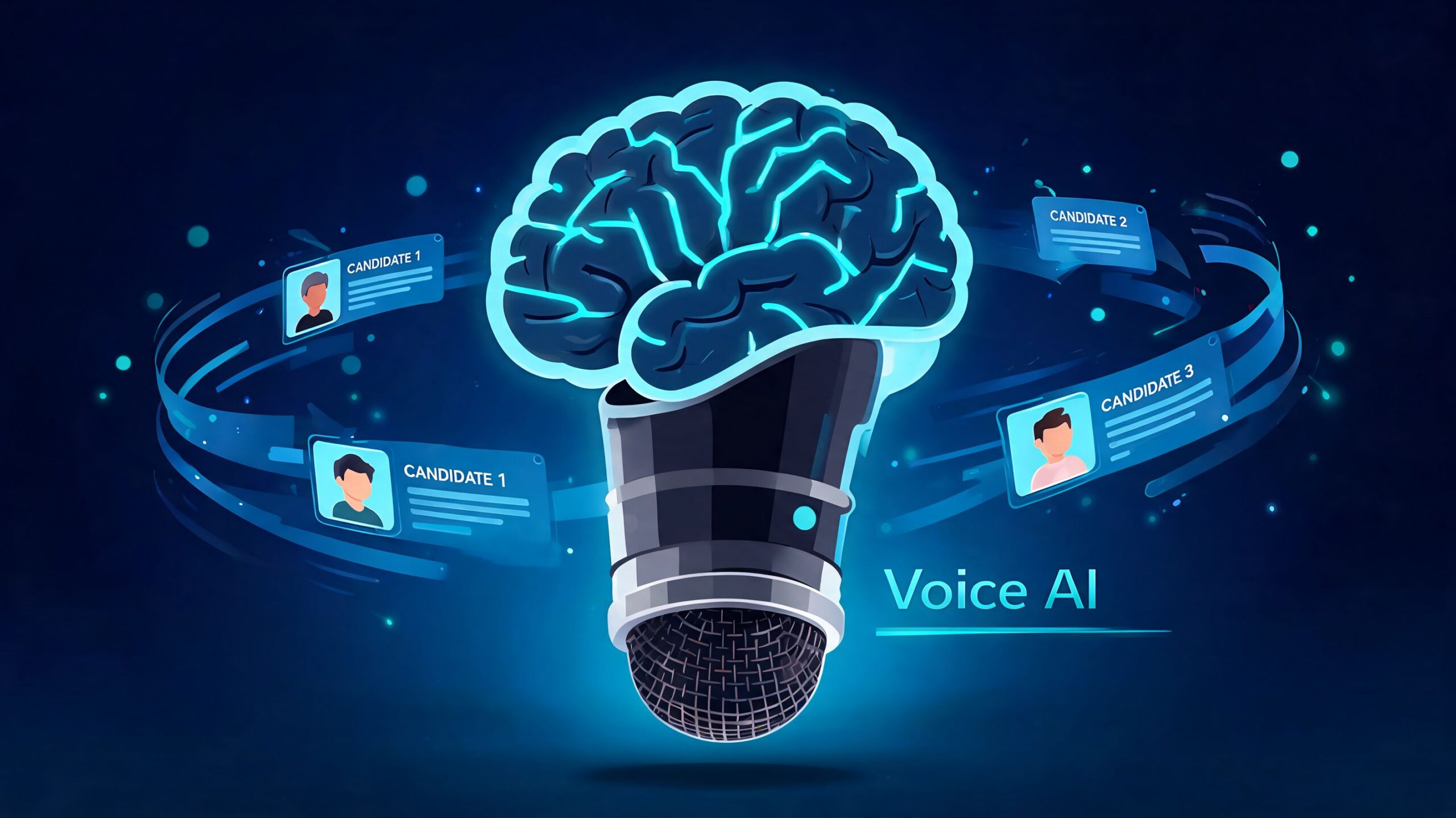
In India’s EdTech sector, no-show rates hit 20-25%. The same data set states that Voice AI agents achieve 91% connect rates and 97% qualification accuracy, reduce manual back-and-forth by 80%, and enable 24/7 scheduling in regional languages according to this analysis of interview scheduling and conversational automation. That changes the operating model.
Why links and emails stop working at scale
Traditional automation assumes the candidate will complete the next step independently. In practice, many won’t. Some need clarification on role, timing, or interview format. Others miss messages, respond outside working hours, or prefer conversation to forms.
Voice AI handles those edge cases in-flow. Instead of sending another email, the system can call, confirm interest, answer basic questions, qualify the candidate, and book the slot. That matters in sectors such as EdTech, BFSI, and field operations where response windows are short and candidate pools are broad.
One example in this category is AI voice agents for HR interviews and candidate selection, where the scheduling function is combined with candidate interaction rather than treated as a separate calendar step.
Where voice changes the economics
Voice AI moves interview scheduling from passive self-service to active conversion management. The gain is not only labour savings. It is better completion.
Three advantages stand out:
- Qualification before booking. The system can confirm fit before consuming interviewer time.
- Regional language interaction. This is useful in Indian hiring markets where English-only workflows reduce reach.
- Always-on response handling. Candidates can confirm or reschedule outside office hours without queueing for a recruiter.
Later in the process, this matters because attendance and readiness improve when candidates have spoken to a system that resolved uncertainty, rather than merely receiving a link.
A short demonstration helps clarify how conversational automation fits the workflow:
The strategic shift is subtle but important. Basic automation books time. Voice AI manages intent.
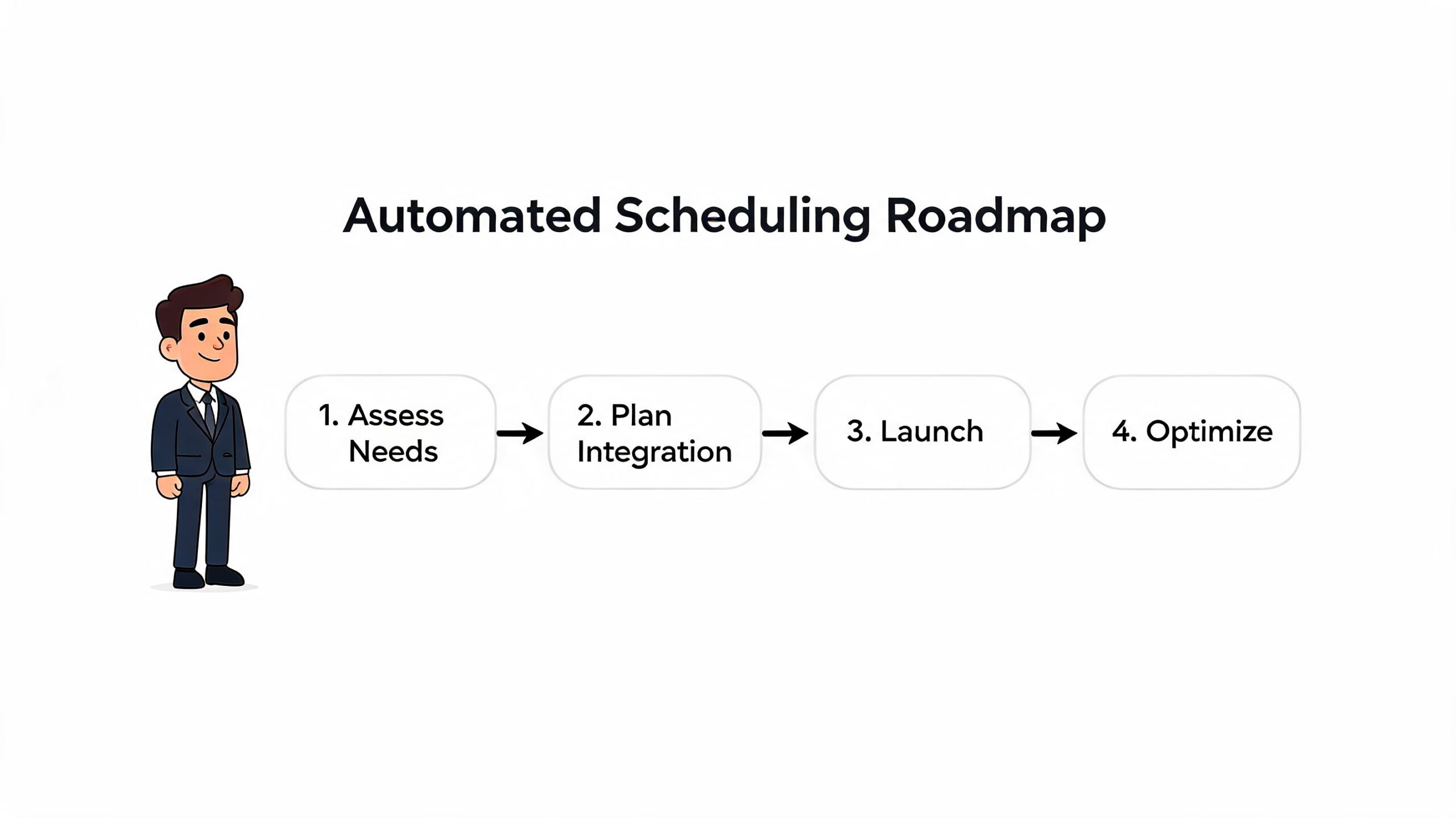
Your Implementation Roadmap for Automated Scheduling
Most implementations fail for governance reasons, not software reasons. Teams buy a scheduler quickly, then discover calendar conflicts, poor ATS hygiene, weak interviewer adoption, or edge cases in field-based roles.
Start with operational diagnosis
Audit the current process before selecting technology. Identify where delays occur, who owns each handoff, and which interview types create the most friction. The objective isn’t to map everything. It’s to find the highest-cost bottlenecks.
Then define what success means in business terms:
- Shorter scheduling cycle times
- Less recruiter admin
- Higher candidate attendance
- Faster movement from shortlist to decision
For companies in real estate and field services, vendor evaluation needs one extra lens. Multi-calendar synchronisation is a key requirement because on-site manager availability must be co-ordinated alongside recruitment workflows, as noted in this industry-specific scheduling review. Standard office-centric schedulers often miss that.
Roll out with governance not enthusiasm
A strong deployment usually follows a phased model. Start with one role family or one business unit. Prove the workflow. Then expand once the ATS mapping, calendar sync, reminder logic, and interviewer adoption are stable.
A practical executive checklist looks like this:
- Measure the current burden. Quantify admin time, reschedules, and stage delays.
- Check system fit. Confirm ATS, calendar, and communication integrations before procurement.
- Pilot in a high-friction queue. Choose a team where scheduling pain is visible.
- Set post-launch review points. Evaluate productivity, candidate response quality, and exception handling.
Leaders who want to explore how conversational scheduling assistants plug into booking workflows can review the DocsBot AI assistant approach to scheduling integrations. The useful takeaway isn’t the brand itself. It’s the model: scheduling works better when the booking layer and the interaction layer are designed together.
Buy for workflow fit, not feature abundance. A smaller tool with cleaner integration usually beats a larger tool that creates exceptions your team must manage manually.
If your organisation is rethinking interview scheduling as an efficiency and conversion problem, DialNexa Labs Private Limited is one option to evaluate. The company builds Voice AI agents for recruitment, qualification, support, and presales workflows, which makes it relevant for teams that need more than a calendar link and want conversational scheduling at scale.

Excellent insights on how interview scheduling impacts hiring velocity, recruiter productivity, and business growth far beyond simple administration. The emphasis on automation and Voice AI as conversion tools rather than cost-saving features makes this a highly valuable perspective for modern talent leaders.
The ‘every day a role stays open is a revenue leak’ framing is refreshingly blunt compared to most HR content. Curious whether your platform handles the back-and-forth when candidates reschedule at the last minute — that’s where our current process breaks.