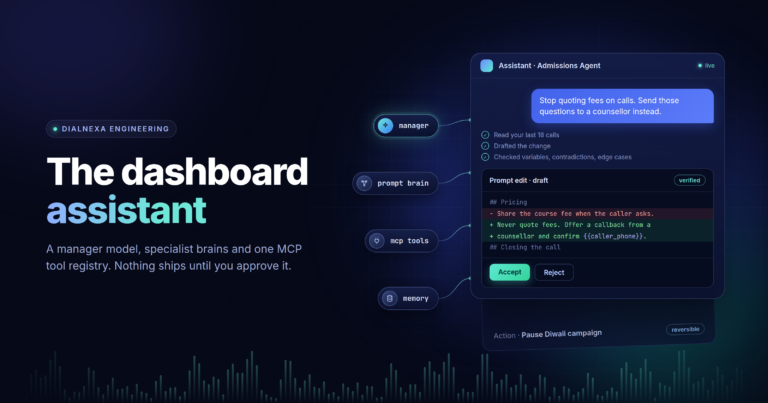
The Dashboard Assistant
One assistant that can edit your agents and run your workspace DialNexa customers build voice agents. Each one has a prompt, a voice, a transcriber,… Continue reading The Dashboard Assistant
Deep technical write-ups from the DialNexa engineering team: voice AI architecture, real-time latency tuning, telephony infrastructure, speech pipelines, and the tradeoffs behind shipping production voice agents at scale.
One assistant that can edit your agents and run your workspace DialNexa customers build voice agents. Each one has a prompt, a voice, a transcriber,… Continue reading The Dashboard Assistant
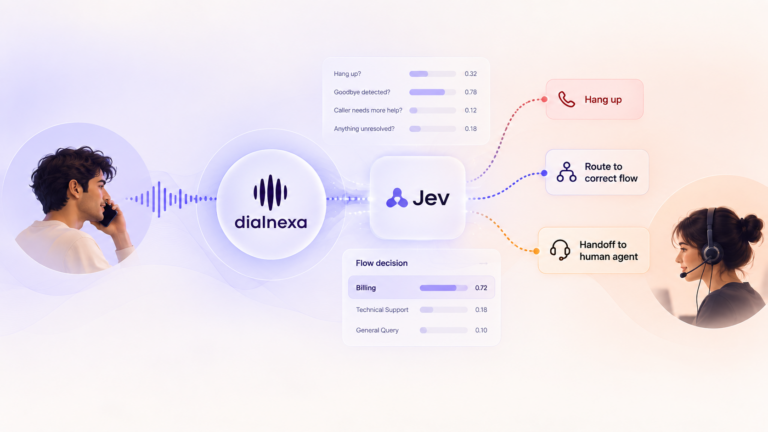
Every turn of a phone call, our voice agents make small decisions that never reach the caller’s ears: should we hang up now? and, for… Continue reading Jev on real calls: can a decision model run our voice agents’ hangup and routing calls?
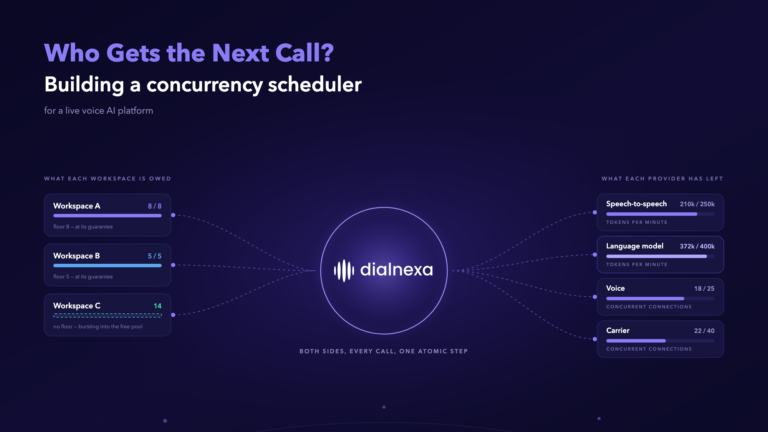
Two things were true about our call scheduler at the same time, and they sound like opposites. It dialled calls we had no capacity to… Continue reading Who gets the next call?
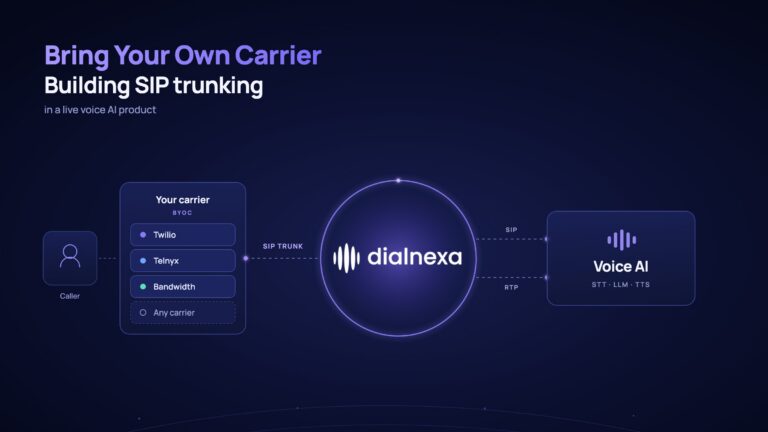
For about a year, our AI voice agents made and received phone calls the way most products do at that stage: we rented them. A… Continue reading Bring Your Own Carrier: Building SIP Trunking In a Live Voice AI Product
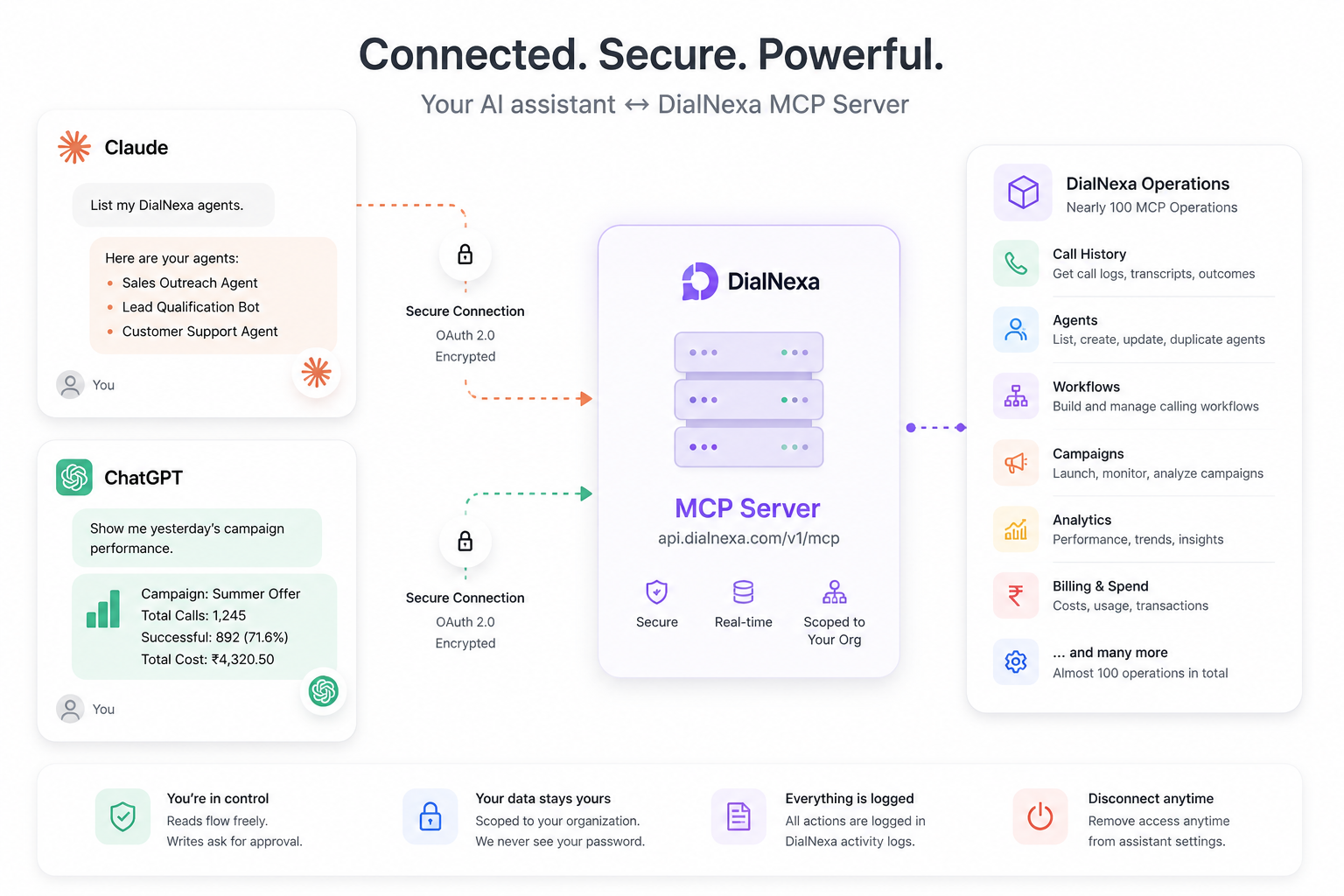
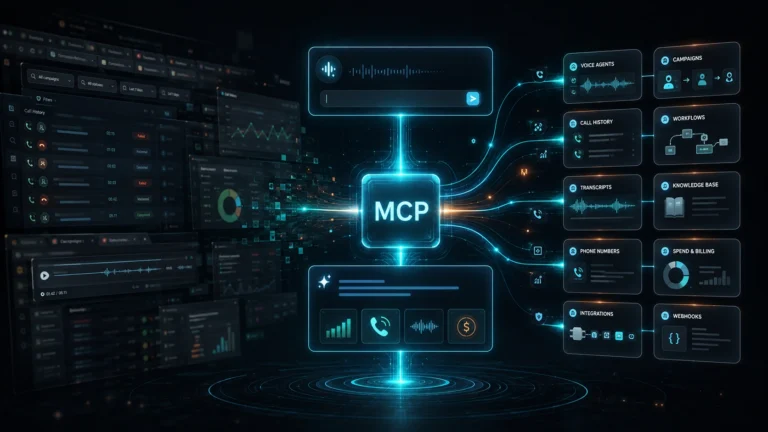
In Part 1 we made the case for asking instead of clicking: nearly a hundred Dialnexa operations that Claude or ChatGPT can now handle for… Continue reading How to Connect Dialnexa’s MCP Server to Claude, ChatGPT, or Your Own Code
It’s 9:40 on a Tuesday morning and you want to know one thing: how did yesterday’s campaign do? So you log in to the dashboard…. Continue reading MCP Turns Your Voice AI Dashboard Into a Conversation
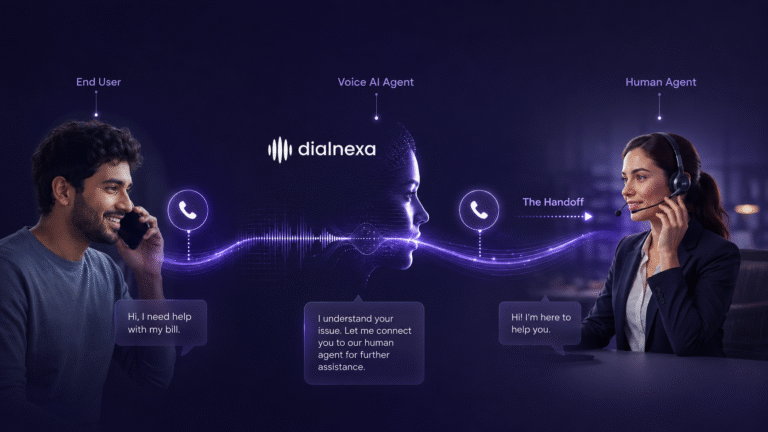
This post has two halves. The Experience is what our call transfer actually does, and why the obvious approach fails. The Engineering is the deep dive: the races, the… Continue reading What happens in the six seconds after your DialNexa AI agent says “let me get you a person”
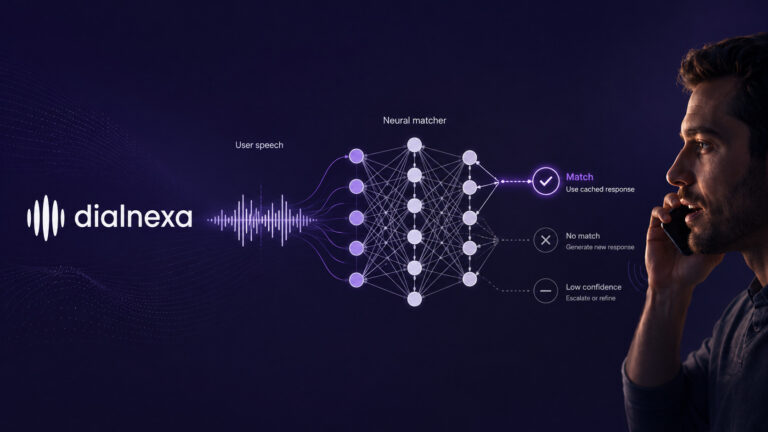
Three matchers in, we learned the real lessons the hard way: cosine similarity that couldn’t tell “yeah” from “nah”, a base model that ranked beautifully… Continue reading The 30-Millisecond Judge: Training a Small Model to Decide When Our Voice Agent Is Allowed to Cheat
Two independent gap detectors, a nightly digest, cost as a behavioural signal, and an honest audit of which feedback loops actually close and which terminate in a table nobody reads.
Detached runs, Redis session locks with database fallback, SSE replay buffers, repairing unpaired tool calls after a restart, protocol-safe compaction, and timezone-correct scheduled autonomy.