
Boost Your E Commerce Customer Service: A CXO’s 2026 Guide
Customer service has become one of the clearest revenue levers in e commerce. In 2025, 64% of shoppers expect a response within one hour, 90% rate an immediate response as essential, and 64% will switch brands after just one poor experience, according to the assigned source for this section. That shifts customer support out of the back office and into the boardroom.
For executive teams, the implication is straightforward. Service speed, resolution quality, and channel design now shape retention, repeat purchase behaviour, and brand preference as directly as merchandising or paid acquisition. Brands that still treat support as a cost line are often measuring the wrong thing. They watch ticket volume and payroll, while customers decide whether the next order goes elsewhere.
Table of Contents
- The Strategic Shift From Cost Centre to Revenue Engine
- Architecting Your Omnichannel Support System
- Defining Success With The Right Metrics And SLAs
- Actionable Playbooks For Critical Scenarios
- Scaling Excellence With Automation And Voice AI
- Building Your High-Performance Service Team
- Your 90-Day Implementation And Measurement Roadmap
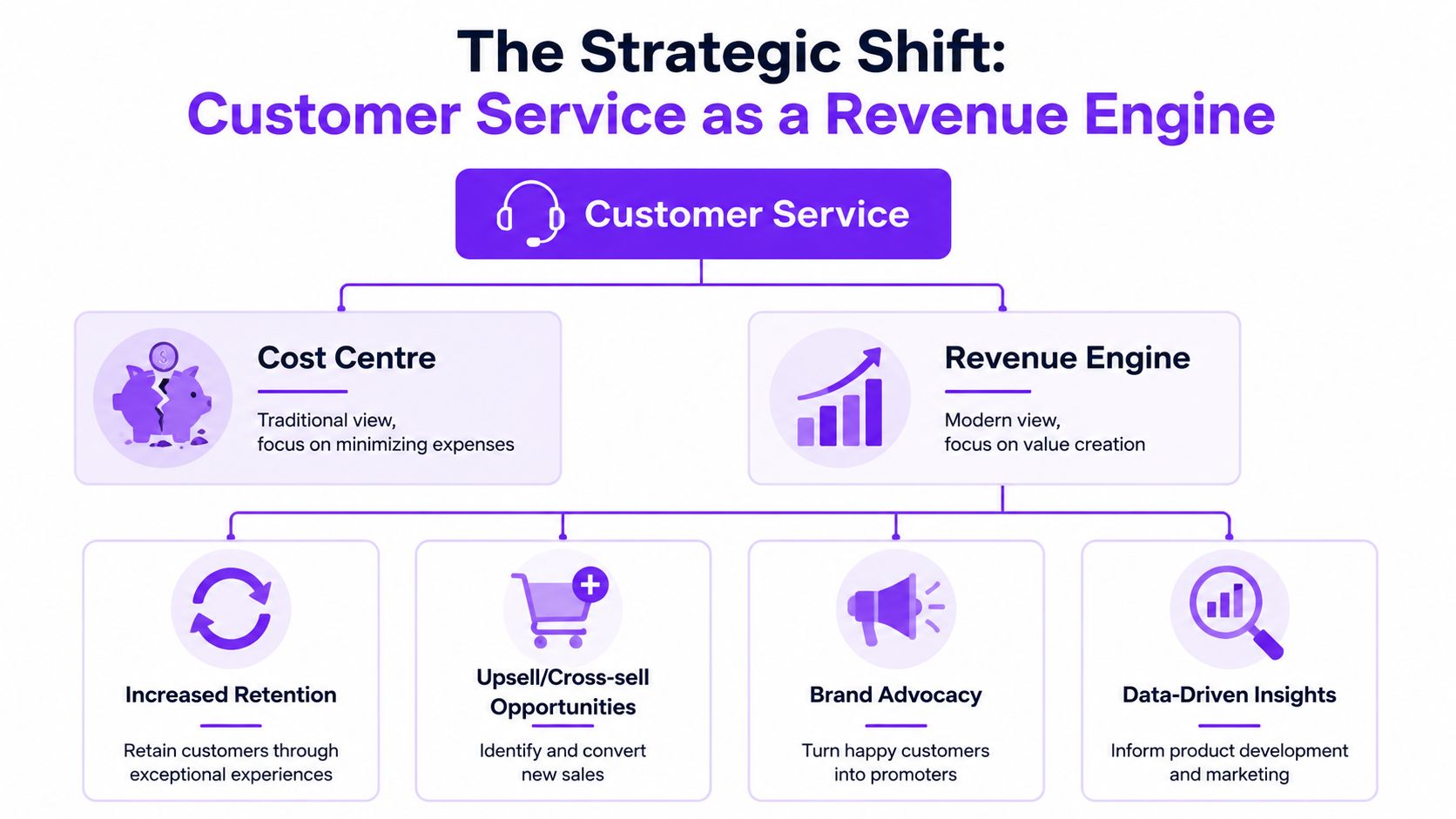
The Strategic Shift From Cost Centre to Revenue Engine
The old model treated support as a necessary expense. The modern model treats e commerce customer service as a retention engine. When response speed determines whether a customer stays, leaves, or pays more for confidence, the economics change.
The strongest board-level argument is simple. The assigned source for this section states that 64% of shoppers expect a response within one hour, 90% see an immediate response as essential, and 64% are willing to switch after one poor experience. Those are not operational trivia. They are indicators that service quality now sits directly on the revenue path.
Why finance should care
A support team influences more than complaint handling. It protects conversion after payment friction, reassures buyers during delivery uncertainty, and preserves trust during returns. When executives frame service only through cost per contact, they miss the larger effect on repeat revenue and lifetime value.
Three commercial effects matter most:
- Retention protection: A weak service interaction can push a customer to a competitor faster than a pricing change.
- Margin defence: Customers will often tolerate small product or logistics imperfections when the brand resolves issues quickly and clearly.
- Brand preference: In crowded categories, responsive support becomes part of the product, not a separate function.
Practical rule: If your service operation can lose a customer, it can also retain one. That makes it a growth function.
What the strategic operating model looks like
Revenue-oriented service teams design for speed, context, and consistency. They don't just ask how many agents are needed. They ask which interactions should be automated, which require empathy, and which moments have the highest retention risk.
For many executive teams, it helps to study operators building service as infrastructure rather than labour. For example, See IllumiChat's platform solutions for a view of how some organisations structure automation, routing, and support orchestration across channels. For a broader operating perspective on outsourced and hybrid support design, this contact centre BPO guide from DialNexa is also useful.
A cost-centre mindset asks, "How do we close tickets faster?" A revenue-engine mindset asks, "Which service capabilities keep customers buying?" That second question usually leads to better investment decisions.
Architecting Your Omnichannel Support System
Most omnichannel strategies fail for one reason. They add channels without assigning each one a job.
An effective e commerce customer service architecture separates interactions by complexity, urgency, and commercial value. That means using self-service for simple requests, live messaging for fast clarification, email for documented follow-through, and voice for high-friction or emotionally sensitive cases.
Start with self-service, not headcount
The most scalable support channel is the one that removes the need for a ticket. According to PartnerHero's e-commerce customer service benchmarks, deploying omnichannel self-service architectures with AI-driven knowledge bases reduces human support ticket volume by 45–55% and improves Customer Effort Score by 30%, while 60% of customers prefer self-service for simple tasks.
That changes the channel hierarchy. Self-service shouldn't sit at the edge of the model as a help-centre afterthought. It should sit at the centre.
A practical design usually includes:
- Order and delivery lookup: Customers want immediate answers on shipment progress and expected arrival.
- Returns initiation: Let buyers start a return, select a reason, and track status without agent involvement.
- Policy clarification: Size charts, cancellation windows, refund timelines, and warranty terms should be easy to find and written in plain language.
Assign each live channel a commercial role
Once self-service handles routine intent, live channels can be reserved for higher-value work.
| Channel | Best use | Leadership implication |
|---|---|---|
| Live chat | Pre-sales questions, quick clarifications, in-session rescue | Supports conversion and prevents abandonment |
| Documentation-heavy issues, refunds, case trails | Keeps an auditable record and reduces back-and-forth | |
| Voice | Complex disputes, urgent delivery failures, emotional cases | Preserves trust where nuance matters |
| Social and messaging | Public issue triage, lightweight updates | Protects brand perception and speeds first acknowledgment |
This model prevents a common executive mistake. Many brands over-invest in staffing every channel equally. Stronger teams design a channel stack, where each contact path has a clear operational purpose.
Customers don't want more channels. They want the right answer in the lowest-effort channel for that issue.
Build one system, not a collection of inboxes
The operational requirement is a unified layer that pulls customer history, order state, and prior interactions into one workspace. Without that, omnichannel becomes multi-channel confusion. Customers repeat themselves, agents context-switch, and leaders pay twice for the same problem.
A well-architected support system should let an agent see:
- The order and fulfilment status
- Previous contacts across email, chat, and voice
- Return or refund state
- Notes from automation or prior agents
That single view matters more than adding a new contact option. Boards often approve channel expansion because it's visible. They should prioritise channel integration because that's where efficiency and consistency stem from.
Defining Success With The Right Metrics And SLAs
Many service dashboards look busy and still fail to tell leadership anything useful. Executives don't need fifty metrics. They need a short set that links operational behaviour to customer loyalty, cost-to-serve, and preventable demand.
One of the most valuable ideas in e commerce customer service is often missing from the SLA conversation. According to Influx's guidance on e-commerce customer service, a key strategy is preventing repeat contacts by mining drivers such as WISMO, return confusion, and product-page ambiguity. That matters even more in environments with after-hours pressure, including India, where 58% of consumers expect 24/7 shopping and support.
The KPI table leaders should actually review
| Metric (KPI) | Definition | Industry Benchmark (Good) | Best-in-Class (Great) | Strategic Implication for CXOs |
|---|---|---|---|---|
| First Response Time (FRT) | Time taken to send the first meaningful reply | Good teams respond promptly within the expected service window | Great teams design staffing and automation so response feels near-immediate | A leading indicator of abandonment risk and perceived brand reliability |
| Average Handle Time (AHT) | Time needed to resolve an interaction | Good performance balances efficiency with clarity | Great performance removes manual work without rushing customers | Reveals process friction, tooling gaps, and training quality |
| Customer Satisfaction (CSAT) | Post-interaction satisfaction score | Good scores show consistent issue handling | Great scores indicate service quality customers actively notice | Useful for spotting broken journeys and weak teams |
| Customer Effort Score (CES) | How easy it was for the customer to get help | Good performance means low friction | Great performance means customers solve simple issues with minimal effort | Often a stronger indicator of repeat purchase than speed alone |
| First Contact Resolution (FCR) | Share of issues solved in one interaction | Good teams solve straightforward issues without handoffs | Great teams solve even complex cases with strong context and authority | Drives cost reduction and customer confidence simultaneously |
| Repeat Contact Rate | Share of customers contacting support again for the same issue | Good teams monitor it by contact reason | Great teams use it to eliminate root causes upstream | The clearest signal that support is feeding operational improvement |
The benchmark columns are intentionally qualitative except where verified figures were assigned elsewhere. For boards, that matters. Precision without valid comparators creates false confidence.
Why repeat contact rate deserves board attention
A team can hit response SLAs and still create unnecessary volume. If customers return because the first answer was incomplete, the policy was confusing, or the product page set the wrong expectation, the organisation is paying repeatedly for the same failure.
Leaders should review repeat contacts by issue type:
- WISMO contacts: usually point to weak shipment visibility
- Return contacts: often expose policy language or workflow friction
- Product-fit questions: may signal merchandising ambiguity
- Refund status follow-ups: usually indicate poor proactive communication
For directors formalising service governance, this contact centre KPI guide is a practical companion to build reporting discipline across teams.
Track repeat contact rate like a quality metric, not just a workload metric. It tells you where the business is generating avoidable demand.
Actionable Playbooks For Critical Scenarios
Service quality often breaks down in the handoff between policy and execution. The policy may be sound. The agent workflow usually isn't.
The fastest way to stabilise e commerce customer service is to standardise a handful of high-impact scenarios. One integration matters especially here. According to Loqate's analysis of e-commerce customer pain points, integrating backend order management systems with communication channels via API reduces First Response Time by 40 to 60% for the 60% of tickets that are WISMO-related, and can increase CSAT from 3.2 to 4.1.
Playbook one for WISMO and shipment anxiety
When a customer asks where the order is, the ideal workflow is short.
- Agent or bot pulls order ID, shipping status, and return eligibility from the OMS in the same workspace.
- The customer receives a status answer immediately, without a second queue or manual lookup.
- If the parcel is delayed, the workflow offers the next action clearly, such as revised ETA, replacement path, or escalation.
Suggested language:
"I've checked your order and can see the latest carrier update. Here's the current status, and I'll also tell you what happens next if it doesn't move by the promised date."
That script works because it answers both questions customers are really asking. Where is it, and am I going to be protected if something goes wrong?
Playbook two for damaged item complaints
Damaged-item cases require speed and discretion. Delay makes the customer feel accused. Over-complication makes the brand feel unsafe.
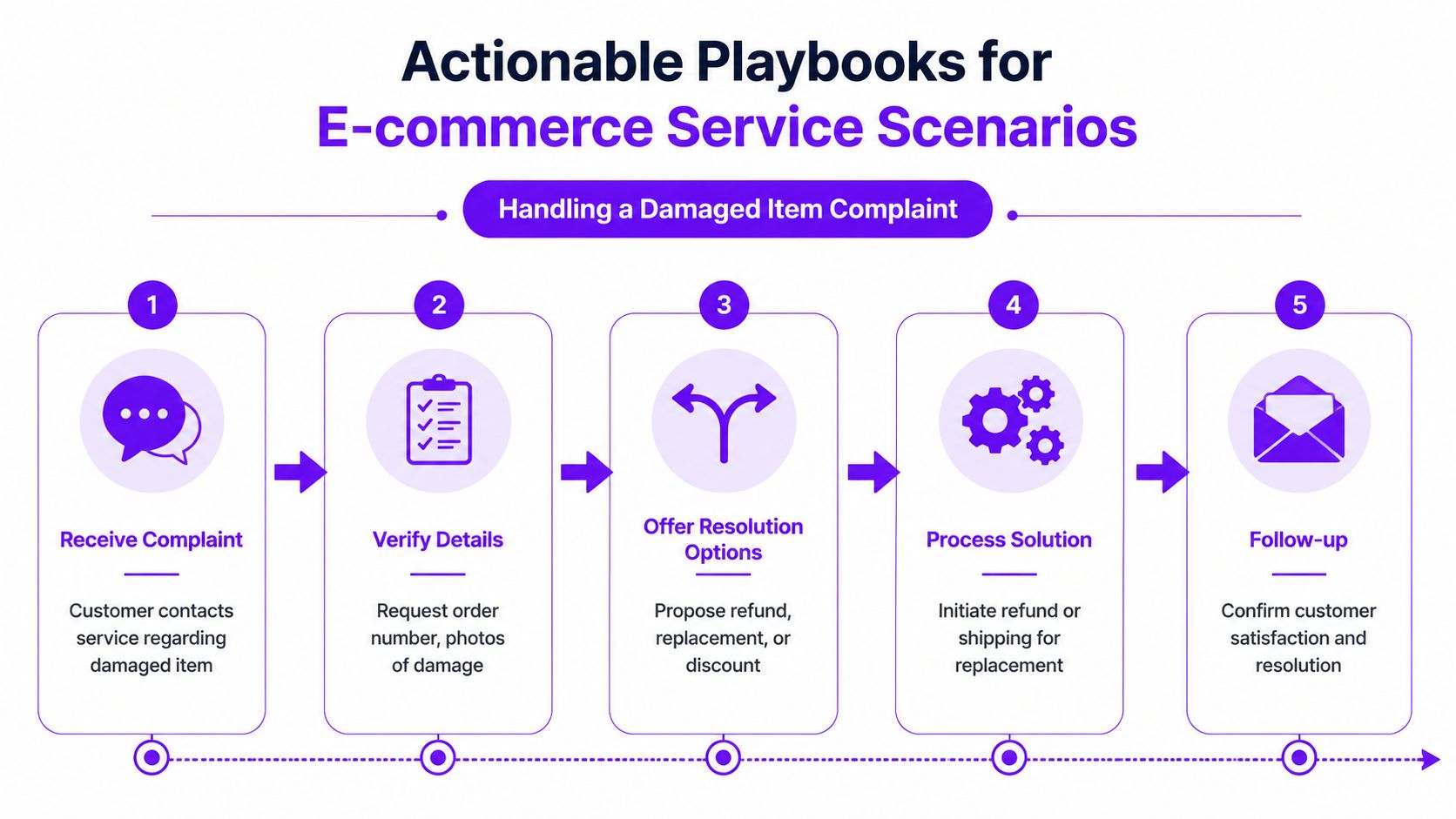
A practical workflow includes:
- Verification first: Request order number and a photo only if needed to determine the right remedy.
- Choice of resolution: Offer replacement, refund, or store credit according to policy and item type.
- Closed-loop follow-up: Confirm when the remedy has been processed and whether any further action is required.
Suggested language:
"I'm sorry the item arrived in that condition. I can help with a replacement or refund, and I'll keep this simple."
Playbook three for returns, refunds, and pre-sales doubt
Returns and refunds are process-heavy, which is exactly why they need discipline. Agents should never improvise policy wording. They should use approved templates, clear eligibility criteria, and visible status checkpoints.
Pre-sales questions are different. They are not service overhead. They are conversion moments. If a customer asks about sizing, compatibility, dispatch timing, or return flexibility, the response should combine product clarity with reassurance.
A good pre-sales answer does three things:
- Clarifies fit or policy
- Removes uncertainty about fulfilment
- Makes the next step easy
Teams that document these playbooks well create consistency without sounding robotic. The point isn't to script every sentence. It's to script the decision logic.
Scaling Excellence With Automation And Voice AI
AI has shifted from a queue-management tool to a revenue lever in e commerce customer service. The reason is simple. Faster resolution protects conversion, repeat purchase, and trust at the moments when customers are most likely to abandon.
The operating problem is not volume alone. It is volatile volume. Campaigns, launches, holiday peaks, and carrier disruptions create sharp swings in contact demand. Hiring to the peak inflates cost structure. Staffing to the mean leaves response times exposed during the periods that matter most for revenue retention.
The assigned benchmark for this section is clear: AI-powered chatbots now handle 30–40% of all initial e-commerce inquiries, and automation has cut average administrative response times from 8 hours to 3.5 hours, helping companies meet the 90% consumer expectation for immediacy and achieve 10–15% higher revenue growth.
Where automation creates the most value
The highest ROI comes from redesigning work, not from removing headcount.
Automation performs best where inputs are structured, policy paths are defined, and speed has direct commercial value. In practice, that usually means four layers of work:
- Intent capture and routing: Classify contacts by issue type and urgency before they enter the queue.
- Context assembly: Retrieve order status, payment history, prior conversations, and return eligibility before agent involvement.
- Routine resolution: Complete low-judgement tasks such as shipment updates, refund-status checks, or password support.
- Out-of-hours coverage: Keep service available when live teams are offline, so demand does not accumulate into the next shift.
Each of these use cases protects margin in a different way. Routing reduces handling time. Context assembly cuts agent effort and repeat explanation. Routine resolution lowers avoidable contact volume. After-hours coverage prevents overnight backlog from degrading service levels the next morning.
Voice deserves separate attention because it concentrates high-stakes demand. Customers rarely choose the phone channel for convenience. They call when the issue is urgent, confusing, or emotionally charged. A brand that automates chat but leaves voice fully manual creates an expensive imbalance. The hardest contacts enter the least scalable channel.
Why voice AI matters in a board-level service strategy
Voice AI should be evaluated as service infrastructure, not as a novelty layer. Its value comes from compressing time to resolution while preserving the human channel for exceptions, recovery cases, and revenue-sensitive conversations.
A well-designed voice AI flow does four jobs:
- Identifies the caller and intent quickly
- Pulls live data from the OMS, CRM, or ticketing stack
- Completes straightforward tasks end to end
- Transfers complex cases to a human with full context intact
The handoff determines whether the system creates value or friction. If a customer has to repeat their order number, problem, and prior actions after transfer, the automation has failed operationally even if containment metrics look strong. Good design passes the case state forward, including identity, intent, verification status, and the action already attempted.
That is why leading teams assess voice AI with the same discipline they apply to checkout or returns. The question is not whether the bot answered the call. The question is whether it shortened resolution time, reduced avoidable transfers, and protected customer lifetime value.
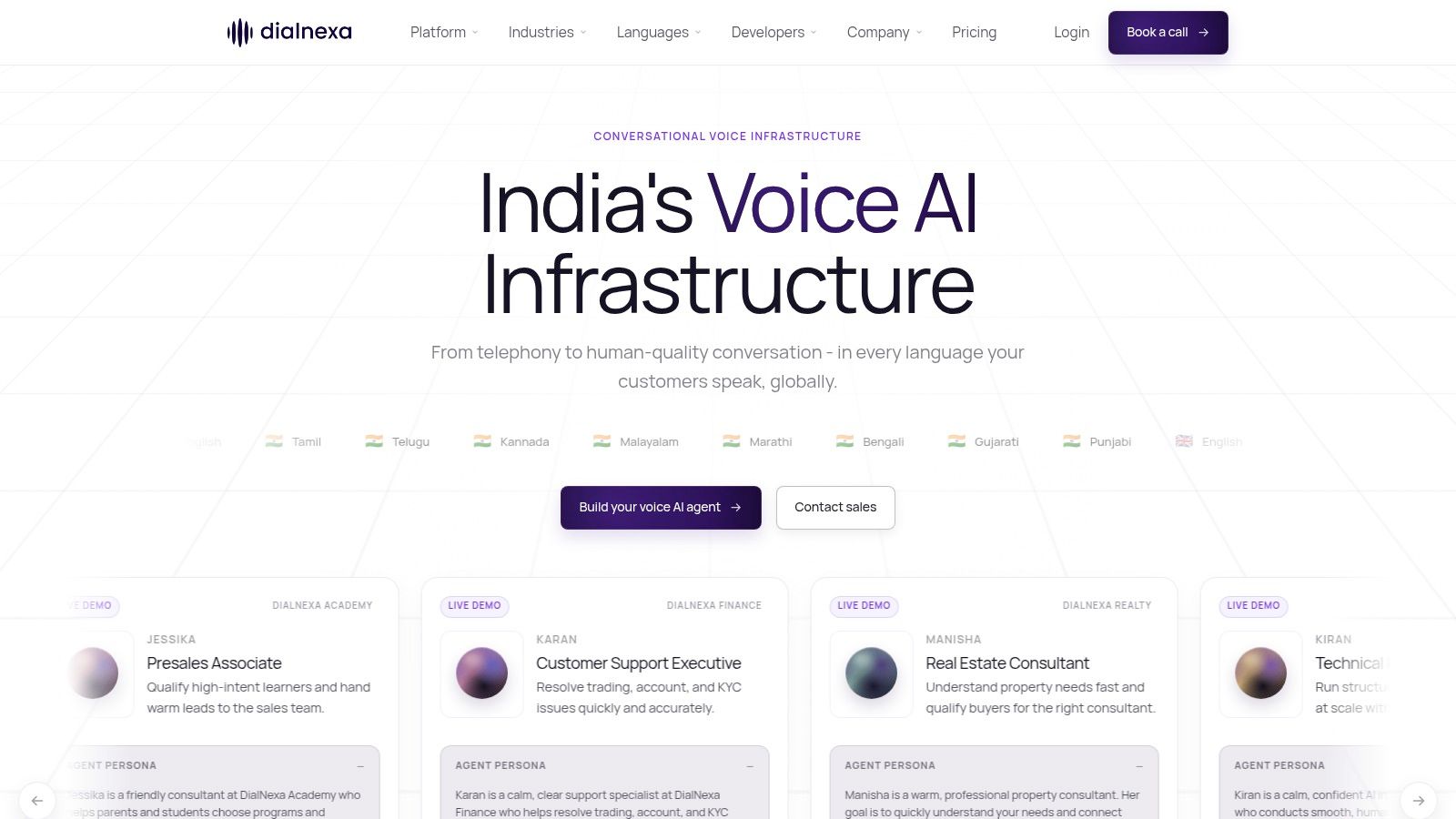
For teams assessing the workflow design behind these systems, this guide to AI agents for customer service examines the operating model in more detail. One platform in this category is DialNexa Labs Private Limited, which provides Voice AI agents for support and related workflows with integration into business systems.
A short product walkthrough helps make the operating model more concrete:
Automation should absorb routine demand, surface context, and escalate with precision. If it only deflects contacts, it shifts cost rather than improving service.
The executive takeaway
The board-level decision is not whether AI can answer basic tickets. It can. The strategic decision is where automation should sit across people, process, and technology to protect service quality during demand shocks and free skilled agents for moments that shape retention.
That is how automation turns customer service from an operating expense into a revenue engine.
Building Your High-Performance Service Team
Technology doesn't remove the need for strong people. It changes where people add value.
In an AI-augmented service operation, the strongest agents are no longer the ones who know where to click. They are the ones who can interpret ambiguity, calm frustration, and make sound judgement when policy collides with customer context.
The skills profile has changed
A high-performing e commerce customer service team needs a different hiring profile than a traditional queue-based support desk.
Look for people who can do the following:
- Handle emotional nuance: Delivery failures, damaged items, and refund disputes often hinge on tone as much as policy.
- Think diagnostically: Agents need to identify whether the issue is operational, technical, or expectation-driven.
- Use systems fluently: Modern teams work across CRM, OMS, helpdesk, and AI-assist tools in one flow.
- Protect the brand voice: The customer should feel the same clarity and tone across chat, email, and voice.
This is why many service leaders now separate routine execution from exception handling. Automation manages the former. Human agents own the latter.
Training should mirror real contact patterns
Most training still overemphasises product knowledge and underinvests in scenario handling. That leaves agents prepared for quizzes but unprepared for customers.
A stronger curriculum usually includes:
- Decision-tree training for refunds, replacements, late delivery, and fraud-related checks
- Tone practice for apology, reassurance, and expectation setting
- Tool fluency drills using live workflows and AI-assisted prompts
- Escalation judgement so agents know when to resolve, when to seek approval, and when to slow down
The human role in modern support is narrower than before, but far more valuable. Agents now handle the interactions most likely to affect retention.
Team design for leadership stability
Executives should also rethink team structure. A flat pool of generalists is flexible, but it can also hide accountability. Many brands benefit from assigning ownership by issue family, such as logistics, returns, and customer retention risks.
That creates three advantages. Quality improves because specialists see patterns faster. Coaching gets more precise. Product, fulfilment, and merchandising teams receive clearer feedback from support.
The board-level priority isn't to hire more agents. It's to build a team that can use automation well, resolve exceptions confidently, and convert customer friction into trust.
Your 90-Day Implementation And Measurement Roadmap
Transformation doesn't need a twelve-month committee cycle. Most brands can make material progress in one quarter if they sequence the work correctly.
Days 1 to 30
Audit the current operation. Map contact reasons, channel volumes, response delays, and escalation points. Identify where customers repeat themselves, where agents leave their main workspace to find answers, and which issues create avoidable repeat contact.
Set a small KPI set. FRT, FCR, CSAT, CES, and repeat contact rate are enough to establish control if definitions are consistent.
Days 31 to 60
Deploy the core workflow changes. Connect the OMS to support channels, formalise playbooks for WISMO, returns, damaged items, and pre-sales questions, and launch or improve self-service for routine requests.
Train supervisors and agents on the new operating model. Focus on exception handling, not only tool usage.
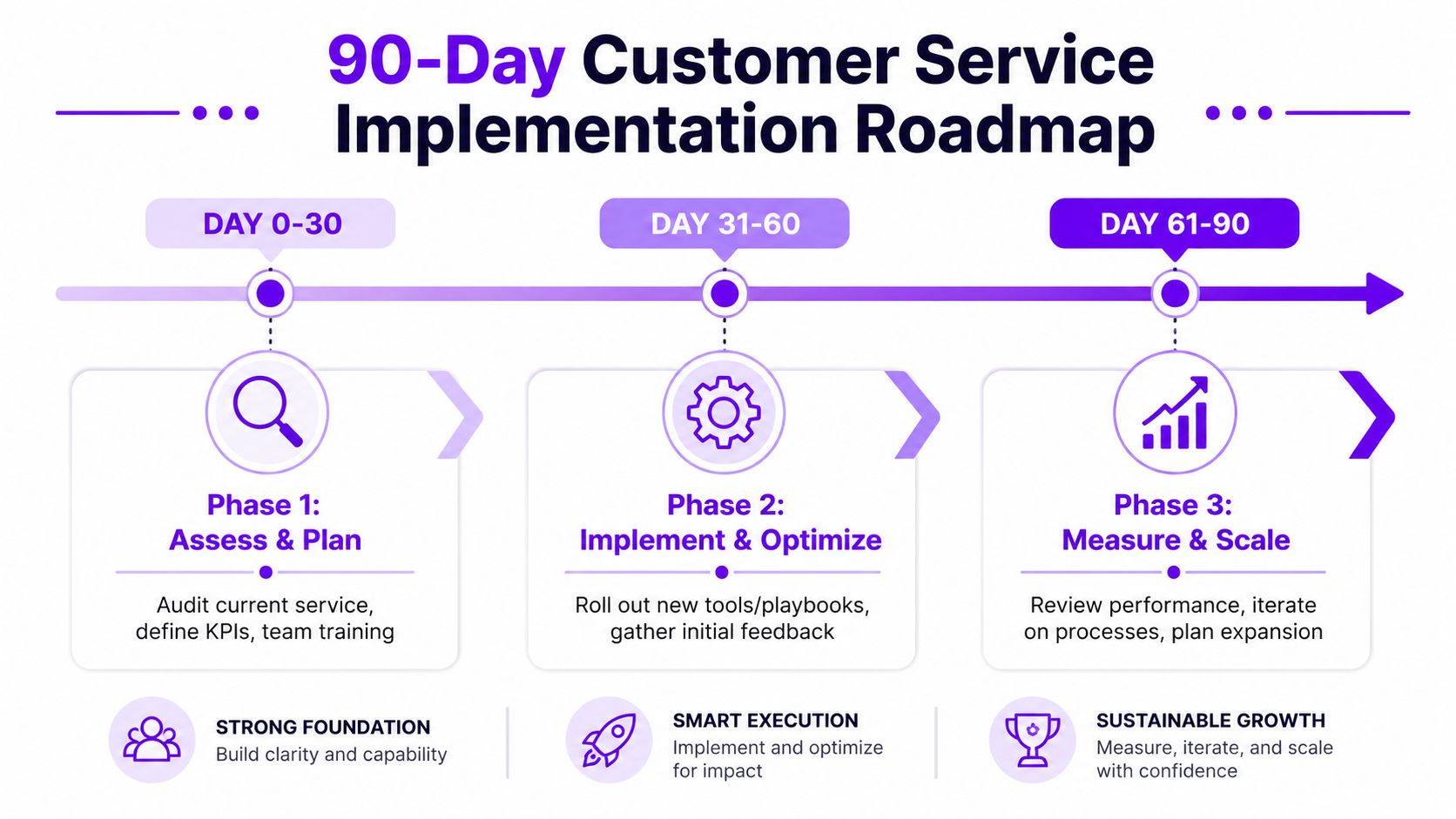
Days 61 to 90
Review results by issue type, not only by channel. If WISMO volume remains high, improve delivery visibility. If returns generate repeats, simplify instructions and status communication. If voice queues carry simple requests, shift more of that load into automation and guided self-service.
At this stage, the board should ask one question. Which contacts should never have existed in the first place? The answer usually points to the next wave of ROI.
DialNexa Labs Private Limited helps organisations deploy human-like Voice AI for support, qualification, and presales workflows at scale. If you're redesigning e commerce customer service around faster response, better routing, and more efficient voice operations, DialNexa Labs Private Limited is one option to evaluate alongside your broader CX stack.

Leave a Reply