

Get Prospects to Pick Up the Call: A CXO’s Playbook
In India, outbound calling fails long before the pitch fails. A 2023 TRAI report says average mobile call pick-up rates sit at 65-70% for known numbers, but fall to under 40% for unknown or outbound marketing calls, with urban areas seeing 25% lower pick-ups because of spam filters and DND compliance, and the DND registry crossing 300 million registrations as of 2024 (TRAI data cited here). For a CXO, that’s not a sales execution issue. It’s a board-level systems problem.
The organisations that win don’t ask reps to “make more calls”. They design an outbound engine that improves answer rates, controls compliance, and routes human effort only to high-intent conversations. When prospects pick up the call more often, revenue forecasting improves, customer acquisition becomes less volatile, and outbound starts behaving like infrastructure rather than a gamble.
Table of Contents
- The High Cost of the Unanswered Call
- Fortify Your Foundation Data and Caller ID Strategy
- Engineer Your Outreach with Strategic Cadence and Timing
- Transform Conversations with High-Impact Scripting
- Achieve Scale and Consistency with Voice AI
- Measure What Matters A CXO Dashboard for Outbound Success
- From Dialing to Dominating Your Market
The High Cost of the Unanswered Call
India’s outbound market faces a trust deficit before a single conversation begins. Earlier in this article, we cited evidence that known numbers are answered far more often than unknown or marketing-tagged calls. That gap has direct financial consequences. When prospects do not answer, acquisition costs rise, lead response times stretch, and pipeline forecasts become less reliable.
For a board or revenue leader, low pickup rates are not a narrow agent productivity issue. They are a signal that the outbound system is failing at market access. If first contact is filtered out by spam suspicion, poor caller recognition, or channel fatigue, script quality and rep capability matter later than many teams assume.
The cost structure deteriorates quickly. Each unanswered call consumes paid agent time, dialer capacity, telecom spend, and the value of lead freshness. It also reduces the yield of every rupee invested upstream in paid media, partnerships, field events, or SDR headcount.
Why the board should care
Three executive implications stand out:
- Revenue leakage: Prospects with genuine intent never reach a live qualification or sales conversation.
- Lower capital efficiency: Leaders often respond to weak connect rates by adding more reps, which raises fixed cost without fixing access to the buyer.
- Brand decay: Repeated outreach from numbers that look suspicious conditions the market to ignore future calls from your company.
A better board-level question is this:
Is low pickup a coaching problem, or evidence that the outbound model lacks trust, recognisability, and operational precision?
That question should shape technology decisions. Leaders reviewing operating models for distributed outreach often assess whether modern call centre software for small business supports routing discipline, number reputation, and caller visibility at scale. Caller identity has become a commercial variable, not just a telecom setting. Teams that ignore how prospects perceive unknown numbers, including the rising friction around no caller ID calls and trust in outbound outreach, usually end up treating a system design failure as a people problem.
The strategic implication is straightforward. High-performance outbound operations are built by engineering answerability first, then improving cadence, conversation quality, and automation. In the Indian market, where spam perception and DND behaviour shape call outcomes, that sequence creates a measurable advantage. Voice AI becomes valuable in that model because it scales disciplined execution once the underlying system is credible enough to earn the pickup.
Fortify Your Foundation Data and Caller ID Strategy
Before you optimise scripts or automate anything, fix the two inputs that determine whether the phone rings with credibility: data quality and caller identity.
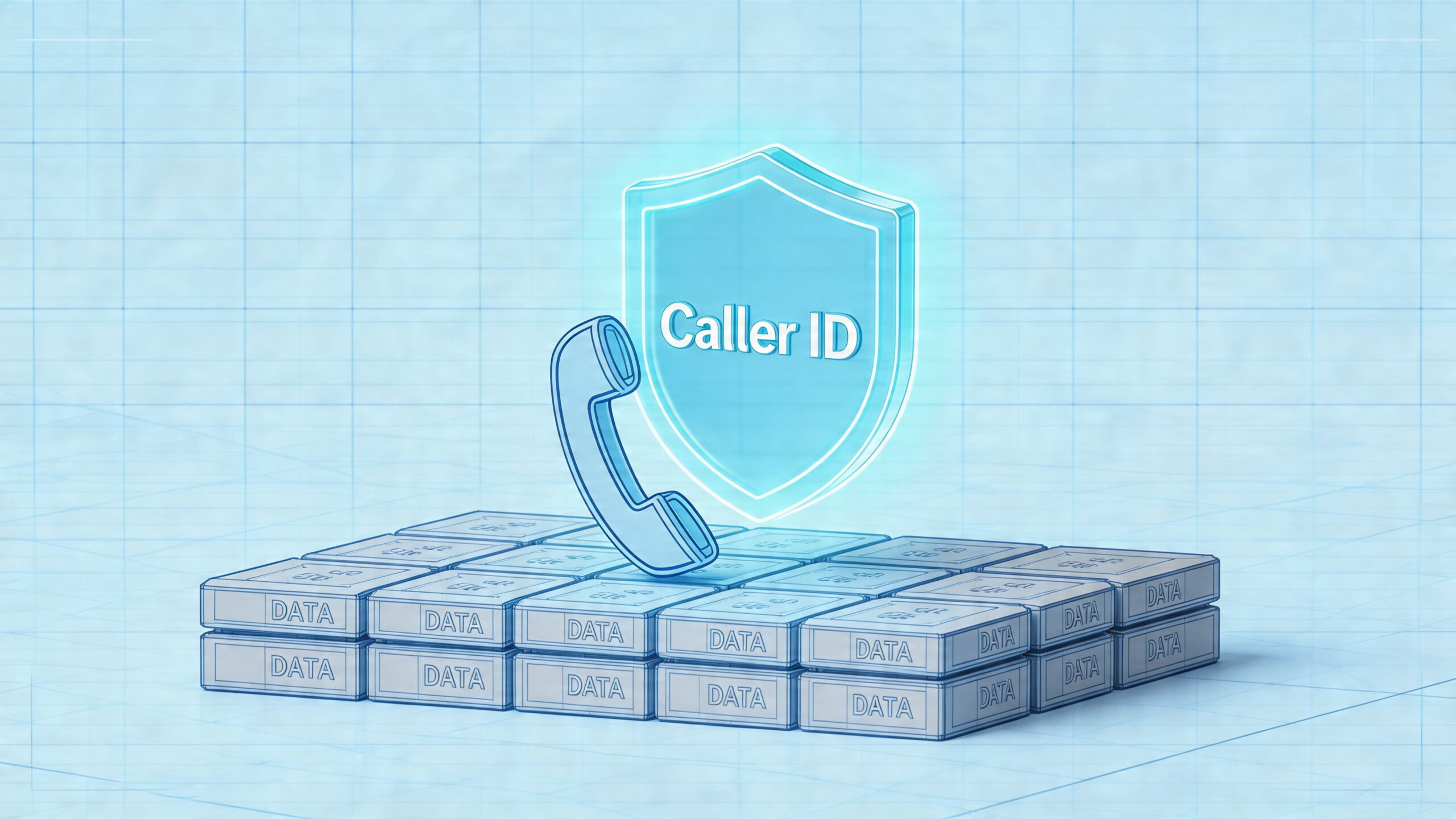
According to JustCall’s India call connect analysis, local presence dialing using Indian region codes can boost pickup by 4-5x, 72% of unanswered calls stem from spam perception, and 17% of call failures are due to bad data. Those three numbers explain why many outbound programmes underperform even when the sales team is capable.
Start with list integrity
Bad data does more damage than missed efficiency. It corrupts management judgement. If call failures come from invalid, stale, duplicated, or poorly segmented records, leaders may wrongly conclude that the market is weak, the message is wrong, or the team lacks discipline.
A useful executive test is simple. Ask operations to classify non-connects into at least three buckets:
| Failure source | What it signals | Executive implication |
|---|---|---|
| Invalid or outdated records | Weak list governance | Marketing and sales ops need tighter ownership |
| Unknown or suspicious caller ID | Trust deficit | Telecom strategy needs redesign |
| No answer from a valid prospect | Cadence or relevance issue | Sequencing and scripting need intervention |
If your data layer is weak, the first fix isn’t more effort. It’s process. Teams that need a practical framework to clean up your data should treat cleansing as a revenue initiative, not an admin exercise. Remove duplicates, verify fields, standardise formats, and suppress records with incomplete consent or inconsistent ownership.
Rebuild trust through caller identity
Most executives underestimate how quickly caller ID reputation shapes answer behaviour. Prospects don’t experience your outreach as a campaign. They experience a number on a screen. If that number looks unfamiliar, irrelevant, or suspicious, the interaction ends before your opener starts.
Local presence dialing solves a trust problem, not just a technical one. A Mumbai prospect seeing a Mumbai code has a clearer reason to assume relevance than if the same call appears from an unfamiliar region. This is why the 4-5x uplift matters so much in strategic terms. It changes your top-of-funnel accessibility.
Organisations that want buyers to pick up the call need to treat caller ID as brand infrastructure.
There’s also a governance angle. Caller identity performance should sit with leadership, not be left solely to telephony admins. Number pools, rotation rules, spam flags, and reputation monitoring deserve the same scrutiny as email domain health.
For teams dealing with trust issues around hidden or suspicious numbers, DialNexa’s own discussion of no caller ID calls is useful context. The larger lesson is broader than one platform. If your caller identity creates doubt, your outbound engine starts every conversation at a disadvantage.
A practical foundation checklist
- Audit source quality: Separate verified first-party records from purchased or ageing lists.
- Map region to number strategy: Match local codes to prospect geography where operationally appropriate.
- Monitor answer patterns: Compare connect outcomes by number pool, region, and campaign type.
- Escalate identity risk: Treat spam perception as a commercial issue, not just a telecom issue.
Engineer Your Outreach with Strategic Cadence and Timing
The gap between average outbound and high-performing outbound is rarely script quality alone. It is sequence design. Teams that contact prospects across channels in a defined order, instead of placing isolated calls, improve the probability that a buyer recognises the company before deciding whether to answer.
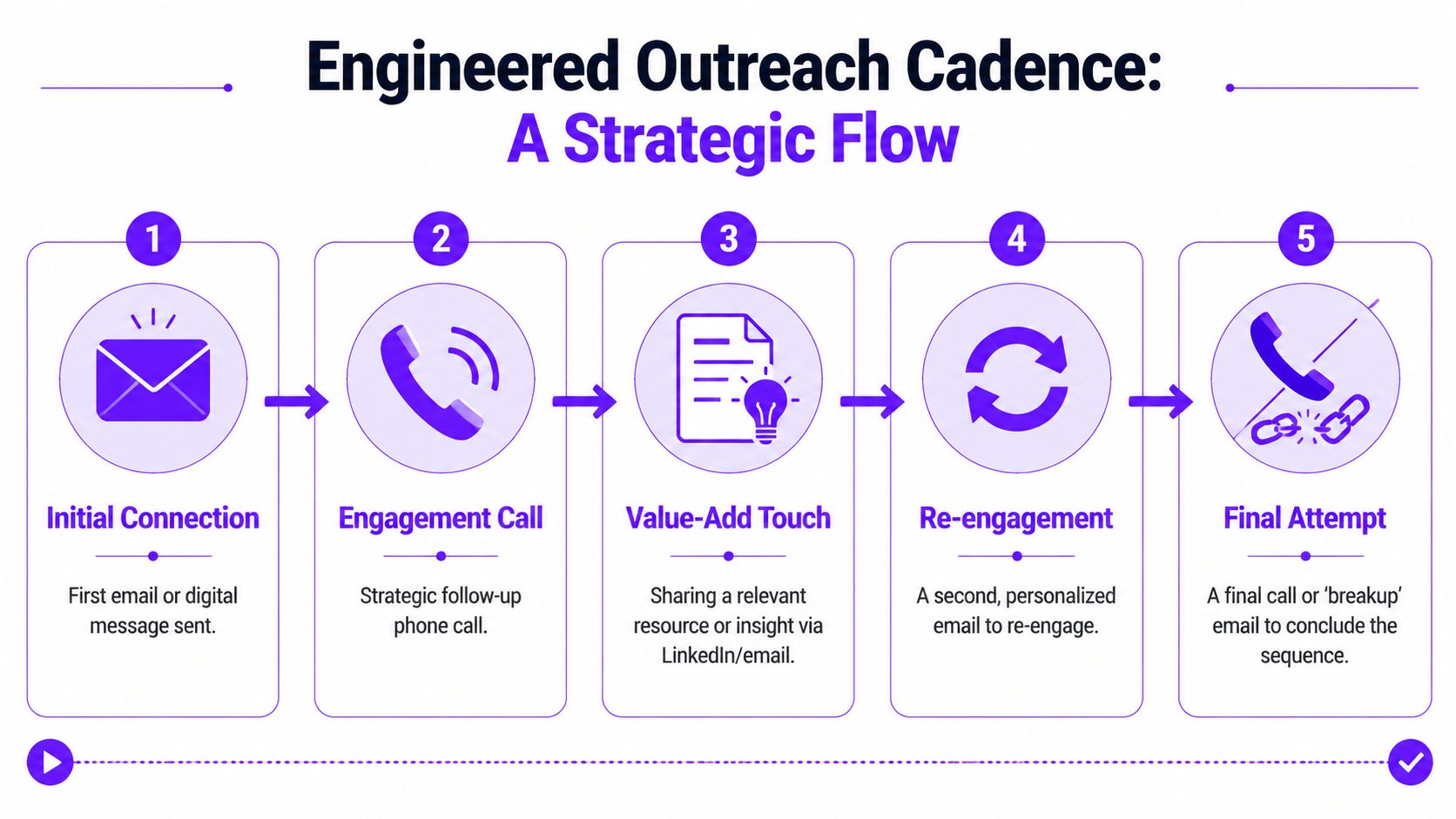
A validated sequence from the brief shows why this matters. Sending an email 24 hours before the first call, then following with a LinkedIn touch and a second call, can improve connects by 70% versus standalone cold calls. The same brief also indicates that calling Tuesday to Thursday between 10-11 AM IST performs 49% better than Mondays. For Indian teams, that is not a minor scheduling detail. It is a controllable efficiency gain in a market where rep capacity is expensive and connect rates are volatile.
Why sequence design changes unit economics
Buyers process outreach cumulatively. The first email creates light familiarity. The call tests whether that familiarity is strong enough to earn attention. A LinkedIn touch or relevant follow-up adds social proof and context. By the second call, the interaction feels less random and more credible.
This has direct financial implications. The brief notes that 40% of reps stop after one attempt, even though 93% of conversions happen by the sixth contact and the average opportunity needs eight attempts. That pattern points to an operating model failure, not a motivation issue. If management does not define cadence rules, enforce retry logic, and monitor adherence, reps will optimise for activity comfort instead of revenue yield.
Cadence should be built like an operating system
Boards reviewing outbound performance should push leadership teams on four design choices.
Pre-call familiarity
Send a short message before the first dial. The objective is recognition, not persuasion.Time-window discipline
Ring during protected calling blocks based on observed answer data, not rep convenience.Channel progression
Each touch should contribute a new reason to respond, such as a trigger event, customer proof point, or relevant insight.Exit criteria
Define when a sequence pauses, shifts to nurture, escalates to another stakeholder, or closes.
The commercial principle is simple. Persistence only creates value when each contact becomes more informed than the last.
That is why mature teams standardise plays instead of leaving follow-up to individual rep judgment. Resources such as effective sales cadence templates are useful starting points for structuring repeatable sequences across segments. The higher-return move is to adapt those patterns to India-specific buying cycles, response windows, and regional channel preferences, then encode them into your dialer and workflow engine so managers are reviewing exceptions, not policing basics.
For teams refining message progression across those attempts, these outbound communication script examples for follow-up and objection handling can help align the wording with the sequence logic.
Example sequence for Indian outbound teams
| Touch | Channel | Purpose |
|---|---|---|
| 1 | Establish relevance before the first dial | |
| 2 | Call | Test live engagement while recall is fresh |
| 3 | LinkedIn or email follow-up | Add proof, context, or trigger-based relevance |
| 4 | Call | Re-engage after familiarity has increased |
| 5 | Final message | Close the loop professionally and preserve future conversion potential |
The strategic question is not how to make more calls. It is how to design a contact system that raises answer rates, protects rep time, and compounds learning across thousands of attempts. That is also the point where Voice AI becomes economically important. Once cadence rules are defined, AI makes them executable at scale with consistent timing, follow-up discipline, and no drop in quality.
Transform Conversations with High-Impact Scripting
Once someone answers, the objective isn’t to launch a monologue. It’s to earn the next thirty seconds.
The data point that matters most here comes from Cognism’s cold calling analysis: successful calls involve asking 11-14 discovery questions and last between 5:50-7:30 minutes, correlating with a 70%+ success rate. The same source says persisting with 5+ attempts captures a 70% conversion uplift, because 80% of prospects initially say no four times. That should change how leadership thinks about scripts. High-performing calls are question-led, not pitch-led.
Replace product-first scripts with diagnosis-first conversations
Most underperforming scripts make the same mistake. They force the rep to explain the company before understanding the buyer’s context. Buyers hear generic language, assume low relevance, and disengage.
A stronger script behaves like a diagnostic interview. The opener should establish relevance quickly, then move into questions that uncover timing, pain, ownership, and next-step logic.
For example:
- BFSI: Open with a context cue tied to compliance or process change, then ask how the team currently handles volume spikes, qualification, or customer support routing.
- EdTech: Refer to enrolment operations or counselling workflows, then ask where drop-offs happen between enquiry and counselling conversation.
- Real estate: Start with booking or lead response context, then ask how quickly the team reaches fresh enquiries and who handles site-visit follow-up.
What better scripting changes at leadership level
Question-led calls do more than improve close outcomes. They create cleaner management data. You learn why prospects stall, what objections repeat, which segments respond, and where hand-offs fail.
That’s why the script should be designed as an information system, not just a persuasion tool.
Better scripts don’t sound more polished. They surface better decisions.
A useful pattern is to organise live calls around layers of inquiry:
- Opening relevance: Why this call, why now.
- Operational reality: How the prospect handles the workflow today.
- Pain intensity: Where the process breaks under volume, delay, or inconsistency.
- Decision path: Who owns change, what would need to happen next.
Calls also need enough space to develop. If your team rushes every interaction toward a demo or offer, they’ll never reach the 5:50-7:30 minute range associated with stronger outcomes in the source above. That doesn’t mean speaking longer for its own sake. It means holding a conversation substantial enough to qualify intent.
Script governance matters as much as script writing
Most firms review scripts too rarely and train them too loosely. Leadership should insist on a living script library, segmented by industry, use case, and objection type. A static generic opener won’t support growth across BFSI, education, real estate, and software.
Teams building that playbook can also review practical communication script examples to compare structures and refine call flows. The value isn’t in copying lines. It’s in seeing how strong scripts move from opener to diagnosis to action without sounding mechanical.
Achieve Scale and Consistency with Voice AI
India handles outbound at a scale few markets can match. The constraint is no longer dial capacity. It is execution quality at volume.
Voice AI matters because it changes the cost structure of outbound without weakening control. A well-configured system can apply the same qualification logic, follow-up discipline, and compliance rules across every shift and every campaign. That turns outbound from manager-dependent activity into a repeatable operating system.

DialNexa cites internal and customer-reported performance data showing higher connect rates, stronger lead-to-booking conversion, and AI qualification accuracy that closely tracks human review. The strategic implication is more important than any single metric. If qualification and follow-up can be standardised, boards get a more forecastable pipeline and lower dependence on rep-by-rep variance.
Why Voice AI changes unit economics
Manual outbound breaks first in three places. Quality varies across agents. Follow-ups slip when queues build. Skilled reps spend time on low-intent contacts that should have been filtered earlier.
Voice AI addresses each of those failure points.
| Constraint | What happens in manual outbound | What Voice AI changes |
|---|---|---|
| Consistency | Script delivery and qualification standards vary by rep and shift | Every call follows the same decision logic and compliance rules |
| Coverage | Callbacks and nurture steps are missed during peak load | Sequences run on time across large lead volumes |
| Qualification focus | Senior reps spend time screening weak leads | Humans engage after intent or complexity crosses a defined threshold |
That shift matters most in fast-decay categories such as education, real estate, and e-commerce. Lead value drops quickly when first contact is delayed. Firms that respond immediately and route qualified demand to humans faster gain an advantage that is operational, not cosmetic.
The operating model leaders should implement
Voice AI works best as an execution layer sitting on top of a defined outbound design. It should inherit your segmentation, routing rules, cadence windows, consent controls, qualification thresholds, and handoff conditions. If those decisions are vague, automation scales confusion. If those decisions are explicit, automation scales discipline.
A practical deployment model usually includes:
- Front-end qualification: AI manages first-contact screening, captures structured responses, and identifies intent.
- Mid-funnel follow-up: AI runs reminders, callback attempts, and reactivation sequences without queue-driven delay.
- Human escalation: Sales or support teams step in when purchase intent, objection complexity, or account value justifies human time.
- Closed-loop review: Leaders compare AI classifications against downstream outcomes and adjust logic accordingly.
Operating principle: Automate repetition. Escalate nuance.
A short product walkthrough helps clarify how this kind of system fits into live outbound operations:
The deeper advantage is management control. Leaders can audit opener performance, handoff quality, intent classification, and sequence adherence from one system instead of relying on sample-based supervisor checks. For teams designing that control layer, these call center dashboard examples and KPI structures are useful reference points.
Used properly, Voice AI does not remove humans from outbound. It reallocates them to the moments where judgment changes revenue outcomes. That is the difference between a lower-cost call operation and a scalable outbound engine.
Measure What Matters A CXO Dashboard for Outbound Success
Boards do not fund outbound for dial volume. They fund it for revenue yield, risk control, and repeatability. A CXO dashboard should therefore answer three questions with precision: Are we creating qualified demand at an acceptable cost, are decisions improving over time, and can we prove the process is compliant if challenged?
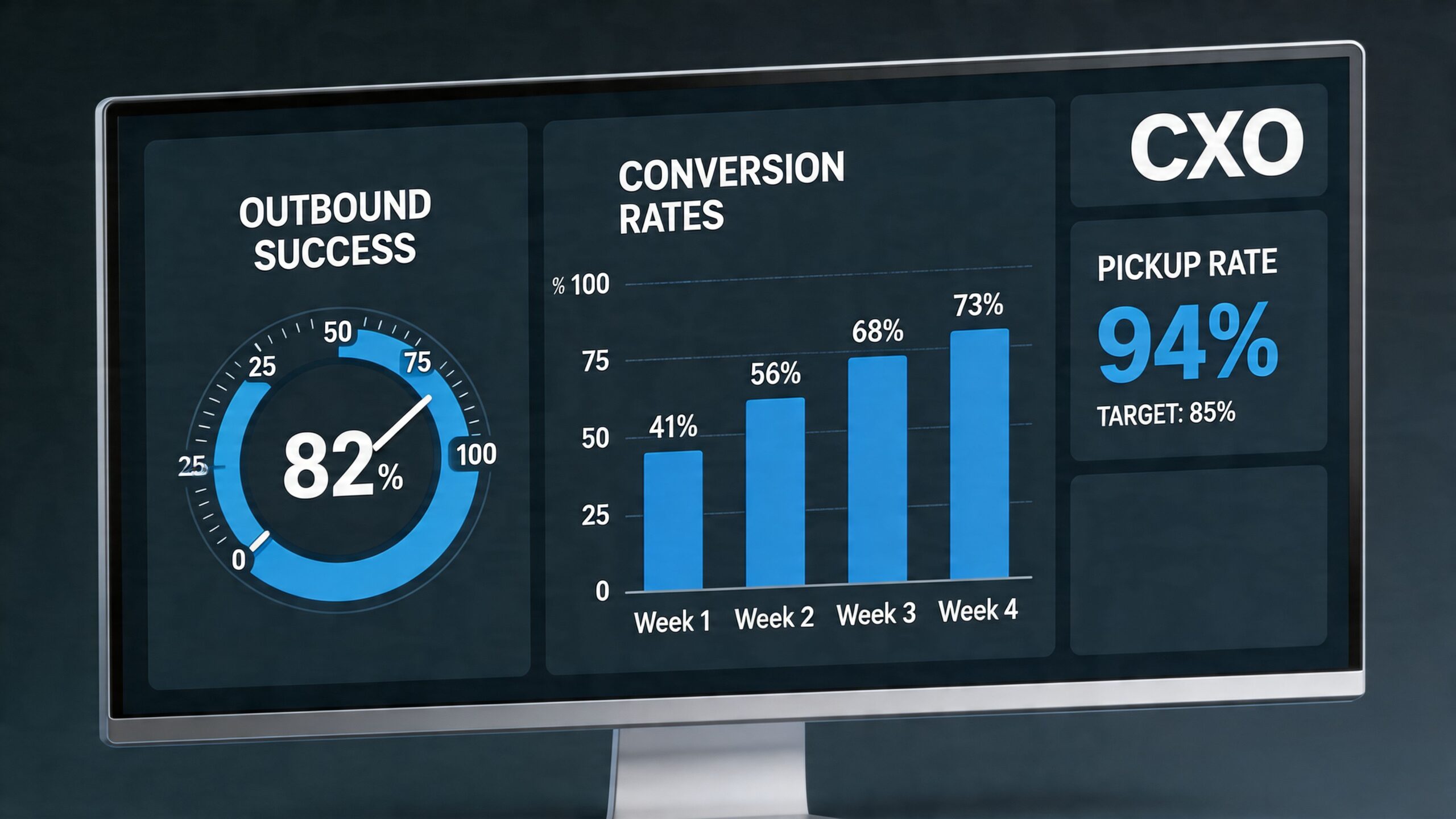
The common reporting failure is straightforward. Outbound leaders often present activity metrics that describe effort, while senior management needs metrics that show economic output and operating control. Calls made, calls connected, and average handling time still matter, but only as diagnostic inputs. They are not decision metrics.
The commercial layer
The first layer should show whether each conversation is producing more value over time.
Track:
- Cost per qualified connection: Total outreach cost divided by live conversations that meet your qualification threshold.
- Conversation depth: Whether calls last long enough to establish need, authority, timing, or next-step readiness.
- Lead-to-meeting or booking ratio: The share of qualified conversations that convert into a measurable pipeline event.
- Qualification accuracy: The percentage of AI or agent dispositions that match later human review or downstream outcomes.
- Sequence completion rate: Whether target accounts receive the intended number and order of outreach attempts.
This view changes management behaviour. If cost per qualified connection rises while sequence completion remains low, the issue is execution discipline. If connect rates are healthy but lead-to-meeting ratios stall, the likely problem sits in targeting, script logic, or offer design. If qualification accuracy drops, the business is wasting agent time and contaminating pipeline forecasts.
That is how outbound becomes manageable at scale. Leaders stop reacting to volume and start correcting the specific constraint depressing yield.
The governance layer
The second layer should treat compliance and security as operating metrics, not legal footnotes. That is particularly important in India, where outbound teams increasingly work under tighter expectations around consent, data handling, call traceability, and fraud prevention. The Digital Personal Data Protection Act, 2023 establishes a stronger compliance baseline for how organisations process personal data, and the Indian Computer Emergency Response Team documents the broader cyber-risk environment in which these operations now sit through its cyber security advisories and incident reporting framework.
For board-level oversight, the dashboard should make four controls visible:
| Control area | What leaders need visibility into |
|---|---|
| Consent | Whether opt-in status and recording permissions are captured, timestamped, and retrievable |
| Auditability | Whether each interaction can be traced to campaign rules, prompt logic, and final disposition |
| Escalation controls | Whether regulated or sensitive conversations are routed to authorised human teams |
| Security posture | Whether anomaly patterns, unusual call behaviour, or misuse signals are flagged quickly |
A dashboard that shows stronger conversion but cannot show consent lineage, escalation history, or audit trails is not board-ready.
This matters most in BFSI, healthcare-adjacent processes, real estate, and other categories where disclosure quality, record integrity, and identity assurance affect both revenue and liability. The practical implication is clear. Commercial reviews and compliance reviews should use the same management system, not separate reporting stacks reviewed by separate teams weeks apart.
For teams redesigning executive reporting, these call centre dashboard examples for KPI design and reporting structure are a useful benchmark. The objective is not to build a prettier dashboard. It is to give leadership a control tower that links revenue efficiency, operating quality, and compliance assurance in one view.
From Dialing to Dominating Your Market
The gap between average outbound teams and market leaders is widening because the leaders no longer rely on effort alone. They combine clean data, trusted caller identity, disciplined cadences, diagnostic scripting, and scalable execution.
That changes the role of the phone. It stops being a blunt prospecting tool and becomes a controlled system for creating qualified conversations at speed. Once prospects pick up the call more often, leadership gets something more valuable than short-term productivity. It gets predictability.
The strategic shift is clear. Treat unanswered calls as lost revenue, not background noise. Treat caller ID as trust architecture, not a telecom setting. Treat scripts as qualification systems, not sales theatre. Treat Voice AI as an execution layer that standardises quality and protects human capacity for moments requiring judgement.
Organisations that make those changes don’t just improve outbound metrics. They build a commercial advantage that compounds across acquisition, service, and follow-up.
If your team is rethinking outbound as a scalable, compliant revenue channel, DialNexa Labs Private Limited provides human-like Voice AI agents for qualification, customer support, recruitment, and presales workflows across EdTech, BFSI, real estate, e-commerce, hospitality, and software. A practical next step is to evaluate whether your current calling process can support consistent qualification, auditability, and follow-up at scale, then compare that against an AI-supported model built for high-volume business conversations.

[…] scripts for AI-assisted outreach. Teams trying to improve answer rates should also review these practical strategies to get more prospects to pick up the call, because list quality, timing, and script design work […]
[…] front-end call flow often matters more than adding persuasion. That same principle applies to improving pick-up and early-call engagement, where the first seconds determine whether you even reach […]