
No Caller ID Calls: A CXO’s Guide to Risk & Strategy
An anonymous call used to be a consumer annoyance. For most boards today, it’s a trust signal problem with direct consequences for revenue, service operations, and brand safety.
If a parent ignores an admission follow-up from an EdTech brand, a buyer declines a property call, or a customer hangs up on a KYC verification request because the call looks suspicious, the issue isn’t just telecom hygiene. It’s missed pipeline, slower service, and rising friction across every phone-based workflow. That risk is broad. In fiscal year 2025, the U.S. Federal Trade Commission’s National Do Not Call Registry reached approximately 258.5 million active phone number registrations, and the FTC received over 2.6 million Do Not Call complaints, reflecting the depth of consumer distrust around unwanted and often disguised calling activity (FTC National Do Not Call Registry Data Book FY 2025).
Senior leaders should read that carefully. People are not merely declining spam. They’re training themselves to distrust unfamiliar voice contact altogether. That changes the economics of customer outreach, support escalation, collections, reminders, and verification.
For organisations running phone-heavy workflows, the practical question isn’t whether no caller id calls are annoying. It’s whether your operating model can still earn a response in an environment where anonymity and spoofing have weakened confidence in the channel itself. Teams that still treat caller identity as an afterthought usually end up paying for it in poor connect quality, inconsistent follow-up performance, and avoidable reputation damage. Teams that design for trust can create a measurable edge, especially in contact-intensive environments such as contact centre and BPO operations.
Table of Contents
- The Strategic Impact of No Caller ID Calls
- Deconstructing the Technology Behind Anonymity
- Quantifying the Financial and Reputational Risks
- A Practical Defence Guide for Consumers and Employees
- The Executive Playbook for Building Outbound Trust
- From Anonymous Nuisance to Strategic Asset
The Strategic Impact of No Caller ID Calls
Boards usually notice the issue through symptoms, not root cause. Sales says answer rates are inconsistent. Support says customers doubt legitimate callbacks. Compliance worries that important calls are being mistaken for scams. Marketing sees follow-up windows close before an agent reaches the lead.
Those symptoms share one cause. The voice channel has a credibility problem.
Brand trust now affects basic phone operations
When a customer sees “No Caller ID”, “Private”, or a strange local number, they don’t pause to analyse signalling protocols. They decide whether to trust the caller. Most won’t.
That instinct affects good actors and bad actors alike. A hospital callback, a property consultant, a financial services verification team, and a fraudster all compete inside the same damaged attention environment. The result is simple. Legitimate organisations inherit the distrust created by scam traffic.
Board view: Every unanswered legitimate call has two costs. The immediate missed interaction, and the long-term erosion of confidence in your calling brand.
The strategic implication is broader than collections or telesales. It reaches appointment confirmation, admissions counselling, onboarding, payment reminders, claims support, renewals, and crisis communication. If your organisation depends on voice for any high-value moment, trust in caller identity is now an operational dependency.
The hidden cost sits in workflow failure
Most companies underestimate how quickly this compounds.
A no caller id calls problem doesn’t just reduce pickup. It creates extra retries, more voicemail dead ends, more agent time per successful contact, and more inbound confusion from customers asking whether a previous call was genuine. Operations teams then respond with more volume, which often worsens reputation further if identity controls remain weak.
A board should treat this the same way it treats email deliverability or payment authentication. The channel only performs when the recipient believes the interaction is legitimate.
Three consequences tend to show up first:
- Revenue leakage: Prospects don’t answer. Existing customers delay action. Time-sensitive opportunities expire.
- Operational drag: Teams spend more effort reaching the same number of people.
- Trust erosion: Customers begin to associate your outbound calls with uncertainty, even when your intent is legitimate.
That’s why no caller id calls aren’t merely a consumer-side nuisance. They sit at the intersection of fraud risk, customer experience, and commercial performance.
Deconstructing the Technology Behind Anonymity
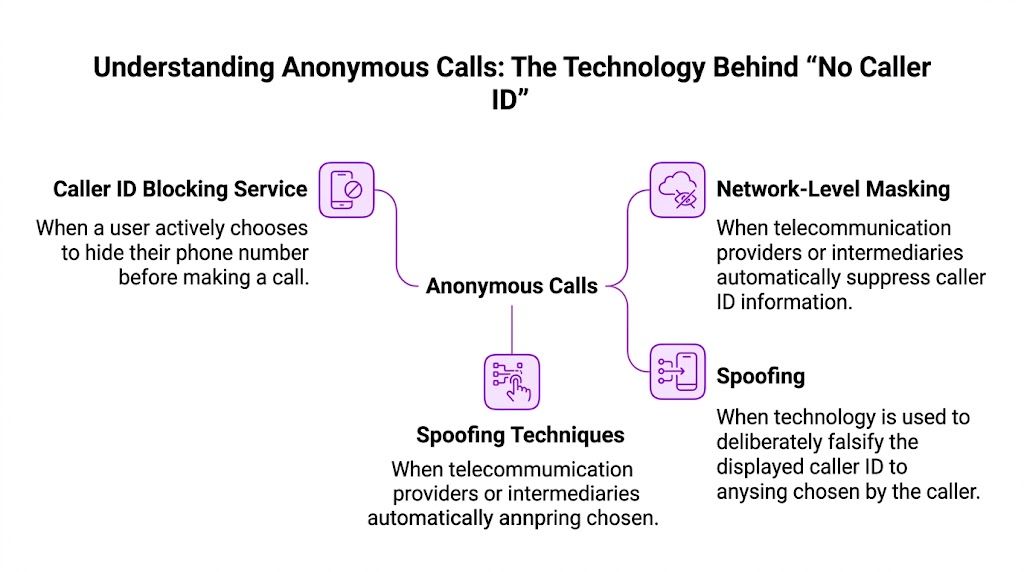
The term “no caller id” sounds simple, but it covers several different behaviours. Executives don’t need signalling-engineering depth to manage the risk. They do need enough clarity to separate legitimate privacy controls from abuse.
Three very different things get labelled as anonymous
The first is caller ID blocking. That’s the straightforward version. A caller deliberately withholds their number through a device or carrier setting. There are legitimate reasons for this. Doctors, reception desks, legal staff, and some field teams may not want a direct line exposed.
The second is network-level masking. Here, the telecom path or intermediary suppresses visible caller identity. This can happen in certain enterprise telephony setups, contact centre flows, or VoIP configurations. It isn’t always malicious, but it often creates confusion because the recipient can’t distinguish operational masking from suspicious behaviour.
The third is spoofing. This is the most dangerous form. It's like forging the return address on a posted letter. The caller doesn’t merely hide identity. They present a false one.
In 2025, 74% of all robocalls used spoofed local area codes, and among 9,242 registered voice service providers, only 44% had fully implemented STIR/SHAKEN caller ID authentication protocols, leaving substantial room for abuse (Nomorobo on area code spoofing surges in 2025).
If you need a quick operational check on whether a number is likely tied to mobile, landline, or VoIP infrastructure before routing or escalating it, tools such as a phone lookup service can help teams make better frontline decisions.
Why authentication matters to leadership teams
STIR/SHAKEN is best understood as a trust framework for caller identity. It doesn’t solve every problem, and it doesn’t make fraud impossible, but it raises the standard. It gives carriers and downstream systems a better way to assess whether a displayed caller identity is likely to be legitimate.
For a board, the practical lesson is this: if your providers don’t support strong identity handling, your organisation inherits avoidable risk.
A voice strategy without identity assurance is similar to sending contracts without signatures. Messages may still arrive, but trust collapses when verification is weak.
Leadership teams should also understand that technical formatting matters. Something as basic as how a destination is structured in SIP routing can affect interoperability and call handling in modern telephony estates. Even non-engineering stakeholders benefit from understanding the logic behind a SIP URI format because identity, routing, and reputation are tightly linked in IP-based voice systems.
A useful way to explain the stack in board language is:
- Caller ID blocking protects privacy.
- Masking can support operational design.
- Spoofing weaponises the same ambiguity.
- Authentication is the control layer that helps markets distinguish one from the other.
That distinction matters in procurement, vendor audits, and risk review meetings. If leaders treat all anonymous calling as one phenomenon, they either overreact and disrupt legitimate workflows or underreact and leave obvious fraud gaps open.
Quantifying the Financial and Reputational Risks
Most telecom issues stay buried in IT or operations until they become a customer problem. No caller id calls move faster. They affect acquisition, service, and fraud exposure at the same time.
The strongest board-level signal comes from fraud effectiveness. According to TRAI’s 2023 Q3 report, 87.2% of No Caller ID calls were classified as Unsolicited Commercial Communications, and these calls showed a 62% higher spam conversion rate than calls with visible caller ID (Vitel Global on no caller ID calls).
That matters because it tells leaders something uncomfortable. Anonymity isn’t incidental. It’s a working tactic.
A board-level risk matrix
The probability side of the risk is high because anonymous or masked calling is cheap to execute and difficult for ordinary recipients to assess in real time.
The impact side is severe because one successful event can produce several losses at once:
- Direct fraud exposure: A spoofed KYC or payment call can trigger unauthorised action.
- Brand contamination: Customers often remember the brand name invoked in the scam, not the signalling path that enabled it.
- Channel degradation: Even after an incident, future legitimate outreach becomes harder because recipients are more cautious.
- Regulatory pressure: Any organisation with weak calling governance will face tougher scrutiny when complaints rise.
This doesn’t affect every sector in the same way. It lands differently depending on the call’s purpose and the customer’s level of urgency.
Common No Caller ID scam patterns by industry
| Industry | Scam Tactic | Primary Target | Key Red Flag |
|---|---|---|---|
| BFSI | Fake KYC, account verification, or payment urgency call | Existing customers | Caller pressures for immediate action without a verifiable callback path |
| Real estate | False listing follow-up or booking confirmation | Buyers and renters | Caller refuses to share a traceable business identity |
| EdTech | Admission offer or fee-resolution call | Students and parents | High-pressure deadline combined with unclear institutional identity |
| E-commerce | Delivery, refund, or order issue pretext | Online shoppers | Request for sensitive information outside normal support channels |
| Healthcare and reception-led services | Appointment or report-related callback misuse | Patients | Call appears masked with no reliable way to validate origin |
These patterns also intersect with digital identity abuse. For example, teams dealing with account creation, OTP flows, or temporary number abuse often review how fraudsters use a virtual phone number for verification to bypass basic trust checks elsewhere in the customer journey. The lesson is consistent across channels. Weak identity controls upstream tend to show up later in voice interactions too.
The reputational damage rarely comes from one bad call. It comes from repeated uncertainty about whether your organisation’s calls are safe to answer.
For directors, the takeaway is practical. No caller id calls should sit on the enterprise risk register wherever phone communication influences onboarding, transactions, or regulated customer contact. If your organisation measures conversion, complaints, abandonments, verification completion, or callback efficiency, this issue already affects commercial outcomes whether the dashboard labels it or not.
A Practical Defence Guide for Consumers and Employees
Consumer behaviour shapes business outcomes here. People have learned to be defensive, and in many cases they’re right to be. Internal staff need the same discipline, especially frontline teams who receive supplier calls, customer escalations, or executive impersonation attempts.

What people should actually do when these calls arrive
The most effective response is usually simple. Don’t engage in real time unless there is clear context for the call.
A practical employee and consumer playbook looks like this:
- Let unfamiliar anonymous calls go unanswered. If the caller is legitimate, they can leave a voicemail, send a text, or contact through an established channel.
- Use device-level blocking and silence features. On iPhone and Android, the relevant controls sit in the Phone app or settings menus, though wording varies by device and carrier.
- Use carrier or app-based filtering where available. These tools aren’t perfect, but they reduce noise and create a first layer of screening.
- Report repeat scam patterns internally and externally. Employees should know where to log suspicious calls. Consumers should use carrier and regulator complaint paths where applicable.
- Verify by returning through an official channel. If someone claims to represent a bank, school, hospital, or platform, call the published number from the organisation’s official website or app.
This is also worth sharing internally with finance, admissions, customer service, and executive assistants. Those teams are frequent targets because callers can exploit urgency, hierarchy, or process gaps.
Practical rule: If the caller wants sensitive action but won’t give you a verifiable route back through official channels, treat the call as hostile until proven otherwise.
What doesn’t work reliably anymore
Many people still assume they can trace anonymous calls after the fact. That confidence is misplaced.
In India, the success rate of callback services such as *69 or carrier traces for No Caller ID calls is just 25%, while scammers using international VoIP gateways evade tracking 80% of the time, which is why proactive blocking and reporting are more dependable than reactive tracing (Voiso on calling back no caller ID).
That’s the key myth to retire. Trace-after-the-fact methods aren’t a serious primary defence against modern spoofing and VoIP abuse.
For a quick visual explainer that’s easy to circulate internally, this walkthrough is useful:
The business implication is blunt. Your customers and employees are becoming harder to reach by design. That’s rational behaviour in a high-risk calling environment. Any outbound calling strategy that ignores this reality will underperform, even if the scripts and staffing are otherwise sound.
The Executive Playbook for Building Outbound Trust
Most boards ask how to stop harmful anonymous traffic. Fewer ask the more valuable question. How do we make sure our own calls are recognisable, compliant, and worth answering?
That second question is where the commercial upside sits.
Five controls that improve answerability and trust
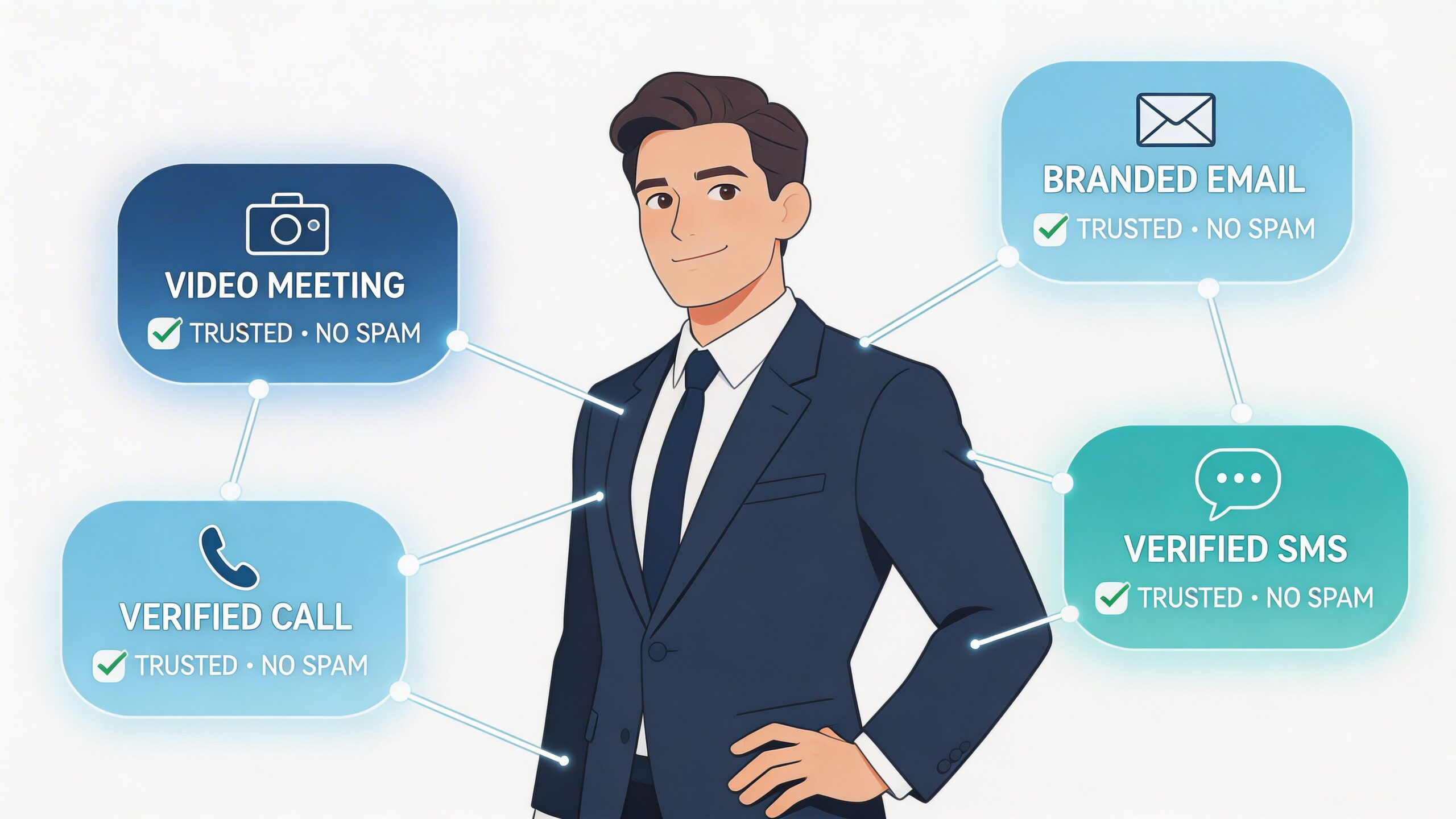
Start with identity governance, not call volume. A business doesn’t earn trust by dialling harder. It earns trust by making each call easier to verify.
1. Stop treating caller identity as a telecom setting
Caller identity belongs in risk, operations, and customer experience governance. Someone at executive level should own standards for what numbers are used, how they are presented, which vendors originate traffic, and how complaints are reviewed.
2. Register and maintain your official calling footprint
In regulated environments, proper registration matters. If your teams operate in India, that includes the relevant principal-entity and header-level governance required under TRAI frameworks. Numbers and headers should map cleanly to business purpose, campaign category, and customer expectation.
3. Use authentication-capable providers and audit them
Providers should be able to explain how they support caller identity assurance, reputation management, and lawful presentation. If they can’t describe their controls in plain language, that’s already a procurement warning sign.
4. Align pre-call and post-call channels
Calls perform better when the recipient has context. A reminder SMS, email, app notification, or scheduled callback agreement can make a legitimate phone interaction feel expected rather than intrusive. This is especially important for BFSI verification, admissions counselling, and appointment-heavy workflows.
5. Manage reputation like a revenue asset
Caller reputation now functions much like sender reputation in email. If your number presentation is inconsistent, masked without reason, or tied to poor complaint patterns, customers won’t give you the benefit of the doubt.
One of the clearest India-specific examples comes from compliant identity handling. By enabling “CLIR Bypass Mode” with registered PE-HC codes under TRAI regulations, SaaS and e-commerce teams can achieve an 8% lead-to-booking uplift, described as a 4x improvement, by preserving Caller ID reputation and reducing incorrect spam labelling (NICE guide on no caller ID).
That’s the shift boards should notice. Trust controls are not only defensive. They improve commercial throughput.
What boards should ask every telecom or voice vendor
A short vendor review often reveals whether a provider understands modern outbound trust or is still selling raw dial capacity.
Ask questions such as:
- How do you handle identity presentation? The answer should cover authenticated calling, masking controls, and how the provider prevents unnecessary anonymity.
- What’s your complaint response model? Good vendors can explain how they investigate spam flags, number reputation issues, and escalation paths.
- Can business units separate traffic by use case? Support, collections, onboarding, and promotional outreach shouldn’t always share the same identity strategy.
- How do you support compliant outbound calling? The provider should understand both technical and regulatory requirements in the markets you operate.
- What does reporting look like for answerability and trust? If a platform can only show dial counts, it won’t help leadership manage brand risk.
Trusted calling is a board issue because the market now punishes uncertainty at the moment of contact.
Teams should also map these controls to workflow design. A demo scheduling team doesn’t need the same calling pattern as a collections team. A healthcare callback flow shouldn’t resemble bulk promotional outreach. Purpose-specific number strategy, timing, scripts, and verification cues matter.
It also helps when leadership understands the business role of an outgoing call beyond simple sales activity. Outbound voice today supports onboarding, service recovery, qualification, reminders, and regulated communication. Each use case deserves its own trust model.
The companies that adapt fastest won’t be the ones that merely suppress scams. They’ll be the ones that rebuild confidence in voice contact as a dependable business channel.
From Anonymous Nuisance to Strategic Asset
No caller id calls are a symptom of a larger breakdown in communications trust. Consumers see it as nuisance. Security teams see fraud exposure. Boards should see both, plus the downstream effect on growth and operations.
When customers hesitate to answer, every phone-based process becomes more expensive. Follow-ups take longer. Service interactions become less certain. Important outreach starts to resemble suspicious outreach, even when the intent is entirely legitimate.
The solution isn’t to abandon voice. It’s to professionalise it.
That means separating legitimate privacy use from risky anonymity. It means choosing providers that support authenticated calling and clear identity governance. It means training employees and customers to verify sensitive interactions through official channels. And it means treating outbound calling reputation as something that deserves the same executive attention as email reputation, payment security, and customer data handling.
Leaders who get this right do more than reduce fraud exposure. They create a channel customers are willing to engage with again. That improves answerability, protects brand credibility, and makes voice communication productive instead of adversarial.
The market no longer rewards organisations for merely making calls. It rewards organisations whose calls feel safe to answer.
DialNexa Labs Private Limited helps businesses turn phone outreach into a trusted, high-performance channel through human-like Voice AI agents built for qualification, support, recruitment, presales, and compliant customer communication. If your team wants to reduce friction, protect caller reputation, and improve the quality of every outbound conversation, explore DialNexa Labs Private Limited.

[…] Teams that ignore how prospects perceive unknown numbers, including the rising friction around no caller ID calls and trust in outbound outreach, usually end up treating a system design failure as a people […]
This is a strong perspective on how caller identity has evolved from a technical setting into a core trust and business issue. The connection between outbound reputation, customer confidence, and revenue performance is explained clearly and gives leaders a practical framework for action.