

Mastering Virtual Assistant for Lead Generation
Businesses still treat lead generation as a staffing problem when it’s increasingly an orchestration problem. Teams spend 41 hours per month on lead generation, yet Indian firms using virtual assistants save 31.5 hours monthly and achieve 35% greater workflow efficiency, according to There Is Talent’s summary of HubSpot and VA adoption data. For directors and CXOs, that changes the discussion. The question isn’t whether repetitive outreach should be delegated. It’s whether your operating model is built for scale, speed, and control.
That’s where the usual conversation falls short. Most advice on a virtual assistant for lead generation still focuses on inboxes, LinkedIn messages, and CRM housekeeping. Useful, yes. Strategic, only partly. In Indian sectors such as real estate, BFSI, and EdTech, the bigger opportunity sits in voice-led outreach, where trust, timing, follow-up discipline, and compliant conversations decide whether a lead progresses or disappears.
Table of Contents
- Moving Beyond Manual Outreach in 2026
- Architecting Your AI Lead Generation Strategy
- Designing Your AI Persona and Conversation Flows
- Integrating Your Tech Stack for Seamless Automation
- Measuring Performance and Modelling ROI
- Industry Playbooks and Final Recommendations
Moving Beyond Manual Outreach in 2026
Gartner estimates that by 2028, agentic AI will be making at least 15 percent of day-to-day work decisions, up from almost none in 2024, according to its technology predictions for agentic AI. For boards reviewing lead generation in 2026, the implication is commercial, not cosmetic. Firms that still rely on manual calling for first response, follow-up, and appointment coordination will carry slower response times, higher operating cost, and weaker process control than competitors that automate those layers.
In regulated Indian sectors, the bigger shift is toward Voice AI rather than generic text assistants. Prospects in BFSI and real estate often decide whether to continue based on a spoken interaction, not an email sequence. That makes the question less about whether automation can save team hours and more about whether the business can increase contact coverage without increasing compliance risk.
Why voice changes the economics
A text-based virtual assistant can update records or schedule meetings. A Voice AI agent affects pipeline generation directly because it handles outbound and inbound conversations at the stage where speed matters most. That includes first-touch calls, missed-call callbacks, document reminders, site-visit confirmations, and reactivation of aged leads.
The financial logic is straightforward. Human calling teams are expensive to scale and hard to standardise. Voice systems can extend coverage across evenings, weekends, and high-volume campaign spikes without forcing the sales organisation to hire ahead of uncertain demand.
That advantage comes with constraints.
In BFSI, every scripted statement about eligibility, returns, loan terms, or documentation has to stay within approved language. In real estate, call recordings, consent capture, DNC checks, and accurate project representations matter because one weak workflow can create legal exposure as fast as it creates leads. A board should treat Voice AI as a controlled operating layer, not just a productivity tool.
Practical rule: Assess a virtual assistant for lead generation on conversion speed, auditability, and script control together. Cost reduction alone is the wrong benchmark in regulated categories.
The competitive shift boards should notice
The strongest deployments do not remove humans from the funnel. They reserve human attention for the moments where judgment changes revenue or risk. Voice AI handles repetitive outreach. Trained teams take over for exception handling, product advice, negotiation, and regulated disclosures that need closer supervision.
This division of labour matters because manual outreach breaks down in predictable ways. Callback queues slip. Sales reps improvise language. Lead notes arrive late or not at all. Managers spend time checking whether the process happened instead of improving close rates. Voice AI can reduce that variability, but only if the organisation sets approval rules for scripts, escalation triggers for sensitive conversations, and clear boundaries on what the agent is allowed to say.
A useful reference point is the broader move toward agent-based operating models. For leaders assessing that shift beyond calling alone, this guide on how to boost your business with AI agents is worth reviewing because it frames automation as an operating decision rather than a software feature list.
Manual outreach still belongs in the mix. It belongs later in the funnel, where trust, nuance, and accountability have the highest commercial value.
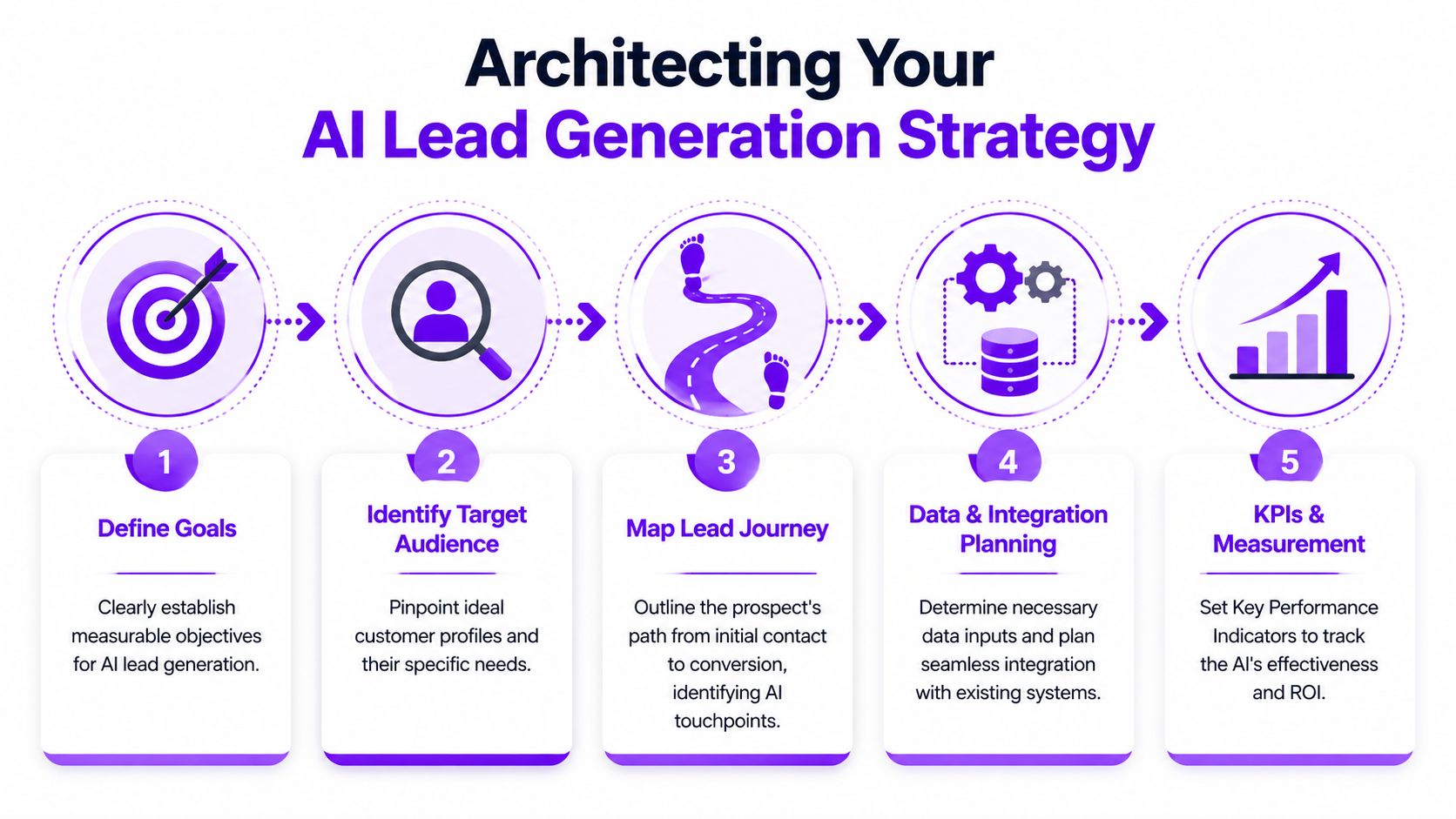
Architecting Your AI Lead Generation Strategy
Most failed deployments don’t fail because the technology can’t place calls. They fail because the business never decided what the system is meant to improve. A virtual assistant for lead generation should be tied to one commercial problem at a time, not introduced as a broad efficiency initiative with vague expectations.
Start with board-level outcomes
Begin with the outcome your executive team cares about. In practice, that usually falls into one of four categories:
- Pipeline velocity: Reduce the lag between inquiry and first meaningful contact.
- Lead quality: Filter curiosity from intent before your sales team gets involved.
- Coverage: Extend calling capacity beyond what the current team can handle.
- Control: Standardise messaging, qualification, and record-keeping across campaigns.
Those choices affect everything that follows. If your issue is low contactability, you need a calling-first design. If your issue is poor lead hygiene, CRM integration and qualification logic matter more than conversational flourish. If your issue is compliance exposure, script governance matters more than volume.
Choose the right operating model
The market often bundles very different tools under the same label. That creates poor buying decisions. A spreadsheet-savvy VA, a chat widget, and a Voice AI agent solve different problems.
In Indian target sectors, this distinction matters because spoken conversations are often where trust is won or lost. Only 12% of Indian SMBs in sectors such as EdTech and BFSI have adopted voice AI for outbound leads, and manual VAs often struggle with India’s 22 official languages, while voice AI platforms can scale to thousands of calls with more consistent natural conversations, according to HireVA’s analysis of the voice AI gap. That adoption gap is an opportunity. It means many firms are still competing with process constraints that no longer need to exist.
A practical decision framework looks like this:
| Business condition | Generic VA | Voice AI agent |
|---|---|---|
| CRM updates and admin follow-through | Strong fit | Useful when tied to call outcomes |
| High-volume first-touch outreach | Limited | Strong fit |
| Multilingual outbound at scale | Inconsistent | Better suited |
| Compliance-sensitive spoken workflows | Weak | Better suited when governed properly |
| Appointment booking through live calls | Partial | Strong fit |
If the lead journey depends on hearing the prospect, answering immediate questions, and moving them to a next step on the same call, voice should sit at the centre of the design.
For teams comparing channels more broadly, this guide on how to capture more leads with AI is a helpful contrast because it shows where conversational automation fits across the funnel. The key is not to confuse chat success with voice readiness. Voice requires a tighter script model, stronger escalation logic, and more careful compliance review.
Designing Your AI Persona and Conversation Flows
A Voice AI agent that only reads a script will underperform quickly. Prospects don’t judge the system by whether it completed the workflow. They judge it by whether the conversation felt credible enough to continue.
Why persona design changes outcomes
In practice, your AI persona is a policy decision. It defines how the business will sound when no human is on the line. That means tone, pace, vocabulary, objection handling, confirmation style, and when to transfer to a person.
For a property developer, the right persona sounds like a composed presales executive. For an EdTech brand, it should sound like a patient programme counsellor. For BFSI, it needs a more formal cadence, stricter disclosures, and tighter boundaries around what the agent can and can’t say.
A useful benchmark from the publisher’s product context is that AI-qualified leads can match human judgment at 97% accuracy when the qualification design is done properly. If you want a concrete look at that style of implementation, this overview of an AI-powered virtual assistant shows how voice-led workflows are being structured around real business tasks rather than generic bot responses.
A weak script versus a credible booking flow
A poor real estate script usually sounds like this:
Hello, I am calling regarding your interest in our property project. Are you interested in booking a site visit? Press one or say yes.
That approach fails because it starts with a transaction before establishing relevance. It doesn’t acknowledge context, budget, location preference, or timing. It also gives the prospect no reason to trust the interaction.
A stronger flow sounds more like this:
- Context first: “You recently enquired about a property in Pune. I’m calling to help with project details and, if useful, schedule a site visit.”
- Intent check: “Are you exploring for personal use or investment?”
- Priority discovery: “Is location, possession timeline, or budget your biggest factor right now?”
- Qualification: “Would you prefer weekday or weekend availability if we arrange a visit?”
- Commitment step: “I can hold a slot and send the project details to your preferred number.”
The difference isn’t cosmetic. The second version mirrors how a competent presales caller thinks.
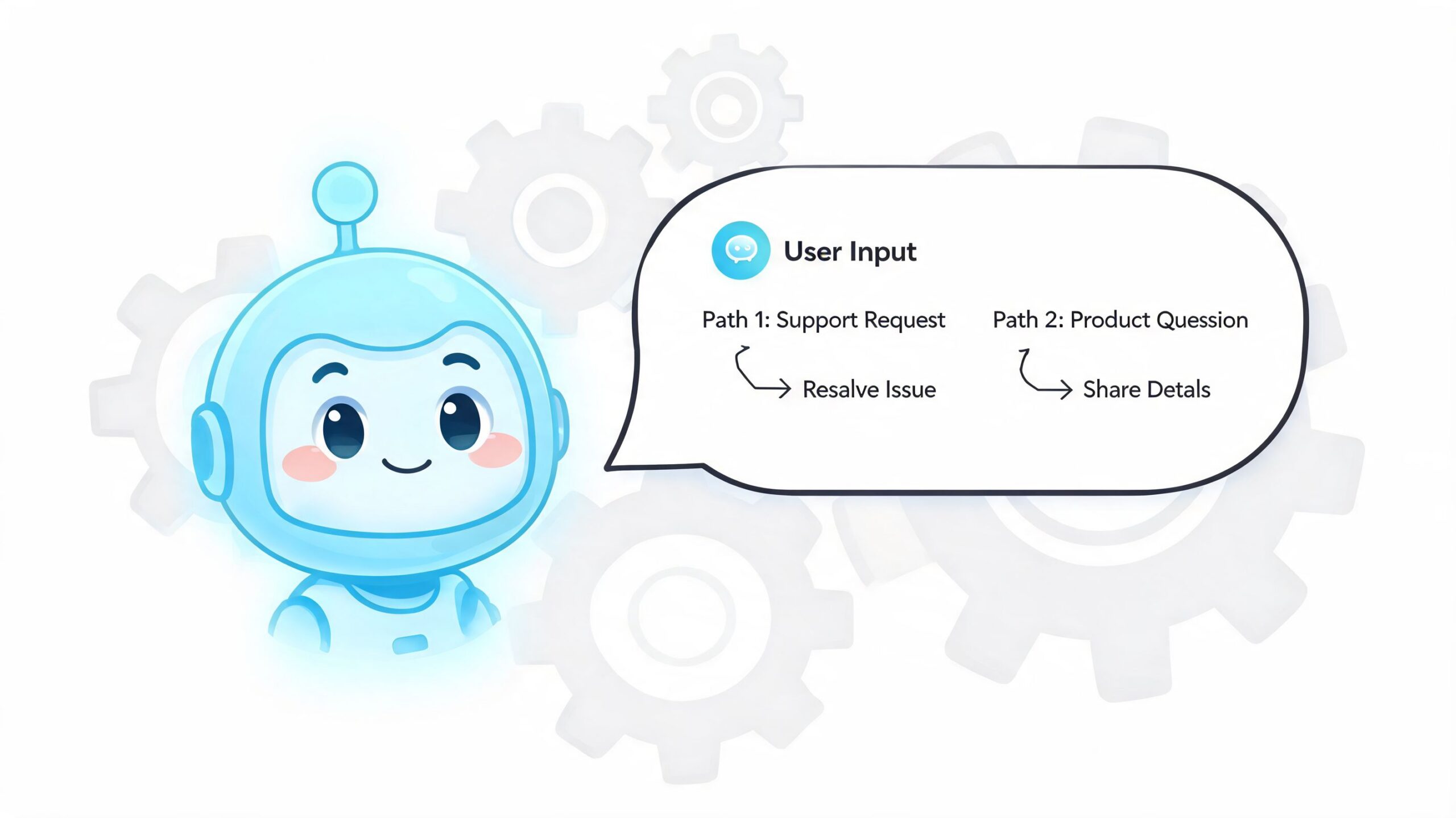
A short visual breakdown helps teams that are designing branching logic for support and inquiry paths:
What strong flows include
The strongest conversation designs usually include these elements:
- A clear opening: State why the prospect is being contacted and what value the call offers.
- Two or three core qualification questions: Keep them commercially useful, not exhaustive.
- Allowed objections: Build approved responses for “not now”, “send details”, “call later”, and “already spoke to someone”.
- Escalation triggers: Route to a human when the conversation turns complex, sensitive, or high intent.
- Call outcome codes: Every call should end with a structured disposition, not a vague note.
A good AI caller doesn’t try to sound theatrical. It sounds organised, relevant, and easy to respond to.
Integrating Your Tech Stack for Seamless Automation
A virtual assistant for lead generation creates value only when the rest of the commercial stack reacts in real time. If the call happens but the CRM stays stale, the business hasn’t automated anything meaningful. It has only created another disconnected tool.
The operating model that prevents lead leakage
For most organisations, the minimum viable architecture includes three connected layers:
- Telephony layer: The platform that places and receives calls.
- Conversation layer: The AI system that manages intent, scripts, qualification logic, and dispositions.
- System-of-record layer: The CRM where ownership, follow-up tasks, notes, and pipeline status live.
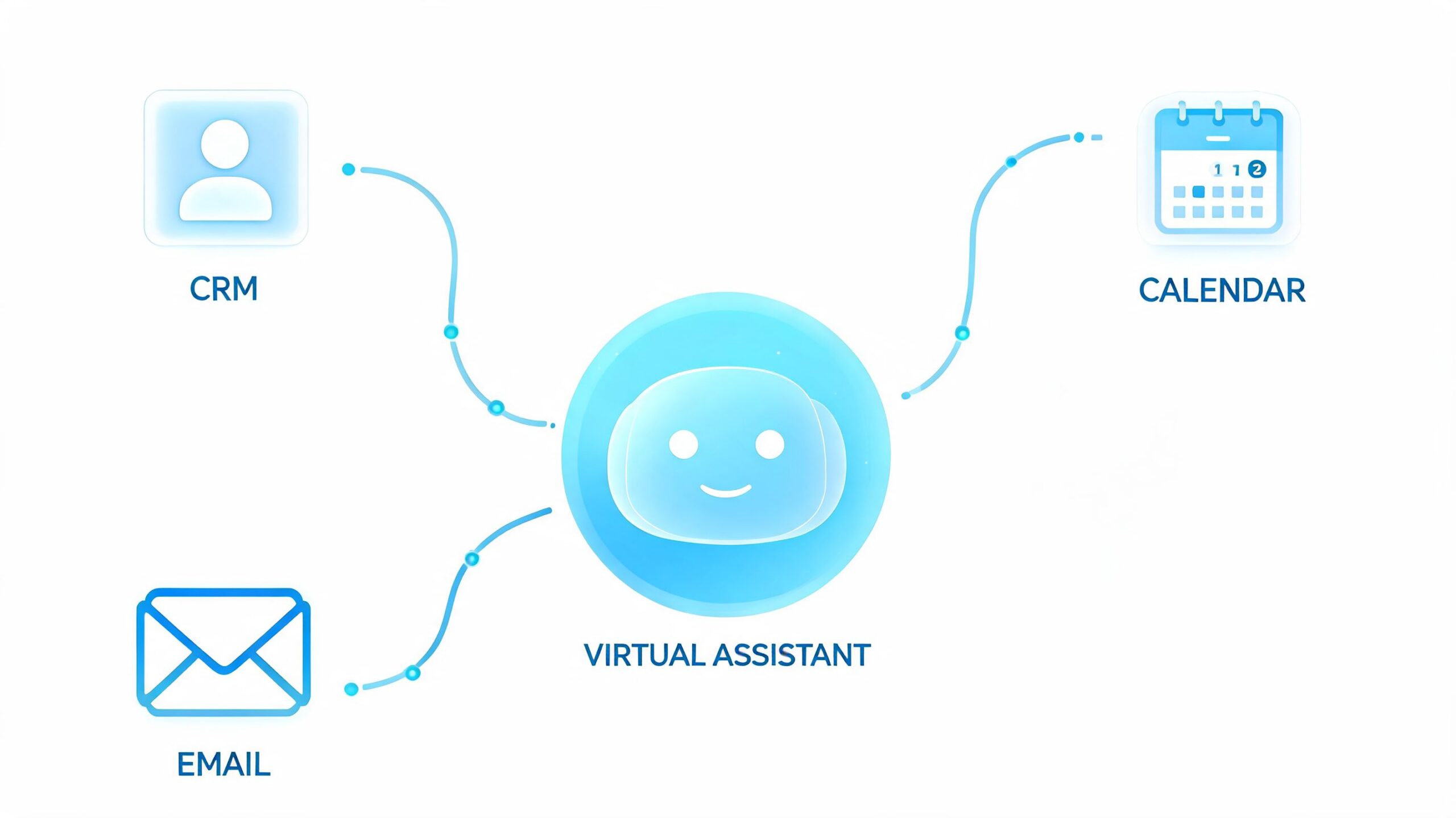
When those layers are integrated properly, every interaction has a destination. Qualified prospects trigger tasks for sales. Unreachable leads go into timed retry sequences. Appointment requests sync to calendars. Disqualified records are tagged with reason codes that marketing can analyse later.
This is why CRM planning should happen before launch, not after. Teams that need a practical view of this discipline can review this piece on CRM and lead management, especially if multiple teams touch the same lead record.
A practical handoff example
Take a common Salesforce scenario. A prospect submits an enquiry for a commercial property. The Voice AI agent places the first call, confirms location interest, captures budget band, identifies purchase timeline, and asks whether the prospect wants a site visit.
The system then writes the outcome into Salesforce as a structured record:
| Field | Example value |
|---|---|
| Lead status | Qualified |
| Interest type | Commercial property |
| Preferred location | Gurgaon |
| Budget note | Captured during call |
| Next action | Site visit scheduling |
| Owner | Assigned relationship manager |
That structure matters more than a long transcript. Sales leaders don’t want reps digging through audio unless needed. They want immediate context, standard fields, and an obvious next step.
Integration rule: If a sales rep can’t open the CRM and know what happened within seconds, your automation design still has a gap.
The same principle applies to HubSpot, Zoho CRM, and custom lead dashboards. The technology choice varies. The operating requirement does not.
Measuring Performance and Modelling ROI
A board will tolerate experimentation. It will not tolerate an opaque cost centre. For Voice AI lead generation, the investment case has to show whether the system improves conversion economics while staying inside compliance boundaries, especially in BFSI and real estate where one bad call can create legal exposure as well as wasted spend.
Use an ROI model the finance team can trust
A credible model starts here:
ROI = incremental revenue from faster, better-qualified conversations + cost avoided from manual calling – technology, implementation, and governance cost
The last term is where weak business cases usually fail. Voice AI in regulated sectors is not just a calling cost line. It includes prompt and script approval, consent language, call recording policies, audit trails, exception routing, and periodic review by compliance and operations. If those controls are missing, a low-cost pilot can become an expensive remediation project.
That is why boards should model two returns at once. The first is commercial return from better contact rates, faster qualification, and more booked next steps. The second is risk-adjusted return. In Indian real estate and BFSI, a voice agent that follows approved scripts, captures structured outcomes, and escalates edge cases predictably can reduce revenue leakage from slow follow-up and reduce exposure from inconsistent human calling practices.
Lead Generation Method ROI Comparison
| Metric | Manual In-House Team | Traditional VA | Voice AI Agent (DialNexa) |
|---|---|---|---|
| Marginal cost per additional lead | Rises with hiring, supervision, and shift coverage | Rises with seat count and vendor management | Falls after setup if call volumes are stable |
| Speed to first response | Depends on staffing and business hours | Better than manual in many teams, but still capacity-bound | Best fit for immediate callback and after-hours coverage |
| Consistency of qualification | Varies by rep discipline | Depends on training quality and QA frequency | Strong when flows, intents, and escalation rules are tightly controlled |
| Auditability of spoken interactions | Uneven unless teams enforce call notes and review | Variable across providers | Better suited to timestamped logs, approved prompts, and structured outcomes |
| Suitability for regulated scripts | Training-dependent | Provider-dependent | Strong fit when legal, compliance, and operations approve call flows centrally |
| Scale during campaign spikes | Slowest to expand | Moderate, limited by staffing | High, provided telecom capacity and routing are planned properly |
| Failure mode | Missed follow-ups and uneven notes | Inconsistent quality across agents | Poor handling of accents, objections, or consent steps if not tested well |
The platform question matters for economics because platform fit determines whether projected savings survive contact with operations. DialNexa is one example of a Voice AI system used for qualification, support, and presales workflows across real estate, BFSI, and EdTech. The financial model weakens quickly if the system cannot produce structured outcomes, maintain approved call behaviour, and push usable records into the CRM.
Metrics That Matter
Use a scorecard that finance, sales, and compliance can all read without debate.
- Speed to first call: Measures whether paid leads are contacted while intent is still high.
- Qualified conversation rate: Shows how many connected calls produce usable intent and profile data.
- Cost per qualified lead: Tests whether efficiency improved or volume increased in isolation.
- Appointment or application progression rate: Tracks whether qualified calls create the next revenue event.
- Compliance adherence rate: Confirms required disclosures, consent steps, and script boundaries were followed.
- Human escalation rate: Reveals where the agent is failing and where specialist staff are still required.
One metric deserves special attention in real estate. Booked site visits are easy to count, but boards should also ask how many were booked with complete buyer context, valid budget range, and confirmed intent. In practice, that difference separates pipeline growth from calendar noise. Teams building that measurement layer can use this guide to data for real estate calling to define which fields should be captured before a site visit is handed to sales.
Do not let reporting stop at call volume or average talk time. Those numbers describe activity, not return.
A finance-ready Voice AI model asks three questions. Did we reach leads faster, did we move more of them to a commercially meaningful next step, and did we do it in a way compliance can defend?
Industry Playbooks and Final Recommendations
Boards evaluating Voice AI for lead generation should start with the workflows where delayed follow-up creates measurable revenue loss and inconsistent human execution creates compliance risk. In India, that usually points to EdTech, real estate, and BFSI. The common mistake is to treat all three as the same call-centre automation problem. They are not. Voice works differently when the call can trigger regulatory scrutiny, financial exposure, or a site visit that ties up field sales capacity.
EdTech counselling and enrolment follow-up
EdTech gets value from speed and persistence, but the commercial gain comes from better triage, not longer conversations. A Voice AI agent can confirm course interest, preferred study format, language preference, and callback timing within minutes of an enquiry. That protects counsellor capacity for applicants who are ready to speak to a human.
The trade-off is accuracy versus flexibility. If the agent tries to answer every question, it will drift into fee discussions, admissions promises, or eligibility statements that should stay inside approved policy. In practice, the better design is narrower. Confirm intent. Capture the fields admissions needs. Escalate quickly when the prospect asks for advice or exceptions.
A workable flow is straightforward:
- Initial contact: Confirm the enquiry, course area, and preferred learning mode.
- Intent classification: Separate information-seekers from applicants ready for counselling.
- Handoff: Send high-intent leads to admissions with a structured call summary and agreed callback slot.
Real estate lead qualification and site-visit booking
Real estate often shows early gains because the economics are simple. Missed first calls waste paid leads. Poor qualification fills calendars with low-intent visits. Voice AI helps only if it improves both response time and booking quality.
That means the agent should qualify, not pitch. The first call should establish project interest, budget fit, purchase timeline, location preference, and whether the buyer is ready for a site visit or still comparing options. Teams that want cleaner handoffs should define the mandatory fields before automation starts. This guide to real estate calling data requirements is useful for deciding what sales should receive before a visit is booked.
Voice creates an added layer of risk in Indian real estate. Projects, pricing, possession dates, and inventory status change often. If the agent is connected to stale data, it will generate false confidence at scale. That is worse than a missed call. It creates legal exposure, damages brand trust, and forces sales teams to spend live conversations correcting the system.
BFSI follow-up with compliance discipline
BFSI is the clearest test of whether a company is implementing Voice AI as an operating system or as a cost-cutting experiment. The upside is real. Application reminders, document collection prompts, renewal follow-up, EMI reminders, and structured KYC calls are repetitive enough to automate. The risk is also real, because one poorly designed script can cross into advice, misrepresentation, or mishandling of customer data.
For that reason, BFSI voice agents need tighter boundaries than text-based assistants. They must identify themselves correctly, state call purpose, respect consent requirements, avoid unsupported product claims, and transfer to a human the moment the conversation enters advisory, disputed, or emotionally sensitive territory. Call recording, transcript retention, audit trails, and approved-script governance are part of the business case, not technical extras.
Shorter flows usually perform better here. They are easier to audit, easier to update after policy changes, and less likely to create compliance exceptions.
A sensible board-level recommendation is to approve one pilot per business unit, tied to a workflow with clear economic value and clear guardrails. Choose a use case where faster contact, better qualification, or better collections discipline can be measured in revenue terms. Then test three things at once. Did conversion improve, did operating control improve, and did compliance hold under real call volume. Scale only after all three are true.
DialNexa Labs Private Limited helps teams deploy human-like Voice AI agents for qualification, presales, support, and follow-up workflows across sectors including EdTech, BFSI, and real estate. If your organisation is assessing a virtual assistant for lead generation and needs a practical path from pilot to scaled deployment, you can review the platform and use cases at DialNexa Labs Private Limited.

[…] building that layer around pipeline creation rather than call deflection alone, this guide to a virtual assistant for lead generation shows how the model applies in […]
[…] time and protect expansion or renewal revenue. Teams building that foundation often pair AI with a virtual assistant for lead generation so inbound demand is captured, screened, and handed off without […]