

Top 10 App for Tracking Calls: A 2026 CXO’s Guide
India’s telecalling stack handles over 1.5 billion outbound calls monthly. At that scale, call tracking is not a reporting add-on. It affects revenue capture, marketing attribution, service recovery, and compliance risk.
An app for tracking calls gives leadership a cleaner view of how demand becomes conversations, and how conversations become pipeline or wasted spend. Without that visibility, teams misread campaign performance, overvalue low-intent leads, miss recoverable calls, and staff queues based on averages that hide real bottlenecks. For executives evaluating growth efficiency, the issue is straightforward. Poor call visibility distorts both top-line forecasts and unit economics.
The strongest platforms do more than store call logs. They connect source, intent, agent behaviour, and outcome so commercial teams can improve sales velocity, route high-value enquiries faster, and identify where marketing spend is creating calls that never convert. If you need baseline context before vendor selection, this guide to what call logging means in business operations helps clarify the underlying data model.
This article evaluates each app through an operating lens: attribution quality, workflow fit, integration depth, reporting discipline, and rollout risk. The goal is not to compare feature lists in isolation. It is to give decision-makers a practical framework to estimate ROI, select the right platform for their operating model, and implement call tracking in a way that improves revenue performance, cost control, and customer intelligence.
Table of Contents
- 1. Exotel
- 2. Knowlarity
- 3. MyOperator
- 4. Servetel
- 5. JustCall
- 6. CallHippo
- 7. CallRail
- 8. CallTrackingMetrics
- 9. Invoca
- 10. CallRoot
- Top 10 Call Tracking Apps, Feature Comparison
- Framework for Action Choosing and Implementing Your Call Tracking Solution
1. Exotel
Exotel is one of the safer choices when the requirement is not just tracking, but full operational control over high-volume voice workflows in India. It’s built for teams that need virtual numbers, IVR, recordings, dashboards, APIs, and campaign support in one environment.
That matters when your call estate is spread across sales, support, collections, and follow-ups. An app for tracking calls often fails at executive level when it only shows logs. Exotel is stronger when you need those logs tied to routing and action.
Where Exotel fits best
Exotel suits organisations where call tracking feeds a broader CX or revenue engine. Real estate developers can use virtual numbers for campaign attribution and connect those calls to IVR branches. BFSI teams can capture recordings and event-level call data, then push outcomes into downstream systems through APIs and webhooks.
A practical strength is its India-first operating model. You don’t have to force a global attribution tool into local telephony realities. That usually shortens go-live time and reduces friction for teams that need to start with cloud telephony and expand into automation later.
For leaders standardising call visibility, this is also where disciplined call logging strategy becomes important. Tracking every inbound and outbound event is useful only if sales, support, and marketing interpret the same data model.
- Best for scale-heavy operations: Strong fit for firms handling large daily call volumes across multiple functions.
- Best for integration-led teams: Useful when product, CRM, and analytics teams want event-level voice data via APIs.
- Main trade-off: If you need advanced multi-system attribution, you may still need BI tooling on top.
Practical rule: Choose Exotel when voice is part of your operating model, not just a reporting layer.
2. Knowlarity
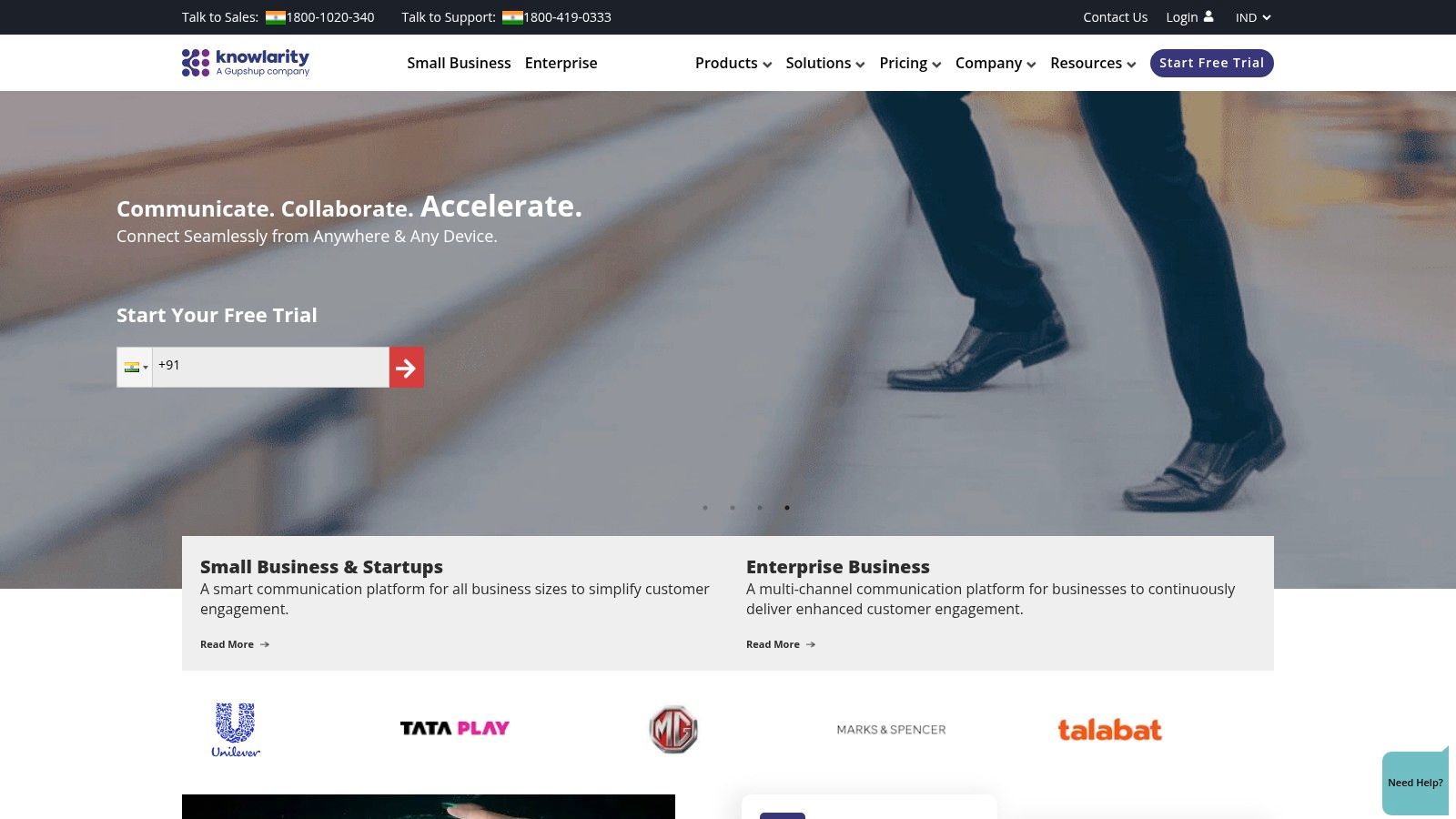
Knowlarity has been in the Indian cloud telephony market long enough to be familiar to many enterprise teams. That history matters. In call tracking, operational reliability and routing maturity usually matter more than a flashy dashboard.
Its advantage is breadth. You get virtual numbers, IVR, routing, recordings, and reporting, with the added strategic upside of being part of Gupshup’s broader conversational stack. For executive buyers, that opens a path from call monitoring to omnichannel engagement.
What executives should watch
Knowlarity makes sense when the business wants one telephony layer that can support present-day tracking and future conversational workflows. Outbound teams can monitor call-centre activity in real time, while leadership gets visibility into call flow patterns and response performance. The platform is better suited to organisations comfortable with a more enterprise-style buying process.
The trade-off is procurement simplicity. Public pricing tends to be less explicit than lighter-weight products, so financial planning may require a deeper sales cycle. That’s manageable for larger deployments, but less ideal for teams looking for instant self-serve evaluation.
For CXOs building oversight across distributed sales units, a structured call centre dashboard approach is often the difference between a telephony rollout and a performance system.
Knowlarity is strongest when the board-level question isn’t “Can we track calls?” but “Can we run voice, routing, and conversational engagement on a single strategic layer?”
3. MyOperator
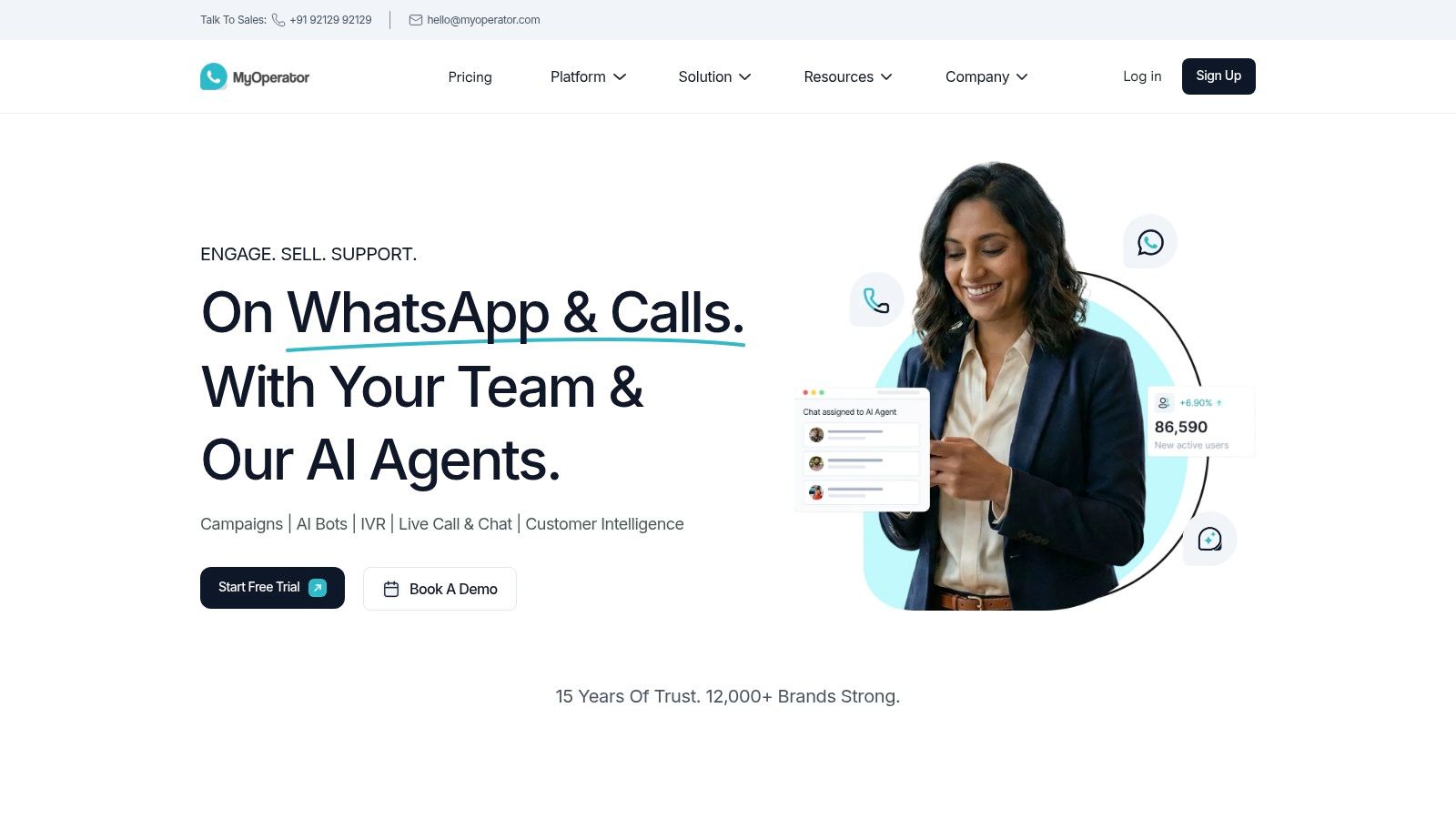
MyOperator fits organisations that win or lose revenue on response discipline. Its strength is managerial control: missed-call visibility, follow-up tracking, agent activity logs, and reporting that helps leaders see whether enquiries are being worked or quietly aging out.
That matters in businesses where speed to callback affects conversion rate and staffing efficiency. EdTech admissions teams, healthcare booking desks, real estate brokers, and service businesses often do not need a heavily customised telephony stack first. They need a system managers can use daily to enforce process, recover missed demand, and improve team accountability.
Where MyOperator creates value
MyOperator is best evaluated as an execution layer for inbound and lead-handling operations. If supervisors spend their day checking unanswered calls, reallocating callbacks, and reviewing whether teams are meeting basic response standards, the platform is easier to put into use than products built around a longer technical rollout.
The mobile and web access also suits distributed sales and service teams. Managers can review performance without relying on a desktop admin setup, which is practical for organisations where team leads are constantly switching between field coordination and call oversight.
It also fits companies tightening how enquiries move through the front line. Teams comparing vendors for this use case should assess it alongside their broader inbound call centre software strategy, especially if the business is trying to reduce missed opportunities without adding contact-centre complexity.
- Good fit for manager-led operations: Supervisors can monitor call logs, callback status, and basic responsiveness without heavy admin training.
- Good fit for missed-call recovery: Businesses that lose pipeline value from unanswered enquiries can put tighter follow-up controls in place.
- Main trade-off: Some useful functions depend on add-ons, so total cost can rise as reporting and workflow requirements become more specific.
For executive buyers, that is the key decision point. MyOperator is less about feature accumulation and more about whether better follow-up discipline, faster response handling, and cleaner operational visibility will produce measurable gains in conversion, utilisation, and customer response quality.
4. Servetel
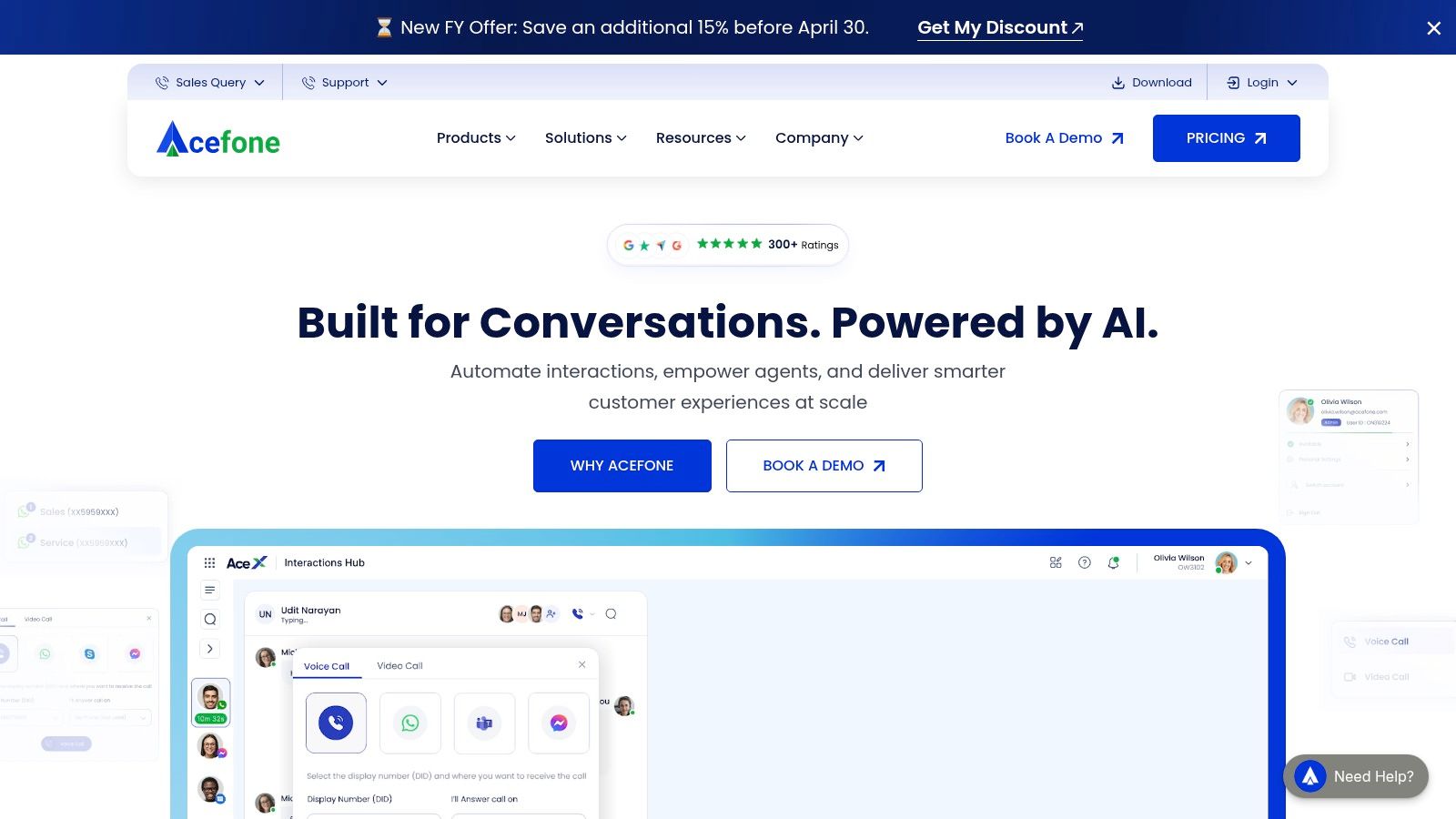
Servetel is often a sensible shortlist candidate when the buying priority is straightforward Indian cloud telephony with practical attribution support. It offers call tracking through unique numbers, IVR, routing, recordings, and API access without trying to position itself as everything at once.
That narrower positioning can be an advantage. For many mid-market firms, the best app for tracking calls isn’t the platform with the longest roadmap. It’s the one that gives clean operational data and dependable routing without forcing a complex rollout.
Best use case
Servetel fits best when marketing and sales both need enough data to trace lead flow, but the business doesn’t yet need a full enterprise contact-centre programme. A property developer running campaign-specific numbers, or a coaching business assigning numbers to landing pages and regions, can get useful visibility quickly.
The practical appeal is documentation around call-tracking use cases. Teams can understand how to route calls, record them, and tie them back to customer journeys. That’s especially valuable in organisations where sales ops and marketing ops are still aligning on ownership.
A limitation is that public pricing detail is less explicit than some peers. For finance leaders, that means validating entry cost, support scope, and usage assumptions before rollout. That extra diligence is worth doing if your team wants a simpler telephony-led path into attribution.
5. JustCall
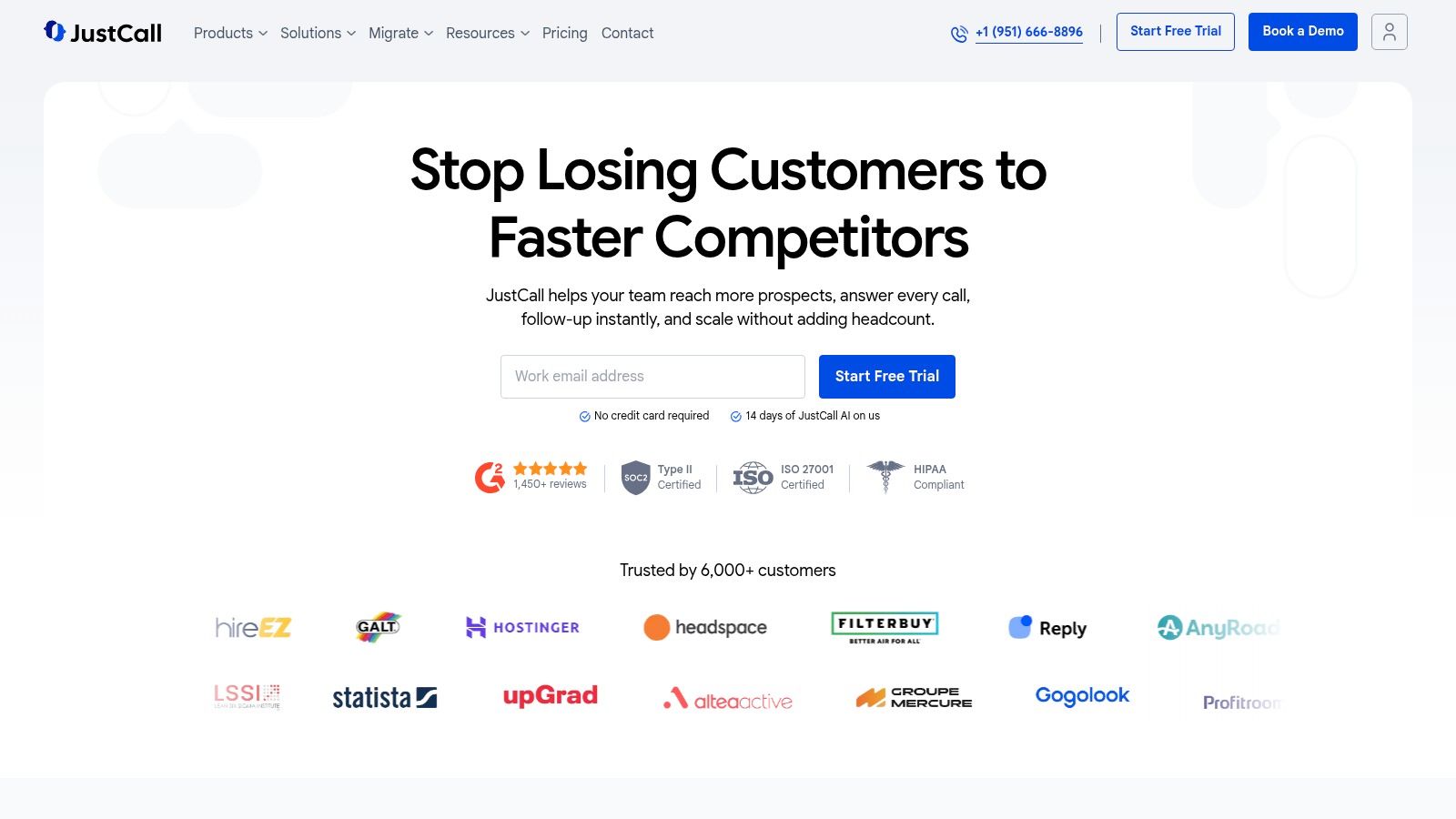
JustCall makes the strongest case when call tracking needs to support revenue execution, not just attribution reporting. For executives evaluating platforms against business outcomes, that changes the buying criteria. The question is less about which product logs calls, and more about which one shortens response times, improves rep output, and keeps CRM data usable.
JustCall sits closer to a sales and support operating system than to a marketing-first call tracking platform. That is a strength for companies where phone conversations directly affect pipeline progression, conversion rates, or customer retention.
Where JustCall creates value
JustCall fits best in teams running high call volume across sales, support, and customer success, especially when managers need activity captured inside the CRM without extra admin work. SaaS revenue teams, cross-border inside sales groups, and service businesses with distributed agents can use it to connect calling, SMS, recordings, analytics, and workflow automation in one environment.
The strategic value is operational. Better call routing reduces wasted agent time. Cleaner CRM logging improves forecast quality. Faster follow-up can raise lead-to-opportunity speed. Those gains matter more than a long feature list if the board-level objective is efficient revenue growth.
There is a trade-off. JustCall can be a strong fit for CRM-centric teams, but businesses buying primarily for campaign attribution may find it less specialised than platforms built around marketing measurement first. Cost discipline also matters. AI features and higher-tier workflow capabilities can push total spend well above the entry plan, so finance leaders should model the full operating scenario before rollout.
- Best for CRM-led revenue operations: Strong fit when leadership wants call activity, notes, and follow-up actions tied closely to pipeline management.
- Best for multi-market teams: Better suited than India-only options for organisations selling or supporting customers across several regions.
- Main trade-off: The value case improves when the business will actively use automation and analytics. It is weaker if the need is limited to basic number-based tracking.
6. CallHippo
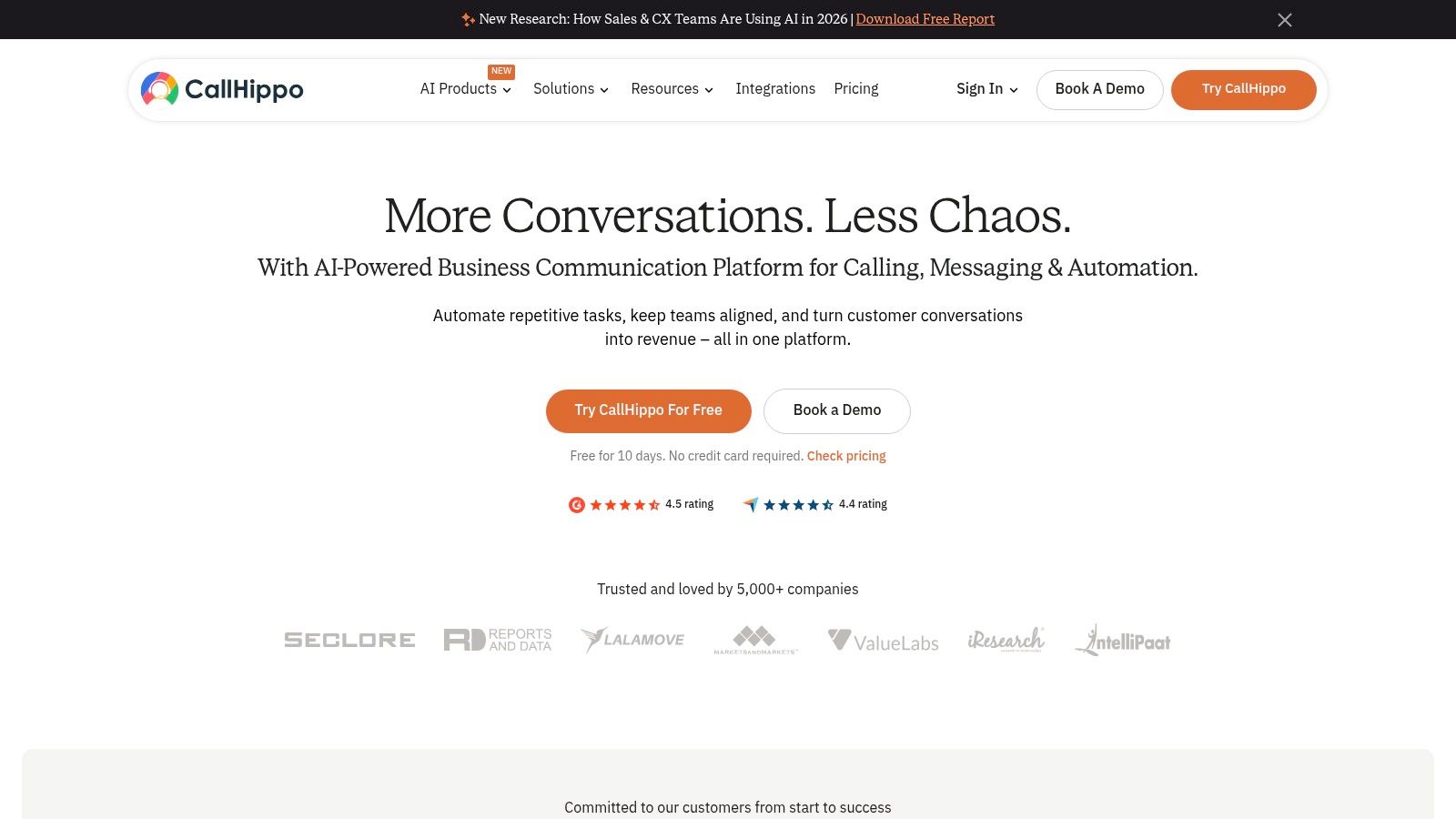
CallHippo stands out for a reason many software buyers underestimate. Pricing clarity changes buying speed. When plans, usage assumptions, and add-ons are easier to review, finance and revenue leaders can model total cost earlier and decide whether the platform supports a real operating case or only looks affordable at entry level.
That matters because CallHippo sits in a useful middle ground. It combines call handling, reporting, recordings, routing, DID support, number masking, and higher-tier AI options in a package that many growing teams can deploy without a long enterprise buying cycle. For executives evaluating an app for tracking calls, the question is less about whether those features exist and more about whether they improve revenue visibility, reduce supervisory overhead, and support the way teams operate.
What to validate before rollout
CallHippo makes the most sense when the business wants one platform to support day-to-day telephony and basic call tracking without paying for a heavier enterprise stack. That can be a sensible fit for service operations, outbound teams building process discipline, and support environments that need clearer reporting across managers, agents, and locations.
The trade-off is economic, not cosmetic. Storage, recording policies, advanced analytics, route-specific pricing, and country-level minute assumptions can change the actual cost per team or per qualified conversation. A low-friction procurement process is useful, but it should not replace a proper cost model.
For leadership teams, the strategic test is straightforward. Will the platform help sales managers raise follow-up speed, help marketing connect inbound calls to actual demand sources, or help operations reduce wasted handling time? If the answer is yes, CallHippo can justify its place. If the need is only basic call logs with limited reporting, the business may end up paying for flexibility it will not use.
Transparent packaging has value. It shortens internal review cycles, makes pilot planning easier, and helps executives compare ROI scenarios before rollout.
7. CallRail
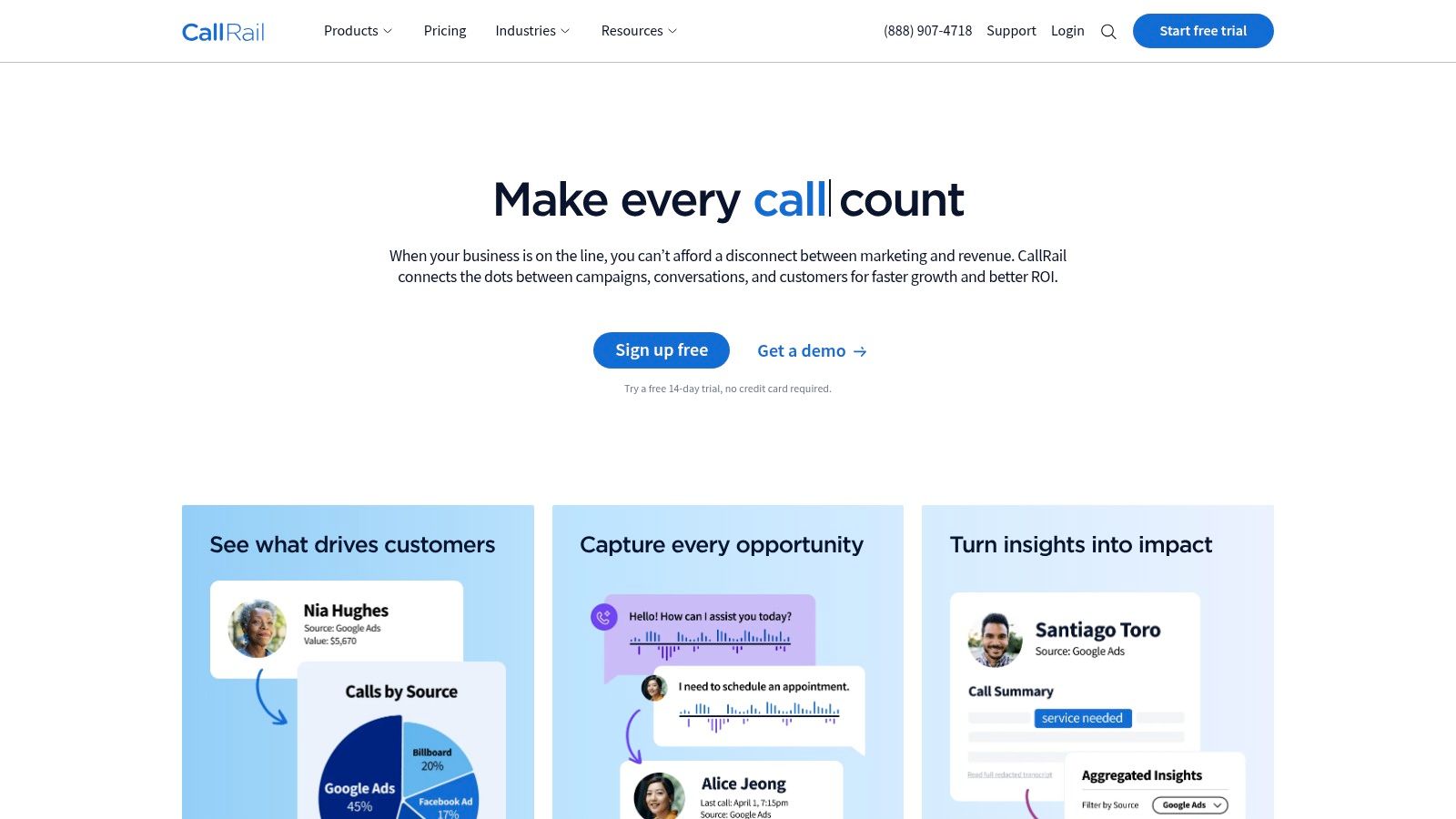
CallRail is one of the strongest products on this list for marketing attribution. If your question is, “Which campaigns, pages, and channels drove the phone lead?” CallRail deserves attention.
Its core strength is dynamic number insertion, paired with call tracking, routing, recordings, conversation intelligence, and form tracking. For CMOs and growth leaders, that allows much tighter ROI analysis than most telephony-led tools.
When CallRail is the right strategic choice
CallRail makes sense when marketing owns the buying decision and the business depends on channel-level attribution. Multi-location businesses, agencies, healthcare providers in supported regions, and performance marketing teams often benefit from that depth.
The limitation is obvious for Indian operations. CallRail officially supports numbers in a smaller set of countries, so it isn’t the natural first choice for India-native telephony deployments. If your core call infrastructure is in India, local providers generally fit better. If your team markets to supported regions, CallRail becomes much more relevant.
This strategic difference is important. A telephony platform answers, “How did the team handle calls?” A marketing attribution platform answers, “Why did the phone ring in the first place?” For many executive teams, those are different budget lines and different owners.
8. CallTrackingMetrics
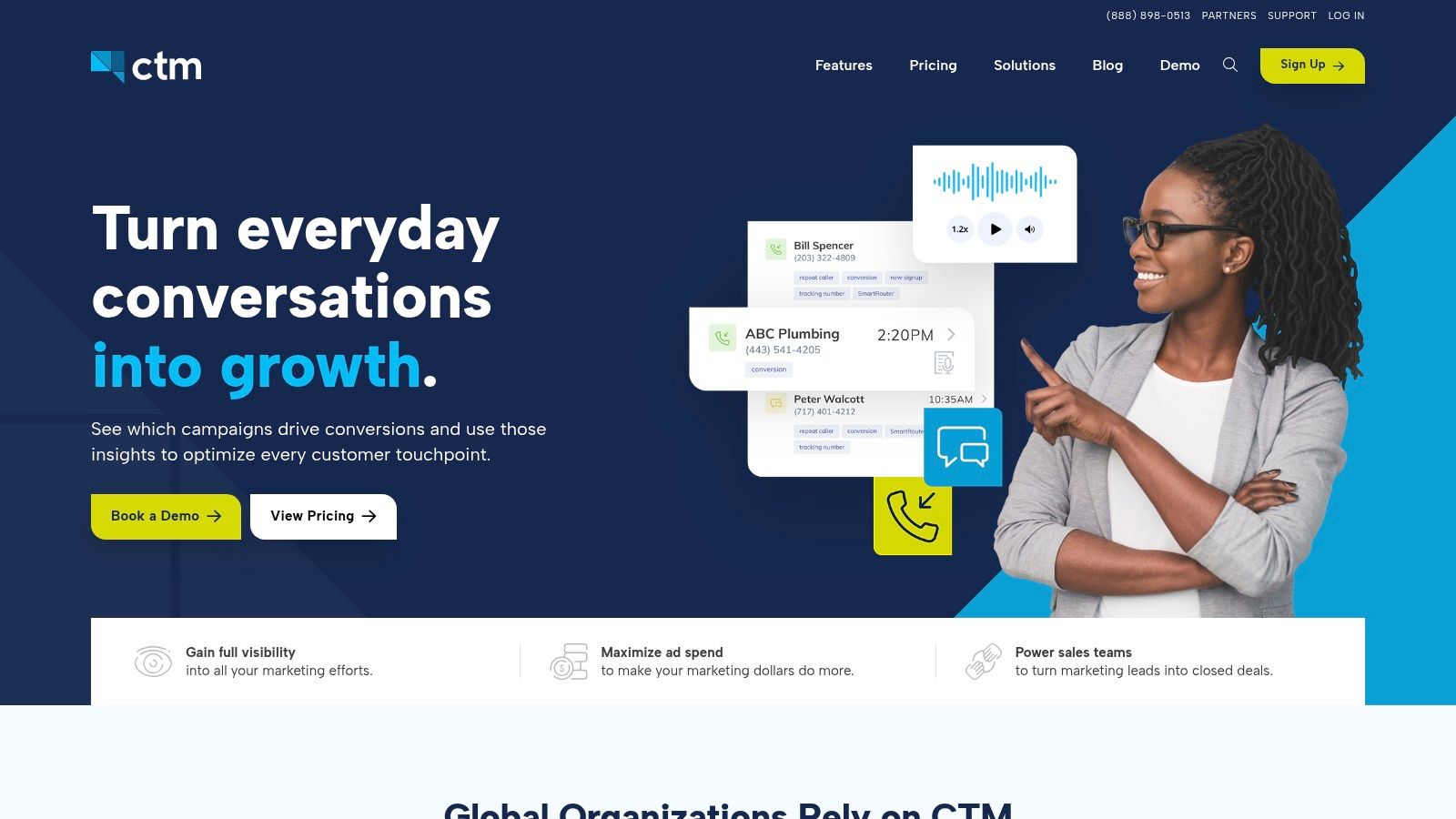
CallTrackingMetrics sits between pure attribution tools and broader contact-centre systems. It tracks calls, texts, chats, and forms, and layers on softphone capability, dynamic number insertion, AI options, and agency controls.
That breadth makes it attractive for organisations managing multiple brands, multiple funnels, or mixed inbound and outbound workflows. It’s less lightweight than a virtual-number app, but more operationally flexible.
Where CTM stands out
CTM is especially useful for agencies and groups that need sub-accounts, white-labelling, and client-level separation. It also gives international buyers more flexibility than some US-centric tools, with published country coverage and add-on structure.
The strategic value is in consolidation. Instead of stitching separate systems for call attribution, texting, basic contact-centre handling, and client access, CTM can centralise much of that estate. For leadership teams, fewer tools often means clearer ownership and cleaner reporting.
The trade-off is complexity. Configuration is heavier, and India number availability isn’t something to assume without confirmation. That’s the recurring theme with global platforms. They can be powerful, but local deployment realities need validation before finance signs off.
9. Invoca
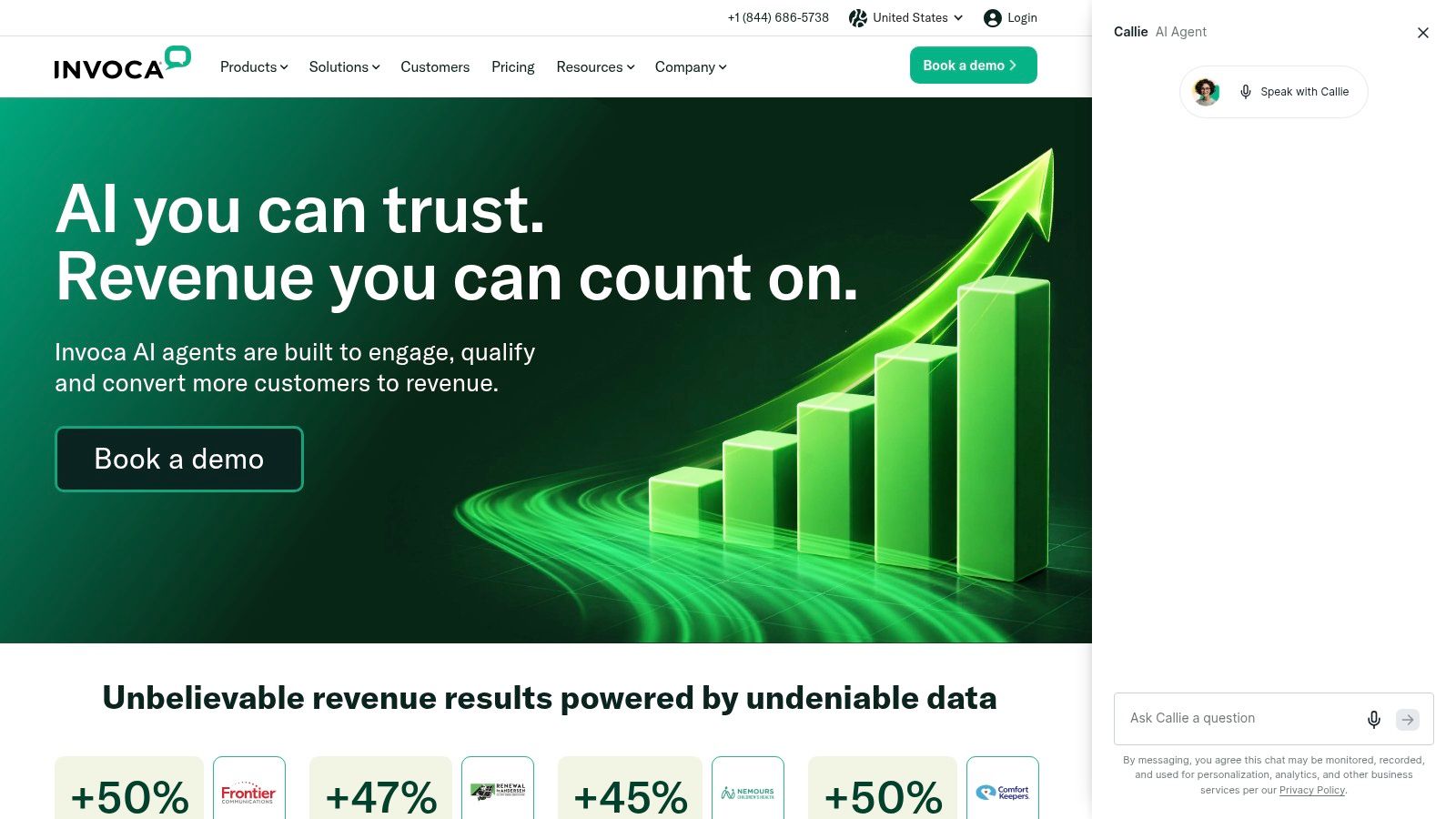
Invoca belongs in enterprise conversations where the call itself is treated as a marketing and analytics asset. It is not a simple app for tracking calls in the SMB sense. It is an enterprise conversation intelligence and attribution platform.
That means it’s best evaluated by teams that already have mature media spend, contact-centre processes, and analytics ownership. If those pieces aren’t in place, Invoca can be more platform than the business is ready to absorb.
Who should shortlist it
Invoca suits large marketers, affiliate-led programmes, and enterprises that need intent and outcome detection tied to campaign and conversion logic. Organisations with formal data, compliance, and operations teams can extract much more value from this style of platform than smaller teams can.
What stands out is signal-based automation and enterprise integrations. That gives leaders a way to connect call outcomes to downstream systems and decisioning. The cost structure is usually bespoke, which makes sense at this level, but it also means TCO discipline matters.
The right time to buy Invoca is when your problem is strategic measurement across channels and conversations, not simple telephony visibility.
10. CallRoot
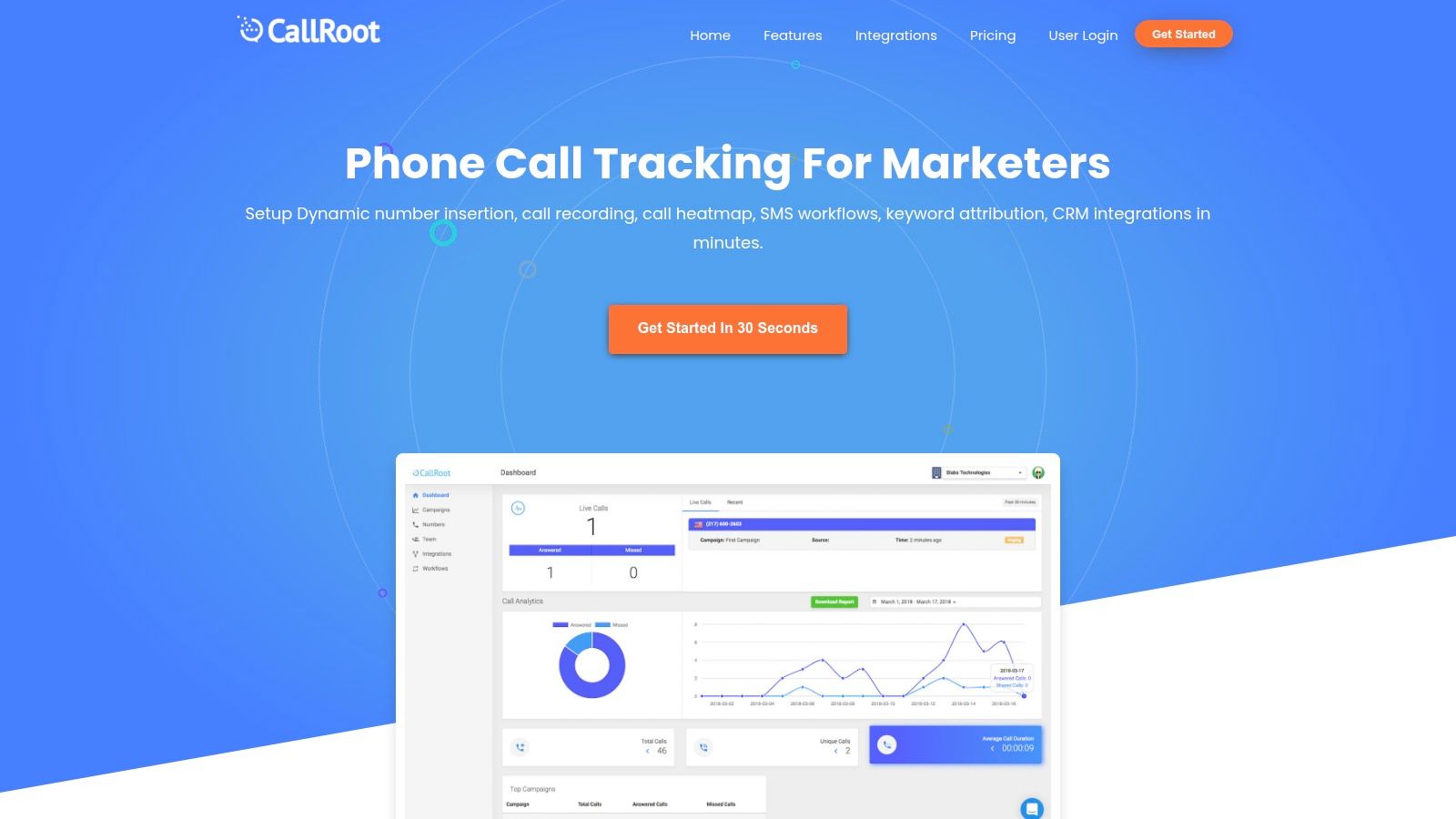
CallRoot is the leanest option in this list for teams that want direct call attribution with simple setup. Its positioning is clear: dynamic number insertion, recordings, live dashboards, ad and CRM integrations, and client-friendly account structure.
For agencies and smaller in-house teams, that focus is useful. There’s less platform sprawl, and pricing is easier to understand than in many enterprise alternatives.
Where it earns its place
CallRoot works best when the primary job is tracking campaign-driven calls and pushing that data into ad platforms or CRMs quickly. It’s especially practical for agencies managing multiple clients and wanting unlimited users with branding options.
The limitation is also clear. It doesn’t bring the same depth of contact-centre tooling as larger suites, and India number availability should be checked directly with sales. If your business needs call handling, routing sophistication, and broader telephony operations, local cloud telephony vendors will usually be stronger.
Still, for lean attribution use cases, simple is often better. A platform that your marketing team can launch quickly and your clients can understand easily can outperform a larger system that never gets fully implemented.
Top 10 Call Tracking Apps, Feature Comparison
| Vendor | Core features | UX / Quality | Value & Pricing | 👥 Target audience | ✨ Unique selling points |
|---|---|---|---|---|---|
| Exotel | Virtual numbers, multi-level IVR, auto-dialer, voice APIs | ★★★★, quick go‑live, India‑reliable | 💰 Transparent India pricing & credit bundles | 👥 High‑volume India ops (BFSI, EdTech, service) | ✨ Fast setup, developer APIs, robust CX roadmap |
| Knowlarity (Gupshup) | Call routing, IVR, recordings, realtime reporting, CRM integrations | ★★★★, proven at scale | 💰 Quote-based pricing (contact sales) | 👥 Enterprises & large contact centres | ✨ Gupshup backing for omnichannel AI 🏆 |
| MyOperator | Call tracking, IVR, WhatsApp, no‑code flows, AI+human handoffs | ★★★★, manager apps & live dashboards | 💰 Published tiers; AI minutes on plans | 👥 SMBs & manager-led sales teams | ✨ Missed‑call workflows, mobile manager tools |
| Servetel | Unique numbers & journey analytics, IVR, routing, APIs | ★★★, clear docs, developer friendly | 💰 Competitive entry pricing; quotes for large setups | 👥 Marketing & sales ops in India | ✨ Strong call‑tracking guidance for attribution |
| JustCall | Cloud phone, power dialer, recordings, AI add‑ons, global numbers | ★★★★, fast onboarding, wide CRM support | 💰 Flexible outbound minutes; AI as paid add‑ons | 👥 India teams serving global customers | ✨ Local numbers across countries, easy CRM sync |
| CallHippo | Reports, routing, voice broadcast, AI/speech analytics, WhatsApp API | ★★★★, transparent INR plans | 💰 Clear INR plans; some per‑minute/feature costs | 👥 SMB/SME sales & support teams | ✨ Good SMB feature set + SSO & role controls |
| CallRail | DNI, conversation intelligence, form tracking, AI Voice Assist | ★★★★☆, mature attribution & analytics | 💰 Published plans; HIPAA options for regulated verticals | 👥 Marketers & agencies (US/UK/CA/AU) | 🏆 Best‑in‑class attribution & conv‑intel ✨ |
| CallTrackingMetrics (CTM) | Call/text/chat/form tracking, DNI, AI tools, agency features | ★★★★, global coverage, more complex setup | 💰 Clear add‑on pricing; agency packages | 👥 Agencies & multi‑brand enterprises | 🏆 White‑labeling, unlimited sub‑accounts, global reach |
| Invoca | AI intent/outcome detection, signal automation, enterprise integrations | ★★★★☆, enterprise‑grade analytics | 💰 Bespoke pricing; higher TCO (enterprise) | 👥 Enterprises, performance marketers, call affiliates | 🏆 Deep AI‑driven intent & automation ✨ |
| CallRoot | DNI, recordings, live dashboard, ads & CRM integrations | ★★★, simple UI, quick DNI setup | 💰 Straightforward plan; transparent overages | 👥 Agencies & lean marketing teams | ✨ Quick DNI setup, unlimited users, simple pricing |
Framework for Action Choosing and Implementing Your Call Tracking Solution
Nearly every phone-driven business claims to track calls. Far fewer can tie those calls to revenue, cost per acquisition, rep productivity, and service recovery in one operating view. That gap is what separates a software purchase from a strategic asset.
Choosing an app for tracking calls starts with one question. What business result must improve first? A CMO usually needs cleaner attribution and faster budget reallocation. A sales leader needs better lead routing, shorter response times, and clearer rep-level coaching. An operations head needs fewer missed calls, tighter queue management, and better control across locations.
That choice should determine the platform shortlist. CallRail and CallTrackingMetrics fit teams that need strong attribution, dynamic number insertion, and campaign-level visibility. Exotel, Knowlarity, MyOperator, Servetel, and JustCall usually make more sense when the operating priority is telephony control, agent workflows, CRM logging, and distributed team management. Invoca belongs in the conversation when the business case depends on enterprise-grade intent detection and automation, and the organisation can support the higher total cost of ownership.
Integration should be the second filter, not an afterthought. If call data does not flow into Salesforce, HubSpot, LeadSquared, Zoho, or your BI layer, leaders end up managing from partial records. That creates predictable failure points: marketing cannot defend spend, sales cannot see source quality by channel, and finance cannot assess acquisition efficiency with confidence.
A practical selection framework is simple:
- Define the primary KPI. Pipeline created, booked appointments, qualified calls, first response time, cost per lead, or recovery of missed-call revenue.
- Map the call journey. Ad click, landing page, call, qualification, CRM update, follow-up, and closed revenue.
- Audit integration requirements. CRM, ad platforms, help desk, analytics stack, and consent or recording controls.
- Model full operating cost. Licences, numbers, per-minute charges, storage, AI add-ons, onboarding, and support.
- Run a controlled pilot. One business unit, one region, or one campaign cluster for 30 to 60 days.
- Set an executive scorecard. Attribution accuracy, answer rate, speed to lead, conversion rate, and cost impact.
Implementation matters as much as vendor choice.
A weak rollout turns good software into another reporting layer. A disciplined rollout changes behaviour. Start with a contained use case where phone calls already influence revenue, such as real estate, healthcare intake, financial services, or high-consideration B2B sales. Connect the platform to the CRM first. Then define what happens after a call is tagged: who owns follow-up, how quickly it happens, and which outcomes are written back into the system.
Automation is where value compounds. If a qualified inbound call ends without a booked meeting, the next action should trigger immediately. Teams can route that event into a Voice AI workflow, a callback queue, or a sales sequence instead of waiting for manual follow-up. That operating discipline is often worth more than another analytics dashboard because it converts insight into action while buyer intent is still high.
Cost discipline also needs executive attention. Licence price is the visible line item, but not the only one that matters. Number rental, outbound usage, storage, transcription, AI features, admin overhead, and implementation support often determine whether the platform produces a real return. The right question is not whether the software is affordable. The right question is whether the business case holds after all operating costs are included.
Local fit versus global depth is the final trade-off. If your organisation depends on India-native calling, SIM-based outreach, WhatsApp-led workflows, or regional support expectations, local vendors often win on deployment speed, pricing clarity, and adoption. If your board expects advanced attribution, agency-grade reporting, or enterprise automation across markets, global platforms usually justify the complexity. Research cited earlier also points to rising adoption in BFSI and real estate, driven by compliance needs and pressure to improve attribution quality.
Use the platform selection process to decide how your company will measure phone conversations as a commercial asset. The strongest implementations treat every call as a source of revenue data, operational signals, and customer intelligence.
DialNexa Labs Private Limited helps organisations turn call tracking into revenue action. If you want to pair your telephony stack with human-like Voice AI for qualification, support, recruitment, or presales, DialNexa gives your team a practical next layer: scalable AI agents, industry-ready workflows, and dashboards that help convert more calls into booked demos, qualified leads, and faster follow-ups.

Leave a Reply