
Best Conversational AI Platforms: 2026 CXO Guide
India already has the scale to make conversational AI a board-level operating decision, not a pilot. The Telecom Regulatory Authority of India reported 1,188.06 million telephone subscribers and 1,185.54 million wireless subscribers at the end of September 2025. That means most customer journeys in India still resolve on mobile, and often on voice, SMS, or messaging rather than a website widget.
At the same time, the enterprise AI budget pool is getting much larger. Fortune Business Insights projects the India artificial intelligence market to grow from USD 4.91 billion in 2025 to USD 27.61 billion by 2032, at a 27.20% CAGR. For CXOs, that changes the buying question. The issue isn't whether conversational AI belongs in the stack. It's which platform can turn customer conversations into lower service cost, faster lead qualification, stronger compliance, and better conversion without creating a hidden integration burden.
That's why generic “top chatbot” lists are often useless in practice. They over-index on feature count and underweight deployment architecture, governance, telephony fit, and total cost of ownership. In India, the best conversational ai platforms usually win because they handle multilingual voice and messaging, connect cleanly with CRM and ticketing systems, and support consent, routing, and auditability.
If you need a quick primer before evaluating vendors, this overview of how conversational AI works is a useful starting point.
Table of Contents
- 1. DialNexa Labs Private Limited
- 2. Yellow.ai
- 3. Kore.ai
- 4. Google Dialogflow CX
- 5. Microsoft Copilot Studio
- 6. Haptik Jio Haptik
- 7. Gupshup Conversation Cloud
- 8. Tars HelloTars
- 9. Verloop.io
- 10. Skit.ai
- Top 10 Conversational AI Platforms Comparison
- Final Thoughts
1. DialNexa Labs Private Limited
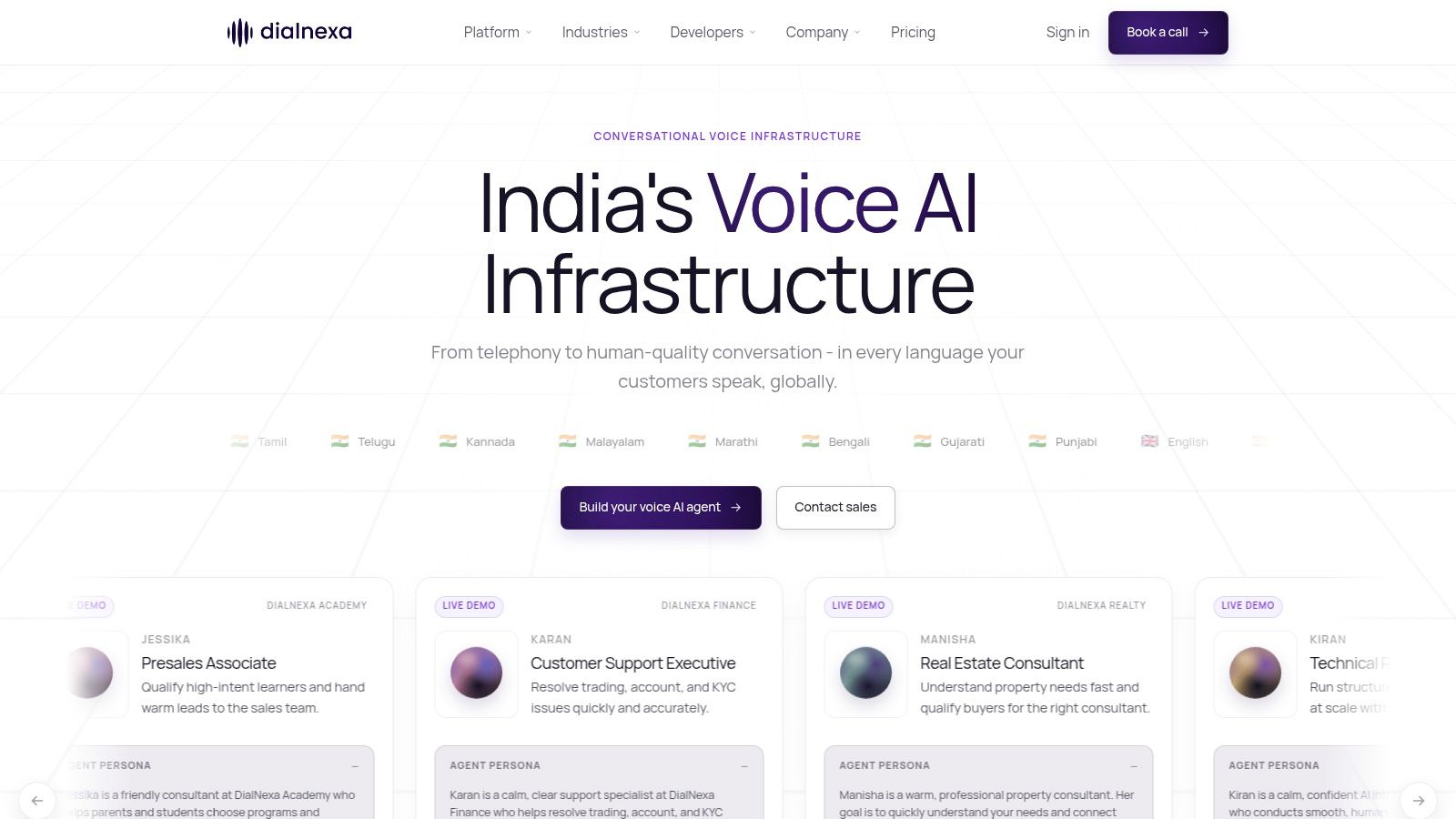
DialNexa Labs Private Limited is a strong option for executives evaluating conversational AI as an operating model decision, not a software experiment. Its focus is voice-led automation for qualification, customer support, recruitment, presales, reminders, and follow-ups in sectors where calls still influence conversion, service quality, and response times, including EdTech, BFSI, real estate, hospitality, e-commerce, and software.
The commercial case is unusually specific. In DialNexa's published materials, customers report higher connect rates, stronger lead-to-booking performance, and close alignment between AI qualification and human assessment. For a revenue or service leader, those metrics matter because they point to three financial outcomes: more productive outbound volume, lower dependence on manual calling teams, and better use of skilled agents on higher-value conversations.
For buyers building a broader strategy around conversational AI for customer service, that distinction is important. A platform that can manage multi-minute voice interactions, capture intent accurately, route calls, and trigger next-step workflows starts to affect cost per contact and conversion yield, not just containment rates.
Why DialNexa stands out
DialNexa's differentiation is tied to deployment practicality. It offers prebuilt personas and call flows for use cases such as property discovery, site-visit booking, KYC guidance, trading platform support, and programme counselling. That can shorten the path from pilot to production, which has a direct effect on payback period.
The hidden cost in conversational AI extends beyond licences to workflow design, integration work, QA, retraining, and exception management. Platforms with pre-structured industry workflows can reduce that implementation drag and lower the risk of stalled rollouts.
Executive filter: If first-contact, reminder, booking, or qualification calls still consume agent hours, evaluate platforms on conversion impact, workload reduction, and deployment time before comparing model sophistication.
Where it fits best
DialNexa fits organisations that run high-volume calling operations and need message consistency across teams and regions. A university admissions team can use it to qualify applicants and schedule counselling. A real estate developer can automate discovery calls and site-visit coordination. A BFSI operation can use it for support routing, KYC guidance, and routine outreach where process discipline and auditability affect customer experience and compliance exposure.
Its API documentation and management dashboard also support faster integration into an existing stack. That lowers operational friction for teams that want rapid rollout without giving up visibility into performance and control.
There are trade-offs procurement and operations leaders should test early.
- Pricing requires direct scoping: Public pricing is not available in the provided materials, so finance and procurement teams should model usage, onboarding, and support assumptions before approval.
- Voice AI requires operating discipline: Script logic, routing rules, CRM data quality, and escalation design still need active ownership after launch.
- Regulated deployments need policy review: Consent handling, recording disclosures, retention settings, and access controls should be validated before production use.
At a portfolio level, DialNexa stands out because its value proposition is tied to front-office economics. It is easier to justify a platform when the business case connects to agent capacity, conversion efficiency, and response coverage, rather than generic automation metrics.
2. Yellow.ai
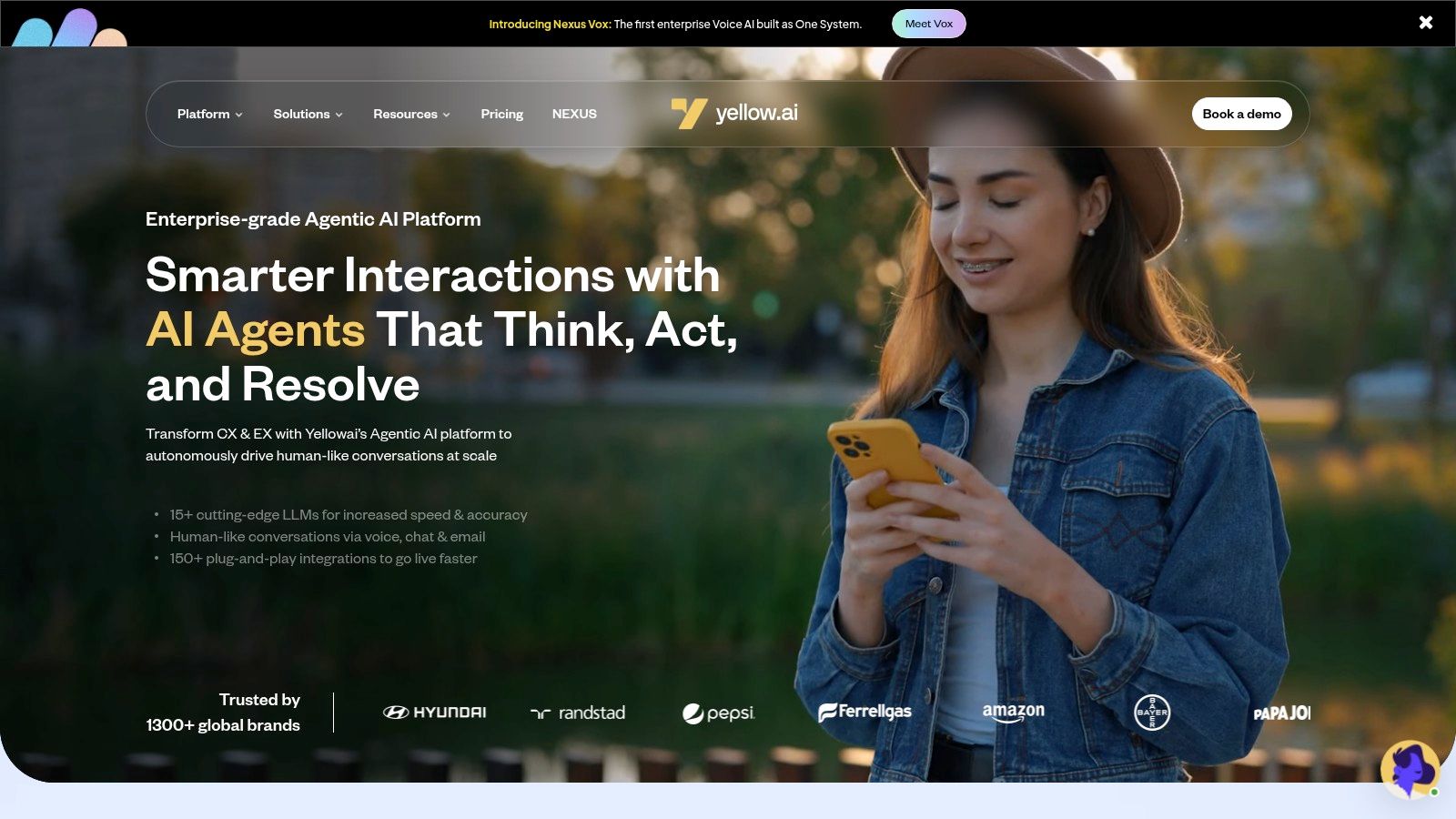
Yellow.ai is a credible enterprise option for companies that want one platform for chat, voice, support, marketing, and commerce journeys. Its strength is breadth. Web, app, WhatsApp, and voice can sit under one operating model, which is attractive for contact centre leaders trying to reduce channel silos.
For India-based businesses, that omnichannel setup matters because the telecom base is overwhelmingly mobile-first, as noted earlier. In practice, that pushes buyers toward platforms that can orchestrate messaging and voice together, rather than treating chat as the primary customer interface.
Why executives shortlist it
Yellow.ai is a practical fit for BFSI, retail, e-commerce, and large service operations that need generative AI agents with workflows, guardrails, analytics, and human handoff. It also offers mature onboarding material and a freemium path, which lowers the cost of initial testing before a broader enterprise commitment.
A useful way to think about Yellow.ai is as a coordination platform. A retailer can use it to run order-support automation on WhatsApp, escalate edge cases to human agents, and maintain one analytics layer across campaigns and service interactions. A bank can use the same model for support, lead routing, and status updates, provided governance is configured properly.
For leaders reviewing TCO, the attraction is consolidation. Fewer standalone tools usually mean fewer integration points, fewer analytics silos, and fewer operational handoffs.
The strongest Yellow.ai use case isn't “let's launch a bot.” It's “let's standardise customer conversations across support, marketing, and commerce on one control plane.”
There are trade-offs. Advanced capabilities typically sit behind paid tiers, and WhatsApp cost modelling can get complicated because template and geography variables affect spend. Teams should also evaluate whether internal operations can support the workflow design discipline needed to keep omnichannel journeys coherent.
This overview of conversational AI for customer service teams is a helpful frame for that decision. Yellow.ai tends to work best when the buyer already knows which customer journeys to automate and how success will be measured.
3. Kore.ai
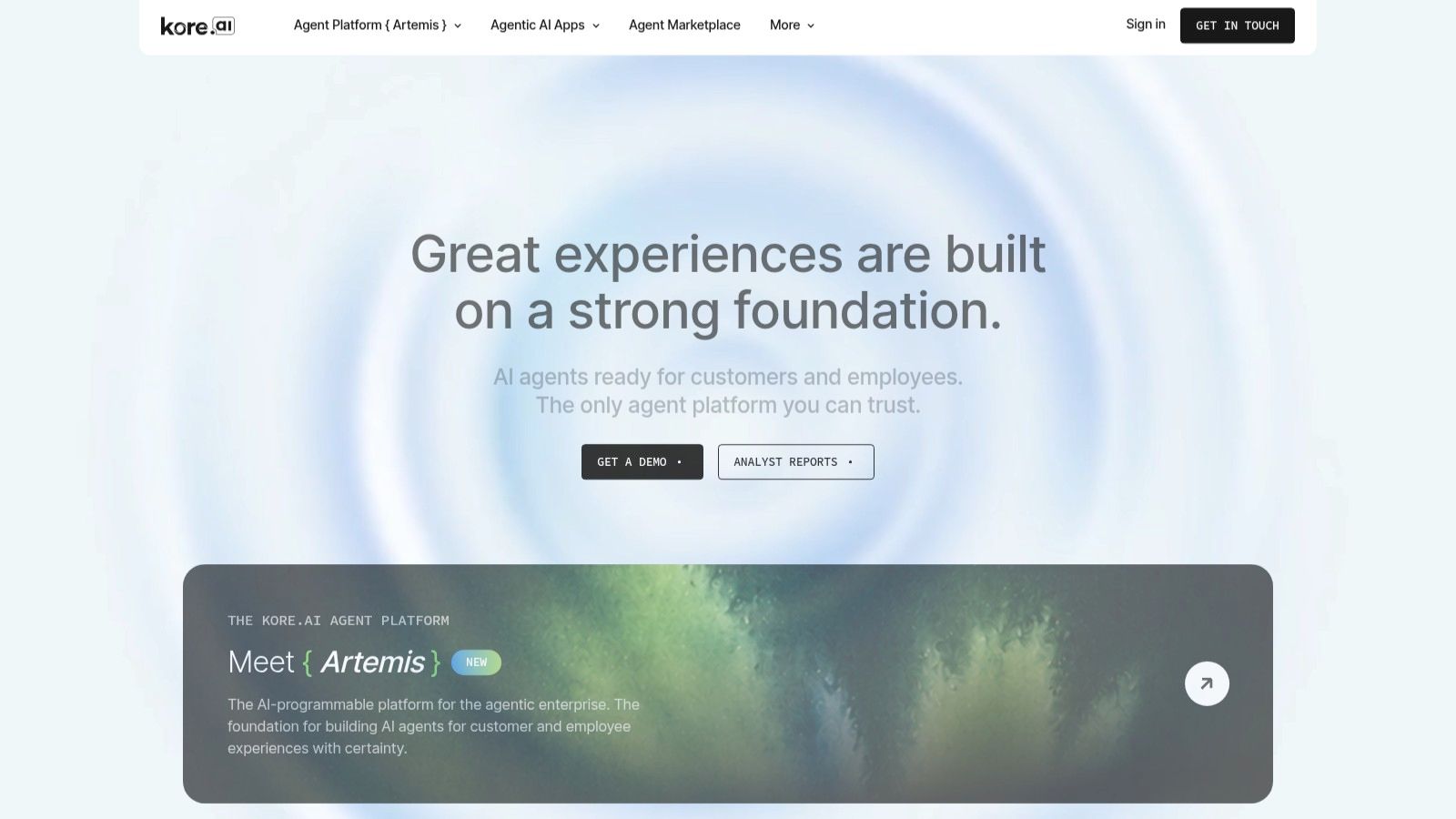
Kore.ai is built for enterprises that want one conversational AI layer across customer service, employee support, and contact centre operations. That matters at the board level because platform sprawl is expensive. Separate tools for CX bots, agent assist, voice automation, and internal service workflows create duplicate integration work, fragmented analytics, and slower governance reviews.
Kore.ai's position in the market is tied to breadth. Gartner's overview of enterprise conversational AI vendors has identified Kore.ai among the notable providers in this category, reflecting demand for platforms that support both external and internal use cases under one architecture, as noted in Gartner's market coverage referenced by Kore.ai. For buyers comparing total cost of ownership, that breadth can change the business case. One platform with shared security controls, orchestration, and administration can be easier to justify than a stack assembled product by product.
The strongest Kore.ai use case is a large-scale automation programme with multiple stakeholders and measurable service-cost targets. A bank can deploy customer support automation, agent-assist guidance, and employee help desk workflows on the same platform. A healthcare provider can support patient appointment management while routing internal HR and IT requests through the same governance model. In both cases, the value is not only containment or faster responses. It is fewer vendors, fewer duplicated workflows, and a clearer path to standardising policy across teams.
Its Studio environment, voice and chat support, and contact centre integrations support that model. So do administrative controls such as SSO, role-based access, and structured governance. These are not feature-list extras. They affect audit effort, deployment speed across business units, and the cost of operating AI in regulated environments.
The trade-off is straightforward. Kore.ai usually requires a serious implementation plan. Enterprises should budget for conversation design, backend integration, testing, and operating ownership after launch. If the organisation lacks process discipline or executive sponsorship, time to value can stretch.
- Best for enterprise-wide automation: Strong fit for companies consolidating customer, agent, and employee experiences onto one platform.
- Less suited to fast, lightweight experiments: The platform shows better economics when deployed across several functions, not as a narrow pilot.
- Relevant for regulated and multilingual environments: Useful where governance, voice support, and cross-channel consistency matter as much as automation rates.
Kore.ai is a strategic platform decision, not a tactical bot purchase. For CXOs, the question is whether the business can use that breadth to reduce software overlap, improve service productivity, and create a reusable automation layer across the enterprise. If the answer is yes, Kore.ai deserves a place on the shortlist.
4. Google Dialogflow CX
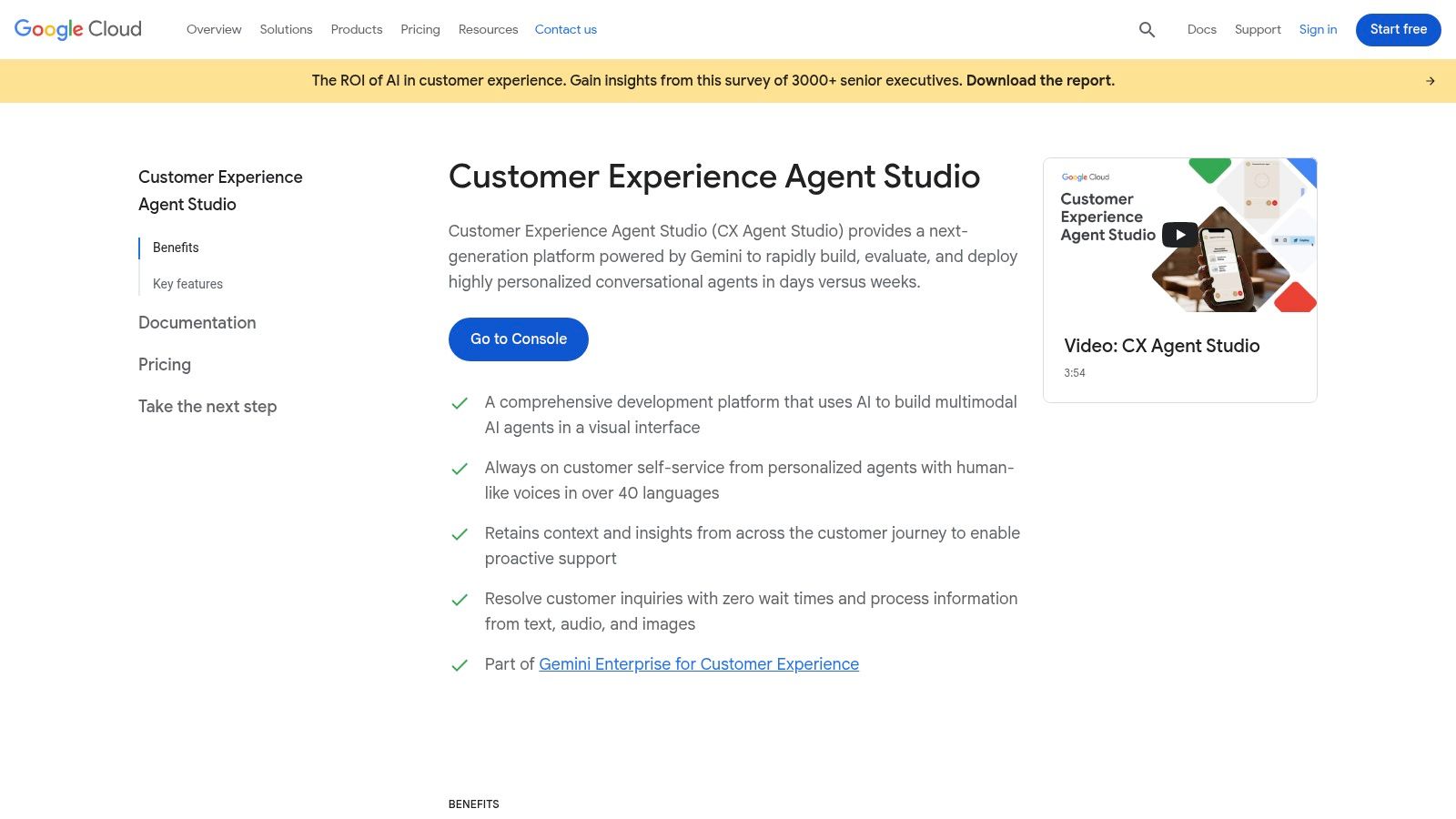
Google Dialogflow CX is often the right answer when an enterprise wants maximum design control and already has strong development resources. It's less a packaged business application and more a cloud-native framework for building advanced voice and chat agents with stateful flows, fulfilment hooks, and direct ties into Google's contact centre ecosystem.
That distinction matters. If your team wants custom conversational architecture, precise flow design, and usage-based billing instead of a bundled enterprise suite, Dialogflow CX deserves a serious look.
Why Dialogflow CX makes financial sense
Its pay-as-you-go structure can be attractive for organisations that want to avoid large upfront software commitments. A software company can build a support assistant tied to product telemetry. A travel or hospitality brand can orchestrate booking and modification flows with highly specific logic. A large support operation can connect Dialogflow CX to telephony and human agents without adopting an all-in-one vendor stack.
The trade-off is operational complexity. Cost modelling can become difficult once you account for sessions, speech components, fulfilment, and adjacent cloud services. Complex flow design also needs product and engineering discipline.
Independent market coverage adds context here. It estimates the global conversational AI market at USD 16.09 billion in 2026, growing at a 23.0% CAGR to USD 68.52 billion by 2033, with chatbots representing 68.7% of type share in 2026. That suggests many buyers will still default to chat-led deployments. Dialogflow CX is more valuable when leadership deliberately wants voice and workflow depth rather than just a chatbot interface.
If your organisation measures success by flow control, integration flexibility, and cloud architecture fit, Dialogflow CX often beats easier platforms that become restrictive later.
For CXOs, the question isn't whether Dialogflow CX has powerful technology. It does. The question is whether your business wants to build a differentiated conversational layer, or buy one that arrives with more opinionated business workflows already packaged.
5. Microsoft Copilot Studio
Microsoft Copilot Studio is most compelling when conversational AI is an extension of an existing Microsoft estate. If your enterprise already runs heavily on Microsoft 365, Teams, Dataverse, Azure identity, and Power Platform, Copilot Studio can lower implementation friction because governance and connectors are already familiar to IT and security teams.
That matters more than feature count. In enterprise deployments, speed to controlled rollout often beats theoretical platform flexibility.
Best fit scenario
Copilot Studio works well for internal support, service workflows, knowledge retrieval, and task automation that need to live inside Microsoft channels. A large enterprise can publish assistants into Teams, connect them to records and workflows, and manage lifecycle controls through systems it already operates.
Enterprise research positions Microsoft Copilot Studio as optimised for low-code workflows within the Microsoft ecosystem rather than as a broad standalone bot-building environment. In practical terms, that means buyers should evaluate it less as a neutral conversational platform and more as a force multiplier for Microsoft-centric operations.
A few implications follow:
- Strongest ROI comes from ecosystem fit: Existing Microsoft customers can reduce integration overhead and identity-management complexity.
- Governance is a major advantage: DLP, environment controls, and admin familiarity support regulated deployments.
- Value drops outside the estate: If core workflows live elsewhere, the platform can feel less economical.
There's also a licensing reality. Credit consumption and entitlement structures can be nuanced, so finance and IT should model realistic usage rather than relying on a simple seat-based assumption.
For CXOs, Copilot Studio is often the sensible choice when they want to expand automation without opening another platform governance front. It's less about finding the “most advanced bot” and more about getting dependable business automation from tools the enterprise already trusts.
6. Haptik Jio Haptik
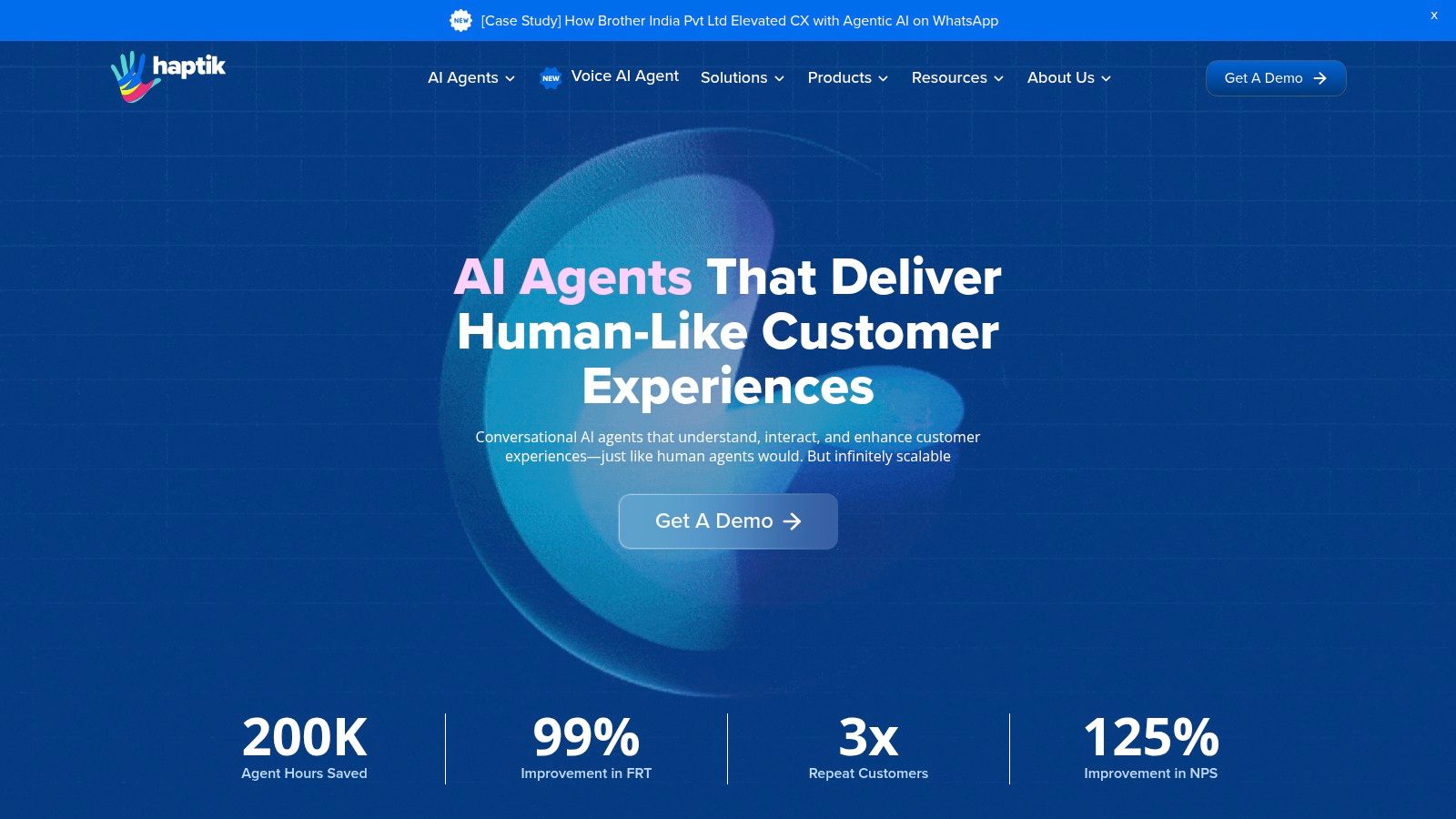
Jio Haptik deserves attention because it combines India-market familiarity with enterprise-grade conversational coverage across support, commerce, and fintech. It's especially relevant for companies that need strong WhatsApp execution and a security posture suitable for larger deployments.
Haptik's practical value is that it doesn't treat India as a secondary market. For CXOs, that usually means better alignment with local messaging behaviour, enterprise procurement expectations, and common deployment patterns in regulated industries.
Why Haptik matters in India
The bigger issue in India isn't only feature breadth. It's compliance readiness. A compliance-first buying lens is increasingly necessary because the Digital Personal Data Protection Act, 2023 creates obligations around consent, purpose limitation, and data minimisation, while TRAI's commercial communications framework raises the bar for customer consent handling and related controls, as summarised in this analysis of conversational AI platform governance in India.
That context makes Haptik's positioning around security, compliance, and enterprise deployment more important than its marketing surface. A BFSI team automating service conversations on WhatsApp needs more than journey design. It needs opt-out handling, auditability, role-based access, and operational clarity around personal data.
For leaders comparing voice-led options as well, this review of the best voice AI platform in India is a useful companion read.
Boardroom question: Can this vendor operationalise consent, retention, and audit controls in a way our compliance team will actually sign off?
Haptik isn't ideal for buyers seeking transparent self-serve pricing. Most meaningful deployments are sales-led, and advanced workflows may need implementation support. But for enterprises that care about India-specific scale and compliance posture, Haptik remains one of the more strategically grounded choices.
7. Gupshup Conversation Cloud
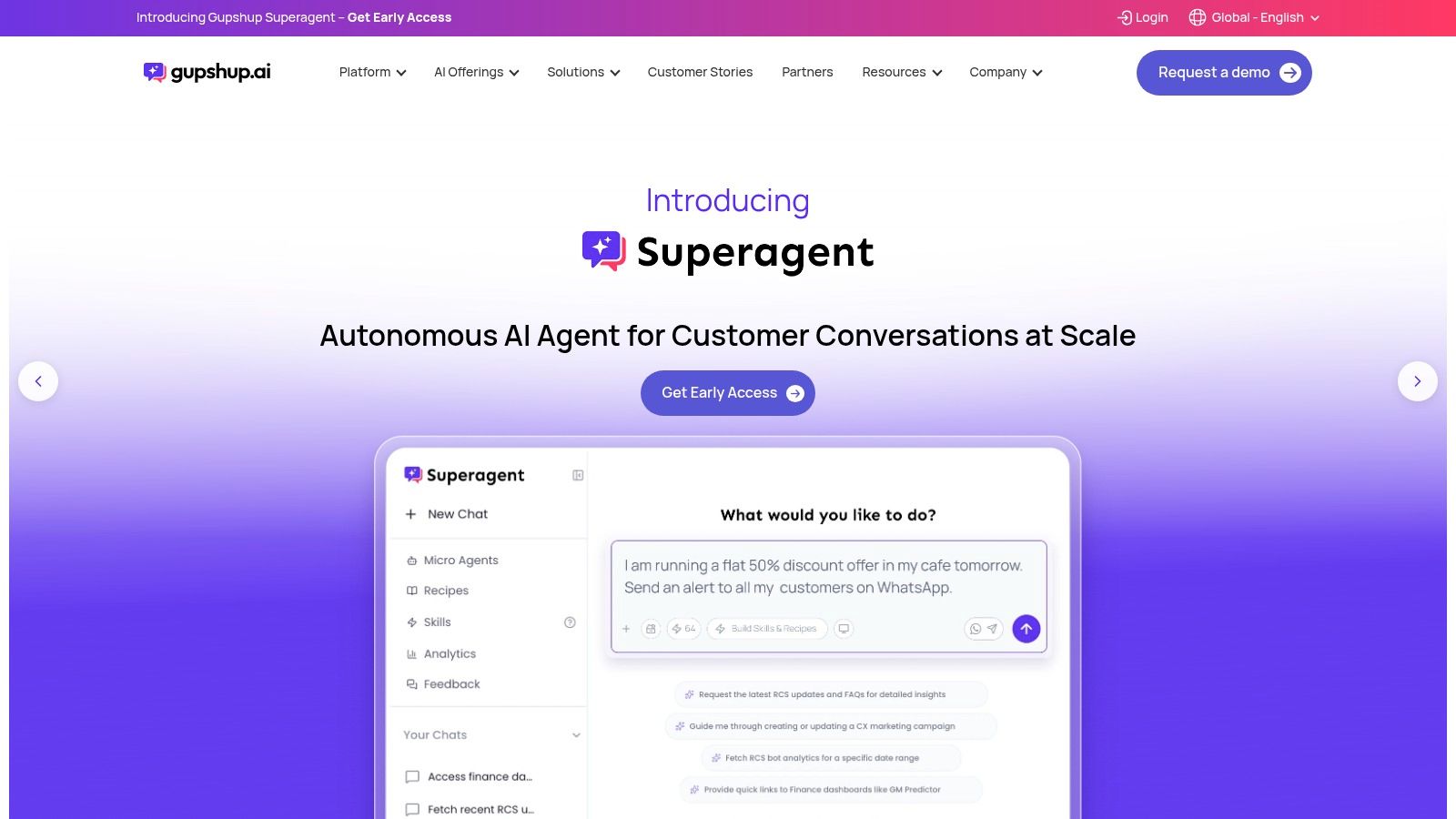
Gupshup Conversation Cloud is a strong candidate when messaging is the centre of your commercial model. Its stack covers bot building, workflows, inbox tooling, broadcasting, and APIs across channels such as WhatsApp, SMS, Instagram, and RCS.
That's a different proposition from platforms built primarily for contact-centre automation. Gupshup is best understood as a conversational engagement infrastructure layer for marketing, commerce, and support.
Where Gupshup creates leverage
An e-commerce brand can use Gupshup to combine campaign outreach, transactional messaging, support flows, and live-agent escalation in one operational environment. A real estate business can manage enquiry journeys, appointment nudges, and qualification updates through messaging-first workflows. For many Indian enterprises, that lowers execution complexity because customer acquisition and servicing often happen on the same channels.
The strategic advantage is channel proximity. Teams don't have to bolt a separate campaign engine onto a support bot stack and then reconcile analytics later. That can simplify operational ownership.
Still, messaging-led scale creates its own cost discipline issues.
- WhatsApp spend needs active control: Fees and provider markups can drift if templates and conversation design aren't managed tightly.
- Complex journeys need technical support: Enterprises often need developers for orchestration, API work, and governance logic.
- Best when messaging drives revenue: If your use case is primarily voice-centric, another platform may fit better.
Gupshup is one of the best conversational ai platforms for businesses that think in terms of customer journeys rather than isolated support interactions. It's less about “deploy a bot” and more about owning the commercial messaging layer end to end.
8. Tars HelloTars
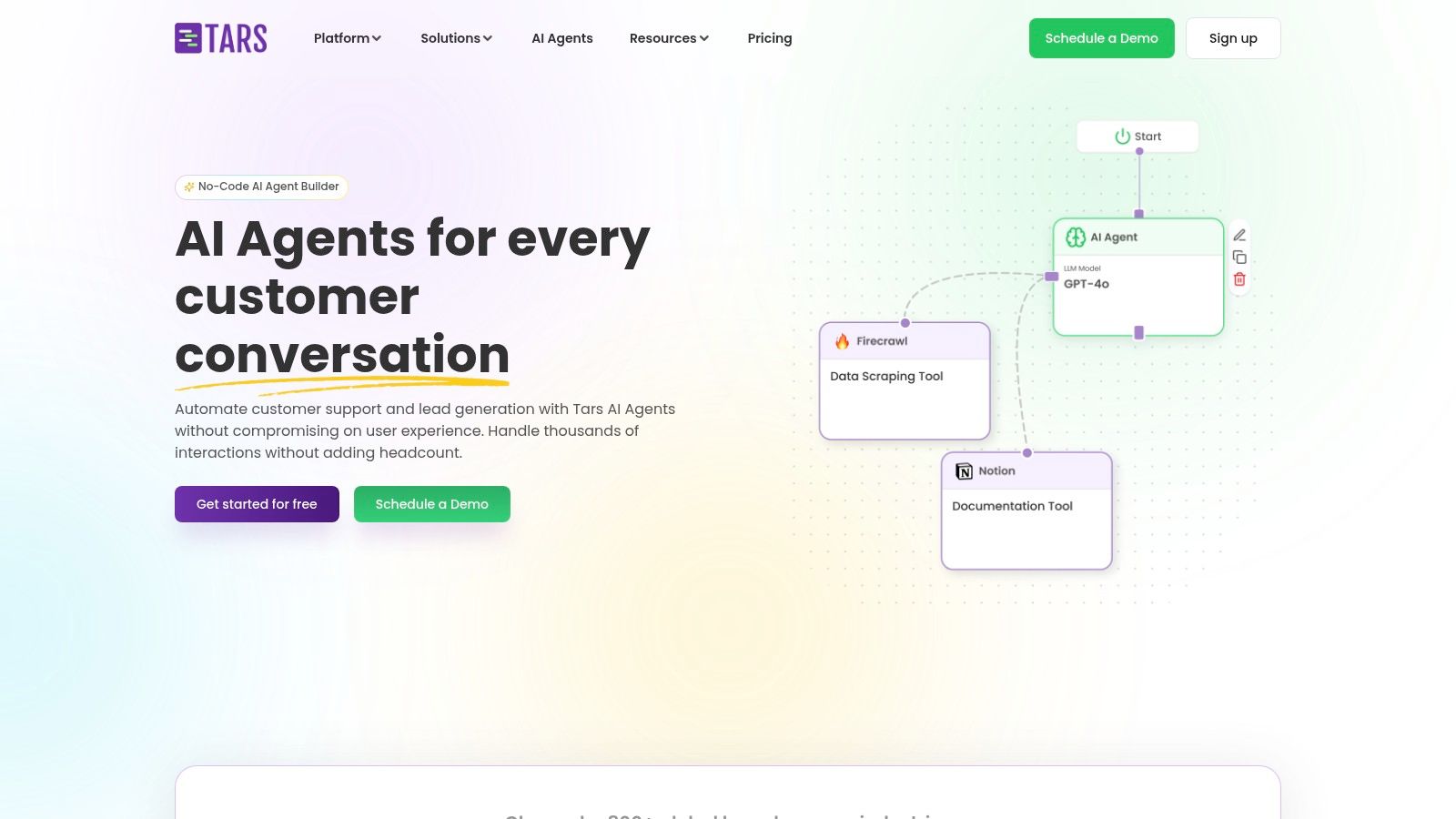
HelloTars remains relevant because not every conversational AI investment should begin with a large enterprise suite. For many teams, the immediate commercial problem is simpler. They need to capture leads faster, qualify intent on landing pages, and reduce drop-off without waiting for a long implementation cycle.
Tars is good at that kind of speed. Its visual builder, templates, CRM integrations, and campaign-style chat funnels make it useful for marketing and conversion workflows.
Why Tars is still relevant
A mid-market education business can launch a course-enquiry flow quickly. A healthcare platform can use conversational intake to guide patient booking requests. A SaaS company can route demo requests based on company size, use case, or urgency without sending every lead straight to a sales rep.
This makes Tars attractive where the ROI window is short and the workflow doesn't require deep contact-centre logic. It also suits teams that want business users, not engineers, to own iteration.
The limitations are clear. Tars isn't the deepest option for highly regulated, telephony-heavy, or multi-system enterprise deployments. Pricing for larger plans is also sales-led, which can make side-by-side procurement slower than expected.
Tars wins when the business asks, “How quickly can we improve conversion on inbound demand?” It's less compelling when the question is, “How do we redesign service operations across voice, chat, and back-office systems?”
That distinction helps executive teams avoid overbuying. Sometimes the best platform is the one that solves the current bottleneck cleanly, not the one with the biggest enterprise feature catalogue.
9. Verloop.io
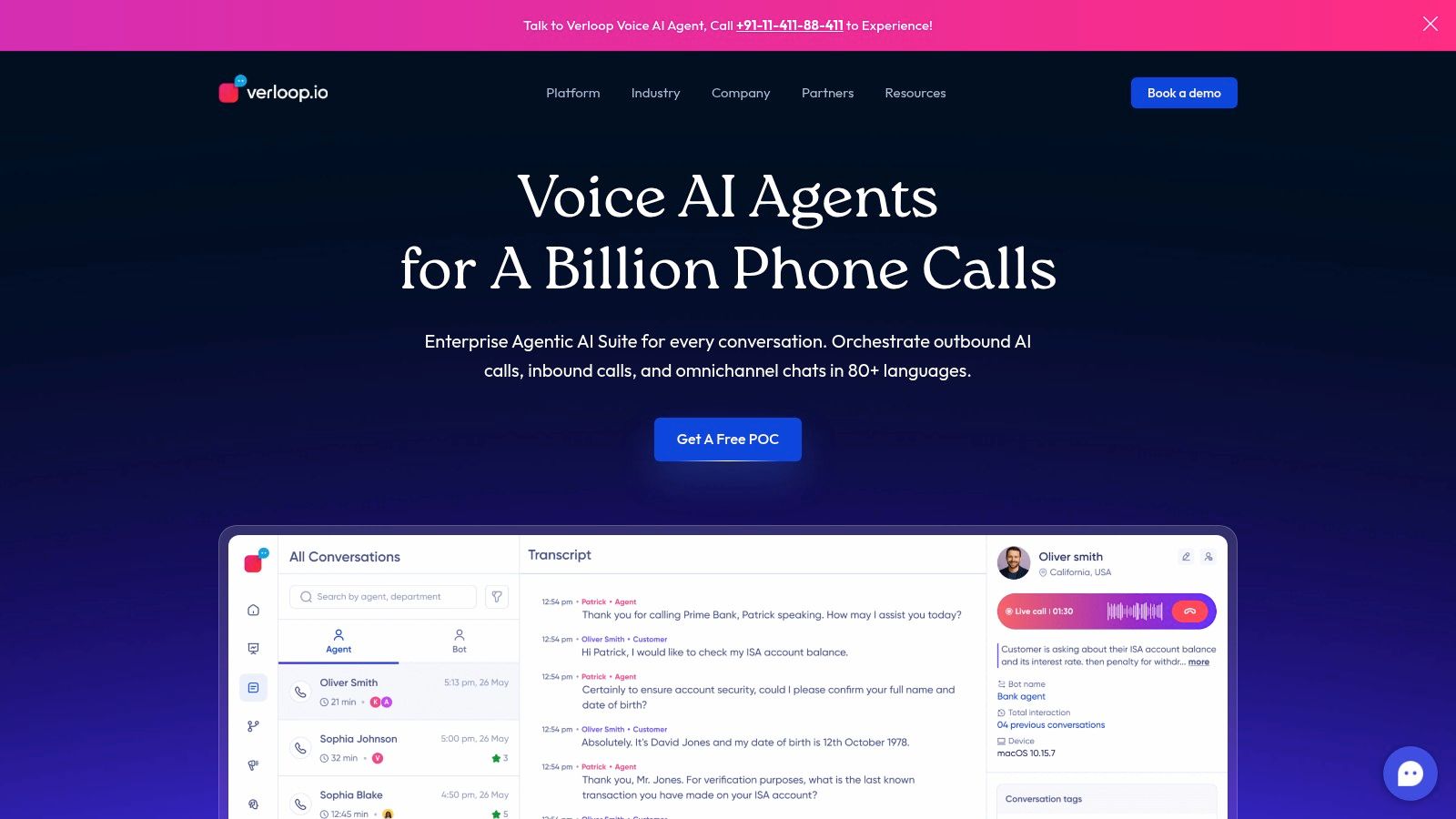
Verloop.io is worth considering for companies that want a CX-oriented platform with visible momentum in both chat and voice automation. It focuses on support, commerce, and sales-adjacent customer journeys, and it tends to resonate with teams that want operational outcomes such as better service handling and smoother automation-to-agent transitions.
Its positioning is practical. Rather than trying to be everything to everyone, Verloop.io is tightly aligned to customer-facing use cases.
Where Verloop.io can outperform broader suites
A consumer brand can use Verloop.io to automate routine support, detect frustration, and hand off to agents before the interaction degrades. A real estate company can qualify leads across channels and move high-intent prospects to the right human team. A BFSI operation can combine voice and chat journeys while maintaining centralised monitoring.
The strategic advantage is focus. Broad enterprise suites sometimes burden customer-facing teams with internal platform complexity they don't need. Verloop.io can be the better fit when the mandate is narrower and centred on service and conversion.
That said, buyers should expect a sales-led process and likely implementation support for advanced capabilities. As with many platforms in this category, public pricing visibility is limited.
Another point matters for India specifically. Voice performance deserves more scrutiny than many listicles give it. Industry analysis focused on conversational AI assistants highlights that India is increasingly voice-led for first-contact and high-friction workflows, and recommends evaluating multilingual support, latency, call throughput, telephony integration, interruption handling, and human handoff quality rather than just channel count, as discussed in this review of conversational AI assistant evaluation criteria.
For CXOs, that means Verloop.io should be tested in real voice conditions, not just judged on a polished chat demo.
10. Skit.ai
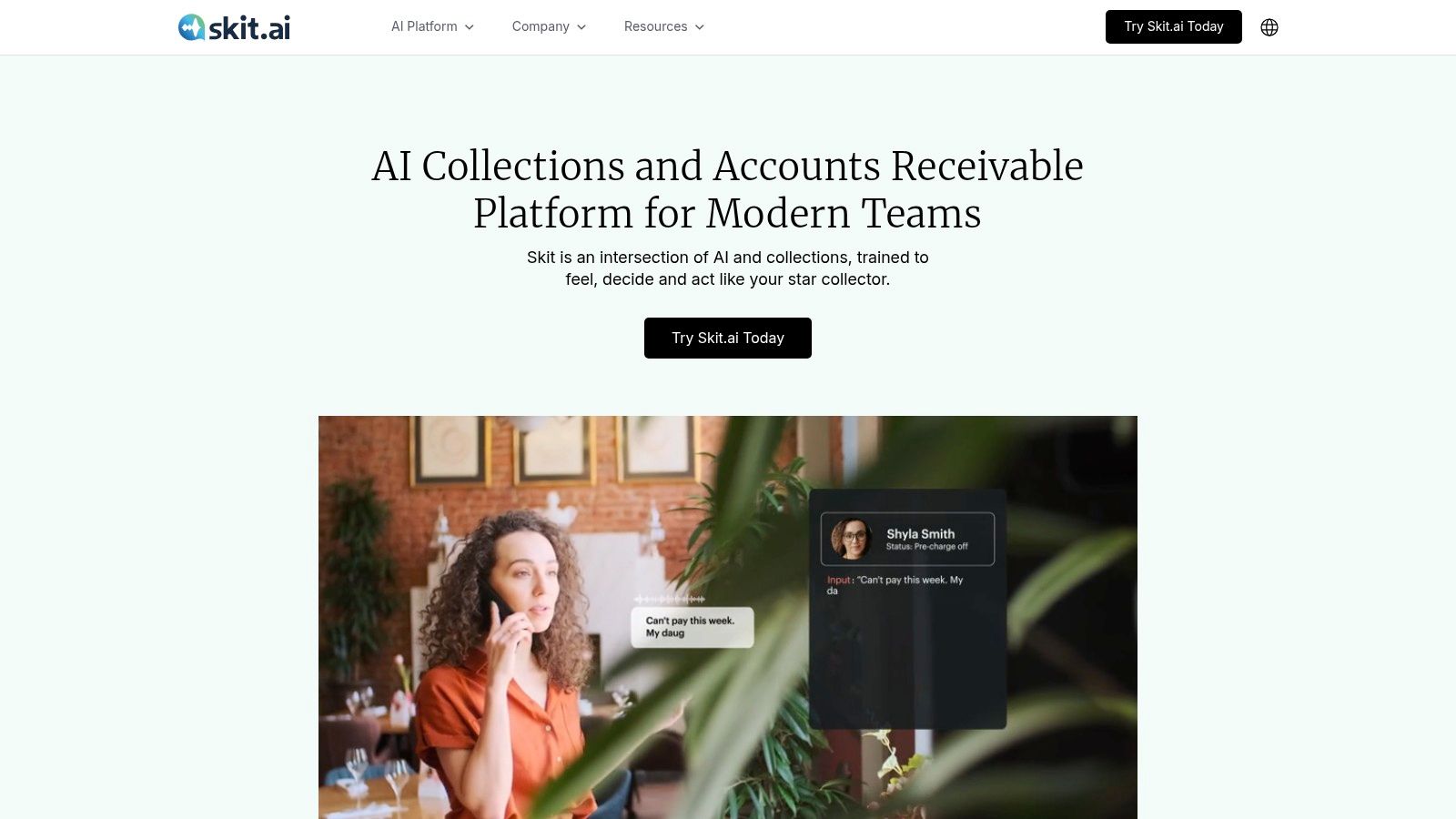
Collections is one of the clearest ROI cases in conversational AI, and Skit.ai is built around that fact. Its position in the market is narrower than horizontal chatbot platforms, but that focus can be an advantage for banks, NBFCs, insurers, and servicing teams that still run large volumes of outbound and inbound calls for reminders, recoveries, and account support.
The business case is straightforward. Calling operations carry high labour costs, inconsistent agent performance, and limited throughput during peak periods. A platform designed for voice-led recovery and servicing can improve contact coverage, standardise outreach, and reduce the cost of routine follow-up, especially where repayment behaviour or service completion depends on repeated contact over several days.
Why Skit.ai stands out in a CXO evaluation
Skit.ai is best assessed as an operations platform, not only as a conversational interface. Its value comes from combining autonomous voice conversations with follow-up actions across channels such as SMS, email, chat, and human escalation. That matters in collections and servicing because outcome quality often depends on disciplined sequencing rather than a single successful interaction.
A lender, for example, may need to attempt reminder calls, send digital nudges, classify intent, route disputed cases to agents, and maintain auditability across the journey. A generic chat-first platform can cover pieces of that flow. Skit.ai appears more aligned with the full operating model.
Market growth also supports this category focus. Grand View Research projects the global conversational AI market will continue expanding through the end of the decade, driven by automation demand across customer support and enterprise workflows, as outlined in its conversational AI market analysis. For buyers, that trend does not mean every platform is interchangeable. It increases the value of choosing a vendor whose economics match the use case.
Skit.ai's trade-off is specialization. If the priority is website chat, lead capture, or lightweight FAQ automation, the platform may be misaligned with the buying objective and cost structure. Procurement teams should also expect an enterprise sales process, solution design discussions, and a closer review of deployment effort than they would see with self-serve chatbot tools.
- Best fit: BFSI and servicing environments where voice outreach directly affects recovery, collections efficiency, or account completion.
- Strategic value: Better coordination across call attempts, digital follow-ups, and agent handoff can reduce operational leakage.
- Key caution: The ROI case depends on workflow volume and process maturity, not on conversational novelty alone.
For executive teams, the main question is not whether Skit.ai can hold a conversation. It is whether it can lower servicing cost per account, improve recovery operations, and scale contact programs without expanding headcount at the same rate. That is a stronger selection framework than comparing demo quality in isolation.
Top 10 Conversational AI Platforms Comparison
| Platform | Core capabilities | Performance & Quality | Unique Selling Points | Target Audience | Pricing & Value |
|---|---|---|---|---|---|
| 🏆 DialNexa Labs Private Limited | Voice-first AI agents, ready-made personas, APIs & dashboard | ★ 4.8, 97% AI-human lead match; connect ↑ 47→91; multi-min natural convos | ✨ Human-like voice agents, industry personas, high conversion lift | 👥 Enterprises (BFSI, EdTech, real‑estate, hospitality, e‑commerce) | 💰 Sales-led (transparent signup); ROI-focused (lead→booking uplift) |
| Yellow.ai | Omnichannel voice + chat, multi-LLM workflows, connectors | ★ 4.2, enterprise-grade reliability | ✨ Strong WhatsApp & omnichannel automation | 👥 Large contact centers, retail, BFSI | 💰 Freemium → paid tiers; advanced features in paid plans |
| Kore.ai | No-code studio, NLU, Contact Center AI, governance | ★ 4.1, mature contact-center tooling | ✨ Deep CC integrations, enterprise security & SLAs | 👥 Enterprises & contact centers | 💰 Sales-led; documented enterprise plans |
| Google Dialogflow CX | Visual state-machine flows, NLU, telephony & CCAI hooks | ★ 4.3, cloud-native scale; robust tooling | ✨ Stateful flow builder + native Google Cloud integrations | 👥 Developers, cloud-first enterprises, contact centers | 💰 Pay-as-you-go usage billing; fine-grained cost control |
| Microsoft Copilot Studio | Low-code bot building, MS365/Dataverse connectors, governance | ★ 4.0, strong security/compliance | ✨ Tight Microsoft 365 & Teams integration | 👥 Enterprises in Microsoft ecosystem | 💰 Licensing tied to MS ecosystem; credit/licensing nuance |
| Haptik (Jio Haptik) | LLM-driven agents, vertical templates, WhatsApp & compliance | ★ 4.1, compliance-ready for regulated sectors | ✨ Compliance certifications + WhatsApp expertise | 👥 Large Indian enterprises, fintech, commerce | 💰 Sales-led; enterprise pricing |
| Gupshup Conversation Cloud | Bot builder, journey orchestration, broad channel APIs | ★ 4.0, market-proven WhatsApp/SMS scale | ✨ Full-stack messaging + commerce templates | 👥 Marketers, e‑commerce, enterprises in India | 💰 Usage & WhatsApp fees; sales-led for large programs |
| Tars (HelloTars) | Visual flow builder, landing/chat funnels, CRM integrations | ★ 3.9, quick deploy for marketing use | ✨ Fast lead-capture funnels for SMBs | 👥 SMBs, mid-market, marketing teams | 💰 SMB-friendly; sales-led for larger plans |
| Verloop.io | Voice & chat agents, emotion/frustration detection, analytics | ★ 4.0, CX-focused outcomes (CSAT/resolution) | ✨ Voice AI + emotion detection, AI quality tools | 👥 E‑commerce, BFSI, CX teams in India | 💰 Sales-led; pricing on request |
| Skit.ai | Autonomous voice agents, STT/TTS, omnichannel sequencing | ★ 4.0, proven in collections & BFSI workflows | ✨ Collections playbooks; unified voice+SMS+email sequencing | 👥 Collections, BFSI, voice-heavy programs | 💰 Sales-led; enterprise pricing |
Final Thoughts
Executive teams rarely choose between ten interchangeable products. They choose between operating models, cost structures, and implementation risks. This underlying factor causes conversational AI selections to underperform. The failure usually starts with a feature-led shortlist that ignores where value shows up on the P&L: call deflection, agent productivity, conversion lift, lower service cost, faster deployment, and lower compliance exposure.
A better buying framework starts with unit economics. Map the platform to the workflow that carries the highest volume, the highest labour cost, or the greatest revenue sensitivity. A voice-heavy business should test voice automation first. A Microsoft-centric enterprise should assess whether native governance and workflow fit reduce deployment friction enough to justify ecosystem lock-in. A WhatsApp-led operation should examine message delivery economics, orchestration quality, and handoff design before comparing chatbot interfaces.
Total cost of ownership matters more than license price. Implementation effort, integration depth, governance controls, support model, and channel fees often determine whether a program scales cleanly or stalls after a pilot. In regulated sectors in India, compliance readiness can also change the economics. Weak consent handling, poor auditability, or unclear data controls create downstream legal and operational cost that rarely appears in an early vendor demo.
The strongest platform is the one that matches your revenue engine and your operating reality. For some enterprises, that means an orchestration suite with broad controls. For others, it means messaging infrastructure with scale and campaign discipline. For teams where qualification, collections, booking, or support still run primarily on calls, a voice-led platform may produce faster ROI than a broader but less focused stack.
That is also why DialNexa remains notable in this guide. As noted earlier, its positioning is narrower and commercially clearer than many general-purpose platforms. It is built for organisations that need production-grade voice conversations, repeatable frontline execution, and measurable gains in response handling, lead qualification, support throughput, or follow-up efficiency.
If your evaluation is tied to a defined business case such as recruitment screening, support triage, appointment reminders, lead qualification, collections, or post-sales follow-up, DialNexa Labs Private Limited merits a place on the shortlist. The right next step is not a generic product demo. It is a workflow-level review of expected ROI, implementation effort, compliance fit, and time to production.

Excellent breakdown of the conversational AI landscape. The comparison goes beyond features and focuses on business impact, governance, and deployment realities that truly matter to CXOs.
[…] example in this market is DialNexa's conversational AI platforms overview. According to the publisher information provided for this article, DialNexa's customers report […]