
10 Typical Customer Service Survey Questions for 2026
Short surveys win. Long surveys depress response rates, blur the signal, and leave leadership teams with more noise than direction.
That is the core problem with typical customer service survey questions. They are often written to collect opinions, not to drive decisions. A VP of CX does not need a bloated scorecard. A VP of CX needs a tight set of questions tied to retention, cost-to-serve, revenue conversion, and service recovery.
The best survey programs measure three things. They capture what happened in the interaction. They identify why it happened. They show whether the experience changed a commercial outcome such as renewal, repeat purchase, booking, or escalation cost.
That standard matters even more for teams deploying Voice AI.
If AI handles intake, support, reminders, qualification, or follow-up, the survey has to measure whether the system reduced effort, improved containment, and protected customer trust. If it did not, the automation is adding cost in a less visible place. Poor survey design hides that failure. Strong survey design shows leaders where teams can intervene, retrain flows, and reallocate budget.
The ten questions in this guide are not a generic checklist. They are an executive operating model for CX measurement. Each question should function as a KPI with a clear owner, a target threshold, and an action path inside platforms such as DialNexa. Use them together to assess agent performance, spot process breakdowns, validate Voice AI impact, and prove whether your CX investment is improving retention and reducing operational drag.
Table of Contents
- 1. Overall Satisfaction NPS Net Promoter Score
- 2. Agent Responsiveness and First Response Time
- 3. Resolution Quality and First Contact Resolution FCR
- 4. Agent Knowledge and Expertise
- 5. Ease of Communication and Natural Conversation
- 6. Personalization and Customer Recognition
- 7. Problem Solving Ability and Escalation Handling
- 8. Professionalism and Brand Alignment
- 9. Compliance Security and Privacy Assurance
- 10. Value for Money and ROI Perception
- 10-Point Comparison: Customer Service Survey Topics
- From Data to Decision Activating Your Survey Insights
1. Overall Satisfaction NPS Net Promoter Score
According to SurveyMonkey's guidance on customer satisfaction survey questions, NPS is a standard way to measure loyalty and satisfaction. For CX leaders, that makes it more than a survey staple. It is an early revenue and retention signal tied to whether support interactions create promoters, neutrals, or detractors.
Ask this exactly: "How likely are you to recommend us to a friend or colleague?"
Use NPS as a KPI, not a vanity score. A rising score usually signals stronger retention, lower service friction, and better word of mouth. A weak score points to broken moments in the journey, where teams can intervene before churn, escalation volume, or acquisition costs rise.
DialNexa users should treat NPS as a controlled comparison tool. Run it after key service interactions and compare results across human agents, Voice AI flows, and blended support models. If Voice AI raises containment but NPS drops, you did not improve CX. You shifted cost while weakening future demand. If NPS holds or improves while automation handles more volume, the rollout is delivering real ROI.
How to operationalise NPS
The value comes from segmentation and follow-through.
- By journey stage: Split presales, onboarding, active support, and retention. This shows where satisfaction lifts pipeline conversion versus where it protects renewals.
- By channel: Compare phone, Voice AI, chat, and email. Channel-level gaps expose whether automation is improving service or pushing frustration into another queue.
- By customer segment: Track cohorts such as students, investors, tenants, or policyholders. Different groups tolerate different service gaps.
- By trigger event: Send the survey after a resolved ticket, completed call, onboarding milestone, or booked appointment. Event-based timing gives cleaner attribution.
Practical rule: Never report one blended NPS number to leadership. Report NPS by touchpoint, owner, and channel so operations teams know what to fix.
The business use case is straightforward. A real estate firm can survey after inquiry calls to separate support quality from pricing or inventory problems. An EdTech brand can compare AI-led counselling with advisor-led counselling to see which model protects conversion. A BFSI team can measure whether compliant, secure support still feels worth recommending. That is the standard that matters. If customers would not recommend the experience, the process is costing growth even when tickets are getting closed.
2. Agent Responsiveness and First Response Time
Speed sets the commercial value of a service interaction. If customers wait too long for a first reply, lead conversion drops, repeat contacts rise, and support costs climb.
That is why responsiveness belongs near the top of any customer service survey. Ask: "How satisfied were you with the response time of our customer support team?"
Treat this as a KPI, not a courtesy question. It measures whether your operating model converts urgency into confidence. That distinction matters. A fast timestamp in your CRM does not mean the customer felt helped quickly. Surveying perceived response time closes that gap and shows whether staffing, routing, and automation are producing business value.
The ROI case is straightforward. In real estate, slow first response loses high-intent buyers to faster brokers. In EdTech, delayed callbacks cut enquiry-to-enrolment rates. In BFSI, a sluggish first reply during KYC or onboarding creates drop-off, repeat contacts, and avoidable service expense. Response time affects revenue and cost at the same time.
How to use this question like an operator
Break results down by queue, channel, hour, and journey type. That is where the pattern becomes actionable.
- Inbound support queues: Compare perceived response time with actual SLA data. If SLA performance looks good but survey scores stay weak, your acknowledgement message or queue messaging is setting the wrong expectation.
- Outbound callback programs: Measure whether the promised callback window feels acceptable to the customer, not just acceptable to the team.
- Peak-volume periods: Track score compression during launch days, billing cycles, and seasonal spikes. This shows where extra staffing or automation protects retention.
- Voice AI and AI-first flows: Test whether instant pickup translates into perceived responsiveness. If scores stay low, the issue is usually poor intent detection, a slow opening prompt, or unnecessary qualification steps.
For platforms like DialNexa, this question should sit beside operational metrics such as speed to answer, abandonment rate, and transfer rate. That combination tells an executive team whether Voice AI is reducing queue pressure while preserving customer confidence, or merely answering faster without moving the interaction forward.
One rule matters here. Measure first response time by customer perception and system log. Run both. Perception explains churn risk. Logged speed explains process failure. You need both to justify headcount changes, routing redesign, or AI investment.
A first reply only creates value when it gets the customer to the right next step quickly. Anything else is just a faster way to frustrate people.
3. Resolution Quality and First Contact Resolution FCR
One repeat contact can erase the savings from a low-cost support interaction. That is why this question belongs on every executive dashboard: "Was your issue resolved to your satisfaction?"
Resolution is the commercial test. It ties survey feedback to cost per contact, recontact volume, churn risk, and channel efficiency. If response times improve but resolution stays flat, the operation is getting faster without getting better. If Voice AI containment rises while perceived resolution drops, the business is shifting work, not removing effort for the customer.
Treat this as a KPI, not a courtesy question.
For professional support organizations, the right benchmark is simple. Resolution should be read alongside first contact resolution, repeat contact rate, transfer rate, and downstream conversion. A high self-reported resolution score with weak CRM outcomes usually signals a flawed survey trigger or a narrow definition of success. A low score with strong operational closure often points to poor expectation-setting, unclear next steps, or a workflow that closes tickets before customers feel done.
Define resolution by business outcome
Resolution has to match the journey stage. If the definition is vague, the metric becomes useless.
A real estate enquiry is resolved when the prospect gets the right project details and a site visit or callback is confirmed. An EdTech interaction is resolved when the learner gets relevant course guidance and a clear next step such as counselling, enrolment review, or payment support. In BFSI, resolution often means the customer knows exactly what document, approval, or verification step comes next, even when the final account action happens later.
That distinction matters for AI-first operations on platforms like DialNexa. Voice AI can end a call cleanly and still fail the business if it does not secure the appointment, complete the service request, or prevent the customer from calling back.
How leaders should use this question
Use one core question, then validate it against hard outcomes.
- Support leaders: Compare "resolved" responses with 7-day or 30-day repeat contact rates. If customers say they are resolved and still come back, the fix did not hold.
- Revenue teams: Tie resolution to booked demos, site visits, applications, or collections. A resolved interaction should move pipeline, not just end the conversation.
- Operations leaders: Review workflows with low resolution and high transfer rates. These are the expensive journeys where routing, policy design, or agent tooling is failing.
- AI owners: Audit claimed resolution against CRM completion, payment status, appointment attendance, or case closure quality.
A property developer using DialNexa may see strong call completion rates but weak confirmed visits. That means the AI handled questions yet failed to secure the revenue-driving next step. A SaaS team may find that support calls score well on tone while resolution stays weak because authentication, billing permissions, or calendar integrations break the process after the conversation ends.
Keep the wording strict
Do not water this down with "Was this helpful?" Helpful interactions still create repeat contacts. Helpful interactions still generate escalations. Helpful interactions still leave revenue on the table.
Use direct wording. "Was your issue resolved to your satisfaction?" works because it forces a standard that customers recognize and operators can test against actual outcomes.
If you want first contact resolution, add a second diagnostic question: "Was your issue fully resolved in this interaction, without needing follow-up?" That gives executives two separate reads. One measures perceived resolution. The other measures contact efficiency. Together, they show whether the team is solving problems well and solving them early.
For survey design, one rule stands. Never report FCR from ticket status alone. Customers decide whether the issue was resolved. Your systems confirm whether the outcome held. You need both to judge whether CX investment, including Voice AI, is reducing avoidable demand or just processing it faster.
4. Agent Knowledge and Expertise
Knowledge failures are expensive. They drive repeat contacts, slow conversion, increase supervisor load, and erode trust in both human agents and Voice AI.
Ask a question that tests command of the issue, not vague helpfulness: "How knowledgeable was the agent about your issue?" If you need a stronger diagnostic, add: "Did the agent give you clear and accurate answers?" Those responses measure whether your team can handle real customer intent at scale.
This KPI deserves executive attention because it separates tone from competence. Customers will forgive a plain interaction. They will not forgive wrong answers, uncertainty, or scripted replies that miss the point.
Measure knowledge in the areas that affect revenue and cost
A single knowledge score is useful for reporting. It is not enough for operational decisions. Break the analysis into four dimensions:
- Policy knowledge: Can the agent explain rules, eligibility, documentation, and exceptions correctly?
- Product knowledge: Can the agent answer questions about features, pricing, plans, inventory, and limitations?
- Contextual understanding: Can the agent grasp the customer's actual situation without forcing them to repeat or simplify it?
- Next-step guidance: Can the agent recommend the right action with confidence and accuracy?
That structure turns one survey response into a coaching and systems map. If policy scores fall, fix training and compliance prompts. If product scores fall, update the knowledge base. If contextual understanding falls, review call flows, summarization logic, and CRM data visibility. If next-step guidance falls, check whether agents and AI have the right decision trees, eligibility logic, and escalation rules.
For Voice AI programs, this KPI is even more commercial. A real estate caller may ask about possession timelines, amenities, financing, and site visit availability in one conversation. A banking customer may ask about charges, eligibility, and document requirements while expecting exact answers. If the system sounds fluent but misses facts, containment becomes a vanity metric.
What good looks like
Strong knowledge scores usually correlate with lower transfer rates, fewer reopenings, and better conversion to the next milestone. For a DialNexa deployment, that milestone might be a confirmed site visit, a qualified lead handoff, a completed KYC step, or a booked service appointment.
Use that connection. Segment knowledge scores by intent, product line, campaign, and agent type. Compare AI-led interactions against human-led ones. Then tie the score to business outcomes such as repeat contact rate, escalation rate, booking rate, and average handling cost.
One pattern shows up often. Teams blame weak CX on tone or empathy when credibility is the actual issue. Customers lose confidence fast when the agent hesitates, gives partial answers, or sounds unsure about basic facts.
Set a clear operating rule. Any low score on knowledge should trigger a root-cause review within the knowledge system, not just agent coaching. In many operations, the failure sits upstream in outdated content, missing integrations, poor retrieval logic, or incomplete customer context. Fix the system first. Then retrain the people using it.
5. Ease of Communication and Natural Conversation
Ask: "How easy was it to communicate with the agent?"
Effort is a revenue metric. When customers have to repeat themselves, correct the agent, or fight the flow of a conversation, conversion drops, handle time rises, and repeat contacts climb. That makes this one of the highest-value survey questions in the stack, especially for Voice AI programs expected to reduce service cost without hurting retention.
Use this question as a KPI, not a courtesy check. It tells you whether the interaction felt fluid enough to keep the customer moving toward the next outcome, whether that is a booked appointment, a qualified lead, a completed payment step, or a resolved support issue.
The standard customer effort framing still works here, but voice operations need sharper diagnostics. A phone conversation can sound polite and still fail because the system misses turn-taking cues, loses context across multiple questions, handles interruptions poorly, or creates a clumsy transfer to a human agent. Generic CSAT wording will miss that. Your survey should not.

A weak score usually points to one of four operational failures:
- The agent interrupted the customer or failed to manage turn-taking.
- The system lost context during a multi-part request.
- The wording sounded unnatural, scripted, or repetitive.
- The handoff path created friction by forcing the customer to restart.
Each one has a cost. Interruptions and repetition push up abandonment. Context loss drives escalation. Stiff language reduces trust and lowers conversion in high-consideration journeys like real estate, BFSI, and education.
Add one follow-up that explains the score
Pair the rating with one open-text prompt: "What made the conversation easy or difficult?"
That answer gives QA, conversation designers, and operations leaders something they can fix. If a property buyer says the AI handled location and budget well but got confused after a change in family size, the issue is context retention. If a prospective student says the answers were clear but the voice felt rigid during course exploration, the issue is dialogue design. Treat those responses as product signals, not anecdotal complaints.
For DialNexa and similar platforms, review this score by intent, call path, language, agent type, and transfer outcome. Then connect it to hard metrics: containment, escalation rate, average handling time, booking rate, and repeat contact rate. That is how you prove whether your Voice AI investment is reducing cost while protecting customer confidence.
This demo shows the kind of natural multi-turn interaction executives should expect from modern voice workflows:
If the transcript reads like a script tree instead of a conversation, this KPI will expose it fast.
6. Personalization and Customer Recognition
71% of consumers expect companies to deliver personalized interactions. If your service operation still makes customers repeat known details, you are adding cost, slowing conversion, and training high-intent buyers to disengage.
Use a direct survey question: "Did the agent recognize your history, preferences, or needs and tailor the conversation accordingly?"
This is not a courtesy metric. It is an operational KPI. Strong personalization reduces average handling time, lowers repeat contact, improves conversion on warm leads, and protects retention for existing customers. Weak personalization does the opposite. It forces customers to restate context, increases friction, and exposes broken CRM, routing, and agent-assist workflows.
Zendesk makes the case clearly in its guidance on customer satisfaction survey questions. Segmenting surveys by customer type and interaction context gives teams more useful insight for support and revenue decisions than a generic satisfaction score alone.
Measure recognition, not politeness
A personalized interaction proves that your operation used what it already knew.
A real estate prospect should hear options that match location, budget, and property type already captured in the funnel. An EdTech lead should not need to restate career goals after submitting an inquiry form. A BFSI customer with an existing relationship should be handled with full awareness of recent activity, status, and support history.
That is the standard.
Use this KPI to test four execution points:
- Returning customers: Did the agent recognize prior history without asking the customer to start over?
- High-intent leads: Did the conversation reflect stated preferences and likely purchase intent?
- Service recovery cases: Did the agent acknowledge prior issues and adjust tone and next steps?
- Voice AI and agent-assist flows: Did the system pass usable context into the interaction so the experience felt informed, not generic?
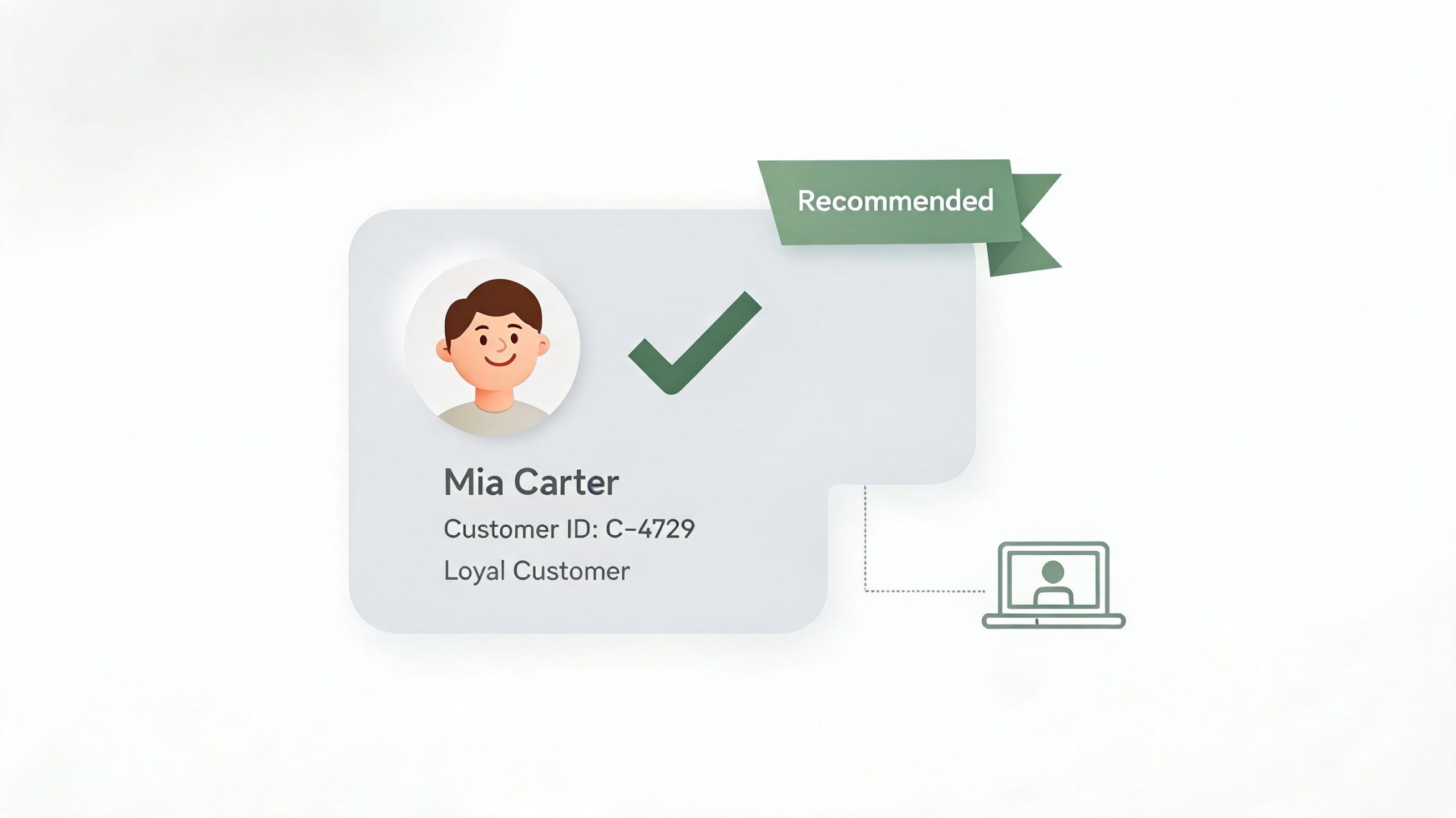
For DialNexa and similar platforms, break this score down by new vs. returning customer, channel, intent, language, agent type, and CRM match rate. Then compare it against conversion rate, repeat contact, handle time, transfer rate, and revenue per qualified interaction. That is how you quantify whether personalization is improving CX ROI or just appearing in scripts and dashboards.
If scores are low, do not edit the survey first. Fix the operating model. Connect the CRM. Expose the right fields in the agent desktop. Pass memory and profile data into Voice AI flows. Remove prompts that ask for information the business already has. Personalization should reduce work for the customer and for your team. If it does neither, it is not personalization.
7. Problem Solving Ability and Escalation Handling
Use a question that checks both outcomes and judgement: "If you had a problem, was it resolved or properly escalated to someone who could help?"
Great service isn't always about solving everything inside one interaction. It’s about recognising the limit of the current channel and making the handoff clean. That’s especially true for AI-led operations.
DialNexa’s audience sectors all face this pattern. A property buyer may have a special requirement that needs a senior sales agent. An EdTech lead may need a scholarship discussion. A BFSI user may raise a compliance exception that should never be improvised by automation.
Score the handoff, not just the solve
Many teams only ask whether the issue was fixed. That misses a core operational truth. A customer can accept escalation if it feels competent and fast. They won't accept getting bounced around.
The better survey design checks whether escalation happened appropriately and whether the next owner had context. That protects both customer confidence and internal cost.
Good escalation reduces friction. Bad escalation multiplies contacts, queues, and rework.
Use these review lenses:
- Appropriate escalation: Did the agent escalate for the right reason?
- Timing: Was escalation early enough to prevent frustration?
- Context transfer: Did the next agent already know what happened?
- Containment: Which issues should stay with automation, and which shouldn't?
DialNexa states that AI-qualified interactions can match human judgment with 97% accuracy in qualification workflows, based on the publisher information provided for this article. The implication for survey design is clear. You should use escalation feedback to test whether the AI is making judgment calls that align with your best human teams.
8. Professionalism and Brand Alignment
Ask: "Did the agent represent the company professionally and in alignment with its values?"
This question gets overlooked because leaders assume professionalism is obvious. It isn’t. The same words that feel reassuring in BFSI may feel cold in EdTech. The same friendly tone that works in D2C may feel too casual in healthcare or enterprise SaaS.
Professionalism becomes even more important with Voice AI because customers form a brand impression in seconds. The voice, phrasing, pace, and confidence of the interaction all signal whether the company feels credible.
Match tone to the commercial context
A bank or trading platform needs clear, controlled language. A property consultancy needs consultative confidence. An admissions team needs warmth without sounding vague. Surveying professionalism tells you whether your service delivery matches the commercial promise your brand makes elsewhere.
A few examples make this concrete:
- BFSI: Customers should hear precise, compliant language that feels secure and competent.
- EdTech: Prospective students should hear clarity and encouragement, not pressure.
- Real estate: Buyers should hear confident, organised guidance that helps them decide.
- Healthcare: Patients should hear calm, respectful communication that reduces anxiety.
Use low professionalism scores as an audit trigger. Review transcripts, compare them to approved brand language, and retrain both human and AI agents on voice, pacing, and objection handling. If the brand sounds inconsistent at the service layer, marketing spend has to work harder to rebuild trust later.
9. Compliance Security and Privacy Assurance
Ask: "Did you feel confident that your information was handled securely and in line with our privacy requirements?"
A single trust failure can erase the efficiency gains from your service operation. If customers hesitate to share documents, verify identity, or complete payment because the experience feels unsafe, conversion drops, handle time rises, and repeat contacts increase. That makes this survey question a business KPI, not a legal checkbox.
It belongs in any journey that collects personal, financial, medical, or identity data. For Voice AI programs, it matters even more. Customers decide fast whether an automated interaction sounds secure enough to continue. If they are unsure who is listening, what is being recorded, or how their data will be used, they abandon the flow or demand a human agent. Both outcomes increase service cost.
Measure assurance at the point of risk
Do not ask this as a generic brand question at the end of a long survey. Ask it immediately after the moment where trust was tested.
A strong deployment model looks like this:
- BFSI: Trigger it after KYC, card support, fraud review, or account update calls.
- Healthcare: Send it after appointment booking, claims help, or any exchange involving patient information.
- EdTech: Use it after admissions, loan counselling, or scholarship conversations that require personal records.
- E-commerce: Ask after payment disputes, refund processing, or account recovery.
The score tells you whether customers felt protected during the interaction. That distinction matters. Your process can meet policy and still fail the customer test if the agent or AI never explained what was happening.
Use low scores as an operational signal:
- Review transcripts and call recordings: Check whether agents explained verification, consent, and data usage in plain language.
- Segment by journey and queue: Security confidence usually drops in high-friction workflows such as KYC, refunds, and account recovery.
- Compare with abandonment and escalation rates: If assurance scores fall where drop-off rises, the trust script is hurting completion.
- Audit AI-specific moments: Confirm whether your Voice AI identifies itself clearly, requests consent where needed, and handles sensitive details with the right prompts and handoff rules.
For platforms like DialNexa, this question should sit inside the reporting layer for regulated workflows. Track it alongside containment, completion, transfer rate, and average handle time. That gives CX leaders a clear ROI view. If automation cuts cost but lowers customer trust, the program is underperforming. If trust stays high while containment improves, you have proof that the design supports both compliance and efficiency.
Low scores usually point to a communication problem first. Fix the wording, disclosure flow, and reassurance cues before you assume the backend is broken.
10. Value for Money and ROI Perception
Price perception drives retention faster than satisfaction scores suggest.
Ask: "Do you believe our service offers good value for the price?" or "Did the service provided feel like good value for the cost?" Then treat the answer as a commercial KPI, not a soft sentiment metric. This question shows whether your CX investment is protecting margin, increasing conversion, and reducing repeat demand.
Executive teams often miss this. They monitor CSAT and NPS, then assume a positive experience translated into business value. Customers judge something else. They compare the result against the price they paid, the time they spent, and the effort required to get help.
A 2024 FICCI-EY report on consumer priorities in India points to the same pressure. Customers are actively weighing value against spend, especially in sectors where service quality influences repeat purchase and trust. If your survey never asks that question directly, your ROI story is incomplete.
Measure value perception as an ROI signal
Keep value-for-money separate from satisfaction and loyalty. It answers a different executive question: did the interaction justify the commercial exchange?
That matters even more in Voice AI programs. Internal ROI can look strong because automation lowers average handle time, increases containment, and cuts staffing cost. Customers may still rate the experience as poor value if the bot forced repetition, failed to resolve the issue, or delayed a qualified handoff. That gap is where CX programs lose renewals and upsell potential.
Use the question to tie service performance to real outcomes:
- Revenue: Did the interaction increase the customer's willingness to buy, renew, book, or continue?
- Cost: Did the service solve the issue efficiently enough that the customer did not need follow-up contact?
- Retention: Did the experience feel worth the price paid for the product, plan, or service relationship?
This is also where many survey programs stay too shallow. They ask whether the customer was happy, but skip whether the interaction changed purchase intent or confidence in the decision. That omission shows up clearly in Jotform's analysis of missing outcome-level customer service survey questions.
For DialNexa deployments, put this metric beside containment rate, transfer rate, repeat contact rate, and conversion by journey. That setup lets a CX leader prove whether automation improved economics without weakening perceived value. If cost drops but value scores fall, the program is trading short-term efficiency for long-term churn. If value scores rise while repeat contact declines, you have evidence that the experience is creating measurable ROI.
Low scores usually point to one of four issues. The price feels too high for the result. Expectations were set poorly. The interaction solved the wrong problem. The channel was a poor fit for the task. Diagnose those drivers fast, because value perception shapes whether customers stay, spend, and recommend.
10-Point Comparison: Customer Service Survey Topics
| Metric | 🔄 Implementation Complexity | ⚡ Resource Requirements | ⭐ Expected Quality | 📊 Expected Outcomes | 💡 Ideal Use Cases & Tips |
|---|---|---|---|---|---|
| Overall Satisfaction (NPS) | Low, single-question survey; easy rollout | Minimal, survey tool, timing logic, segmentation | ⭐⭐⭐⭐, strong predictor of loyalty | Tracks retention trends; industry benchmarks (SaaS 30–40; best 50+) | Send 1–2 days post-interaction; follow up detractors; segment by vertical |
| Agent Responsiveness & First Response Time | Medium, requires routing & realtime instrumentation | Moderate, call logs, scheduling, staffing or AI coverage | ⭐⭐⭐⭐, directly impacts conversion | Improves connection rates (reported 47%→91%); faster lead contact | Set industry targets (real estate <2 min, EdTech <1 hr); monitor peak hours |
| Resolution Quality & First-Contact Resolution (FCR) | Medium–High, needs clear definitions & workflow integration | High, CRM integration, training data, monitoring systems | ⭐⭐⭐⭐, reflects agent competence & flow design | Reduces escalations & support costs; higher retention | Define "resolution"; train flows; aim 75%+ FCR for presales |
| Agent Knowledge & Expertise | Medium, persona design and domain training required | Moderate, domain content, periodic updates, semantic tools | ⭐⭐⭐⭐, increases customer confidence & conversions | Higher lead quality and booking rates; fewer clarifications | Update training quarterly; build detailed knowledge bases; A/B persona tests |
| Ease of Communication & Natural Conversation | High, advanced NLP and context management needed | High, conversational models, voice data, testing | ⭐⭐⭐⭐, key differentiator for user comfort | Greater satisfaction and reduced frustration; higher conversions | Record transcripts; use sentiment analysis; implement fallbacks |
| Personalization & Customer Recognition | Medium, requires CRM/data integration and identity logic | Moderate, CRM access, consent management, personalization engine | ⭐⭐⭐⭐, boosts relevance and loyalty | Increased conversions and repeat engagement; privacy trade-offs | Integrate CRM; segment by lifecycle; be transparent about data use |
| Problem-Solving Ability & Escalation Handling | High, decision boundaries and warm-handoff flows needed | High, escalation workflows, human availability, monitoring | ⭐⭐⭐⭐, balances automation with quality outcomes | Fewer repeat contacts; appropriate human escalation when needed | Define escalation criteria; aim for <15% routine escalation; warm handoffs |
| Professionalism & Brand Alignment | Medium, persona tuning and tone guidelines | Low–Moderate, persona templates, QA audits, training | ⭐⭐⭐⭐, maintains trust and brand consistency | Improved brand perception and credibility | Create brand voice guidelines; audit transcripts; A/B test personas |
| Compliance, Security & Privacy Assurance | High, legal & technical controls across jurisdictions | Very High, security audits, certifications, compliant integrations | ⭐⭐⭐⭐⭐, essential for regulated industries | Enables enterprise adoption; reduces legal/regulatory risk | Document certifications (SOC2/ISO); train agents on compliance language |
| Value for Money & ROI Perception | Medium, requires baseline metrics and reporting setup | Moderate, analytics, dashboards, case studies, pilot resources | ⭐⭐⭐⭐, strong ROI when conversion gains realized | Influences renewals and expansion; measurable via connect/conversion lifts | Establish baselines; run pilots; share monthly ROI dashboards and case studies |
From Data to Decision Activating Your Survey Insights
Most companies already ask some version of these questions. The difference between an average survey programme and an executive-grade one is what happens next.
A typical customer service survey questions list becomes useful only when every question maps to an action owner. NPS should trigger retention and root-cause reviews. Response-time dissatisfaction should trigger queue redesign and staffing changes. Low resolution scores should trigger workflow fixes. Weak knowledge scores should trigger training and knowledge-base updates. Low ease-of-communication scores should trigger transcript reviews and prompt redesign for human and AI agents alike.
That’s where many teams stall. They collect scores, build dashboards, and stop there. Dashboards don’t improve customer experience. Teams do. The survey has to feed decisions on routing, staffing, script quality, CRM integration, escalation thresholds, and channel mix.
For leaders running large support or presales operations, keep the survey short and ruthless. That short-form approach already aligns with market behaviour in India, where businesses often use compact surveys and get better completion. Choose two or three core metrics first. Then add one diagnostic question and one open-text prompt. That structure gives you score, cause, and action without exhausting respondents.
Voice AI raises the bar further. If a platform like DialNexa handles qualification, support, reminders, or booking at scale, you need a survey framework that measures more than politeness. You need to know whether the AI understood context, resolved the right issues, escalated the wrong ones less often, sounded natural, protected trust, and produced commercially useful outcomes. That’s how you justify automation investment to the board, not by promising efficiency in the abstract.
The strongest programmes also connect survey data with operational systems. Match responses to CRM stages, repeat contact patterns, escalation logs, and conversion events. If a customer reports low resolution and then reopens a ticket, the survey was accurate. If a prospect reports a strong experience but doesn’t convert, the issue may lie outside service quality. If customers report strong personalization where CRM integration is active, you’ve identified a scalable advantage.
Use these ten questions as a control panel, not a feedback ritual. Start small, but start with discipline. Pick the questions that align to your current business priority. Retention. Conversion. Cost-to-serve. Trust. Then review results monthly and act fast. In high-volume environments, weak service signals compound quickly. So do good ones.
Customer feedback isn't a soft metric. It’s operating data. Treat it that way, and your survey programme will do what senior leaders need it to do. Protect revenue, reduce waste, and make every customer interaction easier to scale.
DialNexa Labs Private Limited helps teams turn these survey signals into operational gains. If you want human-like Voice AI agents for qualification, customer support, recruitment, or presales, DialNexa Labs Private Limited gives you the infrastructure to deploy, measure, and improve those conversations at scale across EdTech, BFSI, real estate, hospitality, e-commerce, software, and healthcare.

Leave a Reply