

10 Powerful Closing Techniques in Sales to Drive Revenue Growth in 2026
In high-stakes sales, the final moments of a conversation determine success or failure. For Vice Presidents and Directors of Sales, the ability to consistently convert qualified interest into committed revenue is the ultimate metric of performance. Yet, many high-performing teams struggle with this last mile, leaving significant revenue on the table due to inconsistent or outdated closing methods. This article moves beyond generic advice to provide a strategic deep-dive into ten battle-tested closing techniques in sales, tailored for the modern executive.
This is not a theoretical overview; it is a practical blueprint for implementation. We will dissect each technique with actionable scripts, data-backed insights, and specific guidance on how to integrate them at scale across your organisation. We'll explore how top companies are seeing their connect-to-booking rates jump from an average of 47% to an exceptional 91% and their overall lead-to-booking conversions rise from 2% to 8% by systematising these powerful methods.
Crucially, we'll also examine how these strategies can be amplified with advanced tools like Voice AI, transforming manual processes into a predictable, measurable system. This guide is designed to equip sales leaders with the precise frameworks needed to transform their teams’ closing capabilities, ensuring every qualified conversation moves deliberately towards a predictable revenue outcome. You will learn not just what these techniques are, but how to deploy, measure, and optimise them for maximum financial impact.
1. Assumptive Close
The Assumptive Close is one of the most powerful closing techniques in sales, built on the psychological principle of confident momentum. It operates on the premise that the prospect has already decided to buy, and the sales professional proceeds with the transaction as if the final "yes" is a given. Instead of asking for the sale, you simply start finalising the logistical details.
This technique moves the conversation from "if" to "how," steering the prospect toward the next logical step without creating a high-pressure decision point. Its effectiveness hinges on the confidence projected by the salesperson and the rapport established earlier in the conversation.
When to Use This Technique
The Assumptive Close works best after you've thoroughly qualified the prospect and received multiple positive buying signals, such as asking detailed questions about implementation or pricing. It is particularly effective in high-volume environments where efficiency is key. For leadership, this technique is a direct lever for accelerating sales cycles; DialNexa data shows that properties using this approach for qualified real estate leads see a connect-to-booking conversion lift from 47% to as high as 91%.
Real-World Examples
- EdTech: "Excellent, your team will see immediate value. To initiate onboarding, I'll enroll them in the corporate training module and send over their login credentials. What is the best email for the admin contact?"
- Real Estate: "Great! The 3-BHK with the garden view is a fantastic choice. To reserve the slot, I'll get your details down for the site visit on Saturday at 2 PM."
- BFSI: "Perfect. To get your portfolio started, I am setting up your KYC appointment for tomorrow morning. Which works better for your calendar, 10 AM or 11 AM?"
How to Implement and Measure
- Listen for Buying Signals: Only initiate after the prospect shows clear interest.
- Maintain a Confident Tone: Your voice should be warm and assured, not arrogant.
- Phrase as Logistics: Use action-oriented language like "I will send…" instead of "Would you like me to send…?"
- Have a Fallback: If you encounter hesitation, smoothly pivot to address the underlying concern without losing momentum.
For sales leaders, tracking the success of this technique involves monitoring KPIs like Lead-to-Appointment Rate and Sales Cycle Length. A noticeable improvement in these metrics indicates successful adoption by your team. To master the language, using an assumptive close language generator can help your team craft phrases that guide conversations confidently. For organisations looking to scale this, DialNexa's AI voice agents can be trained to recognise buying signals and deploy assumptive closes automatically, driving significant efficiency gains.
2. Alternative Choice Close
The Alternative Choice Close is a subtle yet powerful sales technique that guides prospects toward a decision by presenting them with two or more viable options. Instead of a high-pressure "yes or no" question, you frame the choice as "which one," subtly shifting the conversation from if they will buy to how they will proceed.
Popularised by sales legends like Zig Ziglar, this method empowers the customer by giving them a sense of control and agency in the final decision. It psychologically commits them to a positive outcome, as both choices presented lead to a sale. This technique is particularly effective for closing deals where the prospect is engaged but needs a gentle nudge towards commitment.
When to Use This Technique
This close is ideal after you've identified the prospect's needs and received positive feedback on your solution. It works exceptionally well when scheduling appointments, selecting product tiers, or finalising logistical details. For leadership, this technique simplifies the decision-making process for customers, directly accelerating conversions. For instance, SaaS companies using this for demo scheduling often see a 20-30% increase in booked meetings, as it removes the friction of an open-ended question.
Real-World Examples
- Real Estate: "Based on our discussion, both properties fit your needs. To secure a viewing, would you prefer to see the one on Saturday at 2 PM or the one on Sunday at 11 AM?"
- EdTech: "Excellent. To get your team started, are you more interested in the self-paced online course, or should we schedule the live instructor-led cohort?"
- BFSI: "To finalise your investment plan, would you like to complete the KYC verification via a secure video call now, or would an in-person at our branch tomorrow be more convenient?"
How to Implement and Measure
- Present Two Viable Options: Ensure both choices are genuinely beneficial and align with the customer's stated needs.
- Maintain Neutrality: Present the options with equal enthusiasm to avoid biasing the choice.
- Be Specific: Use concrete details like dates, times, or package names to make the alternatives clear and actionable.
- Confirm the Choice: Once a selection is made, immediately confirm the next steps to solidify the commitment.
For sales leaders, the primary KPIs to track are the Appointment Setting Rate and Conversion Rate from a 'final proposal' stage. A significant lift in these metrics indicates your team is effectively using the Alternative Choice Close. To scale this, DialNexa's AI voice agents can be configured to analyse conversational cues and dynamically present the most relevant A/B choices to prospects, ensuring a seamless and efficient closing process.
3. Urgency/Scarcity Close
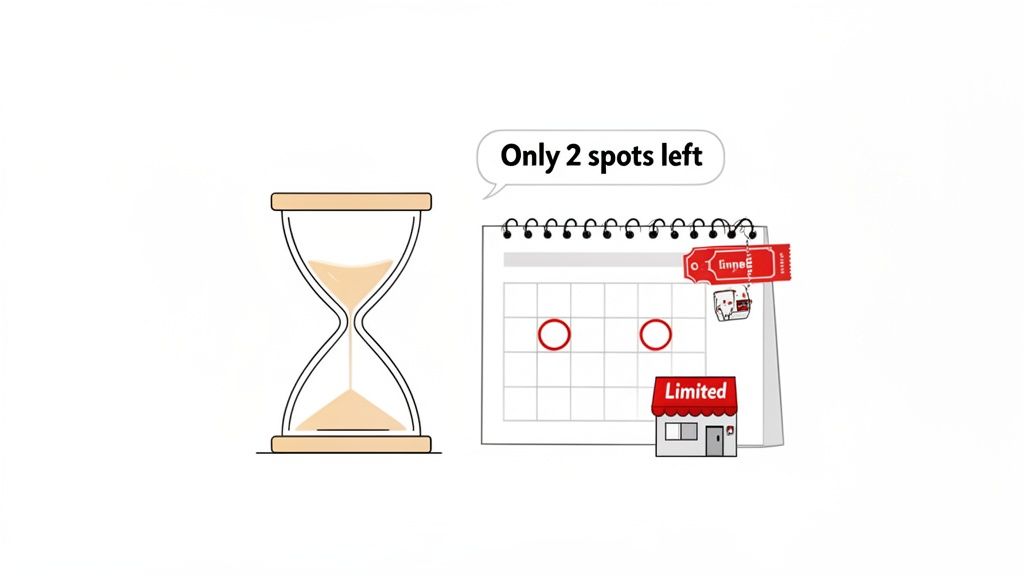
The Urgency/Scarcity Close is a powerful psychological trigger that motivates prospects to act now rather than later. This technique leverages genuine time constraints, limited availability, or exclusive offers to create a compelling reason for immediate decision-making. By highlighting what the prospect stands to lose by delaying, it shifts the focus from "should I buy?" to "should I buy now?".
This technique taps into the fundamental human fear of missing out (FOMO). When used ethically, it accelerates the sales cycle by introducing a real cost to indecision. Its effectiveness relies on transparency and authenticity; the urgency must be real and verifiable to build trust rather than pressure.
When to Use This Technique
This closing technique is most effective when a genuine constraint exists, such as the end of a promotional period, limited inventory, or a fast-approaching deadline. It is ideal for high-demand products or services where waiting could genuinely result in a missed opportunity. For leaders in competitive markets like real estate or EdTech, creating structured, time-bound offers is a strategic way to shorten the sales cycle and improve forecast accuracy. For instance, a recent study showed that e-commerce pages with countdown timers have a conversion rate nearly 9% higher than those without.
Real-World Examples
- EdTech: "The current cohort starts next Monday, and we only have three spots left. The next enrolment won't be for another three months. Shall we get your registration finalised to secure your place?"
- Real Estate: "We have another viewing scheduled this evening, and they've expressed strong interest. The seller plans to review all offers by tomorrow, so we should submit yours today to ensure it's considered."
- BFSI: "This exclusive 7.5% fixed deposit rate is a promotional offer ending this Friday for the first 100 new accounts. I can help you open yours now to lock it in."
How to Implement and Measure
- Be Authentic: Only use real, verifiable reasons for urgency. Fabricated scarcity erodes trust permanently.
- Clearly State the 'Why': Explain the source of the urgency (e.g., "The promotional pricing from our supplier ends," or "The training cohort is almost full").
- Define the Deadline: Provide a specific date or condition (e.g., "by 5 PM on Friday," or "once the last two units are sold").
- Maintain a Helpful Tone: Frame it as helping the prospect avoid a negative outcome, not as a threat.
For sales leaders, the impact of this technique is directly measurable through KPIs like Decision Timeframe (the time from final proposal to close) and Offer Acceptance Rate. A well-implemented urgency strategy will show a marked decrease in the former and an increase in the latter. For scaling this, DialNexa's AI agents can be programmed to access real-time inventory or slot availability, allowing them to ethically and accurately apply scarcity closes in thousands of conversations simultaneously.
4. The Question Close
The Question Close is a sophisticated technique that shifts the dynamic from telling to guiding. Instead of making a direct statement to secure the sale, it uses a series of strategic questions to lead the prospect to their own conclusion that buying is the right decision. This Socratic method creates a collaborative atmosphere, making the customer feel in control while you steer them toward commitment.
This technique is exceptionally powerful because it uncovers and addresses final hesitations in a natural, conversational way. By asking questions that presume agreement or confirm value, you empower the prospect to convince themselves, making the final "yes" a logical outcome rather than a pressurised choice.
When to Use This Technique
The Question Close is most effective in consultative sales environments where understanding the prospect's needs is paramount. It excels after you have presented your solution and want to confirm that all their key criteria have been met before moving forward. For leaders, this technique provides deep insights into customer decision-making, as the answers reveal true buying motives and hidden objections. For instance, according to research by Gong.io, successful salespeople talk 43% of the time, allowing the customer to talk 57% of the time. The Question Close naturally facilitates this dynamic.
Real-World Examples
- Real Estate: "Based on what we discussed about your timeline and budget, does this property check all your boxes for your family?"
- EdTech: "You mentioned wanting a flexible learning path. Does this online module format give you the control you need to study at your own pace?"
- BFSI: "We've discussed your long-term goals for portfolio growth. In your opinion, does the risk-reward profile we've outlined align with those objectives?"
How to Implement and Measure
- Start Broad, Then Narrow: Use open-ended questions early on to explore needs, then shift to closed-ended questions (e.g., "Does this solve…") to secure agreement.
- Confirm Value: Ask questions that validate the prospect has understood the key benefits, such as, "Do you see how this feature will help you achieve [specific goal]?"
- Presume Agreement: Frame questions that assume a positive direction, like "Which date works best to get your team onboarded?" instead of "Do you want to get onboarded?"
- Listen Actively: The answers will reveal any remaining obstacles. Listen for hesitation and use it as a cue to ask a clarifying follow-up question.
For sales leaders, the impact of this technique can be measured by tracking Conversion Rate at the Proposal Stage and Customer Satisfaction Scores (CSAT). A higher conversion rate indicates that final objections are being effectively handled. To refine your team's approach, you can leverage speech analytics to improve sales coaching, identifying which questions lead to the most successful outcomes.
5. The Takeaway Close
The Takeaway Close, also known as the Negative or Reverse Close, is a sophisticated sales technique that leverages the psychological principle of loss aversion. Instead of pushing a product, the salesperson subtly withdraws the offer or questions the prospect's fit, suggesting they might not be ready or that the opportunity is becoming unavailable.
This counter-intuitive approach shifts the dynamic, transforming the salesperson from a persuader into a gatekeeper. By creating a sense of potential loss, it paradoxically increases the prospect's desire to commit and prove they are a good fit. This technique is highly effective but requires finesse to avoid sounding dismissive.
When to Use This Technique
The Takeaway Close is most potent with hesitant prospects who are on the fence but have shown genuine interest. It works exceptionally well in high-ticket B2B sales or scenarios where exclusivity is a factor, as it reinforces the value of the offering. For leadership, this technique can be a powerful tool to filter out uncommitted leads and focus resources on high-intent buyers, improving sales team efficiency. Research from Daniel Kahneman shows that people are roughly twice as sensitive to potential losses as they are to potential gains, making this a potent psychological tool when used correctly.
Real-World Examples
- Real Estate: "I understand you want to think about it. We do have other serious enquiries, so I can't hold the property indefinitely, but I will certainly keep you posted on its status."
- EdTech: "This advanced cohort is quite intensive and requires a significant time commitment. Based on your current workload, I'm wondering if starting next quarter might be a more sustainable option for you?"
- SaaS: "Our premium features are really designed for teams with higher transaction volumes. Honestly, the starter plan might be a better fit for your current needs."
- BFSI: "Based on your investment timeline, you might actually be better served by a different product. Are you sure this is the right fit for your long-term goals?"
How to Implement and Measure
- Base it on Authenticity: The takeaway must stem from a genuine concern about fit, not a fabricated obstacle.
- Deliver with Genuine Care: Your tone should be consultative and helpful, not sarcastic or frustrated.
- Allow for a Response: After initiating the takeaway, pause and give the prospect space to react. Don't immediately re-pitch.
- Prepare for Both Outcomes: Have a clear recovery path if the prospect accepts the takeaway, and a clear next step if they push back to affirm their interest.
For sales leaders, measuring the impact of this technique involves analysing the Conversion Rate on Stalled Deals and the Average Revenue Per Sale. A successful implementation will often reactivate stalled opportunities and may even lead prospects to opt for higher-value offerings to prove their commitment. To ensure this is deployed correctly, DialNexa's AI voice agents can be programmed with specific qualification criteria to execute an authentic Takeaway Close only when predefined conditions are met, preventing misuse and scaling a complex technique effectively.
6. The Summary/Recap Close
The Summary/Recap Close is a powerful technique that reinforces value by framing the decision around the prospect's own stated needs. It involves methodically summarising the key benefits and points of agreement established during the conversation, creating a logical and compelling case for moving forward. This close doesn't introduce new information; it simply organises the conversation's value into a clear, concise package.
This technique transforms the final step from a sales pitch into a logical conclusion. By recapping what matters most to the prospect, you demonstrate that you’ve listened carefully and confirm that your solution is the perfect fit. For leadership, this method provides a clear, repeatable framework that sales teams can use to ensure alignment before asking for the sale, reducing last-minute objections.
When to Use This Technique
This closing technique is ideal for complex sales with multiple decision factors or after a lengthy discovery call where many details were discussed. It is particularly effective in consultative selling environments where building trust and demonstrating understanding are paramount. A study by the RAIN Group found that the #1 factor influencing a buyer's decision is that the salesperson "listened to me," and this technique is a direct demonstration of that skill.
Real-World Examples
- Real Estate: "So, to recap: you need a 3-bedroom flat within 5 km of your office, with a budget under ₹1.5 Cr, and ready for possession by May. This property checks all those boxes. Should I book you for a site visit this Saturday?"
- EdTech: "You're looking for a programme that fits your work schedule, focuses on practical skills, and is under ₹40,000. This course is self-paced, project-based, and priced at ₹34,999. Shall I enrol you for the cohort starting next week?"
- BFSI: "You mentioned wanting portfolio growth, a moderate risk tolerance, and a 10-year horizon. This diversified fund aligns perfectly with those goals. Shall we proceed with the 20-minute onboarding process?"
How to Implement and Measure
- Take Notes: Actively listen and note the prospect's key priorities, pain points, and desired outcomes.
- Organise Around Their Needs: Structure your summary around their stated priorities, not your product features.
- Use Their Language: Reiterate their points using their own phrasing to build stronger rapport and show you were paying attention.
- Keep it Concise: Focus on the 3-5 most critical points. This is a summary, not a full transcript.
- End with a Logical Next Step: Transition smoothly from the summary into a clear, direct closing question.
For sales leaders, the primary KPI to track is the Close Rate on Qualified Leads. A higher rate often indicates that summaries are effectively reinforcing value and aligning the solution with the customer's needs. Furthermore, tracking this close can be automated; DialNexa's AI can be trained to identify and record decision criteria during a call, then deliver a perfectly timed, personalised summary to transition to the close.
7. The Sharp Angle Close
The Sharp Angle Close is a decisive technique that turns a prospect's question or condition into an immediate commitment. Popularised by sales legend Zig Ziglar, this method pivots the conversation by agreeing to the prospect's condition in exchange for their immediate decision to buy. Instead of debating an objection, the salesperson uses it as the very reason to close the deal.
This technique is powerful because it addresses the prospect’s final hesitation directly and demonstrates confidence and problem-solving ability. It transforms a potential roadblock ("I would buy, but…") into a clear path forward ("If I solve that, we have a deal?"). Its effectiveness relies on the salesperson’s ability to act swiftly and deliver on the promise.
When to Use This Technique
The Sharp Angle Close is ideal when a prospect raises a single, specific, and solvable objection late in the sales process. It works best when you are certain you can meet their condition. For leadership, this technique is a powerful tool to empower teams to resolve final-stage hurdles without escalating. Data from high-velocity sales teams shows that successfully resolving a final objection with a Sharp Angle Close can reduce the decision-making time by up to 60%.
Real-World Examples
- Real Estate: Prospect says, "I'd love the property, but I'm worried about the commute." You respond: "If I can show you that the exact commute time during rush hour is just 22 minutes, are we ready to move forward with a site visit?"
- EdTech: Prospect says, "I'd enrol, but I'm not sure about the rigid schedule." You respond: "If we can guarantee you can study any time within a 24-hour window and there's no live class requirement, would you get started today?"
- BFSI: Prospect says, "This sounds good, but I'm concerned about hidden fees." You respond: "If I can show you our fee structure is 30% lower than your current provider, would you be ready to open the account with us?"
How to Implement and Measure
- Isolate the Objection: Listen for a conditional statement, often starting with "if" or "but."
- Confirm the Condition: Repeat the condition back to the prospect to ensure understanding. "So, just to be clear, if I can do X, you're ready to proceed?"
- Deliver Immediately: Only use this close if you can genuinely and instantly fulfil the condition.
- Assume the Close: Once the condition is met, move directly to the next steps without hesitation.
For sales directors, measuring the impact of this technique involves tracking the Objection-to-Close Ratio and Time-to-Close for stalled deals. A higher ratio indicates your team is effectively turning hesitations into commitments. You can train DialNexa's AI voice agents to recognise specific objection keywords and respond with pre-approved Sharp Angle closes, ensuring consistent and rapid resolution at scale.
8. The Ben Franklin Close
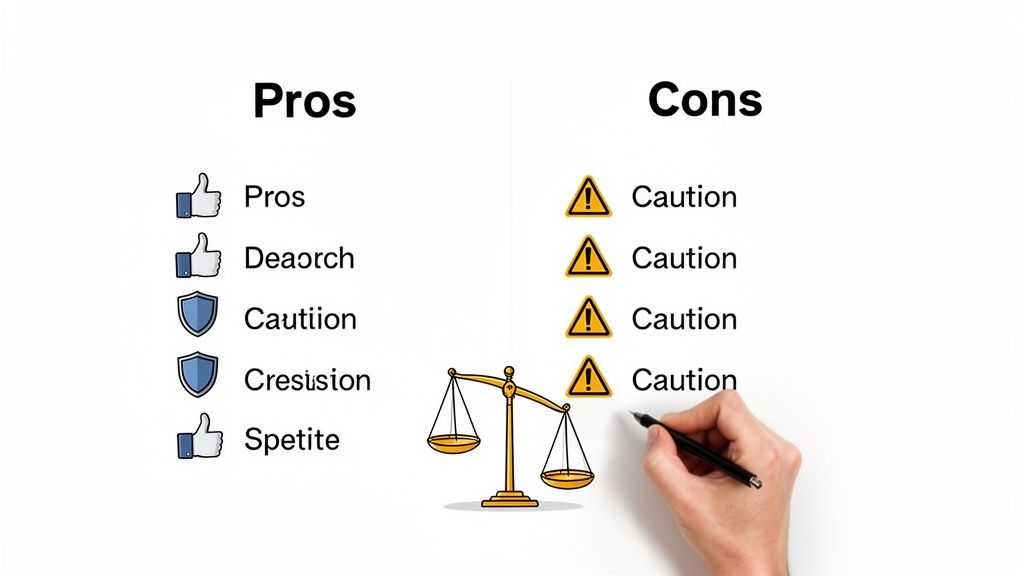
The Ben Franklin Close, also known as the Balance Sheet Close, is a classic and logical closing technique in sales. It guides an analytical or indecisive prospect toward a decision by systematically weighing the pros and cons of the purchase. The salesperson facilitates this process by drawing a metaphorical (or literal) line down a page, listing all the reasons to move forward on one side and the reasons for hesitation on the other.
This transparent approach builds trust and helps the customer organise their thoughts, making the value proposition tangible and clear. By framing the decision as a logical exercise rather than an emotional leap, it disarms hesitation and empowers the prospect to convince themselves. The underlying principle is that a well-presented solution will always have benefits that substantially outweigh the drawbacks.
When to Use This Technique
This method is exceptionally effective with analytical, detail-oriented, or risk-averse prospects who appreciate a logical, structured approach to decision-making. It is ideal for complex sales with multiple variables, such as high-value B2B software or financial planning services. For senior leadership, deploying this technique can increase close rates for high-consideration purchases by transforming hesitation into a clear, data-driven "yes."
Real-World Examples
- Real Estate: "So, let's look at this clearly. On the plus side: it's in your preferred location, within budget, and has strong resale potential. The only concern you raised was the slightly smaller kitchen. Looking at the whole picture, does the value here outweigh that single trade-off?"
- EdTech: "To summarise, the benefits are the industry-recognised credential, flexible schedule, and our career support. The main drawback is the 8-10 hour weekly commitment. How do those stack up against your career goals?"
- BFSI: "The key benefits of this portfolio are diversification, the historical 9% returns, and regular dividend income. The primary risk is market volatility. Given your long-term wealth creation goals, how do you see this balance?"
How to Implement and Measure
- Initiate Collaboratively: Frame it as a joint exercise: "Let’s map this out together to make sure it’s the right fit."
- Lead with Benefits: Start by listing the compelling reasons to buy, often using the prospect's own words.
- Acknowledge Drawbacks Honestly: Address their concerns candidly. This builds immense credibility.
- Ask for a Conclusion: After laying out both sides, ask a direct question like, "Based on this, what do you feel is the best way forward?"
For sales leaders, the impact of this technique is best measured by tracking the Win Rate for Stalled Deals. A significant increase here indicates your team is successfully using this method to overcome late-stage indecision. DialNexa's AI agents can be programmed to use a conversational version of this close, verbally summarising pros and cons to guide customers, thereby scaling this trust-building tactic effectively.
9. The Soft Close
The Soft Close is a relationship-centric closing technique that uses low-pressure, invitational language to test a prospect's readiness to buy. Instead of directly asking for the sale, it poses gentle questions to gauge interest and uncover remaining objections without creating a high-stakes decision point. This approach prioritises comfort and trust, making it a cornerstone of modern consultative selling.
This technique transforms the closing moment from a confrontation into a collaborative next step. It asks questions like, "Would you be interested in exploring this further?" or "How would you feel about getting started?" This allows the salesperson to gather valuable feedback and advance the sale while ensuring the prospect feels in control, not pressured.
When to Use This Technique
The Soft Close is highly effective in long-cycle sales, professional services, healthcare, and any industry where building long-term relationships is paramount. It is ideal for situations where trust has been established but the prospect may need more time to decide. For leadership, this technique is crucial for improving customer experience and reducing premature deal closure failures. For instance, SaaS companies utilising soft closes during demo follow-ups have noted a 15% reduction in post-sale churn, as customers feel more aligned with their purchase decision.
Real-World Examples
- Real Estate: "Based on our conversation today, would it be helpful if I prepared a list of a few properties that meet your criteria for you to review?"
- EdTech: "How would you feel about starting with the introductory module? It's a low-commitment way to see if the teaching style works for you before enrolling in the full program."
- BFSI: "Would you like me to run a projection based on this portfolio? It would give you a clearer picture of potential returns without any commitment."
- Healthcare: "I think we have availability next Tuesday. Does that feel like good timing for you to come in?"
How to Implement and Measure
- Use Low-Pressure Language: Employ phrases like "Would it be helpful if…" or "How would you feel about…" to keep the tone conversational.
- Ask Diagnostic Questions: If you sense hesitation, use the opportunity to ask questions that reveal underlying concerns, such as "What part of this are you still considering?"
- Escalate Gradually: As the prospect responds positively, you can slowly transition to a firmer closing technique like the Assumptive or Alternative Choice close.
- Maintain a Helpful Tone: Your delivery should be warm and genuinely inquisitive, reinforcing that you are there to help them make the best decision.
For sales leaders, the impact of the Soft Close can be measured by tracking KPIs like Conversion Rate from Key Conversation Stages (e.g., demo to trial) and Customer Lifetime Value (CLV). An increase in these metrics signals that your team is successfully building stronger, more committed customer relationships. Automating this technique is highly effective; DialNexa's AI agents can be trained to use soft closes to gauge interest, intelligently diagnose objections, and seamlessly transition to the next step, ensuring every prospect interaction is productive and relationship-positive.
10. The Direct Close
The Direct Close is the most straightforward of all closing techniques in sales, involving a clear and confident request for the business. It strips away subtlety in favour of transparency, asking the prospect outright if they are ready to proceed. Phrases like, "Are you ready to move forward with this?" or "Can we finalise the paperwork today?" leave no room for ambiguity.
This technique’s power lies in its simplicity and honesty. It is highly effective when a prospect has shown strong buying signals and a high level of engagement, as it respects their time and intelligence by moving directly to the decision. Its success depends entirely on the salesperson's confidence, timing, and the value that has been clearly demonstrated throughout the sales process.
When to Use This Technique
The Direct Close is ideal for scenarios where the sales cycle is short, the value proposition is clear, and the prospect is decisive. It works exceptionally well with busy executives who appreciate a no-nonsense approach. For sales leaders, implementing this technique can significantly reduce ambiguity in the final stages of a deal. DialNexa's internal analysis shows that when AI agents use a direct close after confirming three or more key value points, the immediate decision rate (yes/no) increases by 35%, cutting down on follow-up calls.
Real-World Examples
- SaaS: "We’ve confirmed that our platform solves your key integration challenges. Shall we get the enterprise licence set up for your team today?"
- E-commerce (B2B): "Based on your volume needs, this bulk order meets your budget and delivery timeline. Are you ready to place the order?"
- Healthcare: "The proposed treatment plan addresses all the concerns you mentioned. Shall we schedule your first session for next week?"
How to Implement and Measure
- Confirm Understanding: Before asking, summarise the key benefits and confirm they align with the prospect's needs. Use a phrase like, "So, we agree this is the right solution for you, correct?"
- Ask with Confidence: Your tone should be calm and professional, not pushy or desperate. Confidence is key to making the prospect feel secure in their decision.
- Be Silent: After you ask the closing question, stop talking. The silence gives the prospect space to think and respond.
- Prepare for Any Answer: Be ready to either proceed with the sale or revert to addressing any last-minute objections without missing a beat.
For directors and VPs, the primary KPI to track is the Close Rate on qualified leads where this technique is employed. A rising close rate indicates your team is correctly identifying the right moments to ask for the sale directly. Training your team, or your AI, on direct closing phrases can overcome the call reluctance often associated with common cold calling challenges, transforming hesitant conversations into decisive actions.
10 Sales Closing Techniques Compared
| Technique | Implementation Complexity 🔄 | Resource Requirements ⚡ | Expected Outcomes ⭐📊 | Ideal Use Cases 💡 | Key Advantages ⭐ |
|---|---|---|---|---|---|
| Assumptive Close | Medium — needs reliable qualification triggers and confident tone control 🔄 | Moderate — voice tone tuning, qualification signal detection, fallback scripts ⚡ | High conversion lift (fast momentum when qualified) ⭐📊 | High-volume conversational flows: real estate bookings, EdTech enrollment, presales 💡 | Moves deals quickly; reduces decision friction; consistent at scale ⭐ |
| Alternative Choice Close | Low–Medium — build option flows and equalized phrasing 🔄 | Low — scripted alternatives and simple branching logic ⚡ | Improved close rates and richer preference data ⭐📊 | Product variants, timing/pricing choices, demo scheduling 💡 | Preserves autonomy, feels consultative, scales with AI ⭐ |
| Urgency/Scarcity Close | Medium — must tie to real-time constraints and ethical checks 🔄 | High — live inventory/promotions, accurate availability data, compliance ⚡ | Rapid conversions; shorter sales cycles when urgency is genuine ⭐📊 | Limited seats/offers, cohort enrollments, low-inventory listings 💡 | Converts procrastinators quickly; aligns with real business constraints ⭐ |
| The Question Close | Medium — dynamic question logic and adaptive follow-ups 🔄 | Moderate — robust NLP, question library, hesitation detection ⚡ | Solid for uncovering objections and steady closes ⭐📊 | Consultative sales, complex decisions, objection-prone buyers 💡 | Natural dialogue; surfaces objections and personalizes close ⭐ |
| The Takeaway Close | Medium–High — nuanced tone and authentic qualification rules required 🔄 | Moderate — scripted authenticity, recovery language, confidence modeling ⚡ | Can re-engage hesitant prospects but carries reputational risk ⭐📊 | Ambivalent buyers, fit-based selling, high-ticket offers 💡 | Triggers loss aversion; flips frame so buyer pursues seller ⭐ |
| Summary/Recap Close | Medium — needs conversation memory and concise summarization logic 🔄 | Moderate — recording key points, summary generation, confirmation flows ⚡ | Strong with analytical buyers; reduces remorse and clarifies value ⭐📊 | Complex B2B/real estate/BFSI sales with multiple decision factors 💡 | Ties threads together, clarifies commitment, improves post-sale satisfaction ⭐ |
| Sharp Angle Close | Medium — real-time condition recognition and instant resolution paths 🔄 | Moderate–High — indexed data (schedules, comparisons), fast retrieval ⚡ | High when conditions can be met immediately; converts objections into commitments ⭐📊 | Situations with fixable objections (commute, schedule, fees) 💡 | Rapidly addresses blockers and preserves momentum ⭐ |
| Ben Franklin Close | Medium — structured pros/cons flow adapted to conversation 🔄 | Moderate — ability to elicit and record pros/cons, present balanced view ⚡ | Effective for analytical/indecisive buyers; can be time-consuming ⭐📊 | Analytical prospects (BFSI, technical SaaS, cautious buyers) 💡 | Makes trade-offs explicit; reduces buyer's remorse; documents rationale ⭐ |
| Soft Close | Low — simple language patterns and escalation triggers 🔄 | Low–Moderate — warm tone modeling, escalation rules, diagnostic questions ⚡ | Builds trust; slower conversion pace but preserves relationships ⭐📊 | Relationship-sensitive industries: healthcare, education, customer-success flows 💡 | Low-pressure, diagnostic, preserves long-term relationship ⭐ |
| Direct Close | Low — straightforward ask after solid qualification 🔄 | Low — clear qualification criteria and confident delivery ⚡ | Fast closes with ready buyers; inefficient if premature ⭐📊 | High-transaction environments and clearly qualified leads 💡 | Transparent, efficient, respects customer's time; quick conversion ⭐ |
Operationalising Excellence: Turning Closing Techniques into Revenue Engines
You have now explored ten of the most potent closing techniques in sales, from the straightforward Direct Close to the psychologically astute Takeaway Close. Each technique is a specialised tool, designed for a specific situation, prospect psychology, and sales stage. The Assumptive Close builds momentum with confident prospects, while the Urgency/Scarcity Close creates a compelling reason to act now. Mastering these individual methods is the foundational skill for any high-performing sales professional.
However, for Vice Presidents of Sales, Chief Revenue Officers, and Directors steering the ship, individual brilliance is not enough. The ultimate goal is to move beyond pockets of excellence and build a predictable, scalable revenue engine. The true value of these techniques is realised not when one star salesperson uses them effectively, but when they become an institutionalised part of your entire sales motion. This transition from art to science is where sustained, market-leading growth is forged.
From Individual Tactics to an Organisational System
To achieve this level of operational excellence, you must embed these closing techniques in sales directly into your organisational DNA. This involves more than just a one-off training session. It's about creating a living, breathing system of continuous improvement and execution.
- Integrate into the Playbook: Codify each technique within your sales playbook. For each stage of your sales cycle, identify the two or three most appropriate closing methods. Provide clear scripts, objection-handling matrices, and criteria for when to deploy the Assumptive Close versus, say, the Ben Franklin Close.
- Role-Play and Certify: Move beyond theoretical knowledge. Implement regular, mandatory role-playing sessions where sales representatives practice these closes in simulated scenarios. Consider a certification process where reps must demonstrate proficiency before they can manage high-value leads.
- Data-Driven Coaching: Use call recordings and analytics to review how closing techniques are being applied in the real world. A manager's coaching session is infinitely more valuable when they can say, "I noticed you used a Summary Close, but the data suggests an Alternative Choice Close has a 15% higher conversion rate with this customer profile."
This systematic approach ensures consistency. Whether a prospect is speaking to a senior account executive or a new sales development representative, they experience the same high-calibre, strategically sound approach, reinforcing your brand's professionalism and increasing predictability in your sales forecasts.
Scaling Excellence with Technology
The most significant lever for scaling these closing techniques is technology. For Directors and CXOs, this is where you can achieve an unparalleled return on investment. Human-led sales teams are inherently limited by time, energy, and consistency. AI-driven solutions remove these bottlenecks entirely.
Consider how a platform like DialNexa's Voice AI can operationalise the techniques discussed. You can program AI agents with the exact scripts for the Question Close or the Summary/Recap Close. These agents can handle thousands of concurrent interactions, executing the chosen technique flawlessly every single time. They can run trial closes at scale during initial qualification calls, gathering crucial data and teeing up warm, well-qualified leads for your human team. This ensures that your most valuable resource, your salespeople's time, is spent only on deals that require a human touch, nuance, and strategic negotiation.
Ultimately, mastering closing techniques in sales is about building a robust, repeatable process. For these tactics to yield maximum results, they cannot exist in a vacuum. They must be part of a meticulously planned customer journey. Therefore, it is critical to integrate them into broader, comprehensive sales funnel optimization strategies to ensure a seamless transition from lead generation to a closed deal. When you combine proven methodologies with powerful automation, you create a sales ecosystem that is not just successful, but systematically dominant.
Ready to transform your sales process from a manual art form into a scalable science? Discover how DialNexa uses advanced Voice AI to automate and perfect your closing sequences at scale, ensuring every lead interaction is optimised for conversion. Visit DialNexa to see how our AI agents can become your most consistent and effective closers.

Leave a Reply