
Top 12 Cloud Telephony Providers in India for 2026: A CXO’s Guide
Quick answer: The top cloud telephony providers in India for 2026 covered in this guide include DialNexa, Exotel, Tata Tele Business Services (Smartflo), Airtel IQ, Knowlarity (by Gupshup), MyOperator, Ozonetel, Acefone and Plivo. The comparison below breaks down each provider by best-fit use case, IVR and API capabilities, and pricing model so you can shortlist the right platform for your business.
In today's competitive landscape, your communication stack is no longer just a utility—it's a strategic asset. For Directors, VPs, and CXOs, selecting the right cloud telephony partner is a critical decision that directly impacts operational efficiency, customer experience, and revenue growth. Migrating from legacy systems to a cloud-based solution isn't just about reducing hardware costs; it's about unlocking strategic capabilities like intelligent call routing, scalable outreach, and powerful Voice AI that can transform your business.
This guide moves beyond generic feature lists to provide a strategic analysis of India's leading cloud telephony providers. We'll examine their core strengths, practical limitations, and specific industry use cases to help you identify the platform that aligns with your organisation's long-term goals. Whether you are a VP of Sales aiming to automate lead qualification in your EdTech firm, a Chief Compliance Officer ensuring secure communication in BFSI, or a COO streamlining patient bookings in healthcare, this resource is designed to clarify your decision-making process.
Each provider profile includes detailed analysis, screenshots, and direct links to help you evaluate their offerings effectively. We'll delve into everything from IVR and call automation to API capabilities and pricing tiers, giving you the comprehensive data needed for a thorough comparison. For those also exploring broader communication technologies, understanding the global market can be beneficial. To understand the broader landscape of market options and key players shaping customer service, you might find valuable insights in a guide to the Top 12 VoIP Providers for Call Centers. This article, however, focuses specifically on the nuanced Indian market to help you find the best-fit solution for scaling operations without scaling headcount.
1. DialNexa
Best For: Enterprises seeking scalable, human-like AI voice agents for high-volume outreach and qualification to drive revenue and reduce operational overhead.
DialNexa stands out among cloud telephony providers by focusing intensely on a specialised niche: hyper-realistic, AI-driven voice agents designed for complex, goal-oriented conversations. Rather than offering a general-purpose telephony suite, DialNexa provides a strategic platform for deploying autonomous agents that can manage entire interaction cycles, from initial contact and lead qualification to appointment scheduling and customer support, all without direct human intervention. This makes it an exceptional choice for CXOs and operations directors aiming to drastically reduce operational costs while scaling their outbound and inbound call capacity.
If your team is still clarifying the fundamentals before choosing a platform, it helps to be precise about terminology: an outbound call is a call your business initiates to a customer or lead, as opposed to an inbound call the customer places to you. Getting that distinction right shapes which telephony features (diallers, campaign routing, connect-rate reporting) actually matter for your use case.
Number strategy matters just as much as the platform choice. DialNexa’s virtual number India guide breaks down DID, toll-free, and 140/160 series numbers so the routing decisions in this comparison map onto the right number type.
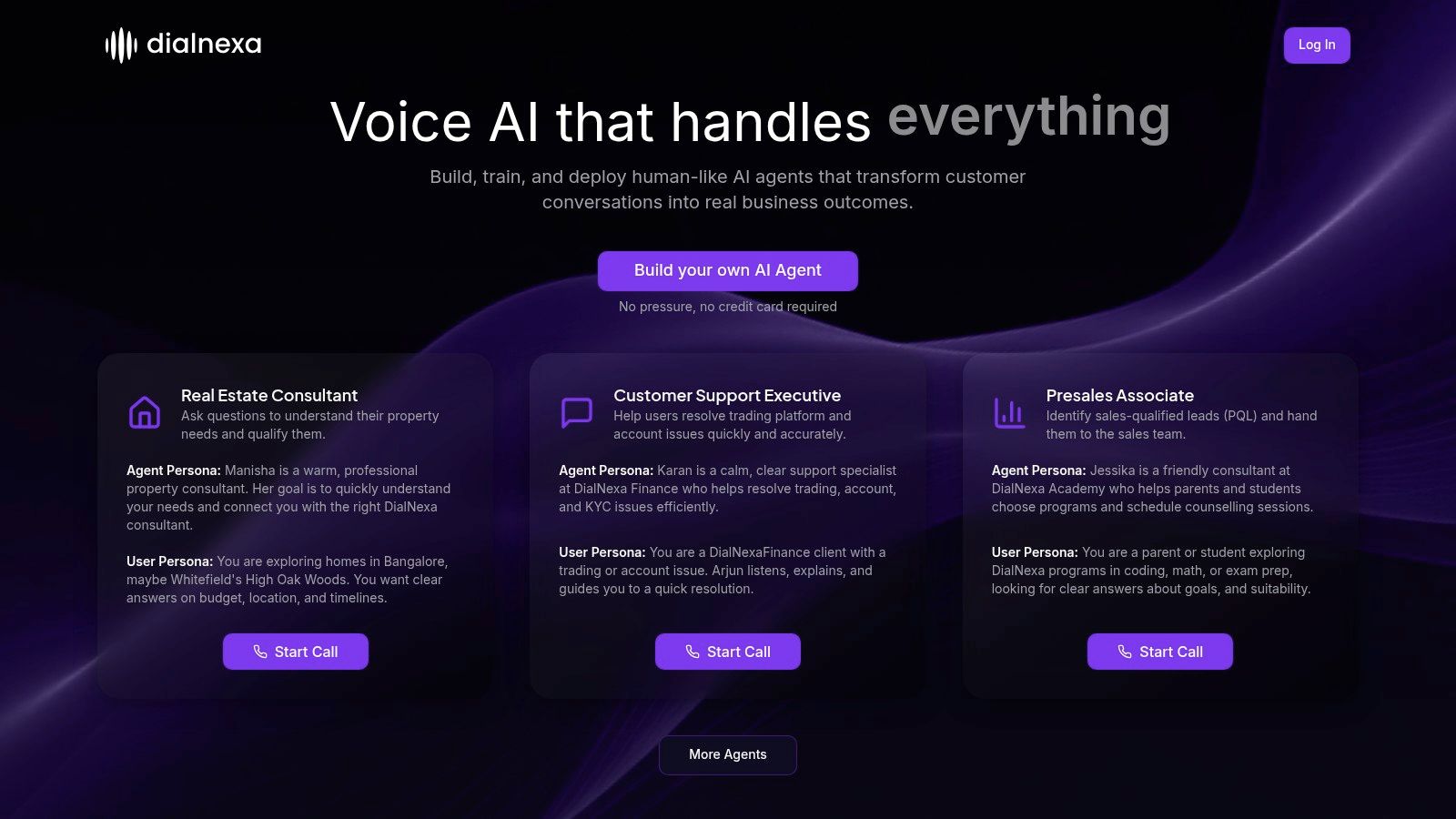
DialNexa is best understood not just as a telephony vendor, but as a platform for teams that want calling infrastructure connected to AI-enabled customer operations. That distinction matters because many businesses no longer want voice as an isolated function. They want it tied to workflow automation, insight extraction, and higher agent productivity.
For businesses evaluating cloud telephony providers in India with a strong CX and AI angle, DialNexa stands out when the goal is not merely to place or receive calls, but to improve what happens during and after those calls. This is especially relevant for organizations handling outbound engagement, support, and revenue conversations at scale. If your team is building a stronger outbound program, it helps to remember that an outbound call is a call your business initiates, and the platform you choose should support quality, visibility, and repeatability across that workflow.
DialNexa fits the direction the category is moving. Businesses increasingly expect AI to support routing, summarization, coaching, and customer understanding instead of treating voice as a standalone utility. Teams interested in that shift can Learn how AI is reshaping contact centres for financial services, explore recent advancements in telephony AI, and see how to leverage AI in your contact centre.
Best for
Businesses that want cloud telephony in India combined with AI-forward contact-centre and customer-engagement capabilities.
Why consider it
- Strong fit for teams that view telephony as part of a wider CX stack
- Useful for organizations combining inbound, outbound, and AI-assisted workflows
- Better suited to strategic modernization than to simple “replace a phone line” projects
Watch-outs
- Buyers looking only for the cheapest basic calling layer may not need the broader platform depth
- Best evaluation comes from mapping the product to actual workflow complexity, not comparing it only on headline features
Ideal buyer profile
Growth-stage and enterprise teams that want a cloud telephony provider aligned with AI-assisted operations rather than basic standalone calling.
2. Exotel
Exotel is one of the most recognizable cloud telephony providers in India and is often on the shortlist for businesses that want a local-market operator with established presence across customer communication use cases. It is typically considered by companies seeking a blend of telephony, contact-centre, and customer-engagement infrastructure without immediately moving to a highly developer-centric stack.
What makes Exotel more interesting than a generic category inclusion is its fit for businesses that need scale within India while still wanting packaged workflows. It often appeals to teams that have moved beyond an early-stage setup but are not necessarily trying to build communications infrastructure from scratch. That middle ground is important because many cloud telephony companies in India either skew too basic for growing operations or too technical for business-led teams.
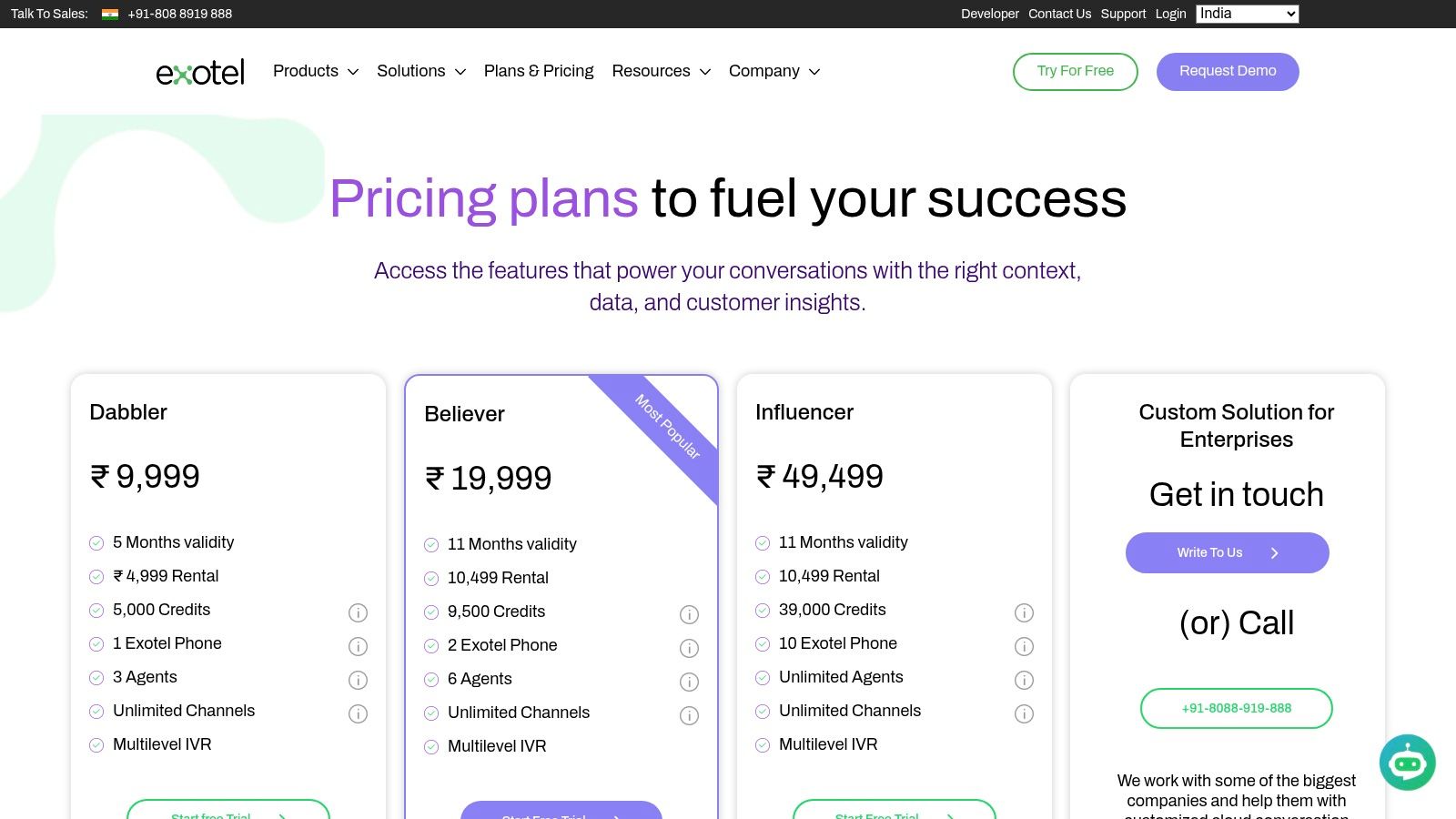
The credit-based model can also change how buyers think about usage. Rather than assuming all cloud telephony pricing behaves like seat licensing, Exotel pushes buyers to estimate operational intensity. That makes it a relevant reference point in any pay as you go vs per agent pricing for cloud contact center providers in India comparison.
For the exact tariff breakdown behind that credit-based model, see DialNexa’s Exotel pricing guide, which maps plan tiers against real per-minute and per-SMS costs.
Best for
India-based businesses that want an established cloud telephony provider with broader packaged capabilities and room to scale.
Why consider it
- Strong category recognition in India
- Better fit than many lightweight tools for teams with more serious customer communication needs
- Useful for businesses comparing structured packaged products against pure API alternatives
Watch-outs
- Credit-style pricing requires careful volume modeling
- Buyers should validate whether their use case needs the full stack or just selected telephony components
3. Tata Tele Business Services – Smartflo
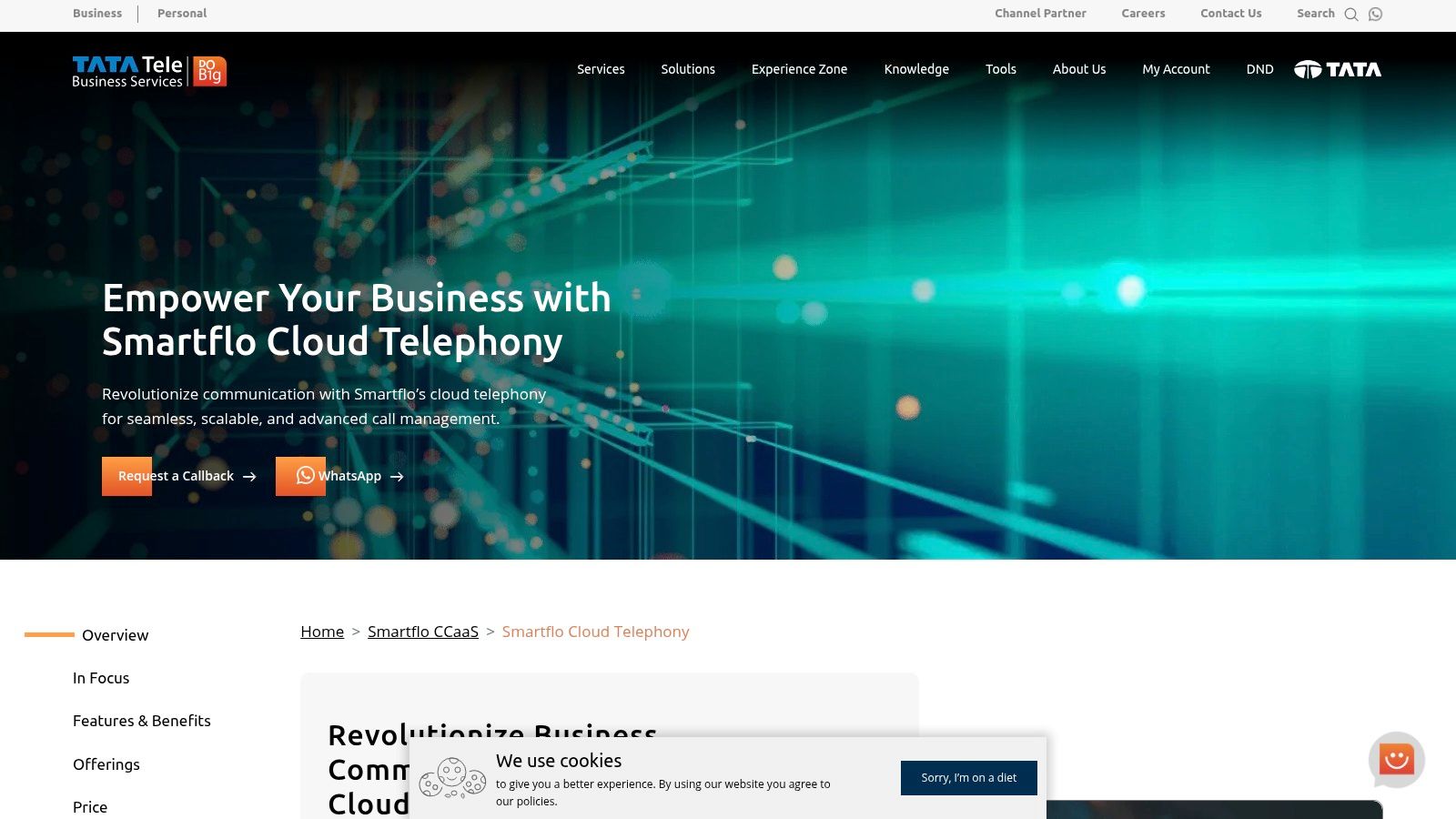
Smartflo is often evaluated by businesses that value enterprise familiarity, telecom lineage, and a relatively structured business communications offering. In the Indian market, that brand association can matter because some buyers are less concerned with experimental flexibility and more focused on operational confidence, procurement comfort, and broad business support.
Compared with startup-led cloud telephony companies, Smartflo can appeal to organizations that want cloud calling India capabilities from a provider with stronger enterprise signaling. This can be especially relevant for companies modernizing legacy telephony environments in phases rather than rethinking customer operations from the ground up.
Smartflo is therefore less about novelty and more about dependable modernization. If your business is moving from legacy systems and wants a more familiar transition path, this profile can be more relevant than a developer-first solution or a highly AI-positioned platform.
Best for
Mid-sized and larger Indian businesses seeking structured cloud telephony solutions from an established telecom-backed brand.
Why consider it
- Strong appeal for buyers who prefer enterprise familiarity
- Better match for staged modernization than for highly custom builds
- Suitable when procurement and vendor confidence are major decision drivers
Watch-outs
- May feel less flexible for teams that want to heavily customize workflows
- Buyers should compare practical implementation speed against more software-native competitors
4. Airtel IQ
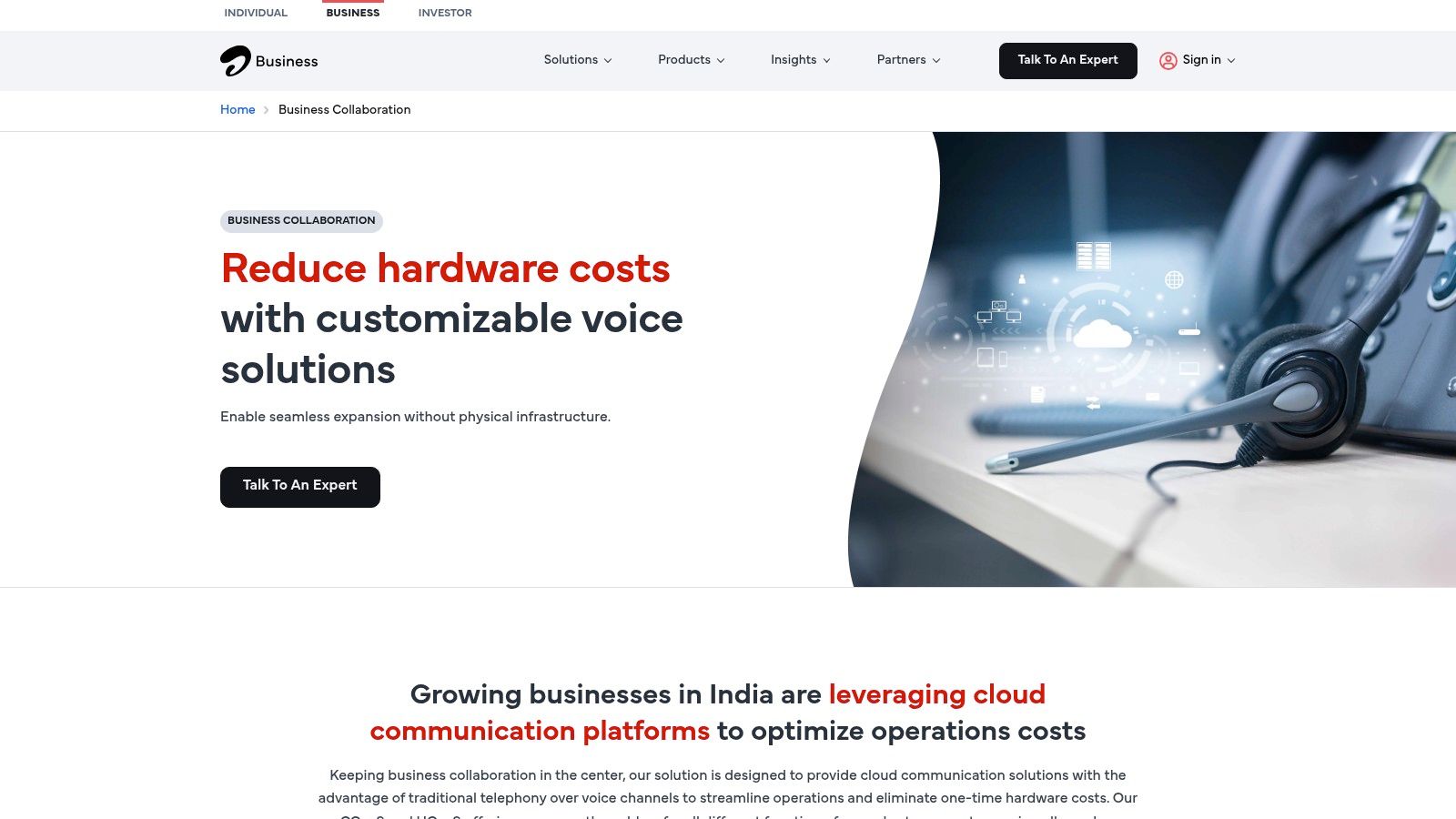
Airtel IQ occupies an important position among cloud telephony providers in India because it bridges telecom familiarity with a more platform-oriented communications proposition. For businesses already operating within the Airtel ecosystem or those that prefer a major telco-backed option, this can reduce perceived adoption risk.
Its practical appeal is often strongest when companies want multiple communication channels under a recognizable umbrella rather than sourcing fragmented tools from different vendors. That does not automatically make it the best choice for every team, but it does make it relevant for buyers who value vendor consolidation and broad communications alignment.
Airtel IQ is worth closer attention in enterprises where telephony decisions are tied to larger communication or IT strategy. In those settings, the question is not only “which cloud telephony provider has the best features?” but also “which provider fits our vendor environment, rollout model, and support expectations?”
Best for
Businesses that want cloud telephony in India from a major telecom-backed platform with broader communications potential.
Why consider it
- Familiar enterprise profile for Indian buyers
- Relevant for teams preferring vendor consolidation
- Good shortlist candidate when communications strategy extends beyond voice alone
Watch-outs
- Buyers should test how flexible the platform is for their exact workflow needs
- Telco-backed positioning does not always equal best fit for highly specialized use cases
5. Knowlarity
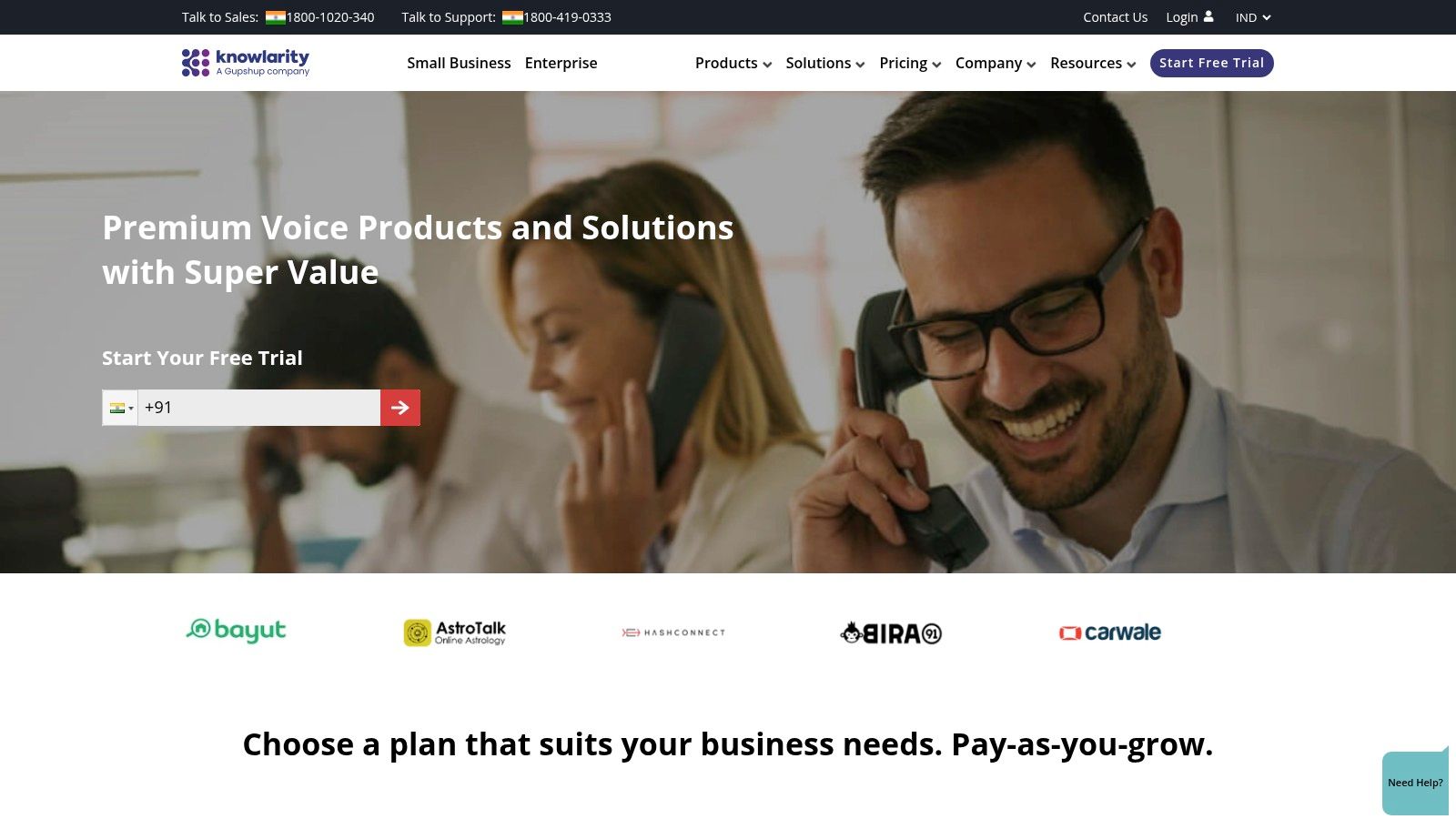
Knowlarity has long been visible in the Indian cloud telephony market and remains relevant for businesses that want packaged business calling capabilities with a recognizable local-market presence. It is often considered by SMBs and mid-market teams that need a practical operational system without turning telephony selection into a major infrastructure project.
What differentiates Knowlarity in this list is not that it offers common telephony features, but that it has historically been part of the mainstream business-calling conversation in India. That makes it a realistic option for teams searching for cloud telephony solutions for small businesses while still wanting room to support sales and service workflows as they mature.
Bundled plans can be appealing to buyers who want cost predictability and easy purchasing. But they can also become restrictive if usage patterns vary sharply across teams or seasons. That is why Knowlarity belongs in the broader pricing-model conversation rather than being judged only on entry accessibility.
Best for
SMBs and mid-market teams seeking a familiar cloud telephony provider with packaged business-calling options.
Why consider it
- Accessible shortlist option for Indian businesses
- Good for teams that prefer productized plans over custom infrastructure assembly
- Useful when predictability matters more than deep programmability
Watch-outs
- Bundled structures may be less efficient for unusual or highly variable usage patterns
- Buyers with advanced integration needs should validate extensibility early
6. MyOperator
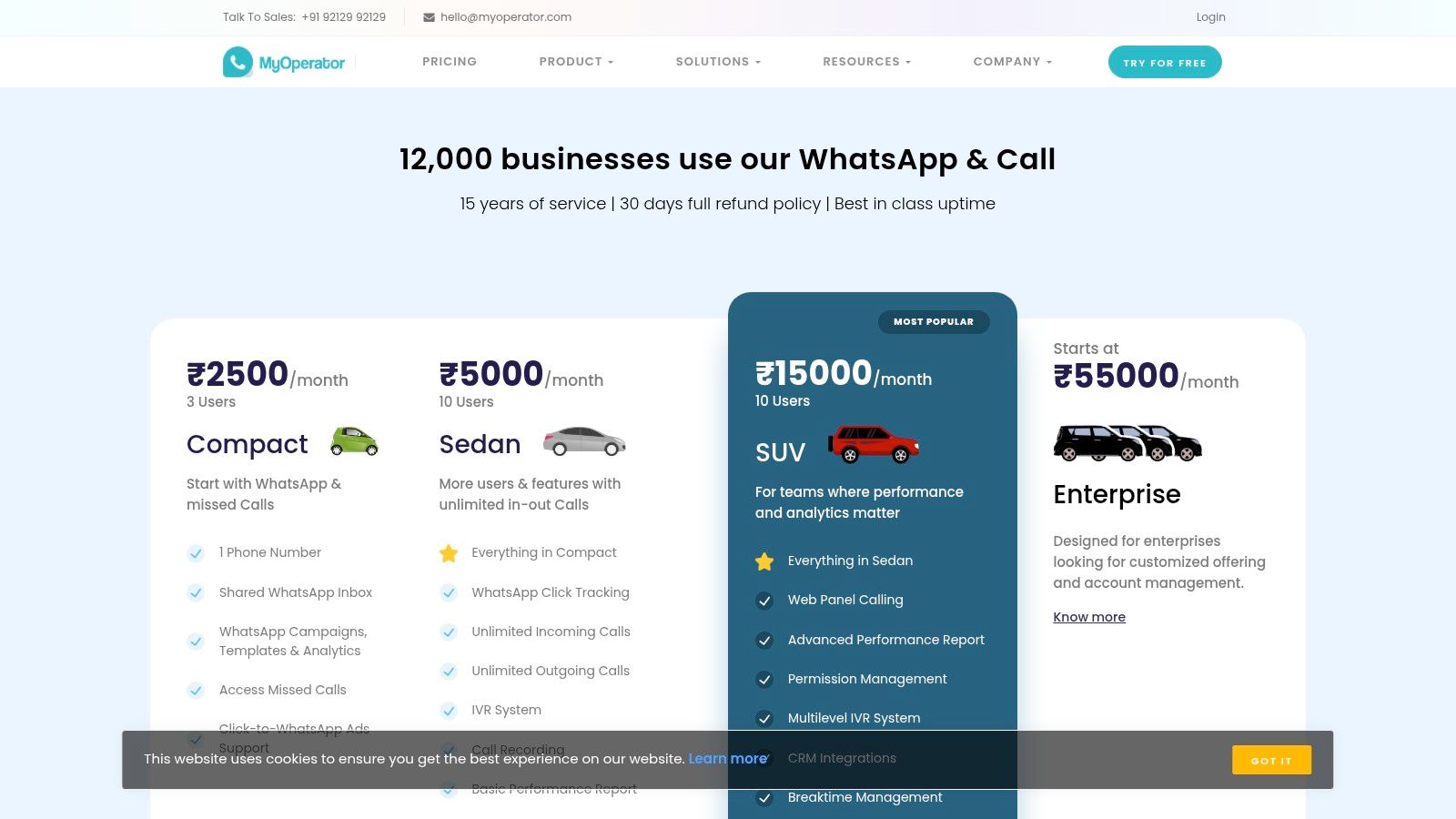
MyOperator is frequently considered by smaller businesses and service-led teams that want a straightforward way to professionalize calling without adopting a heavyweight enterprise stack. In a market where many cloud telephony companies present themselves as equally suited to every segment, MyOperator tends to make the most sense when simplicity and quick operational lift matter.
For businesses entering cloud telephony India for the first time, INR-based plan visibility can reduce friction. It makes budgeting easier and often feels more approachable than API-led consumption models or globally priced enterprise software. That alone does not make it universally cheaper, but it does improve decision clarity for domestic buyers.
MyOperator is especially relevant for organizations that want to standardize customer-facing calling, improve routing and professionalism, and avoid overengineering. It is less about technical depth and more about making cloud telephony workable for business users quickly.
Best for
Small and growing businesses that want approachable cloud telephony solutions for small businesses with local-market pricing clarity.
Why consider it
- Clear relevance for first-time telephony modernization
- More approachable for business-led teams than developer-first alternatives
- Practical for companies that want a fast operational improvement without major complexity
Watch-outs
- Advanced enterprises may outgrow lighter packaged workflows
- Buyers should compare feature depth carefully if support complexity is increasing
7. Ozonetel
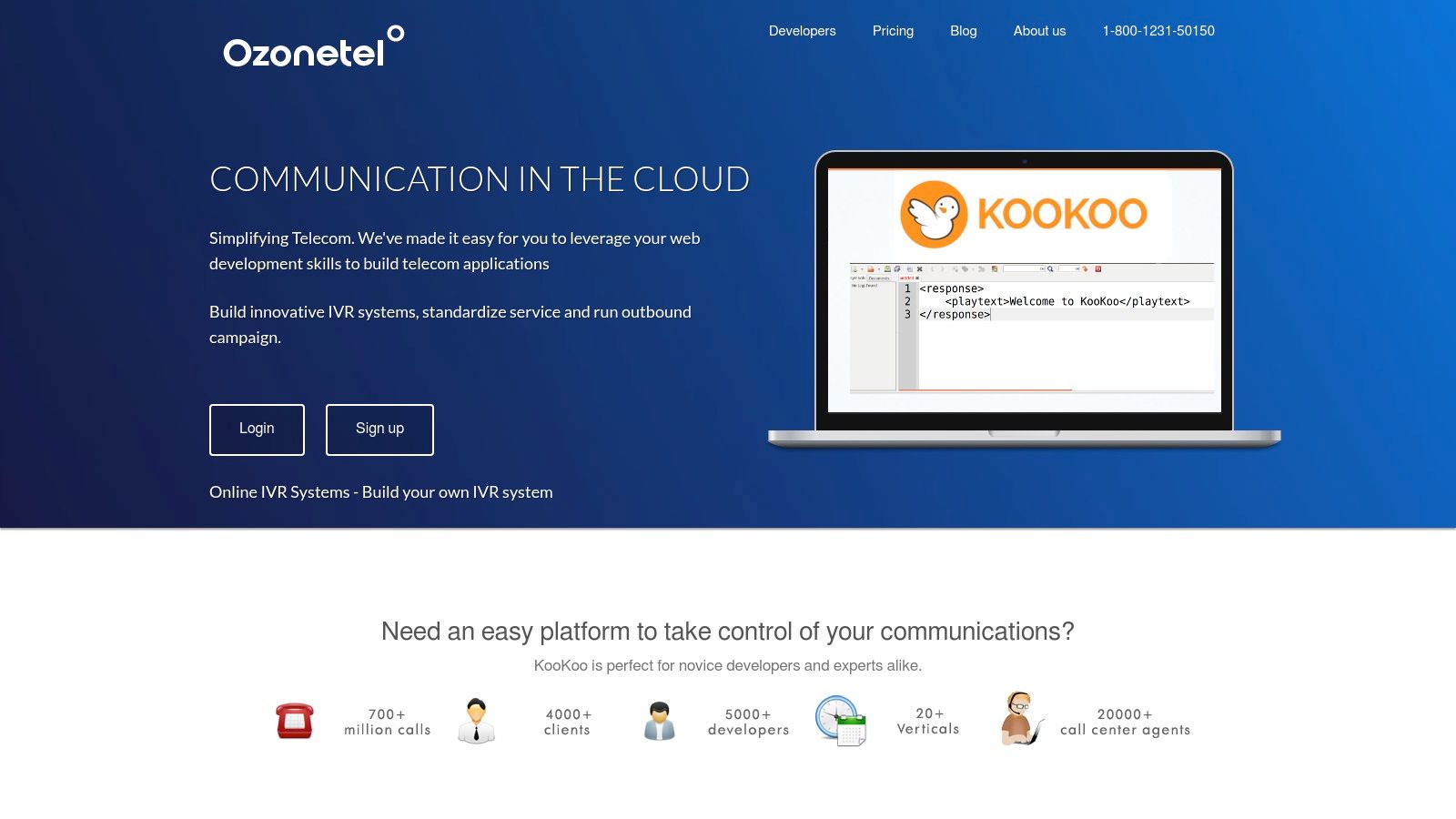
Ozonetel is particularly relevant for businesses with contact-centre requirements rather than just general business telephony needs. That distinction is essential. Many buyers searching for top cloud telephony providers in India need queueing, supervision, reporting, agent management, and workflow depth that basic business phone tools do not handle well.
Its position in this list is driven by operational orientation. Ozonetel tends to be more meaningful in support, collections, inside sales, and high-volume service environments where management capability matters as much as call connectivity. In that sense, it competes less with entry-level virtual number products and more with platforms designed for active customer operations.
If your organization is evaluating cloud telephony providers through a contact-centre lens, Ozonetel deserves specific comparison on workflow support, supervision needs, and scale realism rather than generic feature parity.
Best for
Contact-centre and high-volume customer operations teams that need more than basic business calling.
Why consider it
- Better aligned to agent-led operations than lightweight telephony tools
- Strong shortlist candidate for support and collections-heavy environments
- Useful where supervisory and operational control are central buying criteria
Watch-outs
- May be more platform than a small business needs
- Buyers should assess implementation complexity against simpler alternatives
8. Acefone
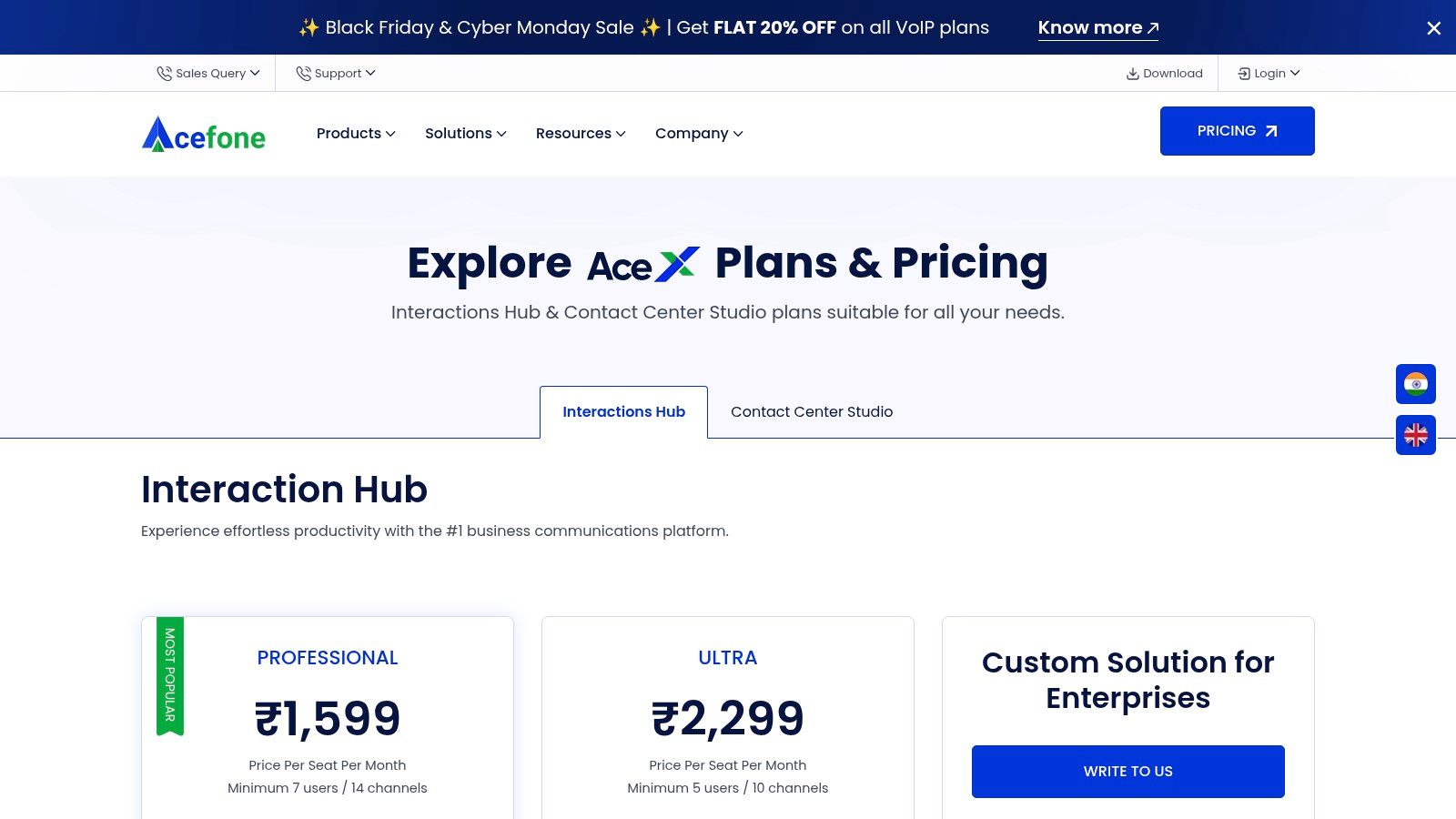
Acefone is typically evaluated by businesses that want hosted telephony and contact-centre capabilities in a more productized package. Its relevance in this list comes from spanning a middle ground: more structured than a raw communications API, but still aimed at serious business communications needs.
That makes it worth considering for buyers who want an operational system rather than a development project. In cloud telephony provider comparisons, this middle segment is often underserved because articles either focus on local entry-level tools or globally dominant developer platforms. Acefone belongs to the practical buying conversation for teams in between.
It can be particularly useful for organizations balancing functionality and implementation effort. For those buyers, the main question is not maximum extensibility, but whether the platform covers current calling and support needs without excessive complexity.
Best for
Businesses that want a hosted, productized communications system with contact-centre relevance.
Why consider it
- Good fit for operational buyers who do not want to build from APIs
- Bridges business telephony and contact-centre requirements
- Worth comparing for teams between SMB simplicity and deep enterprise customization
Watch-outs
- Buyers should validate India-specific fit against more local-market-oriented vendors
- Not every organization will need the broader hosted system layer
9. Plivo
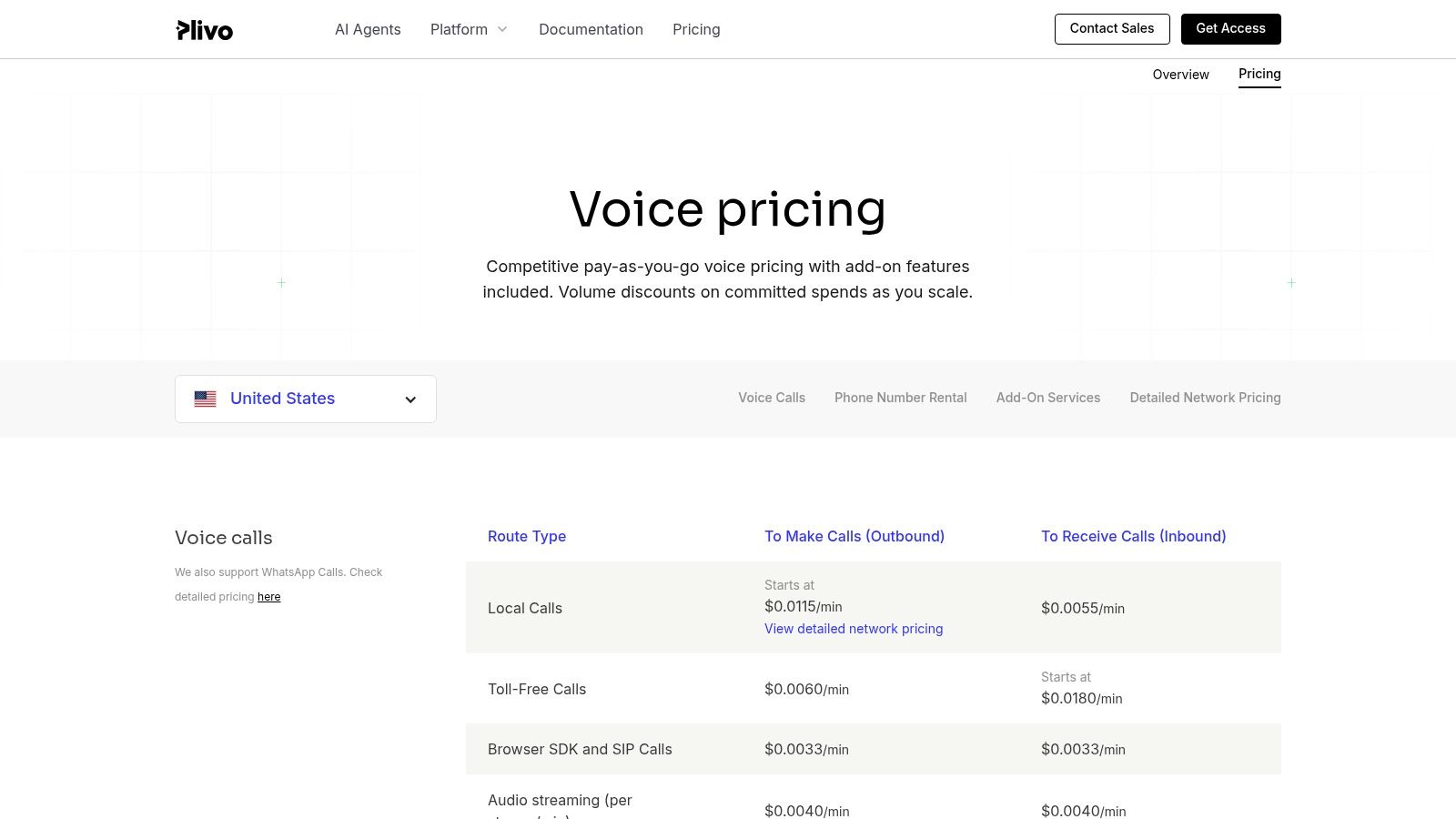
Plivo is a meaningful inclusion because not all cloud telephony providers should be judged as finished business software. Some are infrastructure choices for technical teams that want to embed voice into applications, workflows, or custom customer journeys. Plivo fits that developer-first buying motion.
Its transparent voice-pricing orientation makes it especially useful in discussions about usage-based economics. For product teams, digital businesses, and engineering-led organizations, per-minute logic can be more efficient than paying per seat for unused software layers. That is why Plivo becomes relevant when evaluating pay as you go vs per agent pricing for cloud contact center providers in India, even if it is not the most turnkey option for non-technical teams.
Plivo is generally best for businesses that know they need programmability and are willing to trade some out-of-the-box convenience for control.
Best for
Developer-led teams that want programmable voice and usage-based economics.
Why consider it
- Strong for embedded or custom communications workflows
- Relevant in cost discussions where seat-based pricing feels inefficient
- Better suited to technical ownership than packaged business telephony products
Watch-outs
- Less ideal for teams seeking a ready-made contact-centre interface
- Requires a clearer technical implementation path than many packaged alternatives
10. Twilio (Programmable Voice + SIP Trunking)
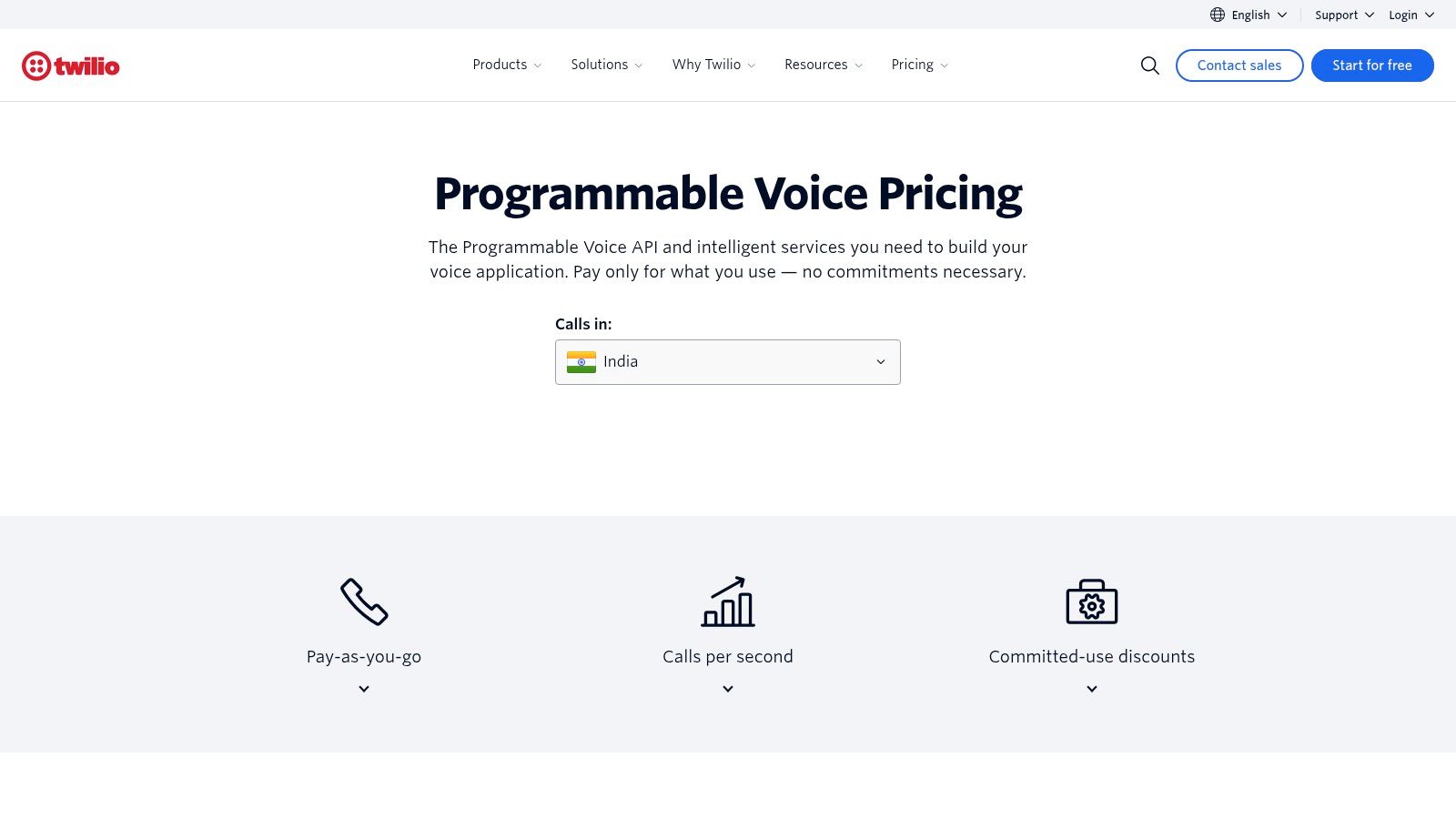
Twilio is often the benchmark for programmable communications, but that does not mean it is automatically the right cloud telephony provider for every Indian business. Its strength is flexibility. Teams can design custom voice flows, integrate telephony into software, and treat communications as a programmable layer rather than as a fixed business application.
This makes Twilio particularly important in this guide as a contrast case. If a business wants a finished, locally familiar cloud calling India platform with business-user administration, Twilio may feel indirect. But if the organization wants control, extensibility, and custom development, it becomes highly compelling.
Twilio therefore belongs in this list less as a default recommendation and more as a strategic option for technical buyers who understand what they are trading off: more flexibility, less turnkey packaging.
Best for
Engineering-led organizations that want maximum communications flexibility and custom workflow design.
Why consider it
- Global leader in programmable communications thinking
- Ideal when telephony must be embedded into product or process design
- Strong reference point for API-first cloud telephony comparisons
Watch-outs
- Not the easiest fit for buyers seeking ready-made business telephony workflows
- India-specific deployment expectations should be validated carefully against local needs
11. Amazon Connect (AWS)
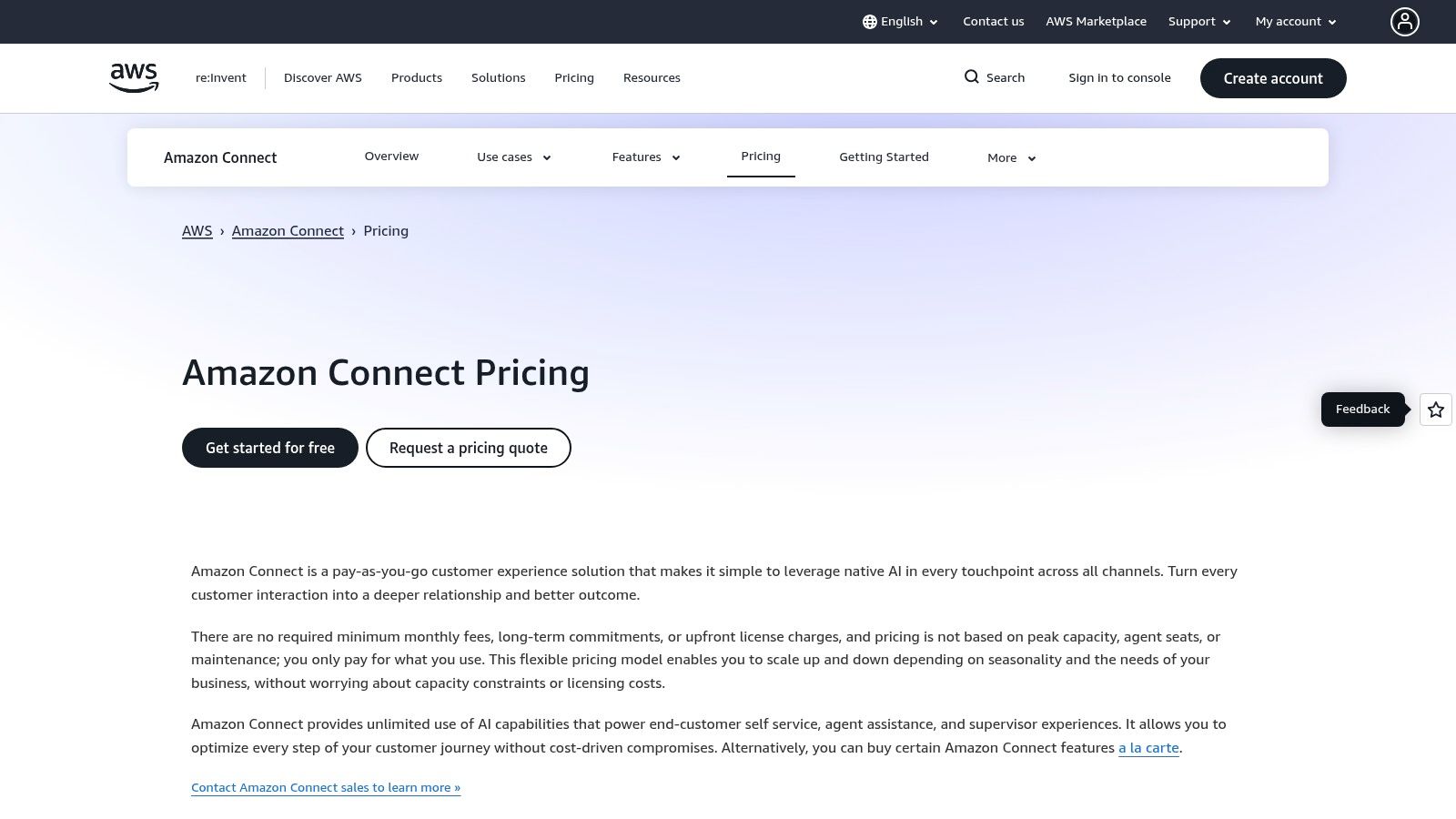
Amazon Connect sits closer to the cloud contact-centre end of the spectrum than to lightweight business telephony. It is relevant for buyers already invested in AWS or those designing customer operations with a strong preference for cloud-native infrastructure and configurable service environments.
Its value is less about simple voice replacement and more about how voice fits into a larger operational architecture. That can make it compelling for advanced teams, but too heavy for companies just trying to set up practical telephony quickly. In other words, Amazon Connect should be evaluated as an operational platform choice, not merely as another phone solution.
For Indian buyers, the key question is organizational readiness. If the business has the technical and process maturity to support a cloud-native contact-centre environment, Amazon Connect can be strategically strong. If not, a more packaged cloud telephony provider may deliver faster value.
Best for
Larger or technically mature organizations building cloud-native contact-centre operations.
Why consider it
- Strong fit for AWS-aligned environments
- Better for broader operational architecture than simple phone replacement
- Useful when customization and cloud-native design matter
Watch-outs
- Often excessive for SMB telephony needs
- Requires stronger implementation and operational maturity than packaged tools
12. Freshdesk Contact Center (formerly Freshcaller)
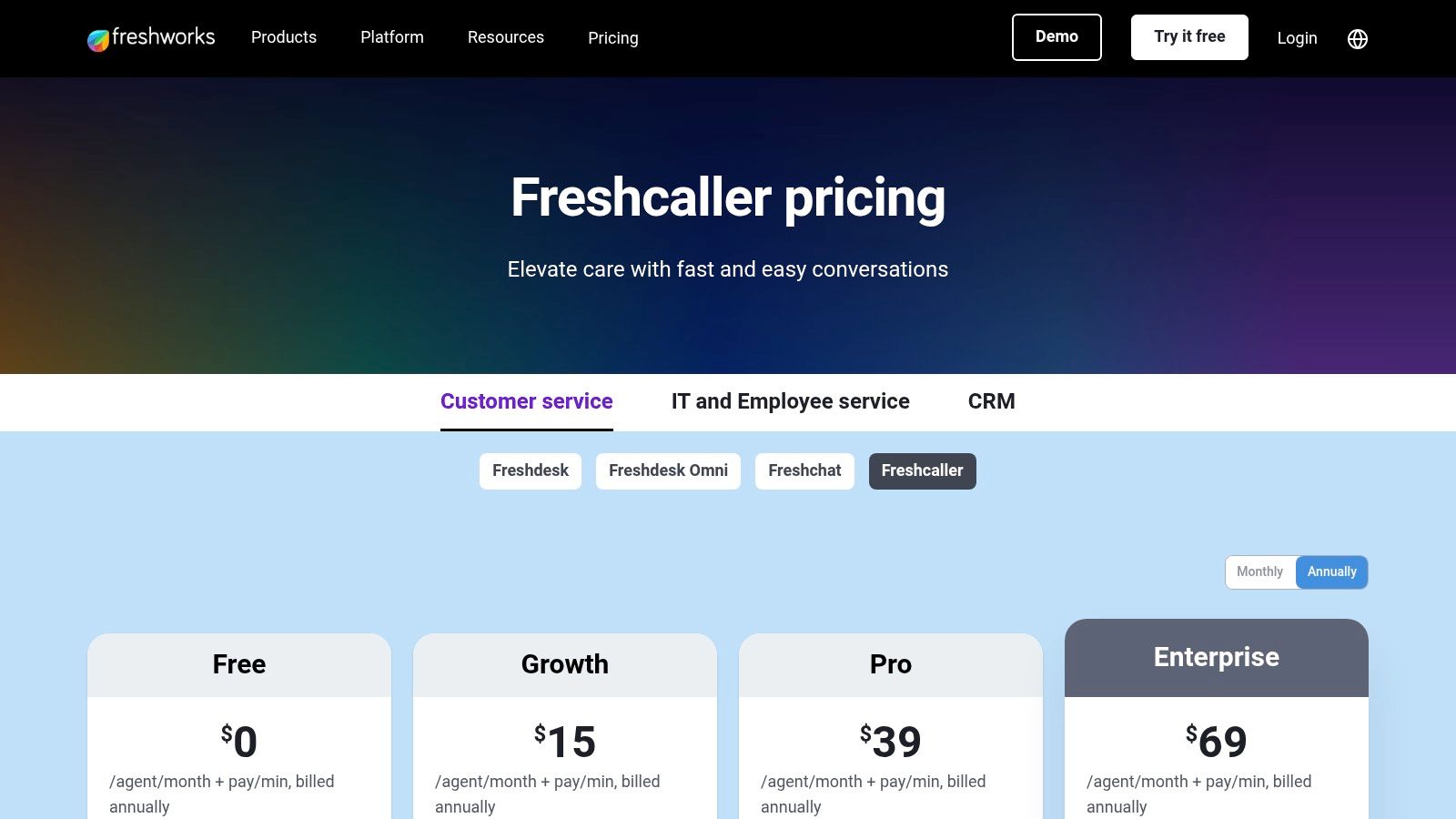
Freshdesk Contact Center is often attractive to businesses that want calling closely aligned with support operations and helpdesk workflows. That makes it a practical option for service-focused teams already in, or open to, the Freshworks ecosystem.
Its inclusion here is important because many buyers are not choosing among pure telephony products. They are choosing between integrated support software with calling, dedicated cloud telephony providers, and infrastructure APIs. Freshdesk Contact Center can work well when service teams want fast adoption and tight proximity to support processes rather than a standalone telephony stack.
It is usually most compelling for customer support contexts, not for every type of outbound-heavy or highly customized voice workflow. That use-case specificity is exactly why it deserves a differentiated profile.
Best for
Support-led teams that want calling integrated with broader customer service workflows.
Why consider it
- Strong contextual fit for service operations
- Easier to evaluate for support teams than raw voice infrastructure tools
- Useful for businesses prioritizing helpdesk adjacency over telephony specialization
Watch-outs
- May be less ideal for highly customized or developer-led communications use cases
- Buyers should compare depth against dedicated contact-centre platforms if scale is growing
Pay as You Go vs Per Agent Pricing for Cloud Contact Center Providers in India
This is one of the most important decisions in the market, and it is often misunderstood.
Pay-as-you-go pricing
Pay-as-you-go models usually charge based on actual usage such as minutes, events, numbers, or API activity. This pricing tends to suit:
- businesses with variable call volumes
- engineering-led teams building custom workflows
- companies piloting new voice use cases
- organizations that do not want to pay for inactive seats
The advantage is flexibility. You can start smaller, experiment faster, and align cost more directly with demand. The downside is unpredictability. If call volumes spike or usage design is inefficient, bills can become harder to forecast.
Per-agent pricing
Per-agent pricing usually charges a recurring amount for each user or seat, sometimes with plan tiers and usage allowances. This model tends to suit:
- support teams with stable staffing patterns
- operations leaders who need cleaner monthly budgeting
- businesses that want packaged software with admin tools and dashboards
- non-technical teams that prefer out-of-the-box functionality
The main benefit is predictability. The downside is that you may pay for capacity you do not fully use, especially in businesses with fluctuating teams or low average usage per seat.
Which is better for India-based buyers?
For cloud telephony providers in India, the right answer depends on operating style.
- Choose pay-as-you-go when your business is usage-variable, API-led, or still experimenting.
- Choose per-agent when your team structure is stable and your priority is budgeting simplicity.
- Choose carefully if your needs sit in between, because many vendors blend the two through platform fees, bundled minutes, credits, or add-on charges.
This is why buyers should not compare vendors on headline plan names alone. A lower apparent entry price can become expensive if you need add-ons, while a higher seat-based plan can be more economical if it includes workflows your team would otherwise build or buy separately.
Cloud Telephony vs Traditional PBX
Businesses still moving off legacy systems should assess cloud telephony vs traditional PBX through operational outcomes, not nostalgia for old infrastructure.
Traditional PBX may still appeal when organizations are closely tied to on-premise environments or have very specific legacy requirements. But for most modern teams, cloud telephony offers clear advantages:
- faster deployment
- easier remote and multi-location support
- simpler scalability
- better integration with CRM, helpdesk, and AI systems
- lower dependence on hardware and site-based maintenance
In practice, cloud telephony in India is usually the better fit for companies with distributed teams, evolving support structures, outbound workflows, or active digital transformation priorities.
How to Choose the Right Cloud Telephony Provider
A useful buying process starts with your real use case, not the vendor’s feature page.
If you are a small business
Prioritize ease of setup, local pricing clarity, and workflow simplicity. Many cloud telephony solutions for small businesses fail not because the software is bad, but because the team buys more complexity than it can operationalize.
If you run a contact centre
Focus on routing, supervision, reporting, queue handling, and integration with your support stack. Basic business calling products may look cheaper but often fall short in daily operations.
If you have a technical product team
Consider API-first options when voice is part of your product or when communications needs to be customized. A programmable platform may be more efficient than adapting packaged business software.
If you are an enterprise buyer
Assess procurement fit, implementation support, scalability, and alignment with the wider CX or IT strategy. The best cloud telephony companies for enterprise use are not always the easiest for SMBs, and vice versa.
Frequently Asked Questions
What are cloud telephony providers?
Cloud telephony providers deliver business calling over internet-based infrastructure instead of relying on traditional on-premise phone systems. They may offer virtual numbers, IVR, call routing, recording, analytics, agent tools, APIs, or full contact-centre functions.
Which are the top cloud telephony providers in India?
The top cloud telephony providers in India depend on use case. Businesses commonly compare DialNexa, Exotel, Smartflo, Airtel IQ, Knowlarity, MyOperator, Ozonetel, Acefone, Plivo, Twilio, Amazon Connect, and Freshdesk Contact Center.
Which cloud telephony provider is best for small businesses?
Small businesses usually benefit most from platforms that are easy to deploy, easy to budget for, and simple for non-technical teams to manage. The right answer depends on whether the priority is basic professionalism, support workflows, or future scalability.
What is the difference between cloud telephony and VoIP?
VoIP refers to voice carried over internet protocol. Cloud telephony is the broader business application layer built on internet-based voice infrastructure, often including numbers, routing, automation, analytics, and business workflows.
Is pay-as-you-go or per-agent pricing better?
Pay-as-you-go is often better for variable usage, experimentation, and API-led deployments. Per-agent pricing is often better for stable support teams that need predictable monthly costs and packaged software.
How do I compare cloud telephony companies in India?
Compare them on India readiness, pricing structure, use-case fit, implementation complexity, integration depth, and whether they are packaged products or programmable infrastructure. The best vendor is the one that matches how your team works.
Final Thoughts
There is no single best cloud telephony provider for every business. The market includes cloud telephony companies in India that are optimized for packaged business calling, providers built for contact-centre operations, and global platforms designed for programmable communications.
The right decision usually comes down to four questions:
- Do you need a business-ready platform or a programmable voice layer?
- Is your cost structure better served by usage-based or seat-based pricing?
- Are your workflows support-led, outbound-led, or product-led?
- Do you need India-first practicality, or global extensibility?
If your goal is to modernize calling while also improving customer operations, AI-readiness, and workflow efficiency, Book a personalised demo with DialNexa.

Written by Aditya Kamat
| Feature Analysis | Assessment |
|---|---|
| AI Conversation Quality | Excellent. Capable of holding natural, extended conversations with documented 97% parity with human judgement in lead qualification. |
| Industry Specialisation | Strong. Pre-built personas for key sectors like real estate, BFSI, and EdTech allow for faster, more relevant deployment. |
| Deployment & Integration | Excellent. A developer-friendly approach with APIs and a clear dashboard enables rapid rollout without significant engineering overhead. |
| Scalability & Performance | Enterprise-Grade. Built to handle thousands of concurrent calls daily while maintaining script consistency and optimising call routing for maximum efficiency. |
| Pricing Transparency | Fair. While not publicly listed, a "contact for pricing" model is common for enterprise solutions. The company promises transparency during the sales process. |
| Potential Limitations | For extremely sensitive or highly regulated conversations (e.g., complex legal advice), human oversight or a hybrid model may still be required to ensure full compliance. |

[…] project timeline. If you want to get a better sense of the wider market, you can learn more about cloud telephony providers in our detailed guide. Taking a proactive stance on compliance ensures your global communications […]
[…] building your communications roadmap, understanding the current landscape is essential. Researching cloud telephony providers is an integral part of that process. Mapping out the journey from where you are now to a fully […]
[…] owners who want a broader strategic view can also skim this CXO's guide to cloud telephony for additional context on how phone systems fit into larger communications […]
Excellent comparison of cloud telephony providers with clear business use cases and measurable outcomes for different industries. The focus on ROI, scalability, and operational impact makes this a highly valuable guide for decision-makers evaluating modern communication platforms.
Excellent comparison of cloud telephony providers with clear insights into features and real-world use cases. This guide makes it much easier to choose the right solution for different business needs.