
10 AI Agents Examples Transforming Industries in 2026
Beyond the hype, the enterprise signal is now clear. The global AI agents market reached USD 7.84 billion in 2025 and is projected to grow to USD 52.62 billion by 2030 at a 46.3% CAGR. For CXOs, that matters less as a market headline and more as an operating cue. Buyers are no longer evaluating whether agents are real. They're deciding which workflows deserve automation first.
That shift is especially relevant in India, where customer operations often combine high call volumes, multilingual demand, repetitive qualification steps, and pressure to scale without matching headcount growth. In that environment, the most useful ai agents examples aren't novelty assistants. They're systems that qualify leads, book appointments, route support, guide KYC, and complete workflow steps across business tools.
The strategic lesson is simple. AI agents create value when they move beyond conversation and into execution. BCG's framing, cited in the market analysis above, is useful here: agents can remember across tasks and changing states, and create value through automation of standardised business processes, collaboration with humans, and uncovering data insights. That's why the strongest deployments aren't measured by whether the bot “sounds smart”. They're measured by operational outcomes.
Table of Contents
- 1. Conversational Voice AI for Lead Qualification
- 2. Recruitment and Screening Voice Agent
- 3. Customer Support and Troubleshooting Voice Bot
- 4. Real Estate Discovery and Booking Voice Agent
- 5. Presales Demo Scheduling and Product Education Agent
- 6. Outbound Campaign and Follow-up Voice Agent
- 7. KYC and Compliance Documentation Voice Agent
- 8. Patient Appointment Booking and Reminder Voice Agent
- 9. Program Counseling and Enrollment Guidance Voice Agent
- 10. Multi-Turn Conversational Agent with Contextual Memory
- Feature Comparison of 10 Voice AI Agents
- From Examples to Execution Your AI Agent Blueprint
1. Conversational Voice AI for Lead Qualification
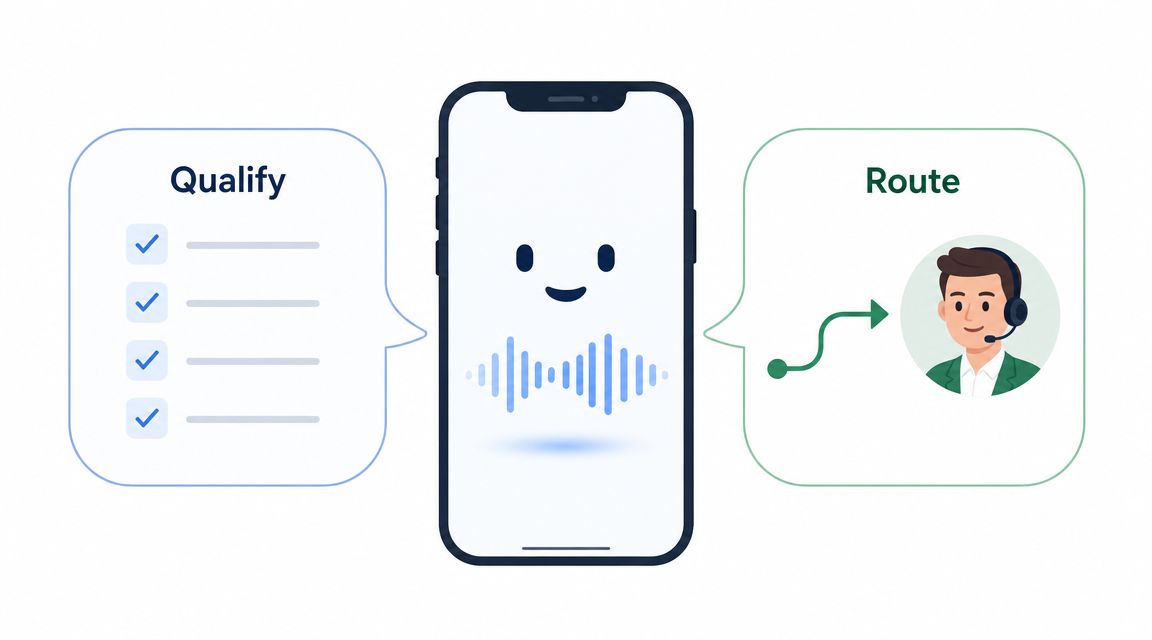
Voice qualification is often the fastest path to ROI because it sits at the top of the revenue funnel and removes human effort from low-yield conversations. In sectors like edtech, BFSI, e-commerce, and real estate, teams lose time when every enquiry gets the same manual treatment, regardless of intent or fit.
A good qualification agent doesn't just ask scripted questions. It identifies intent, collects structured answers, checks eligibility rules, and routes the lead to the right person or workflow. In Indian operations, that matters because voice remains a natural interface for large customer bases across Hindi, Hinglish, and regional languages.
Why this workflow pays first
The most practical lead qualification patterns are already visible in India-focused customer operations. The market analysis linked earlier notes that enterprises are using agents to automate a meaningful share of business tasks by 2027, and specifically points to lead qualification, appointment booking, support triage, and follow-ups as high-value use cases in Indian BFSI, real estate, edtech, and e-commerce environments.
That changes the economics of inside sales. Instead of hiring more callers to ask the same discovery questions, operators can standardise the first interaction and reserve human time for high-intent prospects.
- Model your top calls: Build questions from your highest-converting human conversations, not from a generic sales script.
- Define fit before launch: Budget, timeline, location, urgency, and authority should become structured routing rules.
- Design warm handoff summaries: Sales reps should receive a concise call summary with objections, preferences, and next-best action.
Practical rule: If a lead agent can't update CRM fields, trigger a callback, or book a slot, it's still a talking bot, not an operational agent.
2. Recruitment and Screening Voice Agent
Recruitment teams usually don't need AI to replace interviews. They need it to remove repetitive screening work that slows down hiring. Voice agents fit that gap well when teams are handling volume hiring, standard eligibility checks, or role-specific pre-screens.
Examples are straightforward. An e-commerce company can screen customer service applicants for shift flexibility and language comfort. An edtech platform can pre-screen teaching assistant applicants for subject background and communication quality. A software support team can verify notice period, prior ticketing experience, and location before recruiter review.
Where voice screening works best
The larger strategic trend supports this use case. Statista describes AI agents as the next step in automation technology, “automation with intelligence,” and highlights customer support chatbots, recommendation systems, and autonomous systems that make decisions based on changing conditions as core real-world applications in its AI agents market overview. For hiring leaders, screening is a direct extension of that same shift from static automation to context-aware action.
What makes voice screening valuable isn't novelty. It's consistency. Every candidate receives the same baseline questions, every answer is logged in a structured format, and recruiters spend time on exceptions instead of repetition.
Candidates will tolerate automation if the process is transparent, fast, and followed by a clear human decision path.
A few operating rules matter:
- Disclose AI usage clearly: Put that in job postings and scheduling messages.
- Score against real hires: Thresholds should reflect who succeeds on the job, not who sounds polished on a call.
- Keep human review for edge cases: Borderline applicants often include strong candidates with non-standard backgrounds.
3. Customer Support and Troubleshooting Voice Bot
Support is where many companies first deployed automation, but most early systems stalled at FAQs. The more useful pattern now is tool-augmented support. The agent identifies intent, retrieves the right policy or account information, performs a workflow step, and escalates only when necessary.
That's especially relevant in banking, telecom, travel, edtech, and commerce, where repetitive service queries consume agent capacity. IBM's review of AI agent use cases highlights this architecture clearly, including customer service and operations scenarios where agents use tools in real time rather than solely generating text. The India-relevant lesson is that high-volume support benefits most when intent classification, retrieval, account lookup, ticket creation, and callback scheduling work together.
What strong support automation looks like
A BFSI platform might use a voice bot for account-related FAQs, platform navigation help, and callback scheduling for sensitive issues. An e-commerce brand might automate delivery tracking, order status, and return initiation. An edtech company might handle login issues, access requests, and class scheduling changes before passing complex cases to humans.
For teams building this workflow, DialNexa's guide to AI call bots is relevant because it focuses on call automation patterns rather than generic chatbot design.
- Start with repetitive issues: Pick the narrow set that already dominates inbound volume.
- Escalate based on confidence and sentiment: Don't wait for visible customer frustration to trigger handoff.
- Review unresolved calls weekly: Every failed interaction is training data for the next release.
The business outcome to watch isn't whether support conversations feel impressive. It's whether the agent resolves routine issues without creating extra work downstream.
4. Real Estate Discovery and Booking Voice Agent
Real estate teams often mistake every enquiry for a sales opportunity. In practice, many incoming leads are early-stage, poorly matched, or not ready to book. A discovery and booking agent helps separate curiosity from intent without forcing brokers to spend hours on first-touch calls.
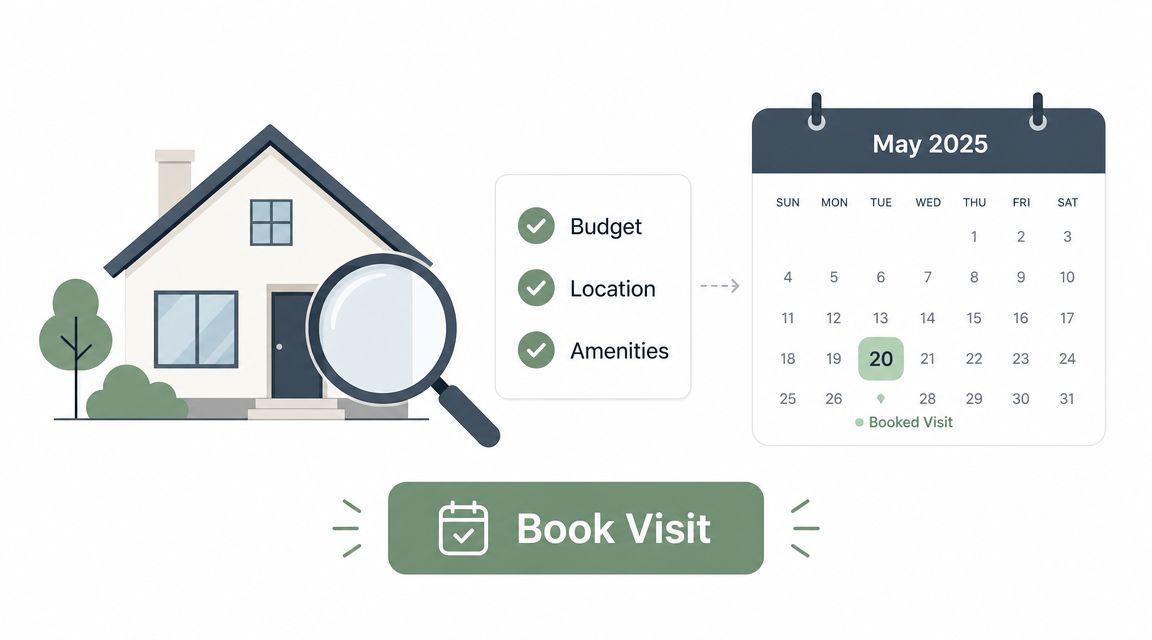
The best deployments collect buyer or renter preferences, location constraints, budget range, timeline, and visit availability in one flow. They can then propose site visits, update calendars, and pass a structured summary to the assigned advisor.
What makes real estate agents useful
This use case becomes more important in India because voice-first customer journeys are still common, especially for inbound property discovery. The issue isn't whether an agent can answer “What's the price?”. It's whether it can handle high-friction, multilingual conversations in real calling environments while completing a next step. That gap is often missing from generic examples content, as noted in Xcubelabs' discussion of real-world AI agent examples.
A practical deployment usually includes:
- Live inventory sync: Nothing damages trust faster than booking a visit for an unavailable unit.
- Context-rich handoff: Human agents should receive preferences, objections, and urgency notes.
- Reminder logic: Follow-up calls before the site visit reduce no-shows and sharpen intent signals.
For property teams that want a workflow-specific view, DialNexa's real estate voice agent overview maps closely to discovery and booking use cases.
Real estate leaders should treat this as pipeline hygiene. Better qualification upstream improves agent utilisation downstream.
5. Presales Demo Scheduling and Product Education Agent
Presales teams are expensive, and much of their calendar is consumed by prospects who aren't ready, aren't qualified, or need only basic orientation. A product education and demo scheduling agent filters that traffic before a solutions engineer gets involved.
This use case works well in SaaS, enterprise software, B2B services, and edtech platforms selling to institutions. The agent can answer foundational product questions, capture company size or use case, identify urgency, and route the prospect to the right demo format.
Where CXOs should draw the line
The strategic point isn't to automate presales expertise. It's to protect it. If every inbound request receives the same senior resource, your cost of acquisition rises and response quality falls as teams become overloaded.
A strong design usually includes a short qualification layer before scheduling:
- Route by buying context: Enterprise, mid-market, and self-serve buyers shouldn't enter the same queue.
- Send prep material automatically: Buyers who receive relevant content before the meeting arrive with better questions.
- Use specialist calendars: Technical evaluation, admin walkthroughs, and executive overviews need different owners.
The fastest sales cycle improvement often comes from removing unqualified meetings, not from asking sales engineers to work faster.
This is one of the more underrated ai agents examples because the value shows up in capacity planning. Presales leaders gain cleaner pipelines, fewer low-value meetings, and more time for high-stakes opportunities.
6. Outbound Campaign and Follow-up Voice Agent
Outbound is where automation can create value quickly or damage brand trust just as quickly. The difference is targeting. Voice agents perform best when they handle follow-up, reactivation, reminders, and structured outreach to audiences with known context.
Examples include abandoned cart reminders in e-commerce, re-engagement for inactive learners in edtech, site visit follow-ups in real estate, and referral outreach in BFSI after positive customer interactions. In each case, the agent's job isn't limited to placing calls. It's to run a repeatable follow-up motion with consistent messaging and clean disposition tracking.
How to prevent outbound waste
A weak outbound agent increases list fatigue. A strong one narrows attention to the prospects most likely to move. That means objection handling, callback logic, opt-out management, and CRM updates have to be built in from day one.
The larger adoption trend supports this direction. One 2026 industry roundup, cited in Keragon's overview of AI agent examples, notes that many teams now understand the examples conceptually but still struggle with implementation, compliance, multilingual coverage, escalation handling, and proving ROI in real workflows. Outbound is exactly where that execution gap shows up.
- Start with warm audiences: Existing leads, dormant users, and prior enquirers are better first use cases than broad cold lists.
- Treat objections as data: Repeated resistance patterns should shape both script revisions and offer design.
- Pause by governance rule: High opt-out or complaint signals should trigger review automatically.
The board-level question isn't whether outbound can be automated. It's whether automation improves revenue efficiency without increasing reputational risk.
7. KYC and Compliance Documentation Voice Agent
In BFSI, most automation conversations eventually hit the same wall: compliance. That's why KYC and documentation guidance are among the most practical ai agents examples for regulated sectors. The workflow is rules-heavy, repetitive, and time-sensitive, but still requires careful escalation when customer inputs fall outside approved scenarios.
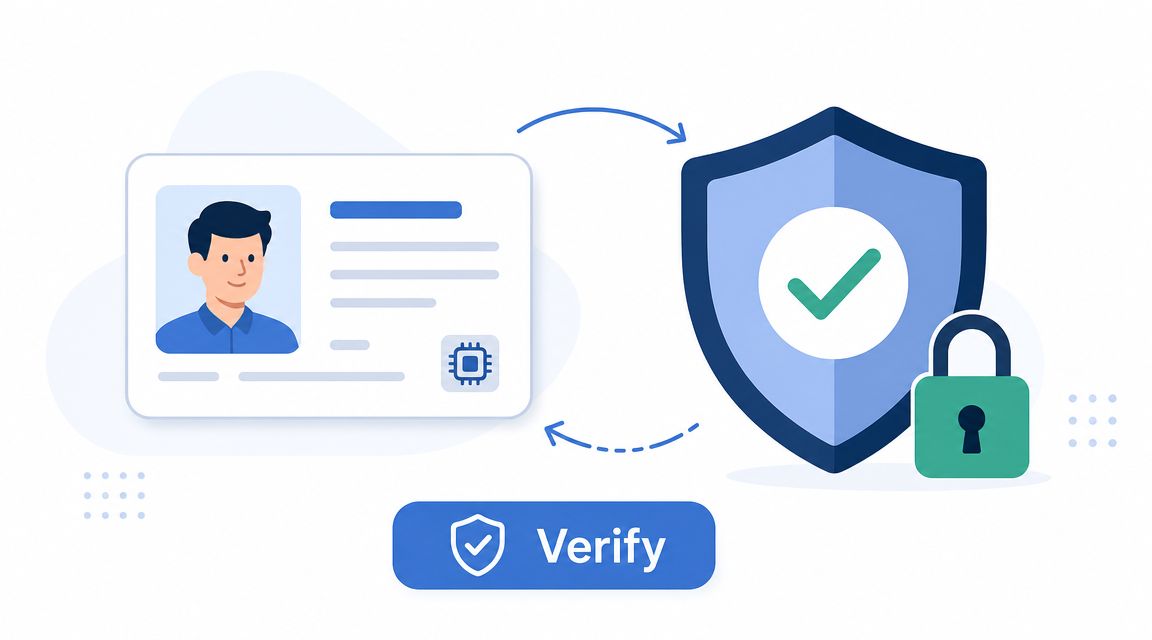
A well-designed KYC voice agent can explain required documents, guide customers through next steps, confirm submitted details, and trigger review workflows when confidence is low. It doesn't replace compliance teams. It reduces avoidable drop-off before those teams get involved.
How to reduce compliance risk
This category matters in India because buyers don't just want examples of automation. They want proof that an agent can operate inside regulated workflows with escalation logic, auditability, and multilingual clarity. That implementation gap is part of the broader enterprise challenge around operationalising AI in India, where adoption is rising but execution and talent constraints remain material.
For banking and fintech teams, DialNexa's overview of compliance in the banking industry is relevant as a grounding resource for process expectations around regulated customer journeys.
A few rules are absolute:
- Script approval must sit with compliance: Product and operations teams can't own regulated language alone.
- Audit trails must be automatic: Verification prompts, customer responses, and escalation triggers should be logged.
- Exception routing must be explicit: Source-of-funds issues, mismatches, and incomplete records need human review paths.
Thus, agent design becomes governance design. If the workflow isn't auditable, it isn't production-ready.
8. Patient Appointment Booking and Reminder Voice Agent
Healthcare providers rarely need broad conversational capability on day one. They need reliable scheduling. Appointment booking, confirmation, cancellation, and reminders are repetitive tasks that drain front-desk capacity and frustrate patients when call queues build up.
A voice agent can handle those interactions cleanly when integrated with scheduling systems. Patients get available slots, confirmations, and reminders without waiting on staff. Clinics and telemedicine platforms get cleaner calendars and fewer manual coordination tasks.
What healthcare leaders should monitor
The more useful benchmark for healthcare leaders isn't “chat quality.” In multilingual service settings, AI-agent success is better measured through containment, turnaround time, and escalation accuracy. Superhuman's case-study roundup cites Lufthansa Group's multilingual support operation handling 80% of common questions without human involvement. For healthcare, that's not a direct clinical benchmark, but it is a useful operational signal for high-volume scheduling and reminder workflows in multilingual environments.
High-performing service agents don't win by sounding human. They win by finishing routine tasks accurately and handing off the rest cleanly.
Healthcare teams should focus on:
- Booking completion: Did the patient secure a valid slot?
- Escalation precision: Were complex needs routed quickly to staff?
- Reminder effectiveness: Did automated confirmations reduce avoidable scheduling friction?
The strongest deployments keep the scope narrow at first. Scheduling is easier to govern than care advice, and that's exactly why it scales.
9. Program Counseling and Enrollment Guidance Voice Agent
Edtech providers often face a mismatch between enquiry volume and counselling capacity. Prospective students ask about eligibility, curriculum, outcomes, schedules, and fees at all hours, but counsellor teams can't scale linearly with demand. A program guidance agent addresses that mismatch.
The agent can recommend programmes based on learner goals, answer foundational questions, explain application steps, and route serious prospects to a human counsellor when the decision becomes more nuanced. That structure matters because not every enquiry deserves equal counsellor time.
How to improve enrolment operations
This use case aligns with a broader historical shift in automation. AI agents aren't just rule-based responders anymore. They're part of the move toward systems that can schedule, route, summarise, and resolve tasks end to end in large service environments. That matters in India, where education businesses often serve distributed audiences across languages and time zones.
Strong programme counselling agents usually share three traits:
- Current academic data: Intake dates, eligibility rules, and programme details must stay updated.
- Qualification logic: Intent signals such as timeline, career goal, and readiness help prioritise counsellor follow-up.
- Counsellor handoff summaries: Human advisors should receive structured context, not another blank slate.
For enrolment teams, the value isn't only labour efficiency. It's response consistency. Prospective students get the same foundational guidance whether they enquire in the morning, at night, or during peak admission windows.
10. Multi-Turn Conversational Agent with Contextual Memory
The most advanced examples of AI agents aren't the ones that answer a question well. They're the ones that remember enough context to move a conversation forward across multiple turns and changing states. That's what separates a one-off interaction from a usable operational agent.
BCG's characterisation of agents as systems that can remember across tasks and changing states is important here, but the practical impact shows up in real workflows. A B2B prospect can return to a discussion without repeating requirements. A property lead can continue from prior preferences. A support user can raise a second issue without forcing a new interaction from scratch.
When memory becomes a business feature
This category is where leaders should be careful. Memory should improve continuity, not create sprawl. The most effective deployments start with narrow boundaries, specific tools, and clear prompts for what the agent may store, retrieve, and act on.
Use cases that benefit most include:
- Complex sales conversations: Multiple stakeholders, objections, and qualification criteria across calls.
- Support with linked issues: Customers often surface more than one problem in the same interaction.
- Guided advisory flows: Education and real estate both rely on preference recall and stepwise progression.
Here's a useful product walkthrough for seeing that style of interaction in motion.
The strategic takeaway is straightforward. Memory turns an agent from a transaction handler into a workflow participant. But only if governance, retrieval quality, and escalation rules are already in place.
Feature Comparison of 10 Voice AI Agents
| Solution | Implementation Complexity 🔄 | Resource Requirements 💡 | Expected Outcomes 📊 ⭐ ⚡ | Ideal Use Cases | Key Advantages |
|---|---|---|---|---|---|
| Conversational Voice AI for Lead Qualification | High, real‑time ASR/TTS, NLU, dynamic routing, CRM integration | Speech models, lead‑scoring data, CRM, multi‑lang support, monitoring | ⭐ High qualification accuracy; ⚡ qualification time from days→minutes; 📊 much higher connect & throughput | BFSI, Real Estate, EdTech, E‑commerce lead intake | ⭐ Scales volume, ⚡ 24/7 availability, 💡 frees sales from repetitive calls |
| Recruitment and Screening Voice Agent | Medium, scripted screening flows + ATS integration | Screening scripts, ATS hooks, scoring models, candidate disclosure workflows | ⭐ Consistent objective screening; ⚡ screens hundreds in parallel; 📊 faster time‑to‑hire | High‑volume hiring (SaaS, E‑comm, EdTech) | ⭐ Reduces bias, ⚡ accelerates pipeline, 💡 standardizes initial interviews |
| Customer Support and Troubleshooting Voice Bot | High, decision trees, KB access, escalation & action flows | Knowledge base, refund/workflow APIs, multi‑turn memory, compliance updates | ⭐ Resolves ~60–80% queries; ⚡ 24/7 support, lower wait times; 📊 reduced ticket volume | E‑commerce returns, BFSI support, EdTech onboarding | ⭐ Consistent resolutions, ⚡ faster responses, 💡 captures issue data for product teams |
| Real Estate Discovery and Booking Voice Agent | Medium, preference capture, scheduling, calendar & CRM sync | Property inventory, calendar APIs, CRM integration, reminder system | ⭐ Improves lead→booking (2→8%+); ⚡ reduces agent time on intake; 📊 fewer no‑shows | Residential/commercial brokers, developers, property managers | ⭐ Increases bookings, ⚡ reduces no‑shows, 💡 automates scheduling and handoffs |
| Presales Demo Scheduling & Product Education Agent | Medium‑High, demo content, qualification logic, calendar sync | Product scripts, calendar/sales platform integration, recorded explainers | ⭐ Higher demo attendance; ⚡ shortens sales cycle (2–4 wks); 📊 better pre‑qualified demos | SaaS, B2B software, EdTech admin demos | ⭐ Educates prospects pre‑demo, ⚡ improves presales efficiency, 💡 provides pre‑call research |
| Outbound Campaign & Follow‑up Voice Agent | Medium, campaign management, dialing & compliance controls | Predictive dialer, curated lists, objection flows, CRM, legal/compliance checks | ⭐ Consistent messaging; ⚡ 3–5x dials vs humans; 📊 lower cost‑per‑dial & campaign analytics | Re‑engagement, lead nurturing, follow‑ups (E‑comm, EdTech, Real Estate) | ⚡ Scales outreach, ⭐ consistent delivery, 💡 rich performance analytics |
| KYC and Compliance Documentation Voice Agent | Very High, strict compliance, audit trails, verification flows | ID verification APIs, secure recording, audit logging, compliance workflows | ⭐ Faster KYC (30→8–10 min); ⚡ 24/7 onboarding; 📊 lower abandonment, auditable records | Banks, trading platforms, fintechs, regulated services | ⭐ Ensures compliance, 💡 auditable logs, ⚡ reduces manual entry errors |
| Patient Appointment Booking & Reminder Voice Agent | High, HIPAA requirements, EHR scheduling, secure handling | EHR/API integration, encrypted calls, scheduling rules, insurance checks | ⭐ Reduces no‑shows 25–35%; ⚡ 24/7 scheduling; 📊 fewer administrative calls | Clinics, dental offices, specialists, telemedicine | ⚡ Lowers no‑shows, ⭐ improves patient convenience, 💡 frees reception staff |
| Program Counseling & Enrollment Guidance Voice Agent | Medium, program database, recommendation logic, enrollment flows | Curriculum content, enrollment workflows, follow‑up sequences, FAQs | ⭐ Increases enrollment conversion; ⚡ 24/7 guidance; 📊 captures preference data | Online course platforms, bootcamps, certification programs | ⭐ Consistent program info, ⚡ scales counseling, 💡 collects lead insights |
| Multi‑Turn Conversational Agent with Contextual Memory | Very High, LLMs, context persistence, guardrails & monitoring | Large models, high compute, rich convo datasets, continuous training & safety layers | ⭐ Best user experience (human‑like); ⚡ handles complex dialogs; 📊 reduces escalations | Complex B2B sales, nuanced support, relationship management | ⭐ Human‑like conversations, 💡 adapts to nuance, ⚡ lowers escalation rates |
From Examples to Execution Your AI Agent Blueprint
The examples above point to a pattern that many leadership teams still underestimate. AI agents create the most value in narrow, repetitive, measurable workflows first. Lead qualification, support triage, appointment booking, KYC guidance, presales routing, and enrolment counselling all share the same operating profile. They involve frequent conversations, predictable branches, a limited set of system actions, and clear business outcomes.
That's why the first executive decision shouldn't be about model selection. It should be about workflow choice. Pick the conversational bottleneck where delay, inconsistency, or manual effort is already visible in revenue leakage or operating cost. For one organisation, that may be inbound lead qualification. For another, it may be support deflection or appointment scheduling. If the workflow has volume, repeatability, and a clear handoff condition, it's usually a strong starting point.
The second decision is measurement. Too many teams still evaluate agents by fluency alone. That's not enough. The stronger benchmark is operational performance: containment on repetitive interactions, turnaround time, booking completion, escalation accuracy, lead qualification quality, and handoff rate. Those measures tell you whether the agent is reducing load, preserving customer experience, and moving work forward.
The third decision is integration depth. A standalone conversational layer has limited business value. An effective agent needs access to calendars, CRM records, ticketing systems, policy content, routing logic, and approval paths. That's what allows it to do useful work instead of only generating plausible answers. In practice, the gap between a pilot and a production deployment is usually found here.
For Indian enterprises, one more factor matters. Language and channel design aren't secondary details. Voice quality in noisy environments, vernacular support, compliance review, and human fallback paths often determine whether an agent succeeds in the field. The most successful teams account for those realities early, especially in BFSI, real estate, edtech, healthcare, and customer support operations.
If you're building a business case, start with one workflow and one outcome. Reduce missed lead follow-up. Improve booking throughput. Deflect repetitive support volume. Speed up compliant onboarding. Then expand from the first proven use case into adjacent journeys. That sequence is more reliable than launching a broad AI initiative with vague goals.
For teams comparing implementation paths, this guide on AI solutions for SaaS is a useful external reference for thinking through where custom agents fit into operating workflows. DialNexa Labs Private Limited is one relevant option if your use case is voice-led qualification, support, recruitment, presales, or workflow-driven calling. The practical question isn't whether AI agents examples are compelling. It's whether your organisation is ready to turn one of them into a measured operating advantage.
If you're exploring voice-led automation for qualification, support, recruitment, presales, or scheduling, DialNexa Labs Private Limited provides industry-specific Voice AI agents with workflow integration options for sectors including edtech, BFSI, real estate, healthcare, e-commerce, and software.

Leave a Reply