
What Is Customer Retention: Boost Profits with AI
A 5% increase in retention can lift profits by 25% to 95%, according to Zendesk's customer retention overview. For a board or growth leader, that single fact should reframe the whole discussion. Customer retention isn't a support KPI. It's a capital allocation question.
Most companies still treat retention as the outcome of customer service, loyalty programmes, or account management. That view is too narrow. Retention sits at the intersection of revenue quality, operating efficiency, and long-term enterprise value. If customers stay longer, spend more, and convert more readily than new prospects, retention affects margin structure just as much as it affects customer sentiment.
The harder question is not just what is customer retention. It's whether your retention performance reflects durable customer value or whether it hides friction, switching costs, and expensive intervention. That distinction matters at executive level because the same headline number can signal either a healthy business or an operationally subsidised one.
For leaders thinking about growth efficiency, service design, and AI-enabled scale, retention deserves the same scrutiny as acquisition, pricing, and sales productivity. The connection between customer value, satisfaction, and long-term economics is especially important in categories where trust and repeated interaction shape buying behaviour, as discussed in this analysis of customer value and satisfaction.
Table of Contents
- What Is Customer Retention and Why It Matters Now
- The Financial Engine Behind Retention The LTV and Churn Effect
- How to Measure Customer Retention Accurately
- Leading Indicators That Predict Customer Loyalty
- Proven Retention Strategies for Key Industries
- Scaling Retention Efforts with Conversational AI
- The Strategic Risk When High Retention Is a Red Flag
What Is Customer Retention and Why It Matters Now
Customer retention is a company's ability to keep first-time buyers coming back and prevent them from switching to competitors. IBM frames it as the result of onboarding, loyalty programmes, value delivery, and customer engagement in its customer retention guide. That definition is useful because it moves retention beyond repeat purchase alone. It ties retention to the full operating system of the business.
For a CXO, that changes the conversation. Retention is not just a measure of whether customers liked an interaction. It's evidence of whether the organisation can deliver enough value, quickly enough, consistently enough, to justify a continued relationship.
Retention is a P&L lever, not a sentiment score
A business with weak retention has to keep refilling the funnel just to stand still. Marketing spend rises, sales effort compounds, and forecasting becomes fragile. A business with strong retention gets more value from every customer it has already paid to acquire.
That's why retention should sit alongside growth, margin, and service quality in executive reviews. It directly affects renewal reliability, repeat purchase behaviour, expansion readiness, and the amount of operational effort required to defend revenue.
Board view: Retention is one of the few growth levers that improves revenue durability while also improving efficiency, if the gains come from better customer experience rather than higher friction.
Why the timing matters now
Competitive categories have become faster, more transparent, and more price-sensitive. Customers compare alternatives quickly. They also judge businesses early, often during onboarding, first use, or first issue resolution. That means retention is increasingly shaped in the opening phase of the relationship, not only at renewal or repurchase.
For executives, the practical implication is simple:
- Acquisition without retention creates revenue that looks strong but decays quickly.
- Retention without value creation can look healthy on paper while hiding support intensity or switching barriers.
- Retention with strong onboarding and low customer effort creates the most durable form of growth.
The companies that win don't treat retention as a post-sale activity. They treat it as an operating discipline embedded across product, service, sales, and support.
The Financial Engine Behind Retention The LTV and Churn Effect
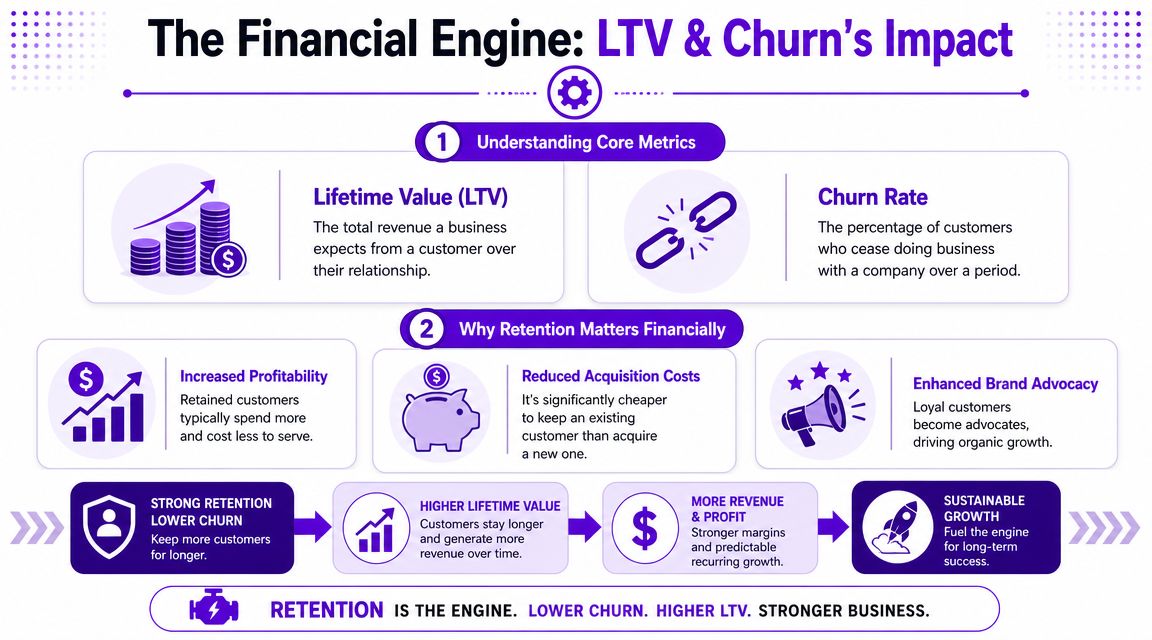
Small changes in retention can produce large changes in enterprise value because they alter both revenue duration and the payback period on acquisition spend.
Why retained customers reshape revenue quality
Retention affects more than repeat revenue. It changes margin structure. If a customer stays longer, the fixed cost of winning that customer is spread across more months, more orders, and more opportunities to expand the account. That improves unit economics even before a company cuts costs anywhere else.
The link between retention, lifetime value, and churn is straightforward. Lifetime value rises when customers remain active longer and continue buying at healthy margins. Churn does the reverse. It shortens the revenue window, weakens recovery of CAC, and forces the business to replace lost customers just to stand still. For finance and growth teams, this guide to customer lifetime value is a useful companion because LTV without retention is only a theoretical number.
That is why churn should be treated as a financial ratio, not only a service metric. A business with high logo growth and weak retention can still destroy value if each new cohort leaves before acquisition costs are recovered. Revenue may look healthy in aggregate while cash generation, sales efficiency, and forecast reliability deteriorate underneath.
Three operating examples show how this plays out:
- A BFSI platform that reduces customer confusion after onboarding can improve repeat engagement and make cross-sell conversations more viable because the relationship begins with trust, not avoidable service friction.
- An edtech provider that keeps learners active beyond the first usage window protects booked revenue and increases the probability of add-on programme sales.
- A real estate consultancy that follows up consistently after a site visit increases conversion from existing demand instead of asking agents to rebuild pipeline from scratch.
For operators looking at sector-specific tactics, these ecommerce customer retention strategies are a practical example of how retention work connects directly to repeat purchase economics.
The video below gives a useful high-level overview of how retention connects to customer economics.
The board-level implication
Boards should evaluate retention investments the same way they evaluate any capital allocation decision. Will better onboarding, lower support effort, improved product adoption, or smarter service automation increase cash flow durability at an acceptable cost?
In many cases, the answer is yes. Retention improvements can raise gross profit, shorten CAC payback, increase expansion revenue, and reduce the volume of new customers required to hit the same growth target.
High retention, however, is not automatically a sign of strength. In some categories it can mask customer inertia, contractual lock-in, or high switching costs. That matters because revenue held in place by friction is less durable than revenue held in place by product value. If customers stay but usage is shallow, support intensity is rising, or NPS is falling, the reported retention rate may be overstating business health.
Retention improves revenue quality when customers stay because they are getting ongoing value, not because leaving is difficult.
For a board, the practical conclusion is clear. Retention deserves close scrutiny because it shapes profitability, capital efficiency, and the credibility of future cash flows.
How to Measure Customer Retention Accurately
A one-point change in retention can alter revenue durability, CAC efficiency, and forecast credibility. Yet many leadership teams still rely on a single blended percentage that is too coarse to diagnose where value creation is holding and where it is failing.
Start with the core formula
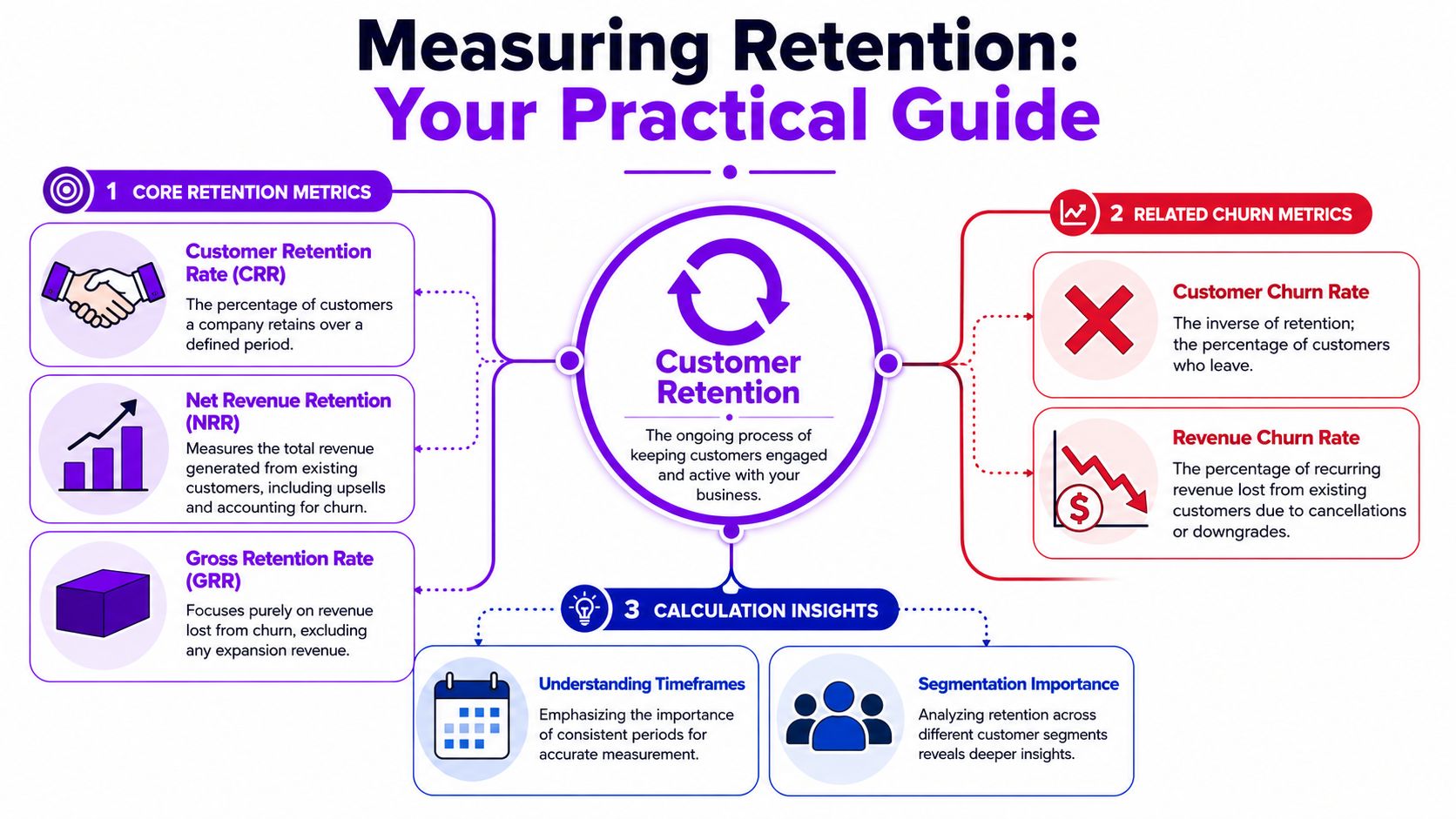
The standard Customer Retention Rate formula is:
[(Customers at end of period) – (New customers)] / (Customers at start of period)
The formula is simple. The discipline is not.
Executives need three controls in place before the number becomes decision-useful. First, define the customer unit consistently. An account, active buyer, subscription, location, or seat can each be valid, but mixing them produces false trend lines. Second, match the measurement window to the buying model. A monthly view may suit subscription software, while quarterly or annual periods may better fit categories with longer renewal or repurchase cycles. Third, separate logo retention from revenue retention when contract values vary materially. Losing one large customer is not equivalent to losing one small one.
In practical terms:
- Count customers at the start of the period.
- Count customers at the end.
- Subtract customers acquired during that period.
- Divide retained customers by the starting customer base.
A retention metric built on inconsistent definitions will usually look stable right up to the point where the P&L weakens.
Use benchmarks carefully
Benchmarks are useful only if they reflect the economics of your category. A retail business with short purchase cycles and low switching costs should not evaluate itself the same way as a bank with deeper account relationships.
The benchmark ranges cited earlier show wide variation by industry. That should push boards toward sharper questions, not softer comfort. Is retention strong because customers repeatedly realize value, or because contracts, migration complexity, or limited alternatives keep them in place? High reported retention with falling usage, rising complaint volume, or deteriorating margin is not evidence of customer strength. It may be evidence of delayed churn.
That distinction matters in valuation terms. Revenue retained through satisfaction is usually more durable than revenue retained through friction.
Move from aggregate rates to cohorts
Blended retention rates often hide the operating problem that matters most. A company can report acceptable overall retention while losing a large share of new customers in the first 30, 60, or 90 days and depending on older cohorts to mask the damage.
Cohort analysis corrects for that. A cohort groups customers by a common start point, such as acquisition month, onboarding date, first order, or contract start. Leaders can then compare how each group performs over time and identify where the retention curve breaks.
That is where retention becomes manageable.
If one cohort drops sharply after implementation delays, the issue is onboarding capacity. If churn rises after the first support interaction, service quality is the problem. If retention is flat in enterprise accounts but weak in self-serve, pricing, packaging, or activation may be misaligned. The management value is not the chart itself. It is the ability to link attrition to a controllable operating event.
Practical rule: If your team cannot identify the stage where customers begin to drop off, you do not yet have a retention strategy. You have a summary statistic.
This is especially useful in e-commerce and digital services, where repeat behavior can shift quickly. Teams looking for tactical ideas can review these ecommerce customer retention strategies alongside their own cohort data to separate generic advice from category-specific action.
A useful executive scorecard includes:
- Core retention rate: Track the standard formula over a fixed period.
- Segment view: Split results by channel, customer type, geography, plan, or tenure.
- Cohort view: Compare customers who started in different periods.
- Event context: Overlay onboarding completion, support contacts, renewal timing, product issues, or service interruptions.
- Revenue lens: Review whether retained customers are holding, shrinking, or expanding spend.
Companies that measure retention well do more than report a percentage. They identify which customers stay, when others leave, and whether reported retention reflects genuine product value or temporary inertia.
Leading Indicators That Predict Customer Loyalty
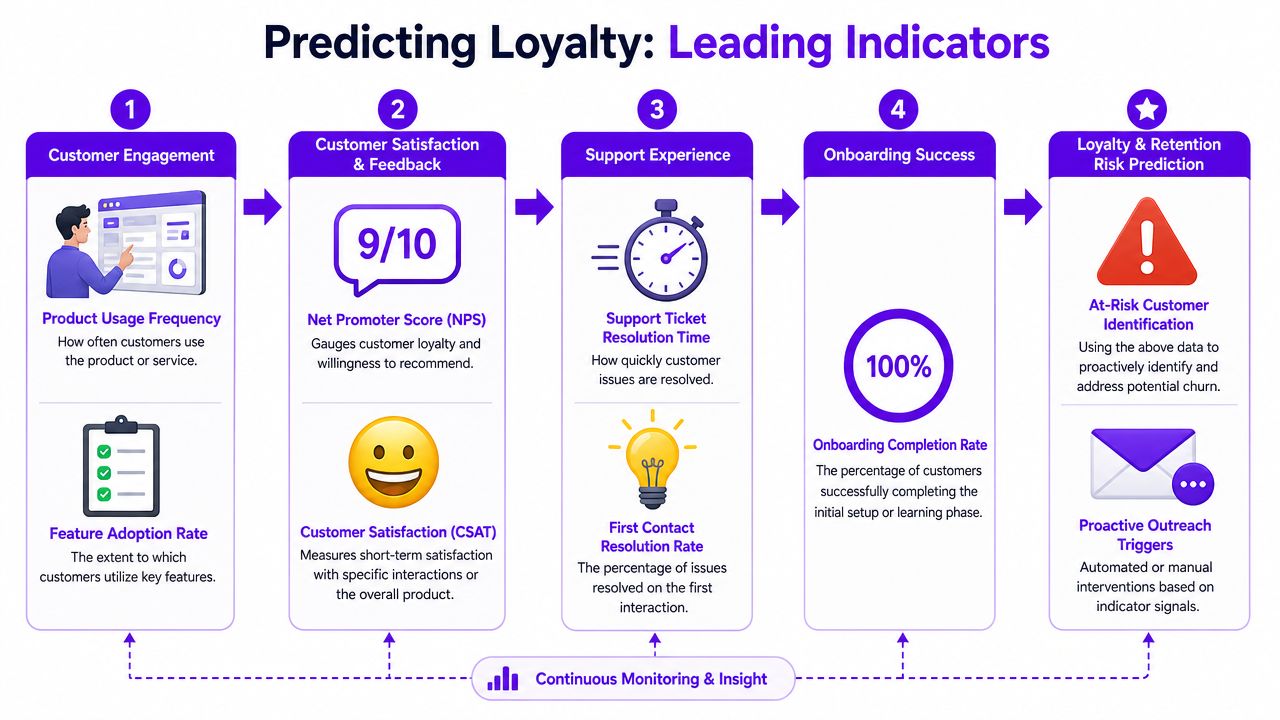
Retention is a lagging outcome. By the time a customer leaves, the decisive experience has usually already happened. Strong operators track earlier signals that indicate whether the customer is moving towards habit, confidence, and repeat engagement.
Operational signals that appear before churn
Contentsquare's retention metrics guide highlights a direct link between first-response latency, issue resolution, and repeat engagement. It also notes that when a customer's first critical task is resolved quickly, retention curves flatten. When that value state is delayed, churn rises sharply in early cohorts.
For executives, that's a key operating insight. Customers don't usually decide to stay because of a branding statement. They stay because the business helps them reach useful value with low effort.
The leading indicators that matter most are often operational rather than promotional:
- CSAT: Reveals whether the immediate interaction met expectations.
- CES: Shows how difficult it was for the customer to get something done.
- NPS: Signals willingness to recommend, which often reflects broader confidence.
- Time-to-value: Indicates how quickly the customer experiences the first meaningful outcome.
If those signals weaken early, retention pressure usually appears later.
What executives should instrument
The same Contentsquare source recommends event-level instrumentation rather than relying only on account-level totals. That means tracking the concrete moments that shape the customer journey.
A disciplined operating model logs:
- First contact: When the customer first asks for help or engages meaningfully.
- First successful resolution: The point at which the initial task is solved.
- Repeat usage interval: The time between first and next meaningful use.
- Escalation count: How often the customer had to push harder to get help.
- Reactivation rate: Whether inactive customers return after intervention.
It also recommends defining a retained user as one who completes the core event at least twice within a fixed window, then measuring the 80% repeat interval to identify when habitual usage stabilises.
Fast support matters, but speed alone isn't the target. The target is the shortest path to repeatable customer value.
A practical example makes this clearer. In edtech, the critical event might be attending a class and then booking the next one. In SaaS, it could be completing setup and then running the core workflow again. In real estate, it may be a first enquiry followed by a confirmed site visit. In each case, the retention problem starts when the second meaningful action doesn't happen soon enough.
Executives who want control over loyalty should stop asking only, “What is our retention rate?” They should also ask, “How long does it take customers to reach their second proof of value?”
Proven Retention Strategies for Key Industries
Retention strategy works best when it reflects the actual buying journey of the industry. Generic advice such as “improve service” is too broad for a VP, COO, or business head who has to allocate teams and budget.
Industry-specific retention strategies
| Industry | High-Impact Strategy | Key Tactic Example |
|---|---|---|
| EdTech | Strengthen post-enrolment guidance | Proactive counselling calls, progress check-ins, and reminders tied to learner milestones |
| Real Estate | Reduce drop-off after first interest | Structured site-visit follow-ups, property alerts, and consistent post-visit communication |
| BFSI | Build confidence through guided service | Personalised portfolio reviews, compliant support journeys, and proactive issue resolution |
In edtech, retention often depends on whether the learner gets early clarity and momentum. A student who enrols but feels lost in the first phase can disengage unnoticed. Teams should design scheduled check-ins around course activation, attendance, assignment progress, and counselling support. The retention gain comes from helping the student make visible progress, not merely from sending reminders.
In real estate, the danger zone is usually between enquiry and decision. Prospects often need repeated clarification, scheduling support, and relevant updates before they commit. Retention, in this context, means keeping the prospect actively engaged with the buying process rather than letting attention decay after a site visit. Teams in adjacent property categories may also find value in this playbook for homebuilder executives, which shows how structured communication shapes longer-term buyer confidence.
In BFSI, trust and responsiveness are central. Customers often stay when the institution makes complex processes easier to manage, whether the issue is onboarding, KYC follow-up, account servicing, or portfolio communication. High-touch support matters, but it has to be disciplined and compliant. The goal is to reduce uncertainty without creating endless manual dependency.
What strong retention programmes share
The best industry programmes usually share four traits:
- Clear triggers: Teams know which event should trigger outreach, such as missed class attendance, incomplete documentation, or site-visit inactivity.
- Relevant communication: Messages are tied to the customer's actual stage, not a generic campaign calendar.
- Operational ownership: Retention is assigned across sales, success, support, and operations rather than parked in one department.
- Closed-loop follow-up: Someone tracks whether the intervention restored engagement.
A good retention plan doesn't just ask customers to come back. It removes the reasons they were about to drift away.
Scaling Retention Efforts with Conversational AI
The problem with most retention programmes isn't the strategy. It's the execution load. Leaders know they should follow up after onboarding, chase incomplete actions, check satisfaction after support, and re-engage dormant accounts. They often can't do it consistently at scale.
Where AI fits in the retention stack
Conversational AI is useful when retention depends on repeated, timely, structured customer contact. It can handle routine outreach that human teams struggle to sustain, especially across large customer volumes and fragmented workflows.
Examples include:
- Post-onboarding check-ins for SaaS or edtech: An AI agent can contact users who haven't completed setup, ask what blocked them, and route the issue appropriately.
- Follow-up after a property enquiry or site visit: The system can confirm interest, answer common questions, and schedule the next interaction.
- BFSI service journeys: AI can guide customers through documentation reminders, service updates, or support triage in a more consistent manner than ad hoc outbound calling.
The value isn't only labour substitution. It's operational consistency. Every customer gets the follow-up. Every missed event triggers a response. Every interaction is logged in a way that improves visibility into retention risk.
Leaders exploring this route should understand how modern platforms combine workflow logic, automation, and conversational design. This overview of a conversational AI chatbot platform is useful for evaluating where AI can augment service and retention operations.
What to automate first
Not every retention moment should be automated. The best starting point is the set of interactions that are frequent, time-sensitive, and rules-based.
A sensible rollout order looks like this:
- Reminder flows for incomplete onboarding or missed next steps.
- Feedback collection after support or guided sessions.
- Reactivation outreach for dormant users or stalled prospects.
- Scheduling and qualification where the next step is clear.
- Escalation routing when the customer needs a human specialist.
Automation should handle repetitive contact and predictable queries. Humans should handle exceptions, emotion, and high-stakes judgement.
Used well, conversational AI doesn't make retention less personal. It makes disciplined follow-up possible without exhausting frontline teams.
The Strategic Risk When High Retention Is a Red Flag
Executives often celebrate retention increases without asking what caused them. That can be a mistake.
The sharper view comes from SupportYourApp's analysis of retention, which argues that high retention isn't always a sign of a healthy business. It can reflect product-market fit issues, high switching costs, or retention lift that hides inefficiency rather than genuine loyalty.
That distinction matters in categories where customers tolerate friction because changing providers is painful, risky, or time-consuming. A bank, platform, school, or property intermediary may retain customers not because the experience is strong, but because the customer doesn't want to restart paperwork, research, or trust-building elsewhere.
Questions boards should ask
A retention increase is healthy when it coincides with lower customer effort, faster value delivery, and less operational intervention. It's less healthy when the number rises only because teams are adding expensive manual touchpoints or because customers are effectively trapped.
Ask these questions:
- Did retention improve because customers realised value faster, or because support teams worked harder to rescue weak journeys?
- Would customers still stay if switching became easier?
- Is retention concentrated among customers facing the highest friction to leave?
- Are we measuring loyalty, or merely persistence?
This issue appears in service-heavy sectors beyond the obvious ones. For example, healthcare and clinics also face trust-heavy, high-friction journeys, which is why this guide to conversational AI for clinics is a useful parallel for leaders thinking about experience quality rather than headline metrics alone.
The strongest executive question isn't, “How do we push retention higher?” It's, “Which retention lift signals a healthier customer experience, and which hides inefficiency?”
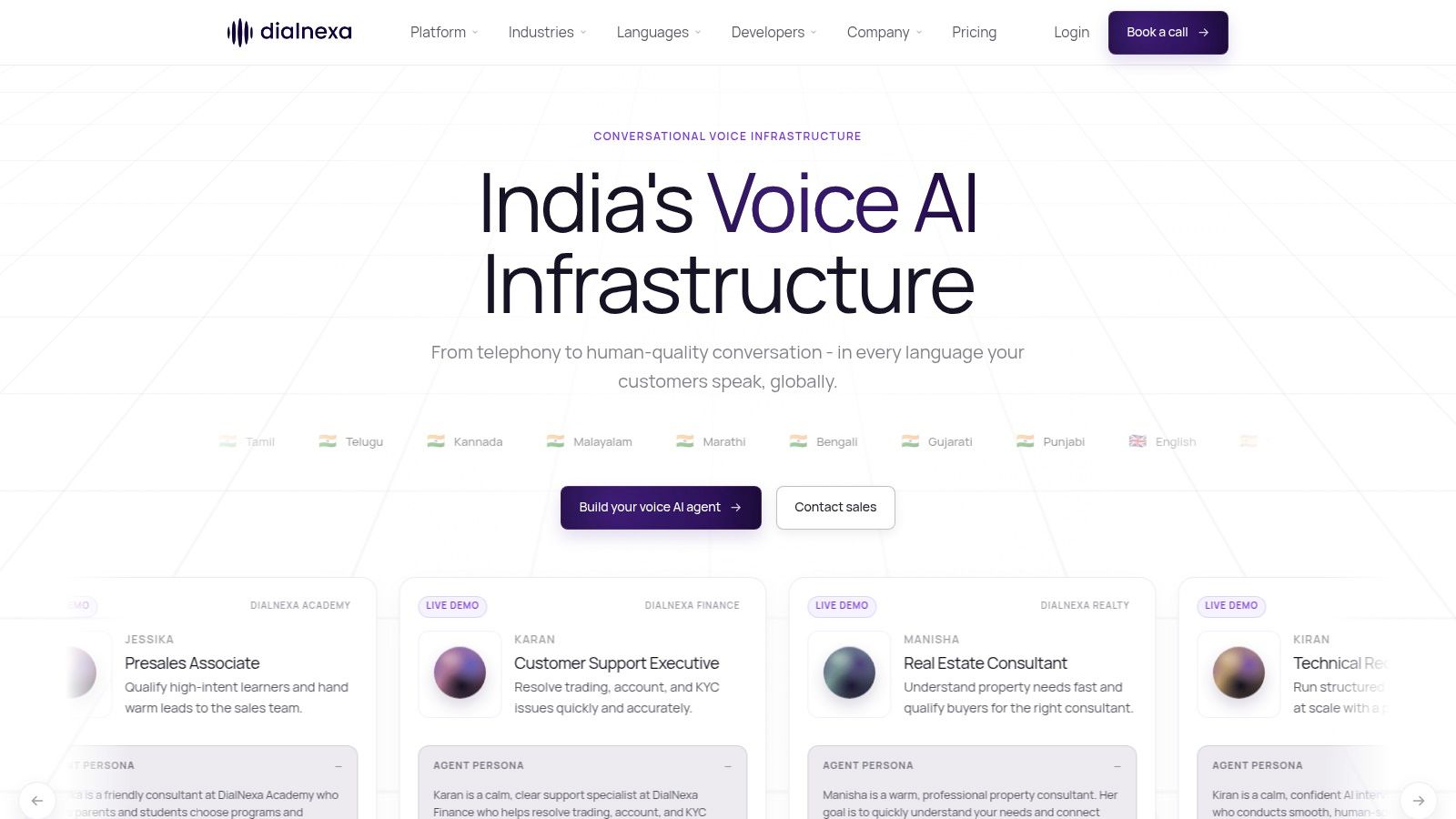
If your team wants to improve retention through faster follow-ups, better support coverage, and scalable customer conversations, DialNexa Labs Private Limited can help you operationalise that work with human-like Voice AI agents built for real business workflows. Whether you run an edtech platform, a BFSI operation, a real estate sales team, or a service-led digital business, the right automation layer can turn retention from a reporting metric into a repeatable growth system.

Leave a Reply