

10 Websites Like Character AI for Business in 2026
Character AI is no longer just a consumer curiosity. It has become a benchmark for engagement and scale. The platform, founded in 2022 by Noam Shazeer and Daniel De Freitas, reached over 208 million monthly visits, more than 16 million user-created chatbots, and average session times of 120 minutes, according to Voiceflow’s Character AI alternative analysis. That level of retention matters to executives because it proves a simple point. Conversational agents can hold attention long enough to influence support outcomes, onboarding, education, and sales.
But boards shouldn't confuse engagement with business readiness.
Search demand for websites like character ai has shifted because many users want more control, longer memory, and fewer interruptions in conversation flow. Competitor analysis also shows a crowded market with meaningful traffic moving toward alternatives, according to Semrush competitor data for Character.ai. For a business buyer, the key question isn't which app feels most entertaining. It's which platform can support brand-safe experiences, reliable workflows, and measurable operational outcomes.
If you're evaluating websites like character ai for customer support, recruitment, programme counselling, or lead qualification, use a different lens than a hobbyist would. Focus on deployment control, memory persistence, voice support, compliance posture, and whether the product is built for production or just for chat.
For a broader AI stack review, see 12 Best Chat GPT Alternatives.
Table of Contents
- 1. Janitor AI
- 2. ChatFAI
- 3. Poe by Quora
- 4. NovelAI
- 5. AI Dungeon
- 6. Replika
- 7. Nomi
- 8. Kindroid
- 9. Chai
- 10. Inworld
- Top 10 Character AI Alternatives Comparison
- Final Thoughts
1. Janitor AI
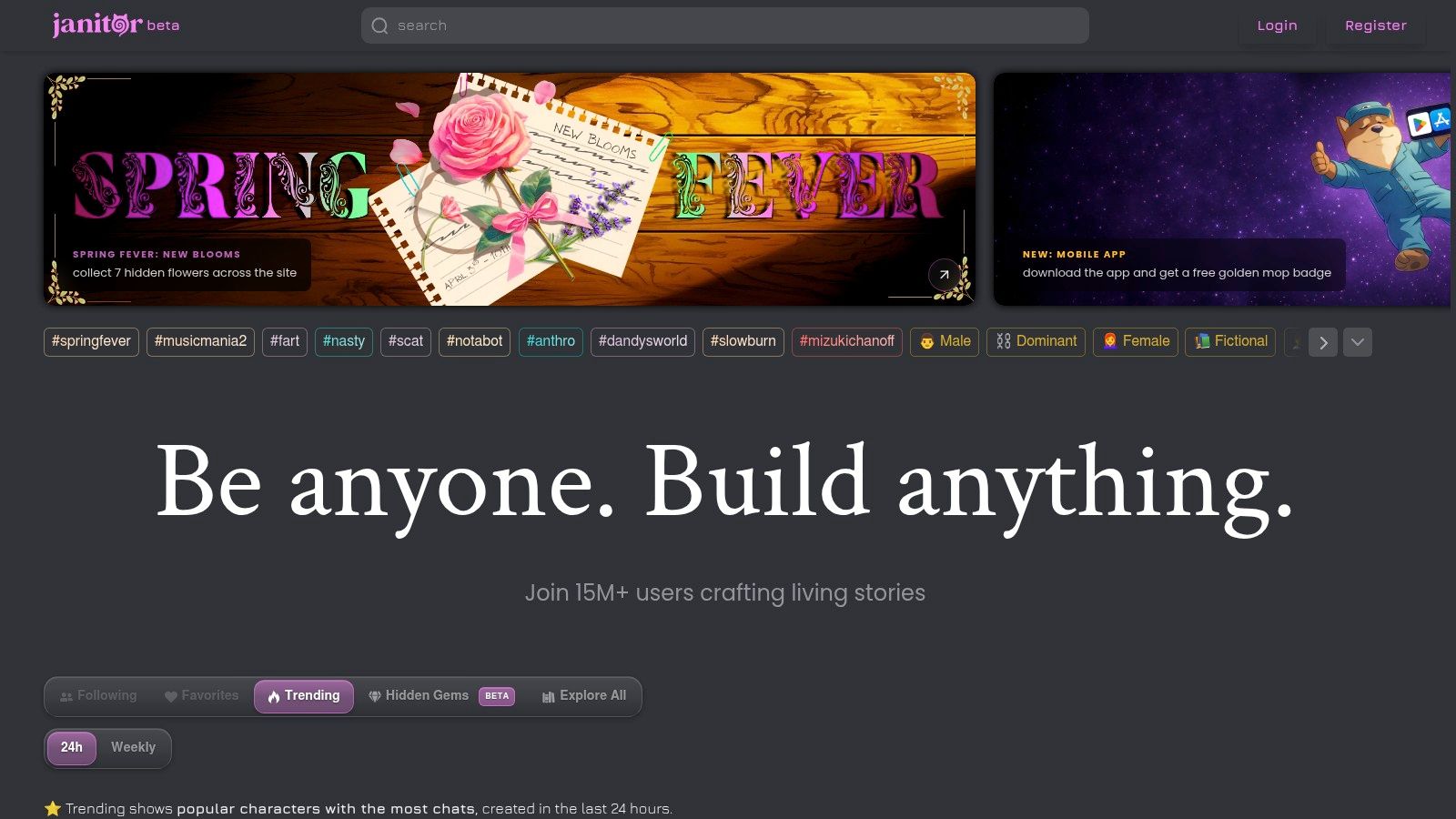
Janitor AI is a testing environment, not an enterprise platform. That distinction matters.
For leadership teams evaluating websites like Character AI, Janitor AI is useful because it exposes a wide range of user-generated personas, supports long conversational threads, and gives technical teams the option to connect external LLM APIs. That makes it a practical tool for concept validation. It does not make it a production-ready CX asset.
Best fit
Use Janitor AI for early-stage persona research, dialogue pattern testing, and prompt iteration. An EdTech company can test different tutor or counsellor archetypes before funding a full product build. A SaaS team can pressure-test onboarding assistant behavior against messy, edge-case questions before handing requirements to engineering.
The commercial value is speed. Teams can compare character styles quickly, review how persistent conversations feel over time, and identify which interaction patterns are worth operationalising.
Its strongest advantages are clear:
- Large persona library: Product and brand teams can assess many interaction styles without building each one from scratch.
- BYO model flexibility: Technical teams can connect preferred model providers and test performance across different stacks.
- Long-form conversation support: Useful for evaluating retention, memory feel, and narrative continuity in text-first experiences.
Executives should also be clear on the limitations. Janitor AI is built around community usage, not enterprise governance. That creates risk in regulated environments where auditability, policy enforcement, data controls, and predictable output quality affect revenue and compliance exposure.
Board-level recommendation: Use Janitor AI to reduce discovery costs and sharpen requirements. Do not use it as the operating layer for BFSI service workflows, healthcare intake, KYC support, or any customer journey that requires controlled outputs and formal oversight.
This is also where the distinction between consumer character platforms and enterprise agents becomes operationally important. Janitor AI is strongest as a text-based experimentation tool. It is far less suited to voice-native deployment, secure systems integration, or scaled customer operations where uptime, permissions, and reporting drive ROI.
2. ChatFAI
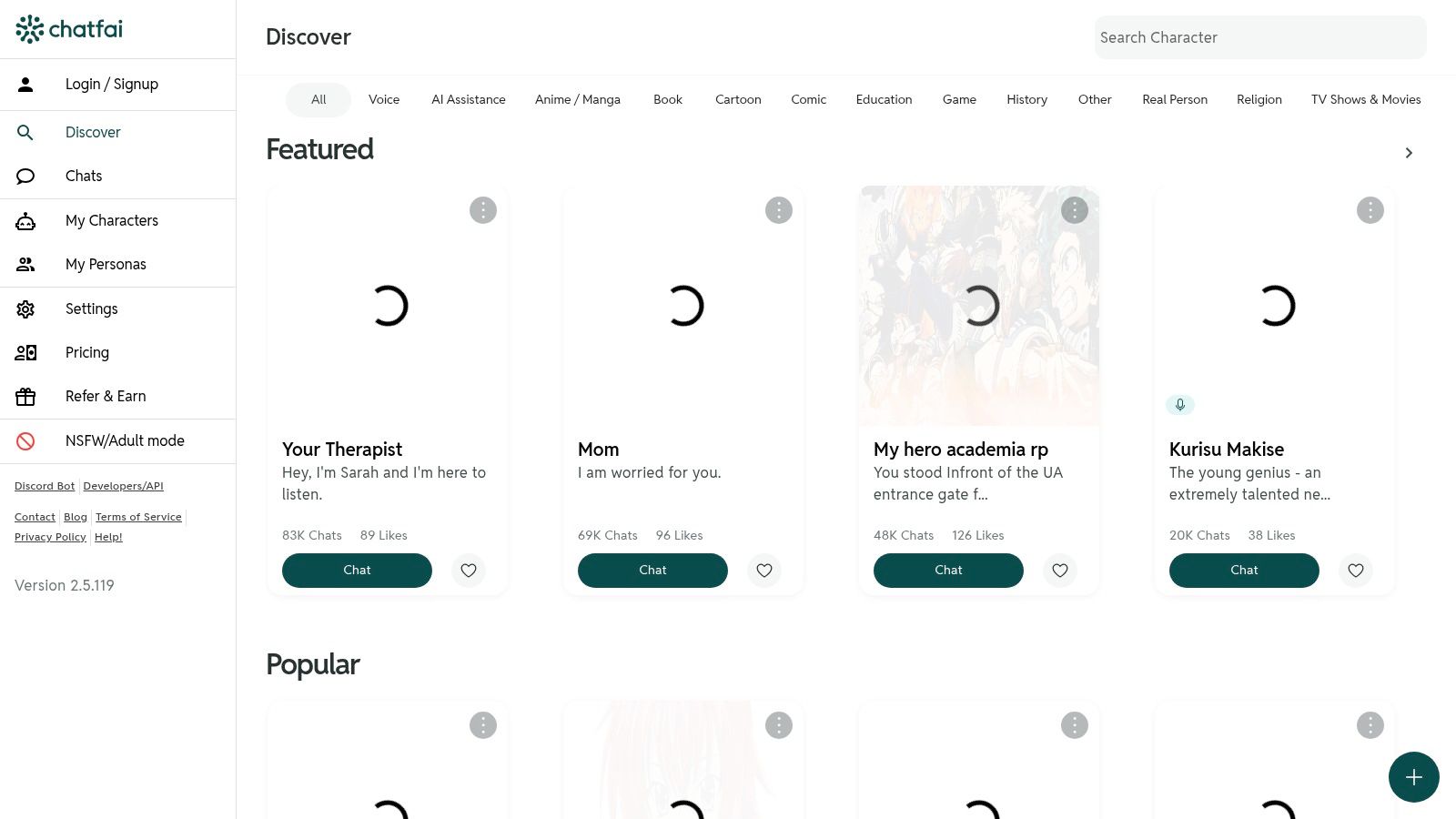
ChatFAI is a speed tool. If your team needs to test branded personas, conversation tone, and lightweight audience engagement without a long implementation cycle, it does that well.
That matters at the evaluation stage.
ChatFAI combines a creator marketplace, private bot creation, and limited voice interaction in a format that product, marketing, and CX teams can use without technical setup. For a board or operating committee, the value is straightforward. Lower testing costs, shorter feedback loops, and faster decisions on whether a character-led experience deserves budget.
Where it creates ROI
ChatFAI works best as a pre-production validation layer. An EdTech company can test whether students respond better to a mentor persona or a peer guide during course discovery. A SaaS brand can trial onboarding assistants with different communication styles before committing engineering resources to workflow automation. A media company can use it to increase session depth with branded companion characters tied to specific franchises or audience segments.
Use it to answer commercial questions early:
- Fast onboarding: Teams can launch pilots quickly and gather qualitative user feedback without building custom infrastructure.
- Private character creation: Brand and CX leaders can test controlled personas before wider release.
- Web and mobile access: Distributed stakeholders can review conversations across devices during approval cycles.
The tradeoff is governance.
ChatFAI is not the right choice for regulated service delivery, high-risk support flows, or any environment where audit trails, policy enforcement, and system-level controls affect compliance exposure. BFSI leaders should treat it as a research and messaging tool, not a customer operations platform. The same applies to healthcare intake, claims support, and identity-sensitive workflows.
Its voice capability also needs to be assessed correctly. ChatFAI can help teams explore whether a persona should speak, but it is not a production-ready voice-native agent stack. That distinction determines cost, integration effort, and operational risk. Leaders evaluating conversational AI should review how enterprise teams are thinking about voice interfaces, brand control, and generative AI deployment in this discussion on the future of writing and generative AI voicebots.
My recommendation is simple. Use ChatFAI to validate persona strategy, message framing, and audience response. Do not use it as the system of record for enterprise service operations.
3. Poe by Quora
Poe is the fastest way on this list to compare multiple model behaviours in one interface. That makes it useful for decision-makers who need answers before they need architecture.
Most websites like character ai lock you into one interaction style. Poe does the opposite. It lets teams compare bots, model families, and no-code bot configurations side by side.
Executive use case
If your company is still deciding what kind of AI assistant it should build, Poe is a strong evaluation environment. A support director can compare concise support bots against more empathetic dialogue styles. A sales enablement team can test whether a product specialist persona outperforms a generic assistant during objection handling.
Use Poe for structured internal review:
- Model comparison: Helpful when procurement hasn't chosen a primary model vendor.
- No-code bot creation: Good for product managers and operations leaders.
- Reliable access across devices: Useful for executive demos and stakeholder review cycles.
This is a strategy tool, not a full operations stack. Poe helps you narrow decisions. It doesn't, by itself, solve workflow automation, telephony, or regulated process design.
Choose Poe when your core question is "Which model behaviour fits our business?" Choose a production platform when your question becomes "How do we run this safely at scale?"
That distinction matters in India and other high-volume service markets. Much of the public conversation around alternatives still over-indexes on unfiltered roleplay rather than enterprise use. For business leaders, Poe is valuable because it shortens evaluation cycles and reduces the cost of choosing the wrong interaction style early.
4. NovelAI

NovelAI is the strongest narrative engine on this list. Its memory systems, lorebook controls, author notes, and style tuning make it more than a chatbot. It behaves more like a structured storytelling workspace.
That matters if your business needs consistency over long interactions.
Where NovelAI stands out
NovelAI is useful when continuity is the product. Training simulations, coaching dialogues, complex scenario walkthroughs, and multi-session educational journeys all benefit from better world and character persistence.
A practical example is onboarding simulation. A SaaS company could build scenario-based customer success training where the AI maintains account history, customer temperament, and product context across extended sessions. An EdTech provider could simulate exam counselling or interview preparation with more durable persona memory than a lightweight chatbot typically offers.
Its strengths are clear:
- Persistent narrative controls: Better for sustained scenario design.
- Fine-tuned style management: Useful when brand voice matters.
- Documentation and active product development: Important for teams building repeatable workflows.
Its limitation is equally clear. NovelAI is built around text-first storytelling. If your board is planning voice-led lead qualification, call routing, or multilingual support, this isn't the final platform.
For leadership teams thinking about AI-generated communication more broadly, this Jasper AI discussion on the future of writing and generative AI is a useful companion read.
NovelAI is best when your use case values coherence over channel breadth. It is one of the better websites like character ai for organisations that need long-form simulation before they need real-time voice automation.
5. AI Dungeon
AI Dungeon comes from a different lineage. It treats the user as a participant inside a world rather than just a person chatting with a bot. That design choice makes it valuable for interactive scenario planning.
This isn't a standard customer support product, and that's why some companies should pay attention to it.
Strong use case
AI Dungeon is effective for immersive training. Recruitment teams can build interview simulations. Sales leaders can create branching objection-handling drills. Security and compliance groups can run narrative exercises where employees make decisions under pressure and see the consequences unfold.
That structure gives it a strong internal enablement role.
- World-building tools: Good for complex, branching simulations.
- Memory and context features: Useful for maintaining scenario logic.
- Narrative agency: Employees can act, not just ask.
The drawback is that AI Dungeon assumes a more game-like workflow. Some teams will find that intuitive. Others won't. If you need a tightly controlled customer-facing interface, this can feel too open-ended.
Still, there is real value in that openness. Many websites like character ai focus on one-to-one conversation. AI Dungeon supports consequence-driven learning. For boards overseeing workforce productivity, that can matter more than entertainment-grade companionship.
A practical implementation would be an admissions team using simulated student personas with changing priorities and objections. Reps can practise the conversation repeatedly until the script and escalation flow are stable enough for production deployment elsewhere.
6. Replika
Replika isn't primarily a roleplay engine. It's a companion product built around ongoing relationship continuity, polished mobile delivery, and voice interactions.
For a board, that changes how you should evaluate it. Replika is less relevant for scripted workflows and more relevant for understanding retention mechanics.
Board-level view
If your company is building any product where emotional continuity matters, Replika deserves attention. Wellness, coaching, learning accountability, and habit formation products can study its design choices around repeat engagement, companion persistence, and daily interaction loops.
That doesn't mean you should copy its positioning. It means you should understand why companion-style products keep users returning.
- Persistent persona experience: Valuable for engagement-led product design.
- Voice and app polish: Useful benchmark for mobile-first service UX.
- Daily-use pattern: Relevant for subscription businesses.
Its limitations for enterprise deployment are obvious. It isn't built as a compliance-first workflow platform for regulated support operations. Content constraints can also make it unsuitable for teams that need broader conversational freedom in simulation environments.
For leaders tracking the cultural shift toward AI as a confidant, this piece on why many women are turning to ChatGPT for personal conversations offers a useful lens on behavioural demand.
Replika is a signal product. It shows what sustained AI attachment can look like. It is not a substitute for enterprise service design.
Use it to benchmark engagement psychology, not to run your BFSI support desk.
7. Nomi
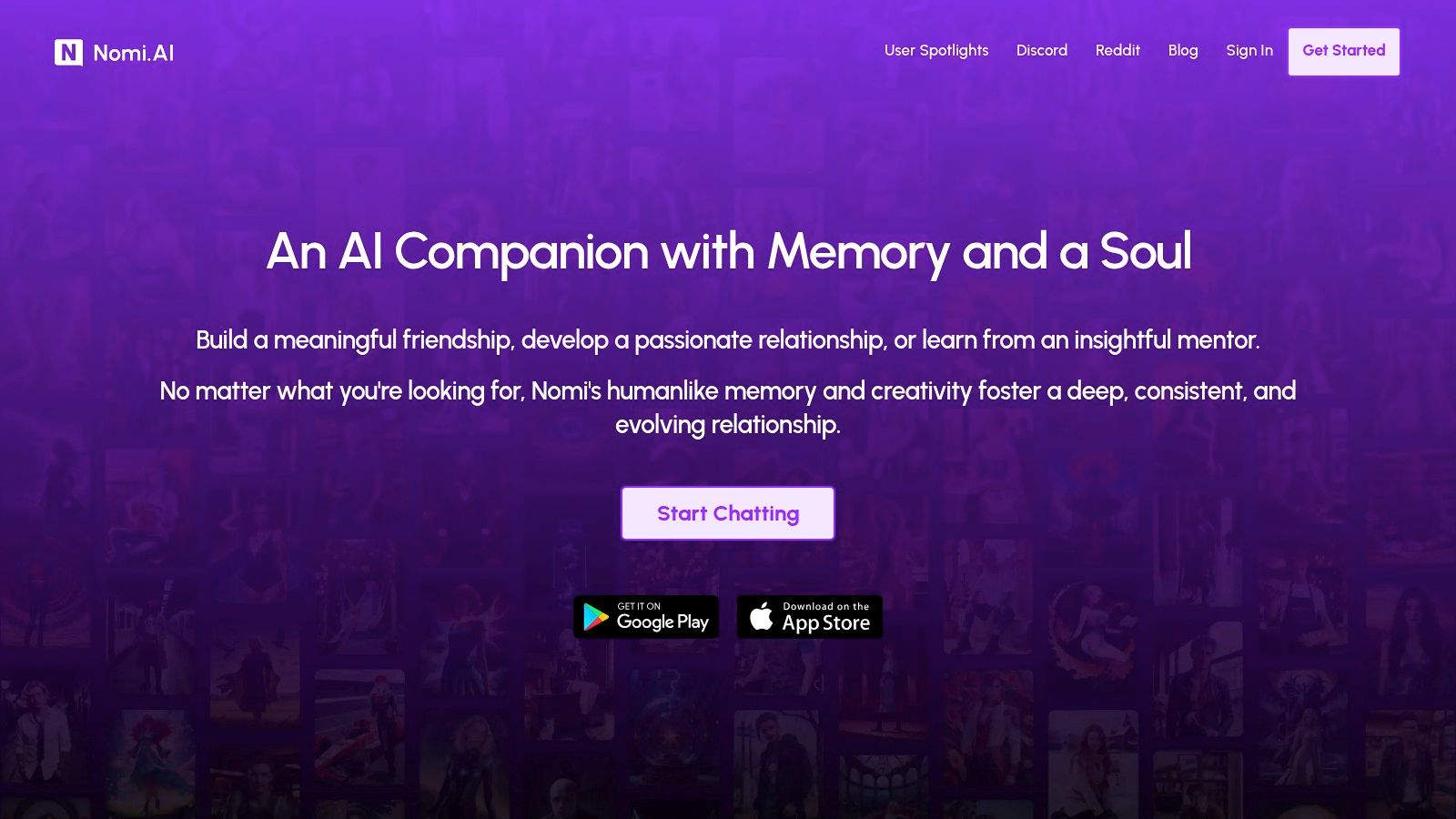
Nomi is one of the better options if your priority is persona consistency. It combines text, voice calling, visual customisation, and frequent product updates in a companion-oriented format.
That makes it relevant for businesses that care about stable digital personalities.
Where to use it
Nomi can help teams evaluate whether a branded persona remains coherent across channels. A premium education brand could test a mentor identity across chat and voice. A concierge-style SaaS product could study whether customers prefer a consistent named assistant over a rotating generic support bot.
The value isn't in raw automation. It's in identity durability.
Nomi is especially useful for organisations that believe AI experience design will become a brand differentiator. If your product promise depends on trust, warmth, and recognisable style, then persona drift becomes a business problem. Nomi's product direction speaks directly to that issue.
That said, it still sits closer to consumer companionship than enterprise operations. It doesn't replace call-centre workflow design, CRM orchestration, or regulated record handling.
In the current market, that's a recurring divide. Many websites like character ai are optimised for immersive one-to-one interaction. Fewer are optimised for production systems that need routing, logging, operational governance, and business KPI alignment.
Nomi is a good benchmark for the first category. It is not the final answer for the second.
8. Kindroid
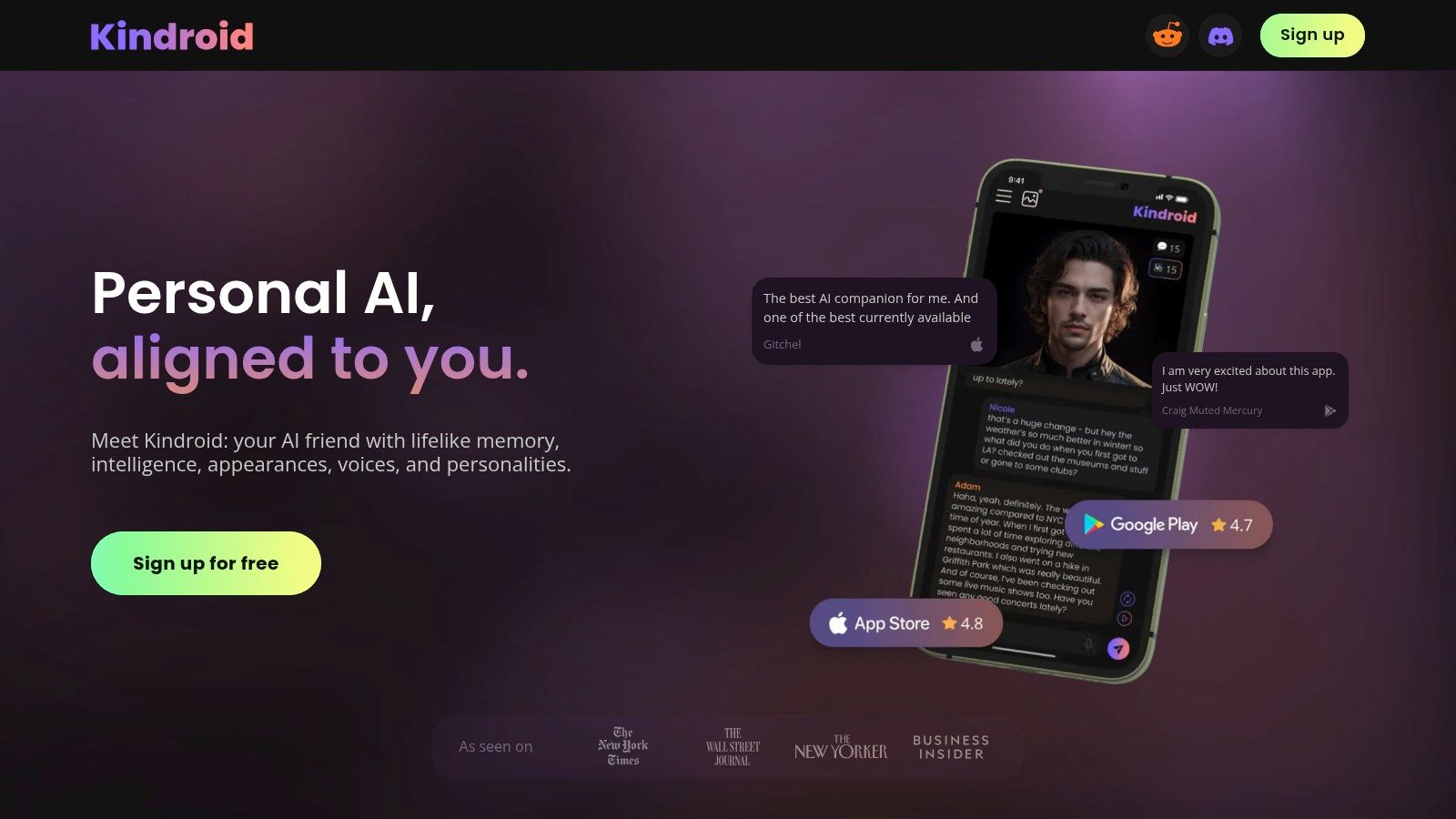
Kindroid is one of the stronger options for teams that need precise control over AI personality, memory, and multimodal behaviour. That makes it relevant for executives testing whether a branded assistant can hold context over time instead of delivering disposable, one-off replies.
The business value is clear. Kindroid helps product, CX, and innovation teams pressure-test high-context assistant experiences before they commit engineering budget to a production build.
A BFSI firm could compare advisory personas for affluent clients. An EdTech company could test how different tutor styles affect session continuity and learner trust. A SaaS provider could evaluate whether onboarding agents perform better with stricter tone rules and longer conversational memory.
Kindroid stands out in three areas:
- Persona control: Teams can shape tone, behaviour, and interaction style with more precision than many consumer chat apps.
- Long-session memory: Better continuity across repeat interactions makes it useful for testing relationship-driven use cases.
- Multimodal experience: Voice and visual features help teams assess whether text alone is enough, or whether broader conversational AI capabilities will drive better retention, conversion, or service outcomes.
The limitation is operational fit. Kindroid is good for experimentation, experience design, and persona benchmarking. It is not built as an enterprise service stack with the governance, systems integration, audit controls, and workflow orchestration that regulated sectors require.
That is the strategic takeaway. Kindroid is a capable evaluation platform for rich digital characters, especially if your team wants to test memory-heavy and voice-aware interactions. It does not solve enterprise deployment on its own, particularly for organisations that need security review, scale, and measurable ROI from production-grade voice agents.
9. Chai

Chai is built for discovery. Its public bot directory, app-first usage pattern, and active community make it one of the fastest ways to see what kinds of characters users engage with.
That can be strategically useful.
Business recommendation
Use Chai when you need rapid market sensing. Consumer brands, gaming publishers, fan platforms, and media businesses can use it to understand emerging persona trends before building proprietary assistants.
A practical example is entertainment merchandising. A franchise team could study which character tones, speech rhythms, and interaction prompts generate the strongest repeat engagement. That insight can then shape a controlled branded rollout elsewhere.
Chai is not ideal for high-governance environments. The app-first experience, broad public catalogue, and community-driven content model create obvious limits for regulated deployment.
Still, don't dismiss it. In a market where many executives are still debating what users want from conversational AI, Chai shows demand patterns in near real time.
The strategic use isn't operations. It's intelligence.
A board evaluating websites like character ai should separate market-learning platforms from production systems. Chai belongs in the first category. It can tell you what kinds of bots attract attention. It won't, by itself, deliver compliance, workflow integration, or auditable customer support.
10. Inworld
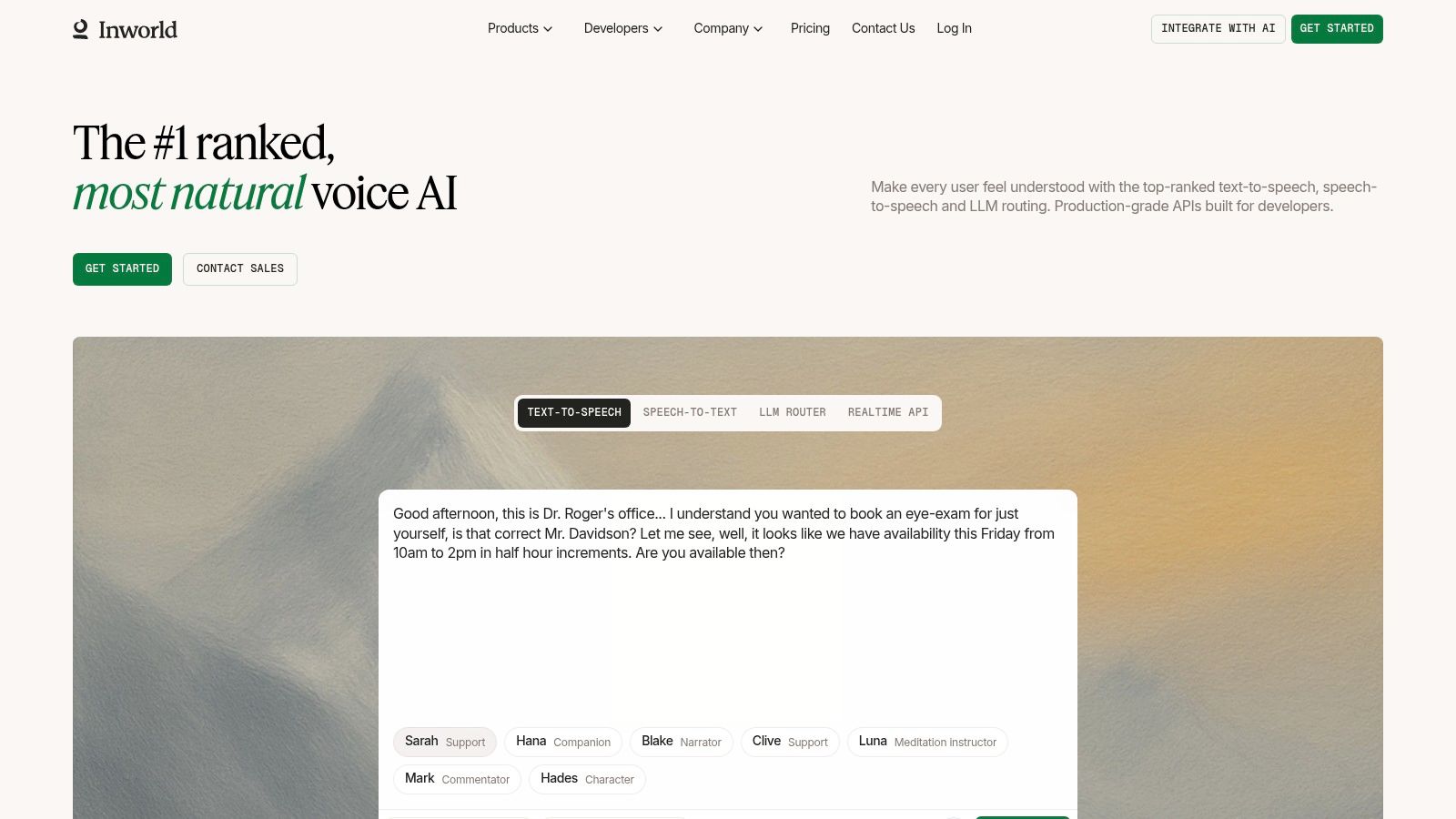
Inworld is the clearest signal that the market for websites like character ai splits into two very different categories. One category is text-first character interaction. The other is production infrastructure for agents that must speak, respond in real time, follow policy, and connect to business systems. Inworld belongs in the second group.
That distinction matters at the executive level.
If your team is evaluating alternatives to Character AI for revenue-generating use cases, Inworld deserves serious attention. It is built for deployment, not just engagement. The platform combines runtime orchestration, memory, goals, safety controls, speech capabilities, APIs, and observability in a package that fits product teams, engineering leaders, and enterprise operations.
Strategic value
Inworld makes sense when conversational AI needs to drive measurable business outcomes. SaaS companies can embed onboarding and support agents inside the product. EdTech providers can build guided tutors with voice and structured learning flows. BFSI teams can prototype tightly controlled assistants for customer education, intake, and service routing, where governance and audit trails matter as much as response quality.
The ROI case is straightforward. Voice and multimodal interactions expand addressable use cases beyond typed chat. Runtime controls reduce operational risk. Observability improves QA, policy enforcement, and escalation handling. Those capabilities have direct impact on containment rates, onboarding efficiency, and support cost per interaction.
Key strengths include:
- Realtime multimodal architecture: Better suited to live customer and in-product experiences than text-only roleplay tools.
- TTS and STT support: Important for voice-led automation, multilingual service delivery, and accessibility.
- SDKs, APIs, and observability: Required for integration, performance monitoring, and enterprise governance.
For boards and CXOs, the core recommendation is simple. Separate character-chat platforms from agent infrastructure. If the roadmap includes customer calls, guided workflows, training simulations, or embedded product assistance, prioritize platforms built for runtime control and voice-native deployment.
For teams that need a baseline definition before evaluating vendors, this overview of what conversational AI is is a useful primer.
Top 10 Character AI Alternatives Comparison
| Platform | Core features ✨ | UX/Quality ★ | Value/Price 💰 | Target audience 👥 | Standout/USP 🏆 |
|---|---|---|---|---|---|
| Janitor AI | ✨ Large community catalog, BYO LLM, character editor & memory | ★★★☆☆ – flexible, variable perf | 💰 Free built-in; pay for external LLMs | 👥 Prototyping teams, creative roleplayers | 🏆 Rapid low-cost persona R&D |
| ChatFAI | ✨ Creator marketplace, private bots, voice on select chars, web+mobile | ★★★★☆ – simple onboarding, mobile-friendly | 💰 Freemium; voice/advanced paid | 👥 Creators, product teams testing voice UX | 🏆 Easy private bots + voice preview |
| Poe (Quora) | ✨ Multi-LLM access, no-code bots, web/iOS/Android | ★★★★☆ – very fast, reliable infra | 💰 Freemium with message limits; paid for more use | 👥 ML/Product teams, model benchmarking | 🏆 Quick side-by-side model comparison |
| NovelAI | ✨ Lorebook, persistent memory, narrative controls, image add-ons | ★★★★☆ – strong narrative tooling | 💰 Paid tiers; TTS/images as add-ons | 👥 Writers, marketing & training content teams | 🏆 Deep brand/story continuity controls |
| AI Dungeon | ✨ Open-ended text-adventure, world-building, memory bank | ★★★☆☆ – immersive but best features paywalled | 💰 Freemium + credits for premium models | 👥 Gamified training, designers, RPG builders | 🏆 Immersive TTRPG-style simulation |
| Replika | ✨ Persistent companion, text+voice, activities & personalization | ★★★★☆ – polished apps, large user base | 💰 Freemium → Pro subscription | 👥 Retention-focused teams, consumer companions | 🏆 Proven long-term engagement model |
| Nomi | ✨ Emotionally consistent companions, selfies, voice calls | ★★★★☆ – persona-focused, frequent updates | 💰 Paid tiers/credits | 👥 Brands seeking consistent persona across touchpoints | 🏆 Strong persona consistency across media |
| Kindroid | ✨ Deep memory, layered persona customization, text/voice/video | ★★★★☆ – power-user controls, cross-platform | 💰 Premium pricing for high-context tiers | 👥 Power users, advanced RP, enterprise tutors | 🏆 Fine-grained behavioral & memory controls |
| Chai | ✨ Large public bot directory, mobile-first bot creation & sharing | ★★★★☆ – very fast discovery, app-first UX | 💰 Freemium; paid for heavier usage | 👥 Market researchers, fast-iteration teams | 🏆 Rapid public trend discovery via community bots |
| Inworld | ✨ Realtime multimodal agents, TTS/STT, SDKs, observability & safety | ★★★★☆ – enterprise-grade, developer-focused | 💰 Usage/credit pricing; scalable for enterprise | 👥 Developers, enterprises building production agents | 🏆 Production-ready voice agents & SDKs |
Final Thoughts
Character AI alternatives should be evaluated as capital allocation decisions, not novelty purchases.
The right question is not which platform feels the most engaging. The right question is which platform reduces service cost, increases conversion, protects compliance, and scales across channels without adding operational drag. That standard immediately separates consumer roleplay tools from business systems.
Several products in this category are useful. Few belong in an enterprise stack.
Janitor AI, Chai, and ChatFAI fit early-stage persona testing, audience research, and low-cost concept validation. NovelAI, AI Dungeon, Nomi, Kindroid, and Replika are better suited to continuity-heavy experiences where identity, memory, and interaction depth matter. Poe is a practical evaluation layer for comparing model behavior before vendor commitment. Inworld stands apart because it is closer to production infrastructure than entertainment software.
That distinction matters at the board level. A text-based character platform can help a team prototype tone, script flows, and user engagement patterns. It usually cannot handle regulated workflows, multilingual support operations, CRM actions, audit requirements, or high-volume voice interactions at enterprise scale.
For BFSI, EdTech, SaaS, healthcare, and real estate, ROI comes from completed tasks. Lead qualification. Admissions counseling. KYC guidance. Appointment booking. Support resolution. Renewal retention. If a platform cannot connect conversation to business action, it remains a sandbox.
Cost structure should drive the final decision. Many companies still carry large support and inside-sales costs because human teams are expensive to scale, inconsistent across shifts, and slow during spikes in demand. The winning vendors in this market will not be the ones with the biggest bot libraries. They will be the ones that turn conversations into measurable outcomes with governance, reporting, and system integration.
If your organisation is also reviewing the service side of this shift, this overview of AI powered customer service is worth reading.
The recommendation is simple. Buy for operational fit, security, and deployment readiness. Reject tools that stop at engagement. If the platform cannot support compliance, integrate with core workflows, and perform reliably at production volume, it is not a strategic alternative.
DialNexa Labs Private Limited helps organisations move beyond experimental chat and deploy human-like voice agents that handle business workflows. If you're evaluating websites like character ai but need outcomes such as lead qualification, admissions counselling, booking support, KYC guidance, recruitment screening, or presales at scale, explore DialNexa Labs Private Limited. The platform is built for production use across EdTech, BFSI, real estate, hospitality, e-commerce, software, and healthcare, with ready-made personas, fast deployment paths, and operating results that matter to leadership teams.

This is an insightful comparison that clearly separates experimentation tools from enterprise-ready platforms and focuses on real business value. The emphasis on governance, scalability, and strategic use cases makes it especially useful for decision-makers evaluating conversational AI investments.