
10 Best AI Tools for Healthcare: A CXO’s Guide for 2026
A surprising reality defines the 2026 healthcare AI market. In India, the strongest measurable impact isn't limited to futuristic diagnostics. AI-enabled screening in the National TB Elimination Programme reduced adverse TB outcomes by 27% and increased case detection by 12–16% while generating over 4,500 outbreak alerts from 2022 to 2025. That matters to CXOs because it proves AI can move from pilot theatre to system-level public health execution in resource-constrained settings.
A CXO's Guide to the Best AI Tools for Healthcare in 2026 sits at the intersection of operations, clinical quality, and infrastructure strategy. In a field where operational efficiency and patient outcomes are paramount, Artificial Intelligence has transitioned from a buzzword to a core strategic asset. For VPs, Directors, and CXOs, selecting the right AI partner is a decision that will define future growth, dictating everything from diagnostic accuracy to operational costs. This guide moves beyond generic feature lists to provide a strategic analysis framework. We will evaluate the top 10 platforms based on critical executive criteria: HIPAA/PHI Compliance, Clinical & Operational Accuracy (backed by data), EHR/PACS Integration Depth, and Demonstrable ROI. The goal is to equip you to make investment decisions that deliver not just technological novelty, but tangible business value.
For organisations building or modernising digital care journeys, the practical advantage often comes from pairing software selection with an expert HealthTech development partner that can handle integration, governance, and workflow redesign.
Table of Contents
- 1. Qure.ai
- 2. Aidoc
- 3. Viz.ai
- 4. DialNexa Labs Private Limited
- 5. PathAI
- 6. Niramai Thermalytix
- 7. Tricog InstaECG
- 8. SigTuple
- 9. Predible Health
- 10. AWS HealthScribe
- Top 10 AI Healthcare Tools Comparison
- From Pilot to Practice Implementing AI for Lasting Impact
1. Qure.ai
Qure.ai earns executive attention because imaging delays create enterprise costs, not just clinical inconvenience. A slower radiology queue can delay ED decisions, extend length of stay, slow referrals, and leave expensive diagnostic capacity underused.
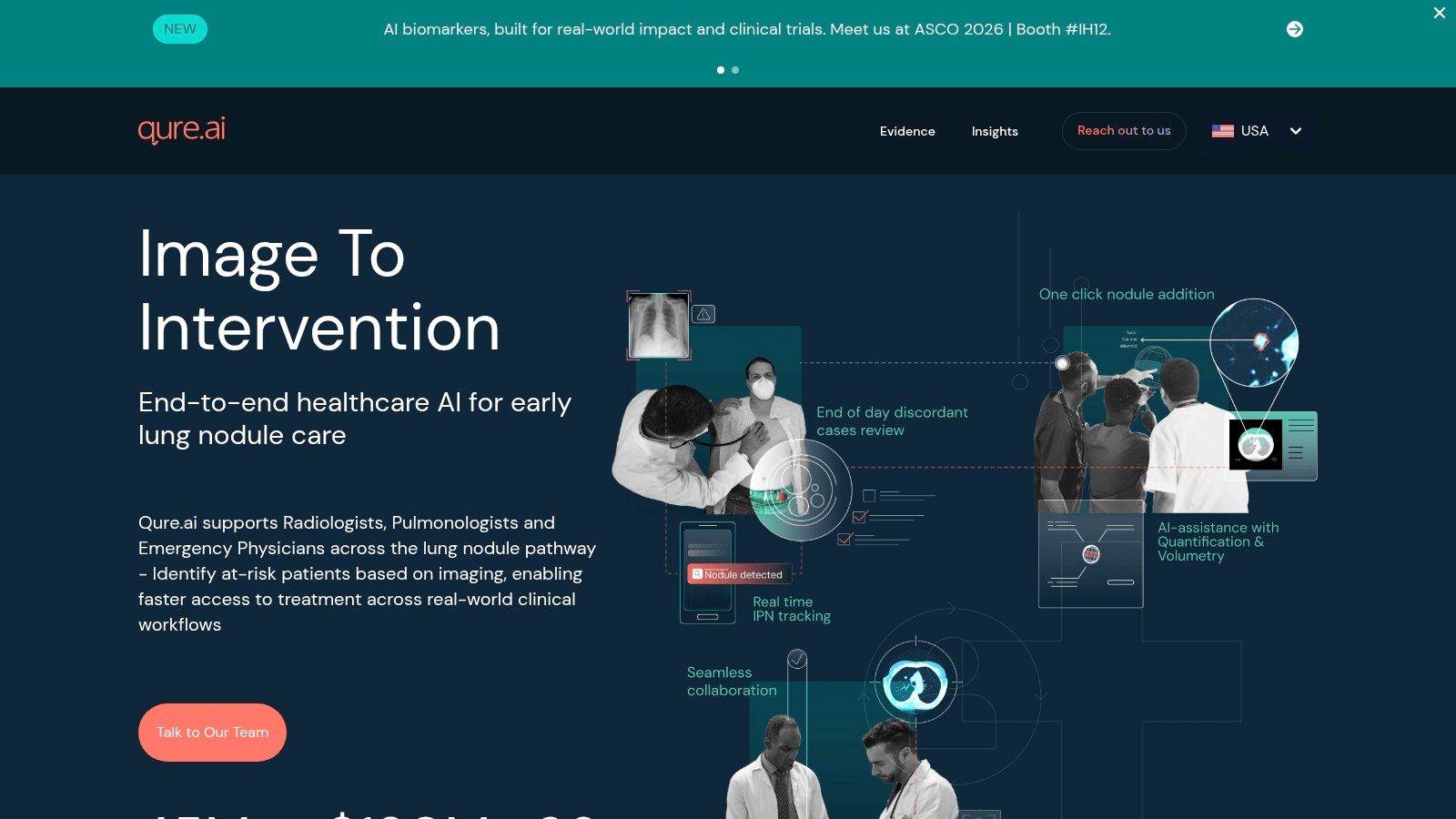
Qure.ai focuses on that pressure point with AI models for chest X-rays and emergency neuroimaging. The strategic appeal is straightforward. Health systems can use the platform to prioritise cases earlier, standardise first-pass review across sites, and direct specialist time toward exceptions rather than routine volume.
Where Qure.ai creates enterprise value
The strongest ROI case appears in networks with uneven radiologist coverage, high scan volumes, or a hub-and-spoke operating model. In those settings, the value is less about replacing interpretation and more about improving how work reaches the right clinician at the right time. That matters for TB programs, emergency pathways, and remote facilities where turnaround time can vary sharply by location and shift.
A practical operating model is to deploy qXR in peripheral centres for screening and escalation, while central radiology teams handle ambiguous or high-risk studies. That approach can improve throughput and reduce avoidable bottlenecks without forcing a full workflow rebuild.
- Best use case: Chest X-ray screening, TB programs, and head CT triage where case prioritisation affects downstream capacity.
- Operational advantage: Deployment options across PACS, RIS, and APIs give CIOs more than one integration path.
- Commercial caution: Public pricing is limited, so buyers should test the business case against current turnaround times, staffing gaps, and referral leakage by site.
Practical rule: If an imaging model cannot fit ordering, routing, and review workflows, technical accuracy will not produce financial return.
Teams also evaluating ambient and voice workflow layers alongside diagnostic AI should review AI ambient solutions and the future of healthcare.
For product details, visit Qure.ai.
2. Aidoc
Aidoc is a platform bet, not a single-tool purchase. That distinction matters to CXOs. Buying one algorithm may relieve a narrow bottleneck. Buying an orchestration layer can standardise governance, triage logic, and integration patterns across multiple imaging workflows.
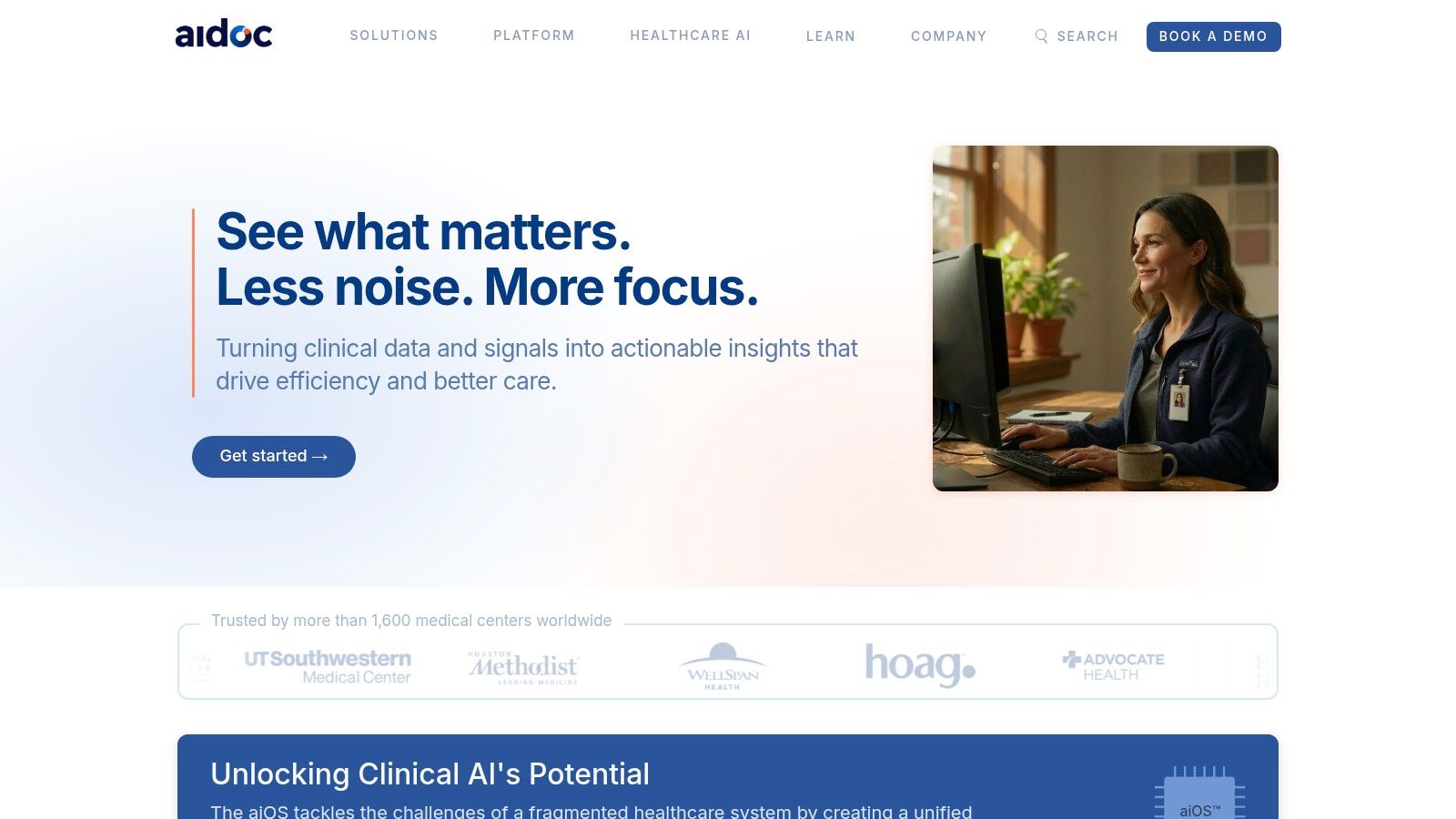
The company's aiOS positioning makes it appealing to enterprise buyers who want one operating model for image-based triage, quantification, and expanding reporting support rather than a patchwork of isolated tools. For organisations already running advanced radiology and acute-care operations, that platform approach can reduce vendor sprawl.
Why enterprise buyers shortlist Aidoc
Aidoc fits best where scale and governance matter more than lowest-cost entry. A network that wants broad algorithm coverage, EHR and PACS connectivity, and central oversight will usually value consistency over point-solution experimentation.
A practical scenario is a multi-hospital group that wants radiology AI governed through one enterprise architecture board rather than separate departmental procurements. That creates a cleaner path for security review, clinical validation, and support.
- Strength: Broad in-house and partner algorithm portfolio supports a consolidated enterprise roadmap.
- Integration upside: Strong EHR/PACS workflow alignment helps operations teams avoid adding manual swivel-chair work.
- Trade-off: Implementation usually requires substantial IT coordination, clinical championing, and contract negotiation.
Aidoc is also a reminder that AI's value in healthcare increasingly depends on communication quality, not just image interpretation. That's especially relevant in multilingual populations, where breaking language barriers in healthcare with voice technology becomes an operational issue, not a UX nicety.
For current product information, visit Aidoc.
3. Viz.ai
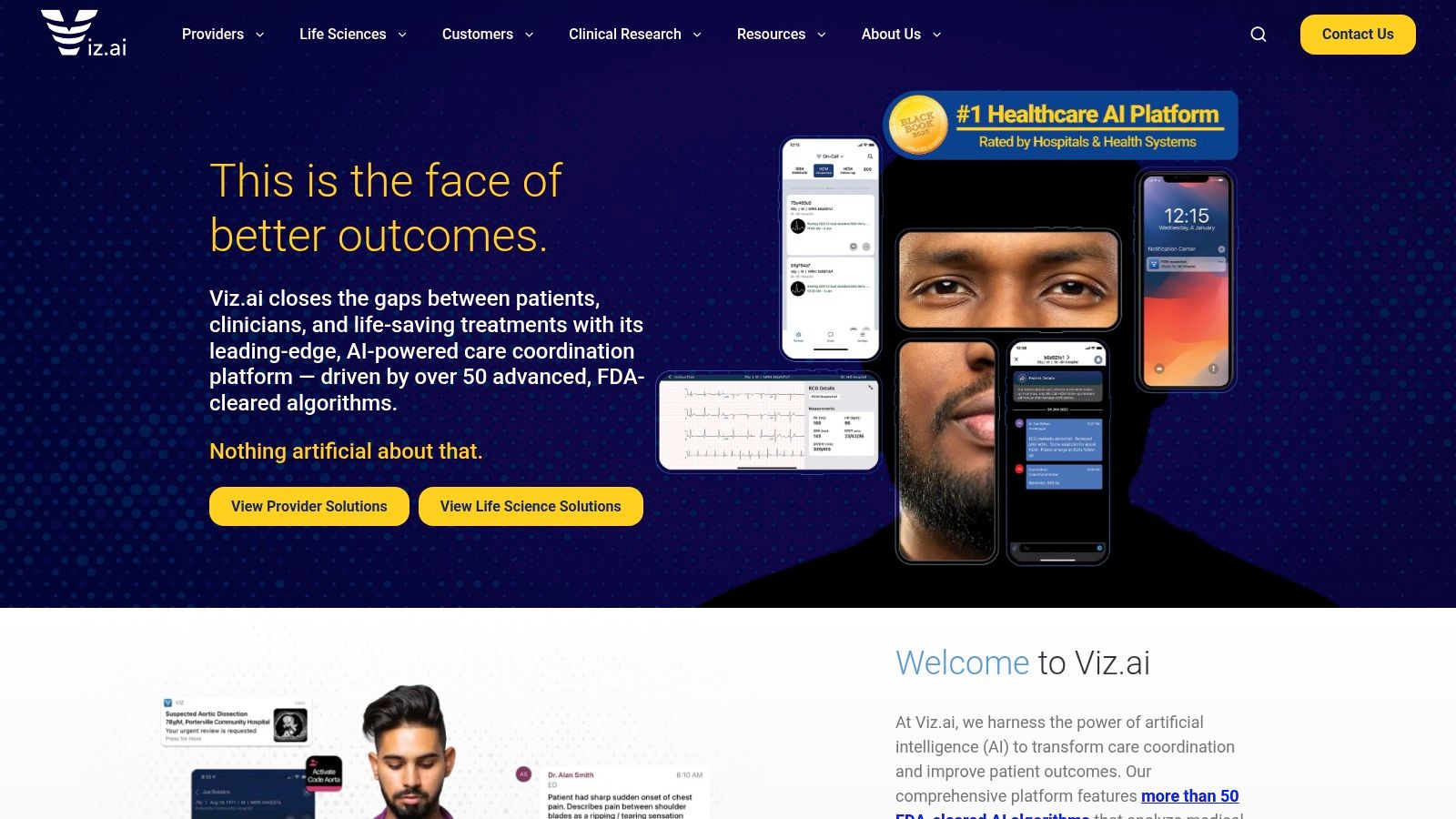
Viz.ai is what healthcare AI looks like when the core value isn't document generation or back-office efficiency. It's care coordination under time pressure. In stroke and related acute pathways, the business value comes from compressing the interval between image interpretation, team notification, and treatment action.
That makes Viz.ai especially relevant for networks that need to coordinate radiology, neurology, emergency, and transfer workflows across multiple sites. Its clinician mobile layer is more than a convenience feature. It's part of the operating model.
Where Viz.ai fits operationally
Viz.ai is strongest when the organisation already understands its neurovascular pathway economics. A full-service stroke centre, for example, may use AI alerting to standardise escalation, reduce coordination lag, and support hub-and-spoke decision-making across feeder hospitals.
Its broad algorithm footprint also matters. Buyers don't have to treat Viz.ai purely as a stroke vendor if they want one platform that can expand into additional pathways over time.
Fast notification only matters if the receiving team trusts the workflow enough to act on it.
- Best fit: Acute neurovascular and time-sensitive service lines where minutes carry direct clinical and financial consequences.
- Operational upside: Secure mobile care-team coordination can reduce handoff friction across departments and sites.
- Constraint: It isn't a plug-and-play departmental app. Enterprise rollout needs pathway redesign and executive sponsorship.
For platform details, visit Viz.ai.
4. DialNexa Labs Private Limited
Administrative friction is one of the largest unpriced costs in healthcare. Missed calls, inconsistent intake, weak reminder workflows, and delayed follow-up reduce access, waste staff time, and depress downstream revenue long before any clinical AI model enters the picture.
That makes DialNexa relevant for buyers who view AI as an operating model decision, not a narrow technology purchase.
The strategic case rests on a gap in industry attention. One analysis found that 97% of AI literature targets diagnostics, while only a fraction addresses administrative automation, even though connect rates can rise from 47% to 91% with human-like voice agents. For a hospital group or multi-site clinic, that imbalance matters. Diagnostic AI can improve specific care pathways. Voice automation can affect access, conversion, utilisation, and service consistency across the enterprise.
Where DialNexa fits operationally
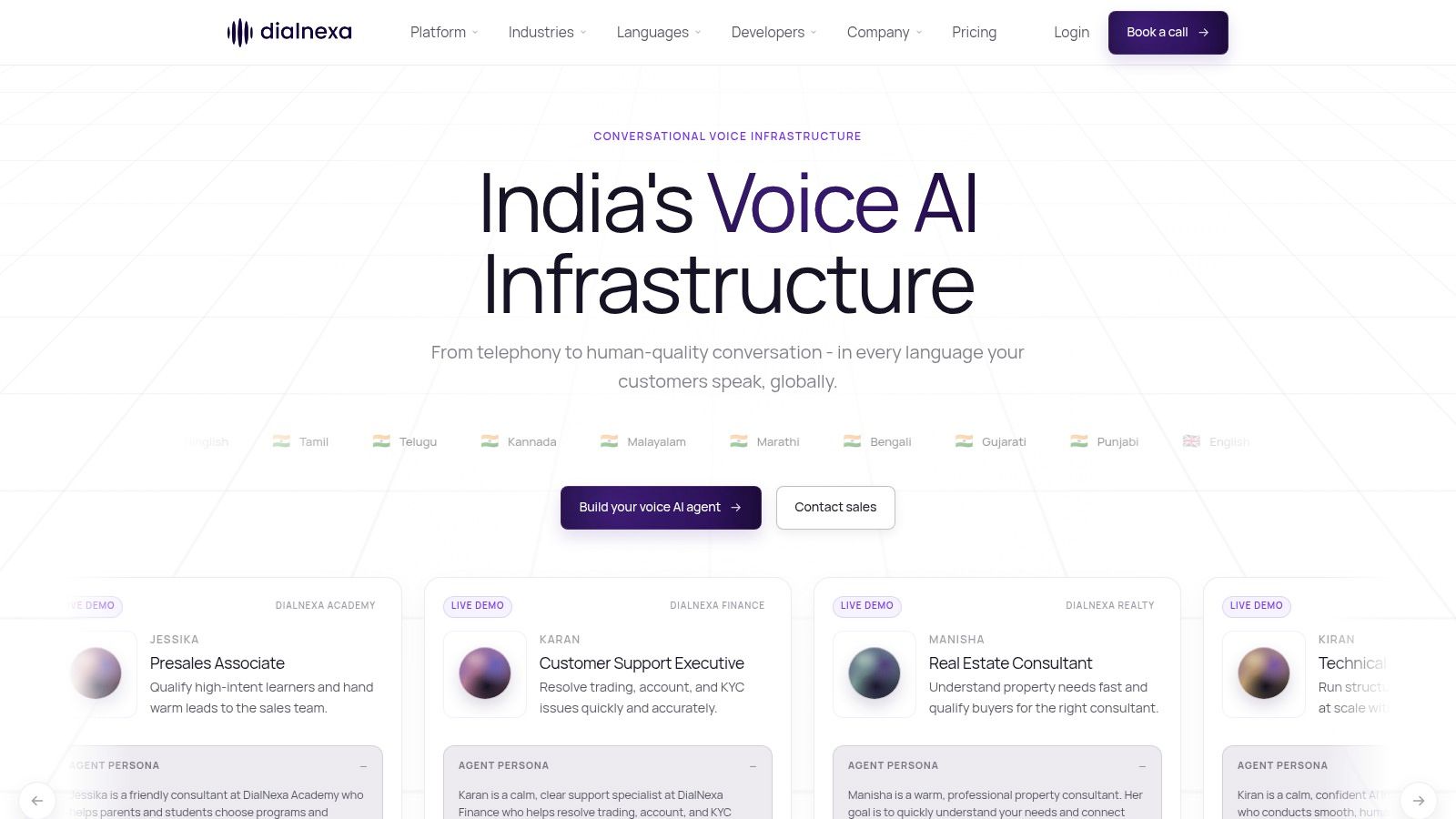
DialNexa focuses on structured voice workflows such as patient qualification, appointment booking, reminders, billing support, and follow-up communication. That positioning is commercially sensible. These are high-volume tasks, they follow repeatable logic, and they often absorb staff capacity that health systems would rather allocate to higher-value patient interactions.
Consider an outpatient network that loses demand during peak calling windows. A voice agent can answer immediately, identify intent, route by specialty, collect basic intake details, and complete scheduling steps in a consistent format. The ROI case comes less from replacing one receptionist than from reducing call leakage, standardising scripts, and extending service coverage without matching headcount growth.
DialNexa has also published company-level performance indicators around lead conversion, qualification accuracy, and multilingual handling. In healthcare, the practical implication is straightforward. Organisations serving linguistically diverse populations may gain more from reliable communication coverage than from adding another point solution inside a single department.
- Best use case: Appointment booking, pre-visit instructions, reminders, billing support, and post-discharge follow-up.
- Strategic upside: Strong fit for multi-site providers that need standardised patient communication across multiple Indian languages.
- Implementation note: The value is highest in workflows with clear decision trees, audit requirements, and defined escalation paths to human staff.
Board-level question: How much outpatient demand are you losing because your access workflows still depend on staff availability by hour, language, and location?
5. PathAI
PathAI is a strong candidate for organisations that see pathology not as a standalone department, but as a strategic oncology and diagnostics capability. Its value is clearest in enterprises that are already investing in digital pathology infrastructure and want AI to improve consistency, throughput, and biomarker-linked workflows.
The company's partnership orientation matters. Distribution through Roche navify Digital Pathology suggests a practical route into existing enterprise stacks rather than requiring hospitals to assemble every integration independently.
Where the ROI case becomes credible
For pathology leaders, the ROI discussion usually hinges on three things. Standardisation of reads, support for expanding cancer workloads, and tighter collaboration between labs, clinical teams, and biopharma programmes.
A practical use case is a cancer centre that wants AI-supported slide review embedded inside a broader digital pathology environment. In that setting, PathAI can become part of a larger operating model for oncology service delivery rather than a narrow technical add-on.
- Best fit: Digital pathology programmes with oncology focus and enterprise-grade lab transformation plans.
- Strategic strength: Alignment with established pathology platforms can lower integration friction.
- Limitation: If your organisation hasn't yet digitised slide workflows, the AI layer alone won't provide value.
For product information, visit PathAI.
6. Niramai Thermalytix
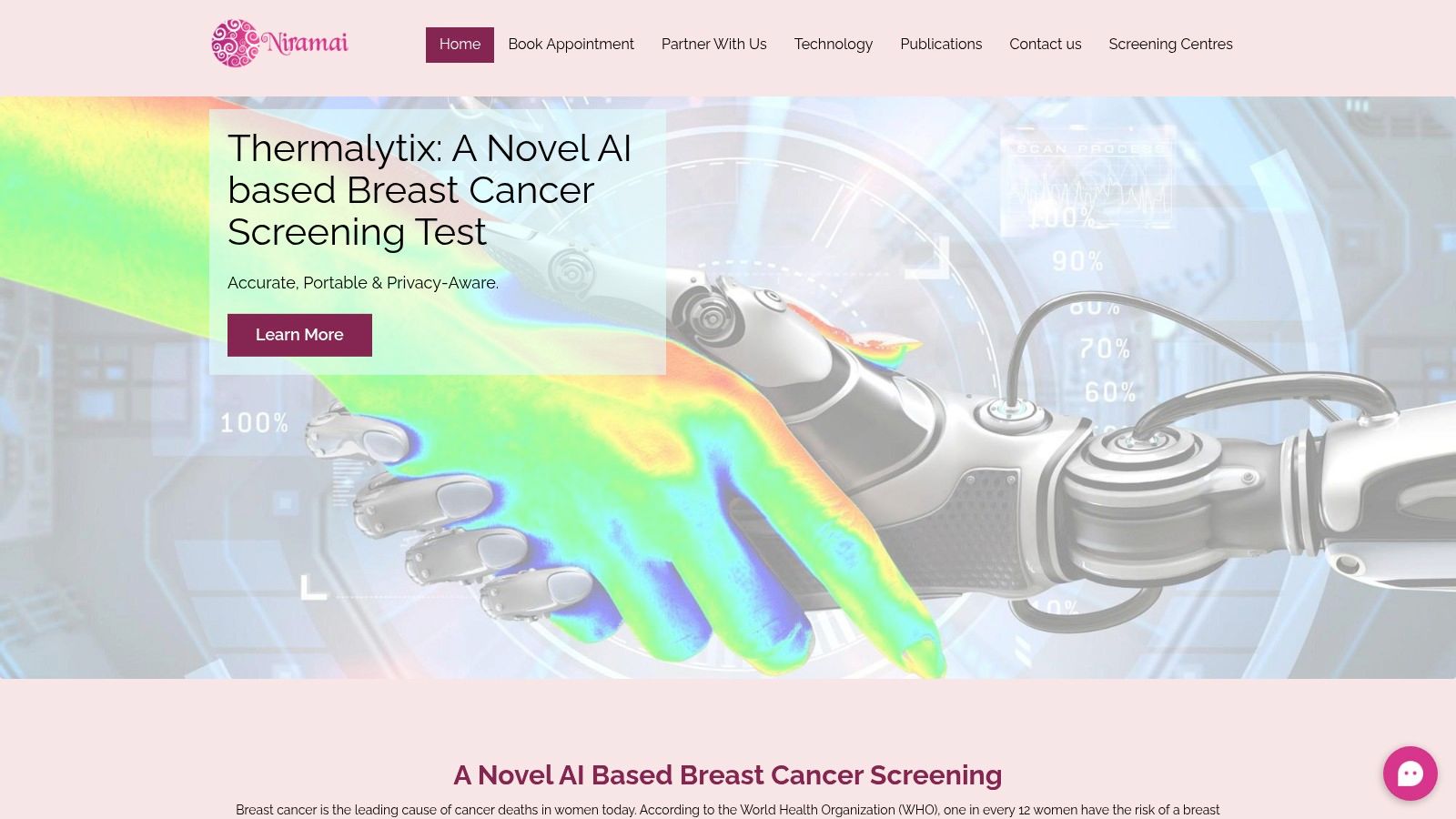
Niramai Thermalytix deserves attention because it reflects a different procurement logic. Instead of asking whether AI can improve an already mature hospital workflow, it asks whether AI can extend screening access where conventional infrastructure is limited.
That's especially relevant in India-first expansion strategies, where community screening, outreach camps, and privacy-sensitive settings can shape actual utilisation more than feature sophistication.
Why Niramai matters in India-first strategy
Thermal imaging with AI analysis changes the economics of screening outreach. It can support earlier abnormality detection in settings that don't have the footprint, staffing model, or patient acceptance profile for conventional mammography-led programmes.
A practical example is a provider network running women's health camps across secondary cities and peri-urban areas. Portable, non-invasive screening can expand coverage and feed referrals into central diagnostic hubs, provided the organisation has a strong follow-up pathway.
- Best use case: Community and outreach screening where access and comfort are major barriers.
- Operational value: Portable workflow can help extend preventive programmes beyond tertiary hospitals.
- Executive caution: This isn't a replacement for diagnostic mammography. Referral design determines whether the screening programme converts into outcomes.
For current product details, visit Niramai.
7. Tricog InstaECG
Tricog InstaECG is a good example of AI that works because it is tied to an end-to-end workflow, not because it claims to be universally intelligent. Its model combines AI-led preliminary interpretation, cloud connectivity, and cardiologist over-read into a single service path.
That matters in smaller hospitals, clinics, and pharmacy-linked care settings where local specialist coverage is thin. In those environments, speed and escalation quality are often more valuable than owning a highly modular stack.
What executives should evaluate
The strategic question is whether your cardiac triage challenge is primarily an interpretation problem or a workflow problem. Tricog is strongest when the answer is both. The device, platform, and review model are designed to move a patient from test to referral decision with minimal local dependency.
A practical use case is a distributed clinic network that needs rapid ECG capture and actionable guidance without stationing cardiologists at every site. That setup can improve consistency and reduce referral delay.
- Strength: Wraparound workflow is useful for resource-constrained settings.
- Best fit: Networks that want a managed model for rapid cardiac triage and escalation.
- Trade-off: Full value is more likely when buyers adopt the broader Tricog workflow, not just one isolated component.
For platform details, visit Tricog.
8. SigTuple
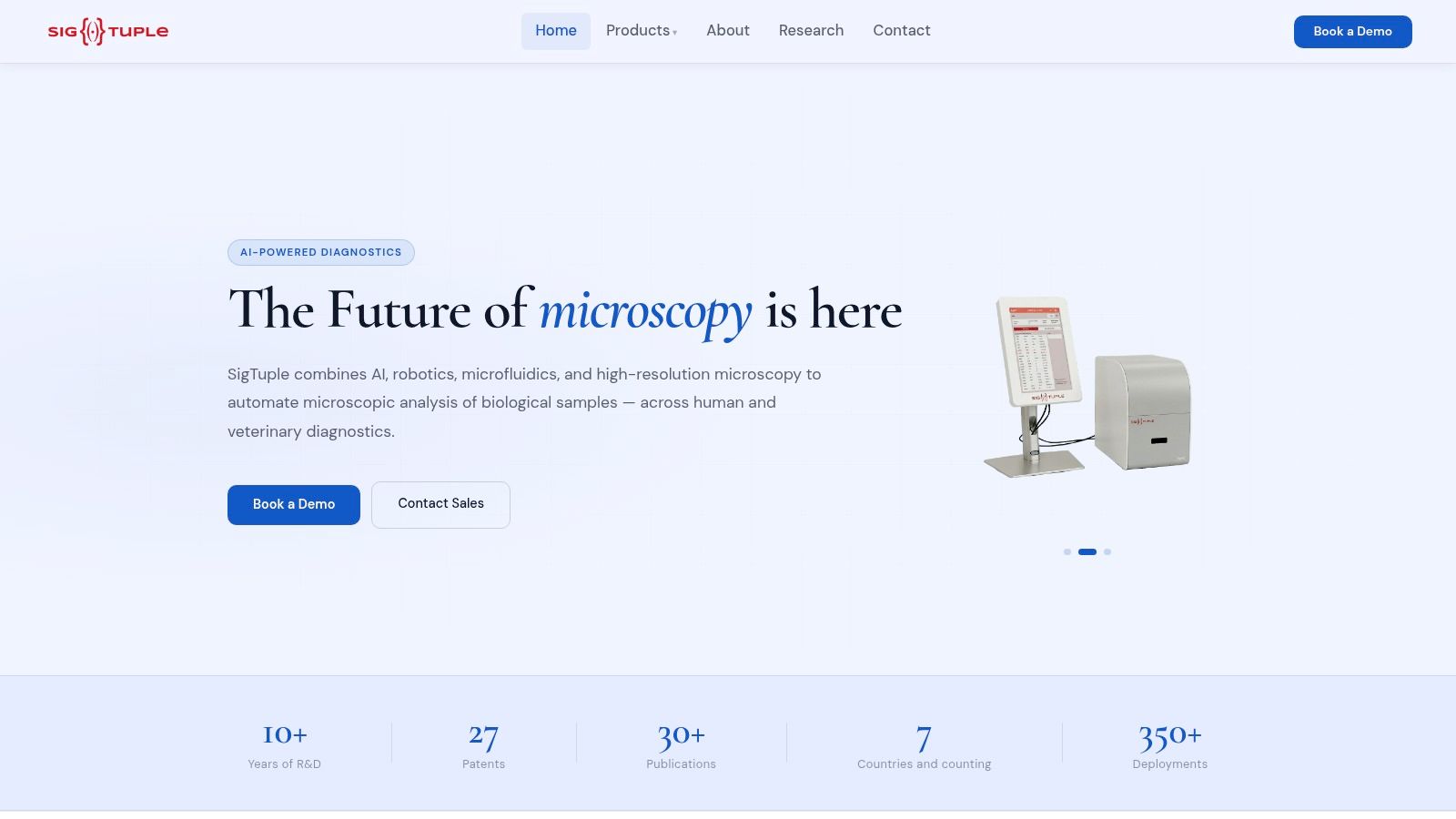
SigTuple targets one of the most persistent inefficiencies in diagnostics. Manual microscopy is labour-intensive, variable, and difficult to scale across distributed lab networks. AI helps when it standardises repetitive review tasks and makes specialist oversight easier to distribute.
Its position in digital microscopy is strategically useful for lab groups that want to move beyond incremental staffing fixes and into technology-led standardisation.
Where SigTuple earns attention
SigTuple's scanner-plus-software model suits labs that are upgrading from conventional microscopy into digitised review and telepathology workflows. That has value in central reference labs as well as networked hospital systems that need consistency across sites.
A practical example is a multi-city lab network using digital smear and urine review to centralise oversight while reducing manual bottlenecks in satellite labs. In that model, AI doesn't eliminate expert review. It prioritises it.
- Best use case: Peripheral blood smear and urine microscopy workflows that are still heavily manual.
- Operational gain: Remote review and workflow management can support distributed quality control.
- Constraint: Capital equipment, validation, and local training requirements mean this is a transformation project, not a lightweight software subscription.
For current information, visit SigTuple.
9. Predible Health
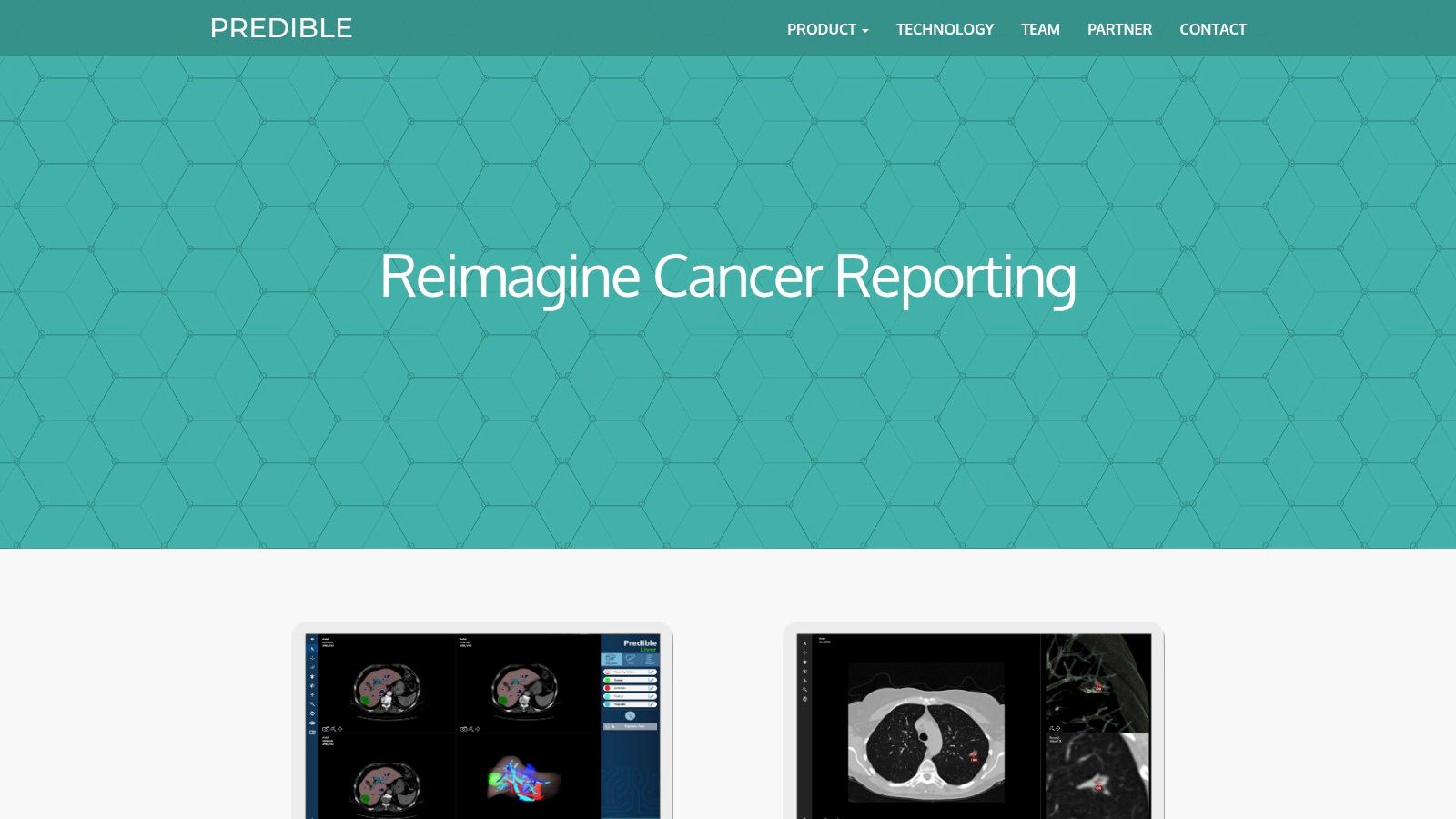
Predible Health is one of the more interesting specialist tools on this list because it focuses on practical imaging workflows in liver and lung care rather than broad AI branding. That narrowness can be a strength. CXOs often get better returns from tools tied to high-value service lines than from diffuse, multi-purpose pilots.
Its cloud-based model also makes it relevant to organisations that want imaging support without heavy on-premise complexity.
Where Predible Health can compound value
Predible Health is best evaluated by oncology centres, hepatobiliary programmes, and surgical planning teams that need better segmentation, volumetry, nodule tracking, or longitudinal reporting support. Those are workflows where precision affects treatment planning, clinician time, and reporting consistency.
A practical example is a cancer centre using automated lung nodule tracking to support follow-up continuity across repeated scans, while liver segmentation helps surgeons prepare more efficiently for intervention planning.
Narrow AI often produces clearer ROI than broad AI because finance teams can attach value to one service line, one workflow, and one delay removed.
- Best fit: Oncology and surgical planning teams seeking browser-based imaging workflow support.
- Potential value: Useful where radiology and surgical teams need cleaner longitudinal reporting and planning workflows.
- Procurement note: Buyers should verify regulatory status and integration maturity locally before scaling.
For product information, visit Predible Health.
10. AWS HealthScribe
AWS HealthScribe matters because it lets healthcare organisations build ambient documentation on their own terms. For CXOs, that shifts the buying decision from "Which scribe app should we deploy?" to "Which documentation capabilities should we own, customise, and integrate into the enterprise stack?"
The product is best suited to hospital IT teams, digital health platforms, and innovation groups with real engineering capacity. Its value comes from API-level access to transcription, speaker-role identification, summarisation, and clinical entity extraction tied to source evidence. That design gives enterprises more control over workflow logic, clinician experience, and downstream data use than a closed end-user application would.
Where HealthScribe can produce enterprise ROI
The financial case is strongest when documentation is viewed as infrastructure, not a single-point tool. Health systems that want to reduce clinician admin time, standardise note quality, and feed structured outputs into coding, audit, or care management workflows may get more long-term value from a configurable service layer than from a fixed ambient scribe product.
A practical use case is a provider platform that captures consultation audio, generates structured notes, and routes outputs into internal review or EHR workflows. In that model, AWS HealthScribe supports the documentation engine, while the organisation retains control over governance, interface design, and deployment priorities.
That control comes with execution risk. Buyers are taking responsibility for integration work, clinical validation, privacy controls, and change management. For some systems, especially those with limited internal product and engineering resources, the lower upfront commitment of usage-based infrastructure can be offset by a slower path to production.
- Best fit: Healthtech builders and enterprise IT teams developing ambient documentation into broader clinical or operational workflows.
- Potential value: Better economics for organisations that want reusable documentation infrastructure rather than another standalone clinician tool.
- Procurement note: Assess engineering bandwidth, EHR integration requirements, and compliance ownership before scaling beyond pilot use.
For platform details, visit AWS HealthScribe.
Top 10 AI Healthcare Tools Comparison
| Product | Core features | Quality & impact | Pricing & value | Target audience | Unique advantage |
|---|---|---|---|---|---|
| Qure.ai | qXR (chest X‑ray), qER (head CT), PACS/API integration | ★★★★, FDA/CE/CDSCO cleared; deployed in LMICs | 💰 Enterprise/usage-based (quote) | 👥 Hospitals, radiology depts, screening programs | ✨ Multi‑finding detection + regulatory clearances |
| Aidoc | 17+ FDA‑cleared algorithms, aiOS platform, EHR/PACS integration | ★★★★, Large install base (1,600+ hospitals) | 💰 Premium enterprise (quote) | 👥 Large health systems, enterprise radiology | ✨ Platform approach with governance & partner apps |
| Viz.ai | LVO stroke triage, clinician mobile app, 50+ cleared algorithms | ★★★★, Proven time‑to‑treatment improvement | 💰 Enterprise contracts required | 👥 Stroke centers, neurovascular teams | ✨ Rapid care coordination & automated alerts |
| DialNexa Labs Private Limited 🏆 | Human‑like Voice AI agents for booking, reminders, follow‑ups; API & dashboards; 22+ Indian languages | ★★★★★, connects ↑47%→91%, lead→booking 2%→8%, 97% AI qualification accuracy | 💰 Transparent enterprise pricing; consultative sales; proven ROI | 👥 Hospitals, clinics, contact centers, enterprises | ✨ Scales to thousands/day, sub‑300ms latency, ready‑made healthcare playbooks |
| PathAI | AISight platform, AI assays for oncology/NASH, Roche distribution | ★★★, Strong biopharma & pathology partnerships | 💰 Variable; enterprise/partner distribution | 👥 Clinical labs, biopharma, digital pathology centers | ✨ Computational pathology with enterprise integrations |
| Niramai Thermalytix | AI thermal image analysis for breast screening; portable equipment | ★★★, CE marked; suitable for outreach camps | 💰 Device/camp pricing; region dependent | 👥 Community screening programs, primary health centers | ✨ Radiation‑free, portable screening for low‑access areas |
| Tricog InstaECG | AI ECG interpretation + cloud platform + cardiologist over‑read | ★★★, Rapid cardiac triage for clinics & pharmacies | 💰 Service/device sales; sales engagement required | 👥 Clinics, pharmacies, small hospitals | ✨ End‑to‑end device+expert workflow for fast referrals |
| SigTuple | Automated digital microscopy, slide scanners, AI100 software (FDA 510(k)) | ★★★★, Reduces manual review; regulatory traction | 💰 Capital equipment + software/service | 👥 Diagnostic labs, pathology departments | ✨ FDA‑cleared AI for automated cell morphology |
| Predible Health | Liver/lung segmentation, volumetry, nodule scoring, cloud viewer | ★★★, Useful for surgical planning & oncology follow‑up | 💰 Variable; earlier‑stage company | 👥 Oncology centers, surgical/planning teams | ✨ Automated volumetry & longitudinal tracking for planning |
| AWS HealthScribe | Generative‑AI clinical scribe: transcription, speaker roles, entity extraction | ★★★★, HIPAA‑eligible, scalable serverless API | 💰 Pay‑as‑you‑go + Free Tier (metered) | 👥 Healthtech builders, EHR integrators | ✨ Serverless, metered scribing with evidence‑linked extraction |
From Pilot to Practice Implementing AI for Lasting Impact
AI in healthcare creates enterprise value only when it changes throughput, quality, or cost at the workflow level. Tool selection matters, but operating model design determines whether a pilot turns into a repeatable service line capability.
A practical rollout starts with one constrained use case tied to a measurable bottleneck and a budget owner. Imaging triage, documentation, pathology workflow, and patient communication usually perform better than broad transformation programs because they already sit inside established KPIs such as turnaround time, no-show rates, clinician time per encounter, and escalation volume. That gives CFOs, CIOs, and clinical leaders a shared scorecard before procurement expands.
Model choice also has direct governance implications. A 2026 study covered by Forbes found meaningful performance variation across AI systems answering medical questions, including differences in diagnostic accuracy, safety, and rates of severe error across models, based on physician-aligned evaluation criteria in Forbes' summary of the comparative research on AI for medical questions. For executives, the implication is straightforward. “Using AI” is not a single decision. Model selection, benchmarking, fallback rules, and human review thresholds are policy choices that affect risk, productivity, and trust.
Indian deployments add another layer. Language coverage is a clinical and operational issue, not just a UX feature. EkaCare's release of MedMCQA-Indic gives health organisations a way to test whether LLMs can interpret medical content across Indian languages through India-focused multilingual medical AI evaluation datasets. Any system used in multilingual settings should be validated against regional-language medical content before production use, especially if it touches intake, triage, discharge communication, or patient support.
The longer-term upside extends beyond acute diagnosis. Preventive screening, documentation, triage, and patient access can form one connected operating layer if leaders design them as linked workflows rather than isolated tools. Recent discussion of AI adoption in Indian healthcare also points to the scale advantage created by telemedicine and digitally mediated care in Prezent's review of AI tools and telemedicine trends in healthcare. That matters because ROI expands when the same data and workflow infrastructure supports multiple use cases over time.
Documentation remains one of the clearest near-term opportunities for outpatient groups and clinic networks. Pricing benchmarks for Indian ambient and documentation tools suggest a workable comparison point for build-versus-buy decisions, particularly for organisations that need Hindi and regional-language support, as outlined in iChelon Consulting's guide to AI tools for Indian doctors. The strategic question is less about transcription quality alone and more about whether documentation automation reduces after-hours charting, improves coding completeness, and preserves clinician capacity.
Enterprise buyers should also avoid evaluating ROI only through labour substitution. In underserved markets, value often comes from quality gains, faster routing to specialists, and fewer delays in diagnosis. As noted earlier in the article, several vendors are strongest when deployed in distributed care environments where access constraints are part of the economic case.
Execution discipline decides whether those gains persist. Set a baseline before launch. Define who owns exception handling, audit logs, model updates, and retraining reviews. If the system touches protected health information, clinical advice, or patient communication, legal, compliance, frontline managers, and IT architecture should approve the workflow before go-live.
The organisations that scale healthcare AI successfully tend to standardise implementation across teams, not accumulate the most vendors. The same principle applies in adjacent revenue-cycle and administrative workflows such as boosting claims efficiency, where process design often determines outcomes as much as model quality.
If your organisation wants to improve patient bookings, automate reminders and follow-ups, and reduce front-desk overload without sacrificing conversation quality, DialNexa Labs Private Limited is worth evaluation. Its Voice AI approach is relevant for healthcare platforms, clinics, and hospital groups that need multilingual patient communication at scale and want a deployment tied to operational ROI rather than experimentation alone.

Leave a Reply